
The word “would” is a chameleon in the English language. It can shift its meaning and grammatical function depending on the context, making it a source of confusion for many. Yet, understanding its versatility is crucial, especially when communicating effectively in the fast-paced and precise worlds of technology, branding, and finance. Whether you’re explaining an AI trend, crafting a brand narrative, or discussing investment strategies, the subtle power of “would” can dramatically impact clarity and persuasion. This article will delve into the various ways “would” operates as a verb, exploring its past, conditional, and hypothetical applications, and demonstrating how mastering its usage can enhance your communication across these vital domains.
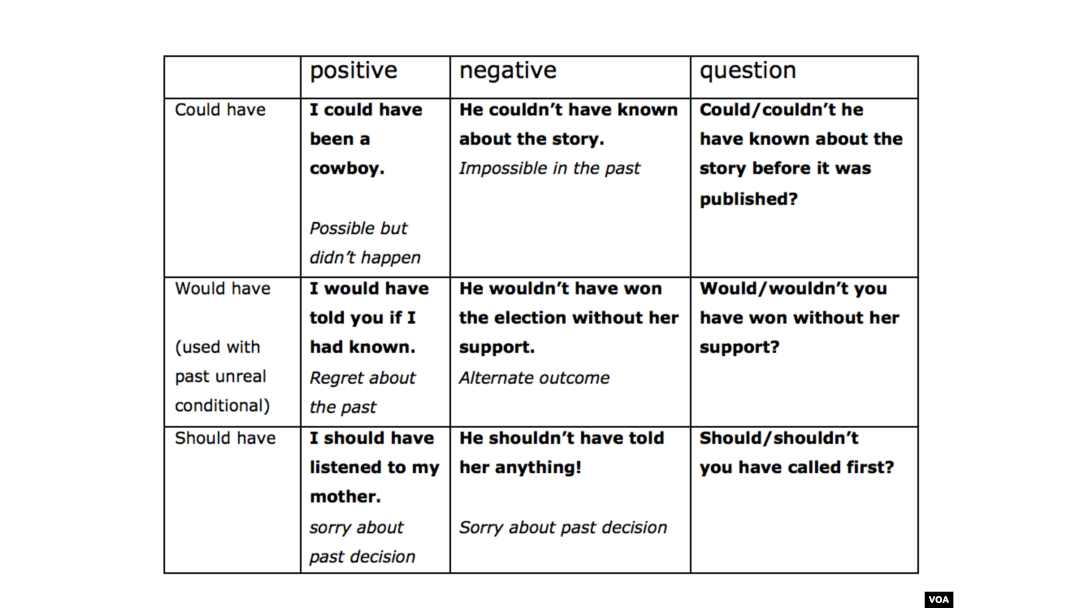
The Past Tense Foundation: “Would” as a Lingering Echo of the Past
At its core, “would” often functions as the past tense of “will.” This is its most straightforward role, describing actions or states that occurred in the past. However, even in this capacity, it carries a nuance beyond simple past tense verbs.
Past Habits and Repeated Actions
One of the primary uses of “would” in the past tense is to describe habitual actions or repeated events that happened in the past but are no longer occurring. This usage often evokes a sense of nostalgia or a contrast with the present.
In Technology: Imagine a retrospective on early software development. You might write: “In the early days of software development, developers would spend hours debugging complex code manually. There would be no sophisticated IDEs to guide them.” Here, “would” highlights the routine, the expected way things were done back then. It paints a picture of a past reality that has since evolved. Similarly, discussing the evolution of user interfaces: “Users would once navigate complex command-line interfaces, a far cry from the intuitive graphical interfaces we see today.” This contrasts the past with the present, emphasizing technological advancement. When reviewing older gadgets, you might say: “This vintage smartphone would struggle to run even basic apps by today’s standards, but it would connect you to the nascent internet.” This sets a historical context for the technology.
In Branding: When analyzing the history of a brand, “would” can illustrate past marketing strategies. For instance: “In the 1990s, this brand would primarily advertise through television commercials, a stark contrast to their current digital-first approach.” Or discussing brand perception: “Consumers would associate this product with reliability, though its reputation has shifted in recent years due to product diversification.” This helps trace the evolution of brand perception and strategy over time, offering valuable insights for current brand managers. It can also be used to describe the recurring challenges a brand might have faced: “During economic downturns, the company would often see a dip in sales, a pattern they’ve worked to mitigate with diversified revenue streams.”
In Money: When discussing personal finance in the past, “would” can describe financial habits. For example: “Before the advent of budgeting apps, many people would track their expenses using paper ledgers. They would meticulously record every transaction.” This conjures an image of a bygone era of financial management. When looking at past investment trends: “In the early 2000s, investors would often rely on traditional stockbrokers, and speculative bubbles would form and burst with regularity.” This highlights past investment behaviors and market dynamics. For business finance, it could be: “Small businesses would struggle to access capital without strong collateral, a barrier that has been somewhat lowered by newer lending platforms.”
Past Predictions and Expectations
“Would” can also convey a past prediction or expectation, often implying that the outcome was different from what was anticipated.
In Technology: “At the time, experts would predict that virtual reality would be mainstream by now, but adoption has been slower than anticipated.” This highlights a past forecast and its divergence from current reality. It can also be used to describe the expected functionality of a new technology: “The initial concept for this AI tool would solve complex problems in minutes, but the beta version required significant human oversight.”
In Branding: “The marketing team would have expected this campaign to go viral, but it only garnered a modest engagement.” This indicates a past expectation that was not met. It can also be used to describe what a brand intended to convey: “The brand’s early messaging would aim to evoke feelings of exclusivity, but it inadvertently alienated a broader audience.”
In Money: “Analysts would have believed that this sector would continue its upward trajectory indefinitely, but market shifts proved them wrong.” This points to past financial predictions that didn’t materialize. It can also describe planned financial actions that didn’t happen: “I would have invested more in that stock if I had known about its future performance.”
The Conditional Power: “Would” for Hypotheticals and Possibilities
Beyond its past tense function, “would” shines as a key indicator of conditional and hypothetical situations. This is where its power to explore possibilities, offer advice, and express politeness truly emerges.
Hypothetical Scenarios and Counterfactuals
This is perhaps the most common and versatile use of “would.” It allows us to discuss situations that are not real, either because they are unlikely, impossible, or contrary to past events.
In Technology: “If AI advancements continued at their current pace, we would likely see fully autonomous vehicles within the next decade. However, regulatory hurdles remain.” This presents a hypothetical future. In the context of software development: “If we had a larger budget, we would be able to implement more advanced security protocols.” This expresses a counterfactual – what could happen if circumstances were different. When discussing future tech trends: “A truly decentralized internet would fundamentally change how we interact online, but achieving that level of decentralization presents immense technical challenges.”
In Branding: “If our target audience had different preferences, our current brand strategy would be entirely ineffective. We would need to pivot significantly.” This explores hypothetical market shifts. In a brand case study: “Without the strategic rebranding, the company would likely have faded into obscurity. The new identity would have resonated deeply with a younger demographic.” This highlights the potential negative outcome averted by a successful brand action. For personal branding: “If you would actively network more, you would undoubtedly uncover more career opportunities.”
In Money: “If the market crashes, many investors would panic and sell their assets at a loss. A diversified portfolio would help mitigate such risks.” This explores a hypothetical financial crisis. For personal finance planning: “If I had started saving earlier, I would be in a much stronger financial position now.” This is a classic counterfactual. In business finance: “If the company would have secured that funding, it would have been able to expand its operations much sooner.”
Polite Requests and Offers

“Would” is essential for making polite requests and offers, softening directness and fostering a more agreeable tone.
In Technology: “Could you please send me the documentation? I would appreciate it.” (Polite request). “We would be happy to offer a demo of our new software if you’re interested.” (Polite offer).
In Branding: “Would you be willing to share your feedback on our latest campaign?” (Polite request). “We would love to feature your success story in our next case study.” (Polite offer).
In Money: “Would you mind explaining the terms of this investment in more detail?” (Polite request). “We would be glad to help you navigate your personal finance goals.” (Polite offer).
The Modal Nuance: “Would” as a Marker of Possibility, Willingness, and Past Intent
“Would” also functions as a modal verb, conveying a range of subtle meanings that go beyond simple past tense or strict conditionals.
Past Willingness or Intent
In certain contexts, “would” can indicate a past willingness or an intention that was perhaps not acted upon, or that happened as a natural consequence.
In Technology: “The engineer would have fixed the bug, but they ran out of time before the deadline.” (Past willingness, unfulfilled). “The system would automatically update itself overnight, ensuring users always had the latest version.” (Past natural consequence/behavior).
In Branding: “The focus group would have loved that tagline, but it was deemed too risky by the board.” (Past willingness/potential preference). “The brand would often engage with its followers on social media, fostering a strong sense of community.” (Past consistent behavior/intent).
In Money: “My financial advisor would have recommended diversifying earlier, but I was hesitant.” (Past willingness/recommendation). “The business would always prioritize customer satisfaction, even if it meant a slight reduction in immediate profit.” (Past consistent intent/behavior).
Expressing Doubt or Uncertainty
“Would” can subtly express doubt or uncertainty, particularly when used in questions or negative statements.
In Technology: “It would be difficult to implement that feature without a significant overhaul of the existing architecture.” (Expressing difficulty/doubt about feasibility). “I wouldn’t be surprised if they release a new version next quarter.” (Expressing likely possibility, with a hint of uncertainty).
In Branding: “It would be challenging to change public perception overnight.” (Expressing difficulty/doubt). “I wouldn’t say this branding is entirely original, but it’s certainly effective.” (Expressing qualified positive assessment, with a hint of reservation).
In Money: “It would be unwise to invest all your savings in a single volatile stock.” (Expressing strong caution/doubt about the wisdom of an action). “He would likely face significant tax implications if he doesn’t report that income.” (Expressing probable negative consequence, with a degree of uncertainty).

Mastering “Would” for Enhanced Communication
The multifaceted nature of “would” makes it a powerful tool for nuanced expression. By understanding its different roles – as a past tense echo, a gateway to hypotheticals, and a marker of modal nuances – you can elevate your communication in critical fields.
In Tech: Precise language is paramount. Using “would” accurately can help explain complex technical concepts, outline potential future developments, and frame retrospective analyses with clarity. Whether describing past functionalities of software or hypothesizing about the impact of emerging AI, mastering “would” ensures your message is understood as intended.
In Brand: Persuasion and perception are key. “Would” allows for the exploration of brand strategies, the crafting of compelling narratives, and the articulation of future brand vision. Its conditional use can highlight the strategic choices made and the potential outcomes avoided, making brand case studies more impactful and marketing messages more persuasive.
In Money: Clarity and confidence are essential. “Would” can be used to explain financial planning scenarios, discuss investment possibilities, and offer advice with appropriate caution. Its ability to form polite requests and express hypothetical financial situations makes financial advice more accessible and less intimidating.
In conclusion, “would” is far more than just a word; it’s a grammatical Swiss Army knife. By consciously practicing its various applications, you can refine your ability to communicate effectively, persuasively, and with a greater degree of precision, ensuring your ideas resonate clearly in the interconnected worlds of technology, brand, and money.
aViewFromTheCave is a participant in the Amazon Services LLC Associates Program, an affiliate advertising program designed to provide a means for sites to earn advertising fees by advertising and linking to Amazon.com. Amazon, the Amazon logo, AmazonSupply, and the AmazonSupply logo are trademarks of Amazon.com, Inc. or its affiliates. As an Amazon Associate we earn affiliate commissions from qualifying purchases.