
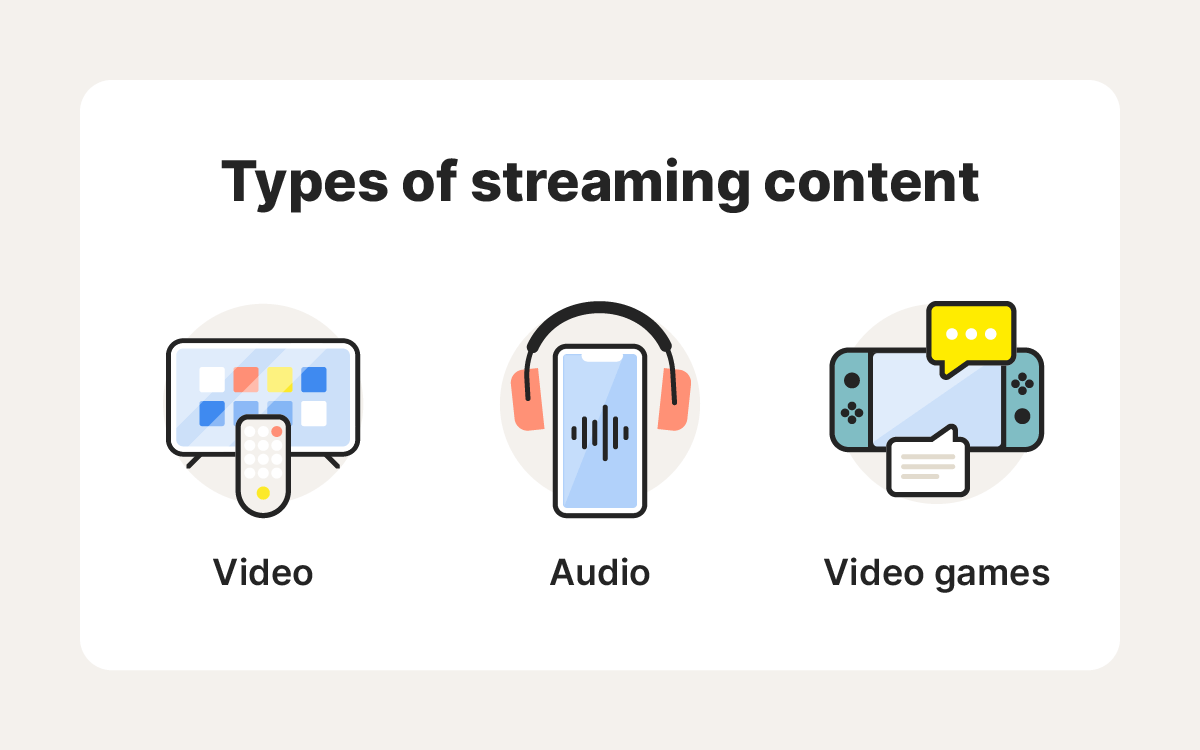
Streaming has transitioned from a niche technical curiosity into the foundational pillar of modern digital consumption. At its core, streaming is the continuous transmission of audio or video files from a server to a client device, allowing users to view or listen to content in real-time without the need to download the entire file beforehand. While the user experience is designed to be seamless, the underlying technology is a complex symphony of data protocols, compression algorithms, and global infrastructure.
To understand “what streaming” truly represents in the current technological landscape, one must look beyond the play button. It is a sophisticated delivery mechanism that balances bandwidth constraints, hardware capabilities, and network stability to provide high-fidelity media across a fragmented ecosystem of devices.
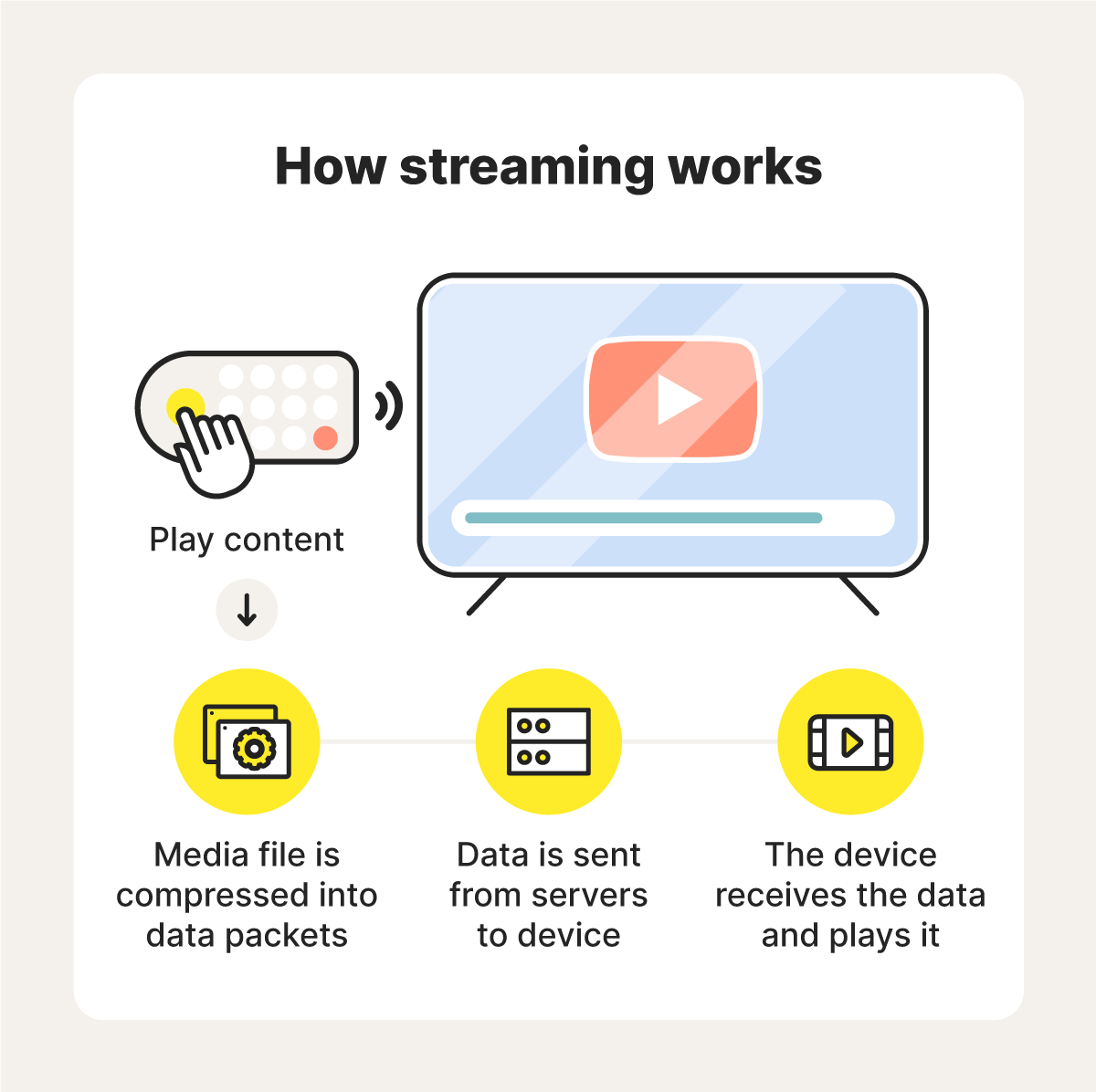
The Mechanics of Data Delivery: Understanding the Streaming Protocol
The primary differentiator between a standard download and a stream is the timing of data processing. When you download a file, your device saves the entire data packet to its local storage before you can open it. Streaming, however, utilizes a “just-in-time” delivery model.
How Buffering and Latency Shape the User Experience
Buffering is often viewed as a nuisance, but it is actually a vital technical safeguard. When a stream begins, the player downloads a small portion of the data—a few seconds of video or audio—and stores it in a temporary memory cache called a buffer. This creates a “safety net.” If the network speed fluctuates momentarily, the player continues to draw from the buffer while the network catches up, preventing a freeze in playback.
Latency, on the other hand, refers to the delay between the moment data is sent and the moment it is processed. In “Video on Demand” (VOD), high latency is manageable. However, in live streaming—such as online gaming or live sports—low-latency protocols like WebRTC (Web Real-Time Communication) are essential. These protocols prioritize speed over perfect error correction to ensure that the “live” broadcast is as close to real-time as possible.
Adaptive Bitrate Streaming (ABS): The Secret to Seamless Playback
One of the most significant advancements in streaming tech is Adaptive Bitrate Streaming (ABS). In the early days of the web, a video file was a single, static size. If your internet slowed down, the video stopped. Modern streaming services solve this by encoding the same video into multiple versions at different quality levels (e.g., 480p, 720p, 1080p, and 4K).
The streaming client (your phone or smart TV) constantly monitors your real-time internet bandwidth. If your connection weakens, the software automatically switches to a lower-resolution segment of the video. This transition happens mid-stream, often without the user noticing anything more than a slight dip in visual clarity. This ensures that the content never stops playing, prioritizing continuity over static resolution.
The Infrastructure Behind the Screen: Codecs and CDNs
For streaming to work efficiently, data must be shrunk for travel and then expanded for viewing. This is where codecs come in, supported by a global web of servers known as Content Delivery Networks.
Video Compression and the Evolution of H.264 to AV1
Raw 4K video is massive—too large for almost any consumer internet connection to handle. Codecs (short for Coder-Decoder) are software tools that compress video data by removing redundant information. For instance, if a scene features a blue sky, the codec doesn’t save every individual pixel; it saves instructions that say, “this whole area is this shade of blue.”
For years, H.264 (AVC) was the industry standard. However, as 4K and 8K content becomes the norm, newer codecs like H.265 (HEVC) and the open-source AV1 have emerged. AV1, in particular, offers significantly better compression—meaning higher quality at lower bitrates—without requiring expensive licensing fees. This allows tech giants to deliver high-definition content even to users on limited data plans.
Content Delivery Networks (CDNs): Bringing Data Closer to the Edge
If every Netflix user in London tried to pull data from a single server in California, the internet would grind to a halt. To solve this, streaming providers use Content Delivery Networks (CDNs). A CDN is a distributed network of servers located in data centers all over the world.
When you press play, the request doesn’t travel to the company’s headquarters; it travels to the nearest “edge server.” By caching popular content geographically closer to the end-user, CDNs reduce physical distance, minimize latency, and prevent backbone network congestion. This “edge computing” approach is what allows millions of people to stream the same viral show simultaneously without crashing the internet.
The Intersection of AI and Streaming Technology
As we move further into the decade, the “tech” in streaming is increasingly being driven by Artificial Intelligence (AI) and Machine Learning (ML). These tools are being used to optimize both the transmission and the visual quality of the media.
AI-Driven Upscaling and Real-time Content Enhancement
Hardware manufacturers and streaming platforms are now using AI to “upscale” content in real-time. If you are watching a 1080p video on an 8K television, AI algorithms analyze the frames and intelligently “guess” what the missing pixels should look like. This creates a sharper image than traditional linear upscaling.
Furthermore, AI is used in “per-shot encoding.” Instead of applying the same compression settings to an entire movie, AI analyzes every scene. An action scene with lots of movement requires a high bitrate to avoid pixelation, while a static scene of two people talking can be compressed much more aggressively. This intelligent allocation of data makes the entire streaming ecosystem more efficient.
Predictive Caching: How Algorithms Anticipate Your Next View
Streaming technology isn’t just about delivery; it’s about anticipation. Large-scale platforms use machine learning to predict what content will be popular in specific regions. Using “predictive caching,” the system can pre-load certain files onto local edge servers before anyone even asks for them. If a major tech reviewer releases a video, the CDN anticipates a spike in traffic and ensures the data is already sitting in local caches worldwide, ensuring instant-start times for the viewers.
Hardware Innovations and the Future of High-Fidelity Streams
The “what” of streaming is also defined by the hardware we use to access it. From specialized silicon in smartphones to the rollout of next-generation cellular networks, the hardware layer is evolving to meet the demands of higher bitrates.
The Role of 5G and 6G in Ubiquitous Streaming
The rollout of 5G has been a game-changer for mobile streaming. With its high frequency (millimeter wave) and massive capacity, 5G allows for the streaming of lossless audio and 4K video on the go with zero lag. Looking forward, the development of 6G promises even lower latency, potentially enabling “holographic streaming” or seamless Extended Reality (XR) experiences where the data is processed in the cloud and streamed to lightweight glasses in real-time.
Smart Devices and the Rise of Cloud Gaming Infrastructure
Perhaps the most demanding application of streaming tech today is Cloud Gaming. Unlike a movie, a game is interactive; the server must receive the user’s input, process the game logic, and stream the resulting video frame back in milliseconds.
This requires specialized hardware on both ends. Server-side, companies like NVIDIA and Microsoft use high-end GPUs to render games. Client-side, modern Smart TVs and mobile processors now include dedicated hardware decoders specifically designed to handle these high-speed video streams with minimal battery drain. This shift represents the ultimate maturation of streaming: the ability to stream not just media, but raw computing power itself.

The Technical Horizon
“What streaming” refers to today is a massive, invisible infrastructure that manages the world’s data. From the software codecs that shrink our movies to the AI that predicts our habits and the 5G towers that deliver the signal, streaming is a testament to how far network technology has come. As we move toward 8K resolution, virtual reality, and more interactive formats, the underlying tech will continue to evolve, making the distance between the server and the screen feel more non-existent than ever before.
aViewFromTheCave is a participant in the Amazon Services LLC Associates Program, an affiliate advertising program designed to provide a means for sites to earn advertising fees by advertising and linking to Amazon.com. Amazon, the Amazon logo, AmazonSupply, and the AmazonSupply logo are trademarks of Amazon.com, Inc. or its affiliates. As an Amazon Associate we earn affiliate commissions from qualifying purchases.