
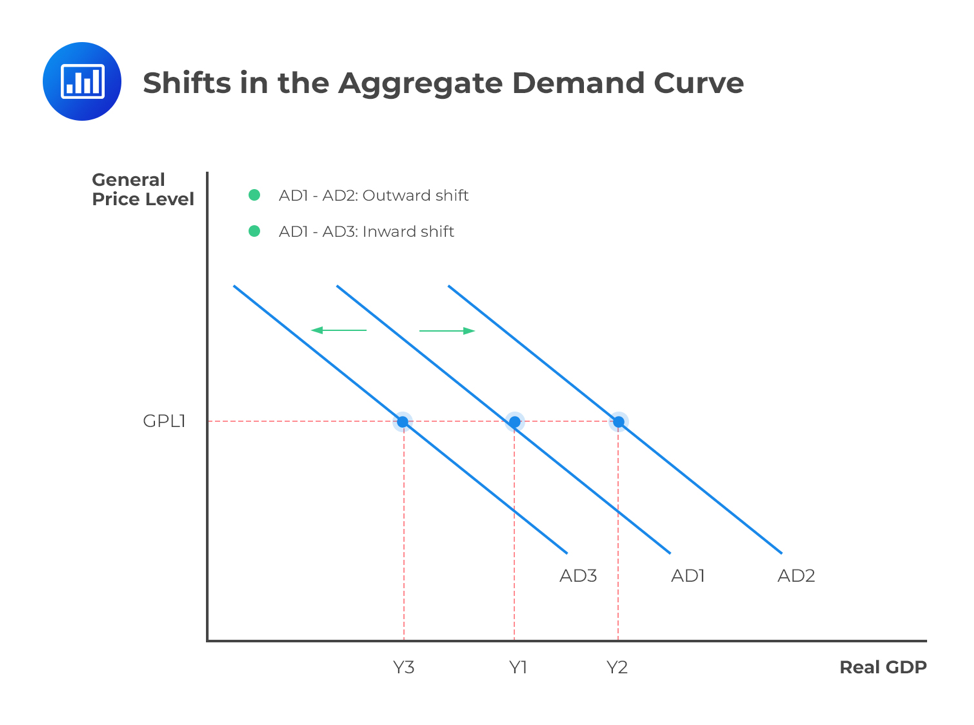
In the realm of finance and commerce, the demand curve is more than just a line on a graph; it is a visual representation of human behavior, economic health, and market potential. For investors, entrepreneurs, and financial analysts, understanding why the demand curve moves—and in which direction—is the cornerstone of strategic decision-making. While a change in the price of a product causes a movement along the curve, a shift of the curve signifies a fundamental change in market conditions.
When the demand curve shifts to the right, it indicates an increase in demand; to the left, a decrease. These shifts are driven by external variables that can make or break a business model or an investment portfolio. In this guide, we will explore the primary catalysts that shift the demand curve, focusing on their implications for the world of money, business finance, and market dynamics.
The Core Economic Determinants of Market Demand
The first step in mastering market analysis is identifying the fundamental economic factors that cause consumers to change their purchasing habits regardless of a product’s price. These determinants are the “levers” of the macro-economy.
Consumer Income and the Wealth Effect
Income is perhaps the most direct driver of demand. In business finance, we distinguish between “normal goods” and “inferior goods.” For most products—luxury cars, high-end electronics, or organic groceries—an increase in consumer income leads to a rightward shift in the demand curve. These are normal goods.
However, the “Wealth Effect” plays a critical role here as well. When the stock market performs well or real estate values rise, consumers feel wealthier even if their liquid salary hasn’t changed. This psychological boost increases their marginal propensity to consume, shifting demand curves outward across various discretionary sectors. Conversely, during a recession or a market downturn, the demand for inferior goods—such as generic brands or public transportation—actually shifts to the right as consumers look to cut costs.
Prices of Related Goods: Substitutes and Complements
No product exists in a vacuum. The demand for any asset or commodity is tethered to the pricing of its substitutes and complements.
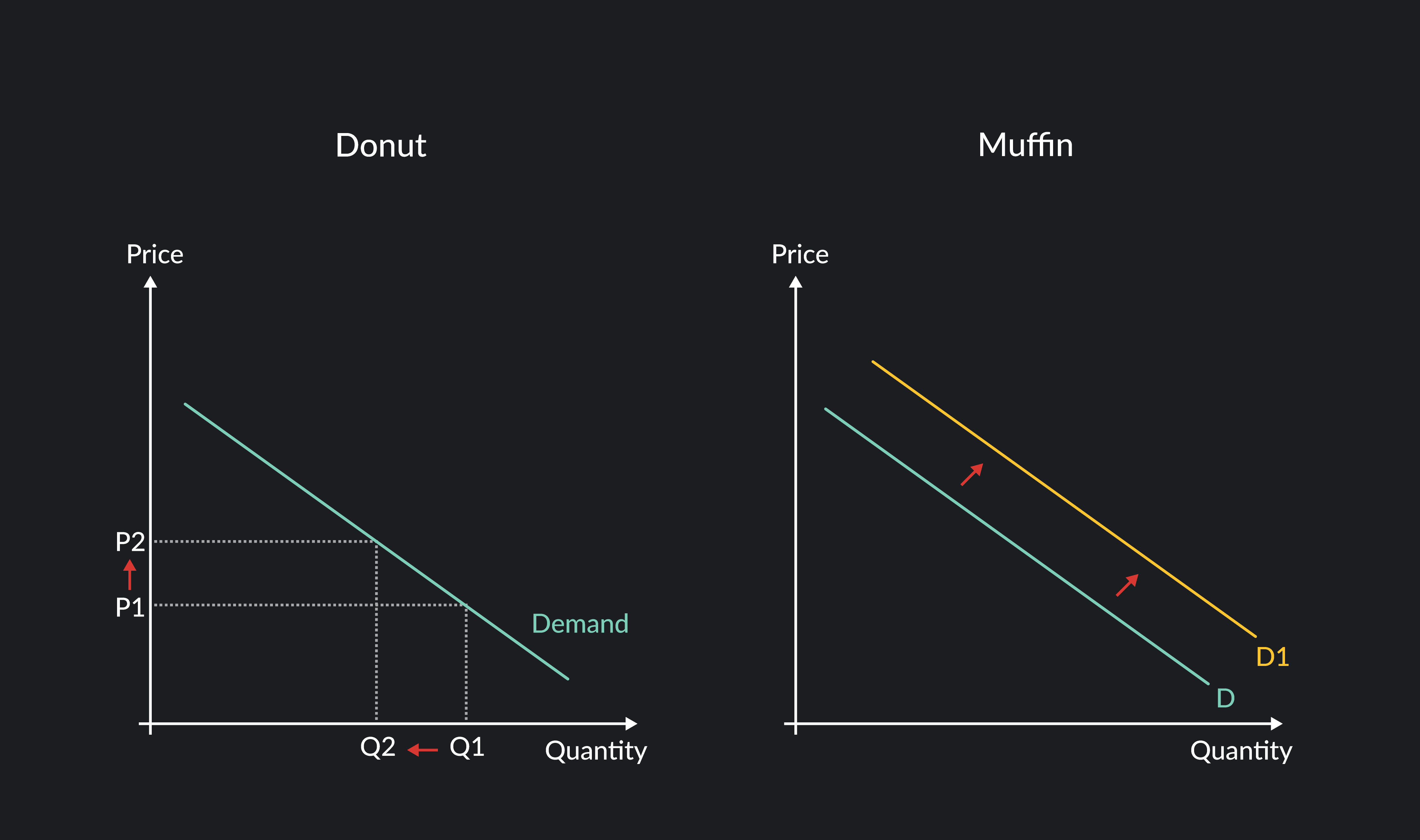
A substitute is a product that can be used in place of another. For instance, if the price of beef rises significantly, the demand curve for chicken (the substitute) shifts to the right, even if the price of chicken remains the same. For investors, monitoring the “cross-price elasticity” between competitors is vital.
Complements, on the other hand, are goods usually consumed together, such as printers and ink cartridges, or EVs and charging stations. If the price of EV batteries drops (making the car cheaper), the demand curve for charging infrastructure shifts to the right. Understanding these relationships allows business leaders to predict secondary market booms before they happen.
Tastes, Preferences, and Social Trends
While harder to quantify than income, shifts in consumer tastes are powerful. These shifts are often driven by cultural movements, health trends, or technological adoption. For example, the growing focus on environmental sustainability has shifted the demand curve for plant-based proteins and renewable energy solutions to the right.
In the financial world, “ESG” (Environmental, Social, and Governance) investing is a direct response to this shift. As institutional and retail investors shift their preferences toward ethical companies, the demand curve for green bonds and “clean” stocks moves outward, often lowering the cost of capital for those firms.
Macroeconomic Influences and Future Expectations
Market participants do not just react to the present; they speculate on the future. This forward-looking behavior is a primary cause of volatility and rapid shifts in demand curves within the financial markets.
Inflationary Expectations and Purchasing Power
Expectations about future prices can cause immediate shifts in the demand curve. If consumers and businesses expect the price of a commodity—like gold, oil, or even real estate—to rise in the coming months, they will increase their demand today to “lock in” lower prices. This shifts the current demand curve to the right.
This phenomenon is frequently observed in the housing market. When interest rates are expected to rise, or when inflation begins to climb, there is often a surge in home-buying activity. This is not necessarily because people need a home more today than they did yesterday, but because their expectation of future costs has shifted their current demand behavior.
Consumer Confidence and the Economic Outlook
The collective psyche of the market, often measured by the Consumer Confidence Index (CCI), is a leading indicator for demand shifts. When the outlook is positive, businesses are more likely to invest in capital expenditures (CapEx), shifting the demand curve for industrial equipment and B2B services to the right.

In contrast, if a “credit crunch” or a geopolitical crisis is on the horizon, demand curves for luxury items and non-essential services shift sharply to the left. For those managing business finance, maintaining a “moat” during these shifts is essential to surviving periods of diminished demand.
Demographic Shifts and Market Composition
Demographics act as the slow-moving but unstoppable currents beneath the surface of the economy. While they don’t change overnight, their impact on the demand curve is profound and long-lasting.
Population Growth and Changing Demographics
The sheer number of buyers in a market determines the position of the demand curve. An increasing population naturally shifts the demand for basic necessities—food, housing, and healthcare—to the right. However, savvy investors look deeper at the age of that population.
As the “Baby Boomer” generation enters retirement, we are witnessing a massive rightward shift in the demand curve for healthcare services, assisted living, and wealth management. Simultaneously, as “Gen Z” enters the workforce, we see shifts in demand toward the “creator economy,” digital assets, and subscription-based financial models.
Geographic Migration and Urbanization
Where people live is just as important as how many people there are. The shift toward remote work (the “Zoom-town” phenomenon) caused a massive rightward shift in the demand for suburban and rural real estate, while simultaneously shifting the demand curve for commercial office space in major metropolitan hubs to the left.
Business owners must track these migrations to ensure they are positioned where the demand is growing. A retail brand that fails to move its “physical footprint” in response to these geographic shifts will find itself serving a shrinking market.
How Investors and Business Owners Use Demand Shifts for Profit
Understanding what shifts the demand curve is not just an academic exercise; it is a tool for capital allocation and revenue growth.
Identifying Undervalued Assets and Market Gaps
By analyzing the drivers of demand shifts, investors can identify “mispriced” assets. For instance, if an investor notices a demographic trend or a change in substitute pricing that the broader market has overlooked, they can buy into a sector before the demand curve fully shifts and prices rise.
This is the essence of “top-down” investing. You look at the macro shifts—such as the global transition to digital payments—and recognize that the demand curve for traditional banking infrastructure is shifting left, while the demand for fintech and cybersecurity is shifting right.
Strategic Pricing and Inventory Management
For business leaders, recognizing a demand shift is crucial for maintaining margins. If a shift to the right is detected (e.g., due to a competitor’s failure or a new trend), a company can increase prices without a significant loss in volume, thereby increasing profitability.
Conversely, if the demand curve is shifting to the left due to a decline in consumer income or a change in tastes, a business must respond by either innovating to change the product’s value proposition or by scaling back production to avoid a surplus. Proper inventory management relies on the ability to distinguish between a temporary “blip” in sales and a fundamental shift in the demand curve.
The Role of Branding in Influencing Demand
While economics dictates that tastes and preferences shift the curve, “Branding” is the tool businesses use to force that shift. A successful marketing campaign aims to shift the demand curve for a specific brand to the right, making it less sensitive to the price of substitutes. This is known as creating “inelasticity.” When a brand becomes a “need” rather than a “want” in the consumer’s mind, the demand curve shifts and hardens, allowing for premium pricing and long-term financial stability.
Conclusion
The demand curve is a living entity, constantly reacting to the world around it. Whether it is a change in federal interest rates, a breakthrough in AI technology, or a shift in the global population, the forces that move the curve are the same forces that create and destroy wealth.
For those in the world of money and finance, the ability to predict and react to these shifts is the ultimate competitive advantage. By monitoring income levels, the pricing of related goods, future expectations, and demographic trends, you can position your capital and your business to ride the waves of demand rather than being swept away by them. Understanding what shifts the demand curve is, ultimately, about understanding the future of the market itself.
aViewFromTheCave is a participant in the Amazon Services LLC Associates Program, an affiliate advertising program designed to provide a means for sites to earn advertising fees by advertising and linking to Amazon.com. Amazon, the Amazon logo, AmazonSupply, and the AmazonSupply logo are trademarks of Amazon.com, Inc. or its affiliates. As an Amazon Associate we earn affiliate commissions from qualifying purchases.