
The quest to answer the age-old question, “What planet is the biggest in the universe?” is no longer a matter of simple stargazing. In the modern era, the discovery of celestial giants like ROXs 42Bb or the massive gas giants in the HD 100546 system is a feat of pure technological prowess. We are currently living in a golden age of “Exoplanet Tech,” where the intersection of high-powered hardware, sophisticated software algorithms, and artificial intelligence allows us to measure objects trillions of miles away with startling precision.
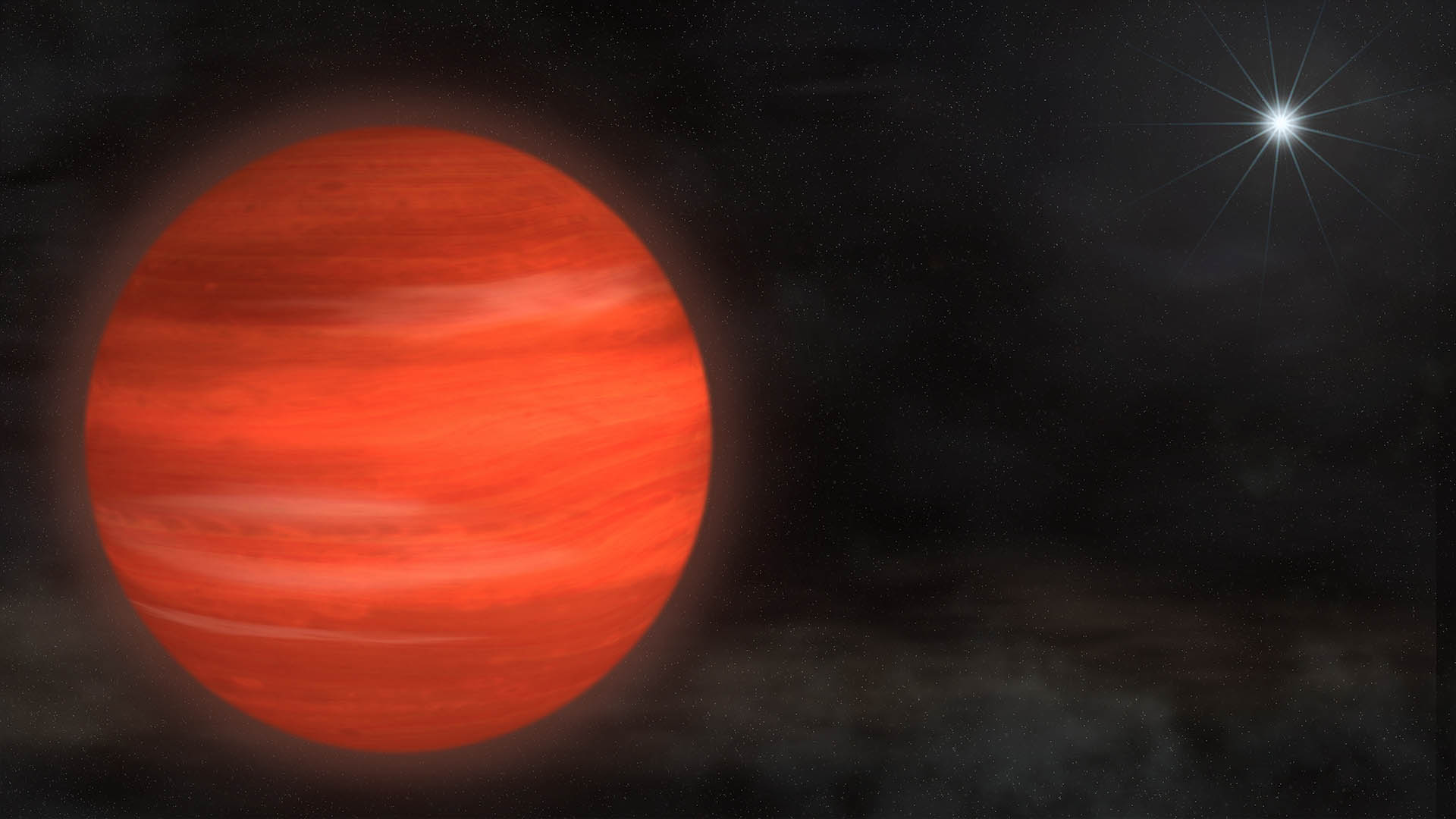
Identifying the largest planet in the universe requires more than just a powerful lens; it requires a tech stack that spans from deep-space sensors to terrestrial supercomputers. This article explores the cutting-edge technology, AI tools, and data processing methods that have enabled humanity to map the true “heavyweights” of the cosmos.
The Hardware Revolution: From Optical Lenses to Infrared Sensors
To find the biggest planet, we first have to see it—or at least detect its influence. Traditional optical telescopes are limited by the overwhelming brightness of stars, which usually drowns out the light of nearby planets. To circumvent this, engineers have developed specialized hardware that treats the universe like a high-resolution digital canvas.
The Power of Transit Photometry and TESS
The Transiting Exoplanet Survey Satellite (TESS) is a prime example of high-level gadgetry designed for discovery. TESS utilizes four wide-field cameras, each equipped with a 16.8-megapixel detector. These cameras don’t just “take pictures”; they monitor the brightness of over 200,000 stars simultaneously. When a giant planet passes in front of its star, the hardware detects a “dip” in light. The depth of this dip—processed via high-speed onboard circuitry—tells us the physical dimensions of the planet, allowing us to categorize the “Super-Jupiters” that dwarf our own solar system.
James Webb Space Telescope (JWST) and Infrared Imaging
While TESS finds candidates, the James Webb Space Telescope (JWST) is the ultimate tech tool for characterization. Operating primarily in the infrared spectrum, JWST uses the Near-Infrared Camera (NIRCam) and the Mid-Infrared Instrument (MIRI) to pierce through cosmic dust. By utilizing “coronagraphs”—internal hardware masks that block a star’s light—JWST can directly image massive planets. This hardware allows tech-driven astronomers to measure the thermal emission of a planet, a critical data point in determining whether a giant is a massive gas planet or a small “brown dwarf” star.
AI and Machine Learning: Sifting Through the Cosmic Big Data
The sheer volume of data generated by modern telescopes is staggering. TESS and the now-retired Kepler mission have produced petabytes of information. Manually searching this data for the universe’s biggest planet would take centuries. This is where AI tools and machine learning (ML) models have become the most critical components of the discovery pipeline.
Deep Learning and Signal Processing
NASA and independent tech labs now employ deep learning models, such as convolutional neural networks (CNNs), to scan “light curves.” These AI tools are trained on thousands of known planetary signals to recognize the specific patterns of a giant planet’s transit. By filtering out “noise”—such as stellar flares or instrumental glitches—AI can identify the signature of a massive planet that a human eye might miss. For instance, Google’s AI team famously collaborated with NASA to discover new planets using neural networks that processed data from the Kepler telescope, proving that software is just as vital as hardware in space exploration.
Automated Characterization Algorithms
Once a potential giant is found, software tools like “Exo-Striker” or custom Python-based modeling suites take over. These programs use Bayesian statistics to calculate the mass and radius of a planet based on the available data. To determine the “biggest” planet, these algorithms must account for gravitational interactions and orbital dynamics. This level of digital security and data integrity ensures that the measurements we claim—often spanning 2.5 to 4 times the radius of Jupiter—are scientifically sound and not the result of data corruption.

Software Integration: Mapping the Unseen with Digital Twins
In the tech world, a “Digital Twin” is a virtual representation of a physical object. In the search for the biggest planet, astrophysicists use similar software principles to create digital models of exoplanets based on limited data points. This allows us to “see” planets that are too far away for direct photography.
Atmospheric Modeling Software
When we identify a candidate for the universe’s biggest planet, we need to know what it’s made of. Software packages like “PandExo” allow researchers to simulate how a planet’s atmosphere would interact with light. By comparing the digital simulation with real-time spectroscopic data from telescopes, tech experts can determine if a planet is a bloated gas giant (which can be physically larger due to heat) or a dense, rocky world. This distinction is vital in the ranking of “biggest” planets, as heat-driven expansion can make a planet significantly more voluminous.
Distributed Computing and Citizen Science Platforms
The hunt for the biggest planet has also embraced the trend of “Edge Computing” and distributed networks. Platforms like “Planet Hunters TESS” (hosted on the Zooniverse web infrastructure) allow thousands of individual users to use their personal gadgets—laptops and tablets—to assist in data analysis. This web-based software distributes the processing load across a global network, utilizing the collective power of human observation and localized computing to verify the findings of automated AI tools.
The Future of Discovery Tech: Autonomous Spacecraft and Quantum Sensors
As we look toward the future, the technology used to find the biggest planet in the universe is shifting toward total autonomy and advanced quantum mechanics. The next generation of “Tech in Space” will be less reliant on human intervention and more focused on real-time, onboard intelligence.
Autonomous Decision-Making in Deep Space
Future probes sent to investigate nearby giant candidates will likely be equipped with autonomous navigation and analysis software. Instead of waiting for instructions from Earth (which can take hours to travel across the vacuum of space), these gadgets will use onboard AI to decide which celestial bodies warrant closer inspection. This “Smart Discovery” model will significantly accelerate our ability to catalog the largest objects in our galaxy and beyond.
Quantum Sensors and High-Precision Measurement
Emerging research into quantum sensors offers the potential for even more precise measurements. These gadgets could theoretically detect minute gravitational changes that current technology misses. By applying quantum computing to the data sets of the 2030s, we may discover that the “biggest planet” we know of today is actually small compared to the giants hiding in the deeper reaches of the universe.
Conclusion: A Universe Defined by Data
In answering “What planet is the biggest in the universe?”, we are really witnessing a masterclass in modern technology. From the infrared sensors of the JWST to the machine learning algorithms developed in Silicon Valley, our understanding of cosmic scale is a direct result of our digital evolution. We have moved past the era of simple observation and into an era of high-fidelity data reconstruction.
The current record-holders for the biggest planets—giants like GQ Lupi b or the gas-heavy worlds of the Scorpius-Centaurus Association—are more than just distant spheres; they are milestones of human engineering. As AI tools become more intuitive and our hardware more sensitive, the title of “biggest planet” will likely shift. However, the tech stack we use to find them will remain the true star of the show, proving that to understand the infinite, we must first master the digital.
aViewFromTheCave is a participant in the Amazon Services LLC Associates Program, an affiliate advertising program designed to provide a means for sites to earn advertising fees by advertising and linking to Amazon.com. Amazon, the Amazon logo, AmazonSupply, and the AmazonSupply logo are trademarks of Amazon.com, Inc. or its affiliates. As an Amazon Associate we earn affiliate commissions from qualifying purchases.