
Bitcoin, since its inception in 2009, has traversed a remarkable journey from an obscure internet curiosity to a globally recognized financial asset. Its meteoric rise and subsequent volatility have captivated investors, economists, and the general public alike, sparking intense debate about its intrinsic worth. Understanding what underpins Bitcoin’s value requires a deep dive into its unique economic principles, technological architecture (from a financial perspective), and the broader market dynamics that govern its price. Far from being a mere digital token, Bitcoin embodies a new paradigm of money, driven by scarcity, decentralization, and an evolving utility that positions it as a significant player in the global financial landscape.
Scarcity and Deflationary Economics: The Foundation of Value
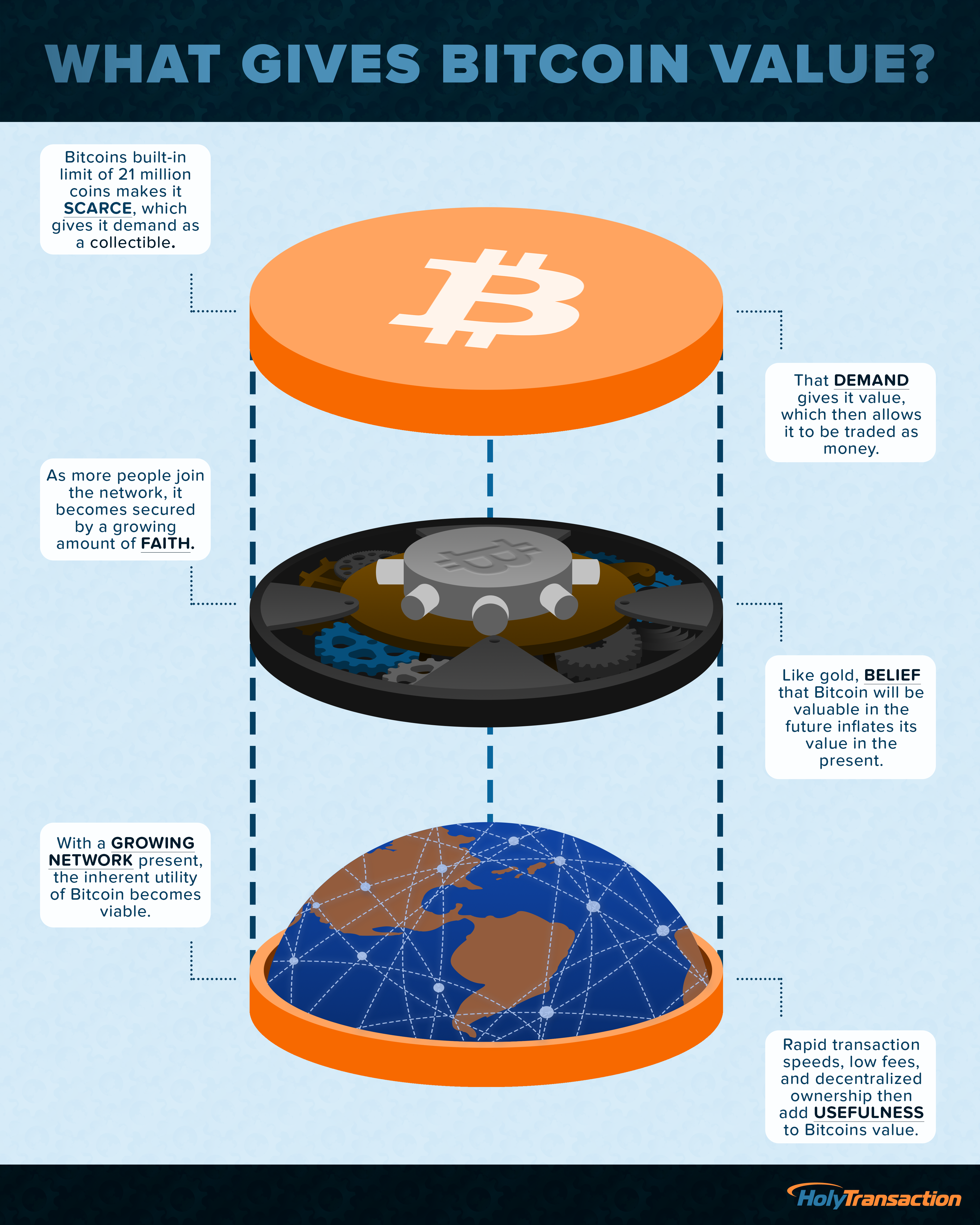
One of the most compelling arguments for Bitcoin’s value stems from its inherent scarcity, a characteristic often compared to precious metals like gold. In a world accustomed to central banks controlling the money supply, Bitcoin introduces a revolutionary, predetermined, and immutable monetary policy.
Capped Supply and Halving Events
At the core of Bitcoin’s value proposition is its strictly limited supply. Only 21 million Bitcoins will ever be created. This hard cap is programmed into its protocol and cannot be altered, making it a truly scarce asset. Unlike fiat currencies, which can be printed in unlimited quantities, or even commodities like gold, whose supply can increase with new discoveries and mining advancements, Bitcoin’s maximum supply is fixed.
Adding another layer to its scarcity model are “halving” events. Approximately every four years, the reward for mining new blocks – and thus the rate at which new Bitcoins are introduced into circulation – is cut in half. This process, known as a halving, systematically reduces the supply of new Bitcoins, creating a predictable deceleration of supply expansion. Historically, these halving events have been significant catalysts for price appreciation, as a reduced supply meets sustained or increasing demand. This predictable, algorithmic scarcity mirrors the supply-demand dynamics that underpin the value of scarce commodities, acting as a natural deflationary mechanism designed to preserve and potentially increase its purchasing power over time.
Predictable Monetary Policy
Bitcoin’s value is profoundly influenced by its completely transparent and immutable monetary policy. The rules governing Bitcoin’s supply are public, verifiable, and cannot be changed by any single entity, government, or central bank. This stands in stark contrast to traditional fiat currencies, where monetary policy decisions are subject to political influence, economic pressures, and human discretion. Central banks can expand the money supply through quantitative easing, lowering interest rates, or direct intervention, which can lead to inflation and erode purchasing power.
Bitcoin, conversely, offers a form of “hard money” with a predictable issuance schedule that is known years in advance. This programmatic certainty eliminates the risk of arbitrary inflation or devaluation through quantitative easing, fostering a high degree of trust in its long-term financial integrity. For investors seeking a hedge against inflation and a stable store of value, Bitcoin’s predictable, disinflationary monetary policy presents a compelling alternative to traditional assets whose values can be eroded by expansionary financial policies. This transparency and immutability provide a robust economic foundation, enabling individuals and institutions to make long-term financial plans without the uncertainty of an ever-changing money supply.
Decentralization and Security as Economic Pillars
Beyond scarcity, the structural integrity and independent nature of Bitcoin’s underlying network contribute significantly to its value, positioning it as a resilient and censorship-resistant financial asset.
Independence from Central Authorities
A defining feature of Bitcoin is its complete decentralization. It operates on a peer-to-peer network without the need for intermediaries like banks, financial institutions, or governments to validate transactions or manage the network. This radical independence has profound economic implications. It means Bitcoin is impervious to governmental seizure, capital controls, or censorship. In regions experiencing political instability, hyperinflation, or restrictive financial regulations, Bitcoin can serve as a vital lifeline, allowing individuals to protect their wealth and conduct transactions outside the control of potentially oppressive regimes.
This freedom from central control grants Bitcoin immense financial autonomy, appealing to those who distrust traditional banking systems or seek an alternative to the surveillance and control often associated with conventional finance. The absence of a single point of failure also enhances its resilience; there’s no central server to be shut down, making it extremely robust against attacks or attempts to devalue it through regulatory pressure. This political and financial independence adds a significant premium to its value, especially as global geopolitical tensions rise and trust in traditional institutions wanes.
The Immutable Ledger (Blockchain)
The security of the Bitcoin network, underpinned by its blockchain technology, is another crucial factor in its value proposition. The blockchain is a distributed public ledger that records all Bitcoin transactions in a transparent, verifiable, and immutable manner. Once a transaction is recorded on the blockchain and confirmed by the network, it cannot be altered or deleted. This immutability prevents fraud, double-spending, and ensures the integrity of the entire financial system.
The cryptographic security and computational power required to maintain the blockchain make it incredibly resistant to tampering. Thousands of independent nodes across the globe collectively validate and record transactions, making it virtually impossible for any single entity to corrupt the ledger. This unparalleled level of security is fundamental to Bitcoin’s value as a reliable medium of exchange and a trustworthy store of value. Investors can be confident that their holdings are secure and that the history of ownership is accurate and unalterable. This trust in the system’s integrity is a non-negotiable prerequisite for any asset to be considered valuable, and Bitcoin’s blockchain provides it in spades.
Network Effect and Adoption
Like any currency or communication medium, Bitcoin’s value is amplified by its network effect. As more individuals, businesses, and institutions adopt Bitcoin, its utility and perceived value grow exponentially. This adoption manifests in several ways: an increase in the number of users holding Bitcoin, a rise in the number of merchants accepting it as payment, and the proliferation of infrastructure around it (exchanges, wallets, payment processors, investment products).
The expanding network effect solidifies Bitcoin’s position as a legitimate financial asset. When more people use it, it becomes more liquid, more accessible, and more broadly accepted as a medium of exchange or a store of wealth. This creates a positive feedback loop: greater adoption leads to greater utility, which in turn attracts more users and further reinforces its value. As major companies like Tesla and MicroStrategy add Bitcoin to their balance sheets, and as countries like El Salvador adopt it as legal tender, its legitimacy and perceived long-term value are significantly enhanced, driving its price higher through increased demand and market confidence.
Utility as a Store of Value and Medium of Exchange

Beyond its fundamental characteristics, Bitcoin’s practical applications and recognized roles in the financial world are key drivers of its value.
Digital Gold Narrative
The “digital gold” narrative is perhaps the most widely recognized and significant utility for Bitcoin. Many investors view Bitcoin as a modern-day equivalent to gold, serving as a hedge against inflation and economic uncertainty. Both assets share attributes of scarcity, durability, divisibility, and portability (though Bitcoin excels in the latter two in the digital realm). In times of global economic instability, currency devaluation, or geopolitical strife, traditional safe-haven assets like gold tend to perform well. Bitcoin has increasingly demonstrated similar behavior, with investors flocking to it during periods of market turmoil as an uncorrelated asset to traditional equities.
Its fixed supply and independence from central banks make it an attractive alternative to fiat currencies, whose value can be diluted by government policies. As global debt levels rise and inflationary pressures persist, the appeal of a decentralized, deflationary asset intensifies. This role as a digital store of value, particularly for long-term wealth preservation, solidifies a significant portion of Bitcoin’s market valuation and investor demand.
Global Remittances and Borderless Transactions
Bitcoin offers a powerful utility as a tool for global remittances and borderless transactions. Traditional international money transfers can be slow, expensive, and subject to various fees and regulations. Bitcoin, by contrast, enables fast, secure, and relatively low-cost transfers of value across international borders, 24/7, without the need for banking intermediaries. This utility is particularly significant for migrant workers sending money home, businesses conducting international trade, or individuals in developing countries with limited access to traditional banking services.
The ability to send substantial amounts of money across the globe in minutes, often for a fraction of the cost of traditional wire transfers, provides a tangible economic benefit. This practical application directly contributes to Bitcoin’s perceived and actual value, as it solves a real-world financial problem for millions of people, increasing its transactional velocity and demand as a medium of exchange.
Programmable Money and Future Potential
While the underlying technology can be complex, the concept of “programmable money” offers significant financial utility and future potential that adds to Bitcoin’s long-term value. As the foundational layer of a new digital economy, Bitcoin can facilitate more than just simple transactions. Innovations such as the Lightning Network, built on top of Bitcoin, enable instant, low-cost microtransactions, expanding its practical utility for everyday payments.
Moreover, the principles behind Bitcoin could inspire and integrate with decentralized finance (DeFi) applications, smart contracts, and other financial innovations, expanding its ecosystem and relevance. While Bitcoin itself is designed to be a simpler, more robust store of value, its existence and success pave the way for a future where digital assets play an increasingly central role in global finance. This potential for future financial innovation, built upon the bedrock of Bitcoin’s security and decentralization, contributes to its perceived long-term value and growth trajectory.
Market Dynamics and Investor Sentiment
Ultimately, an asset’s value in the short to medium term is heavily influenced by market forces, investor perception, and the broader economic climate. Bitcoin is no exception, and its journey has been marked by significant shifts in these dynamics.
Supply and Demand Fundamentals
At the most basic economic level, Bitcoin’s price is determined by the interplay of supply and demand. Given its fixed and algorithmically reducing supply, any significant increase in demand will exert upward pressure on its price. This demand can originate from various sources: retail investors buying into the “digital gold” narrative, institutional investors seeking diversification or a hedge against inflation, corporations adding it to their balance sheets, or users requiring it for transactional utility.
Conversely, a decrease in demand or a surge in selling pressure can lead to price corrections. However, the fundamental imbalance of a perpetually decreasing supply growth rate meeting an increasing global interest base creates a long-term bullish outlook for Bitcoin’s value based purely on supply-demand economics. The scarcity makes it highly sensitive to changes in demand, a characteristic that defines many valuable assets.
Institutional Adoption and Mainstream Acceptance
The growing acceptance of Bitcoin by mainstream financial institutions and corporations has been a critical driver of its value. In its early days, Bitcoin was largely the domain of tech enthusiasts and early adopters. Today, major investment banks, asset managers, and even publicly traded companies are investing in Bitcoin, offering Bitcoin-related products, or integrating it into their financial strategies. The introduction of Bitcoin ETFs in various jurisdictions provides easier access for traditional investors, broadening its appeal and channeling significant capital into the asset class.
This institutional embrace lends significant legitimacy to Bitcoin as a serious asset class, moving it beyond mere speculation into the realm of structured finance. When prominent financial players allocate capital to Bitcoin, it signals to the broader market that the asset is viable, secure, and has a future, thereby increasing investor confidence and demand. This normalization and integration into the global financial system are powerful forces driving its long-term value.
Speculation and Volatility
It is important to acknowledge that Bitcoin’s value is also heavily influenced by speculation and investor sentiment, leading to its characteristic price volatility. As a relatively new and rapidly evolving asset class, Bitcoin’s price can be subject to sharp swings based on news cycles, regulatory announcements, macroeconomic data, and herd mentality among investors. The potential for rapid gains (and losses) attracts speculative capital, which can amplify price movements.
While this volatility can be daunting for some investors, it is a natural feature of a nascent asset undergoing price discovery. Over time, as the market matures and institutional participation grows, some of this volatility may subside, replaced by more stable price action reflecting its fundamental value drivers. However, for now, speculation remains a significant factor in Bitcoin’s short-term valuation, requiring investors to understand both its underlying value proposition and the inherent market risks.
Conclusion
Bitcoin’s value is a complex tapestry woven from its revolutionary economic design, robust technological security, and evolving role within the global financial system. Its hard-capped supply and predictable monetary policy establish a foundation of scarcity unparalleled in the digital age. The decentralized, immutable nature of its blockchain provides an unprecedented level of security and independence, fostering trust and resilience against traditional forms of financial control. Furthermore, its increasing utility as a digital store of value and a medium for borderless transactions, coupled with growing institutional acceptance, solidifies its position as a significant and valuable asset. While market speculation and volatility are undeniable factors, they coexist with profound underlying drivers of value that continue to shape Bitcoin’s trajectory as a groundbreaking financial innovation. As the world increasingly digitizes, Bitcoin’s unique characteristics position it not merely as a speculative asset, but as a foundational element of a future financial paradigm.
aViewFromTheCave is a participant in the Amazon Services LLC Associates Program, an affiliate advertising program designed to provide a means for sites to earn advertising fees by advertising and linking to Amazon.com. Amazon, the Amazon logo, AmazonSupply, and the AmazonSupply logo are trademarks of Amazon.com, Inc. or its affiliates. As an Amazon Associate we earn affiliate commissions from qualifying purchases.