
In the contemporary landscape of digital transformation, the Internet of Things (IoT) has evolved from a futuristic concept into the backbone of industrial and consumer efficiency. At the center of this evolution is Verizon IoT, a sophisticated ecosystem of connectivity, hardware, and software management tools designed to link millions of devices across the globe. For tech professionals and enterprises, Verizon IoT represents more than just a cellular connection; it is a specialized infrastructure built to handle the unique demands of machine-to-machine (M2M) communication. This guide explores the technical architecture, platform capabilities, and the future of connectivity within the Verizon ecosystem.

1. The Foundation of Verizon IoT: Connectivity and Network Standards
The efficacy of any IoT deployment depends entirely on the underlying network. Verizon has partitioned its cellular infrastructure to provide specific protocols tailored to different data requirements, power constraints, and mobility needs. Unlike standard consumer mobile plans, Verizon IoT utilizes dedicated spectrums and signaling methods to ensure reliability.
Narrowband IoT (NB-IoT)
For devices that require minimal data transmission and maximum battery life, Verizon offers Narrowband IoT (NB-IoT). This protocol is designed for stationary sensors, such as smart meters or underground pipeline monitors. Technologically, NB-IoT operates within a very narrow bandwidth, which allows for deep indoor penetration and a massive density of devices per cell site. By focusing on low-power consumption, NB-IoT enables devices to remain in the field for up to ten years without a battery replacement, making it a cornerstone for “set-and-forget” technology.
LTE-M (Long Term Evolution for Machines)
While NB-IoT is ideal for static sensors, LTE-M (also known as Cat-M1) provides the mobility and bandwidth necessary for more complex applications. LTE-M supports higher data rates and allows for seamless handovers between cell towers, which is critical for asset tracking and fleet management. One of the primary technical advantages of Verizon’s LTE-M network is its ability to support Voice over LTE (VoLTE), allowing for emergency communication features in wearable tech or remote security kiosks.
The 5G Revolution in IoT
The introduction of 5G Ultra Wideband has fundamentally changed the potential of Verizon IoT. With latency reduced to single-digit milliseconds and throughput reaching gigabit speeds, 5G enables “Massive IoT.” This is not merely about speed; it is about capacity. Verizon’s 5G infrastructure allows for up to a million devices per square kilometer, facilitating the complex communication required for autonomous vehicles and real-time industrial robotics where a delay of a fraction of a second could lead to catastrophic failure.
2. The Verizon IoT Platform: ThingSpace and Management Tools
A network is only as useful as the tools available to manage the devices connected to it. Verizon’s “ThingSpace” is the centralized platform that serves as the command center for IoT developers and enterprise administrators. It bridges the gap between raw hardware and actionable data.
Device Management and Orchestration
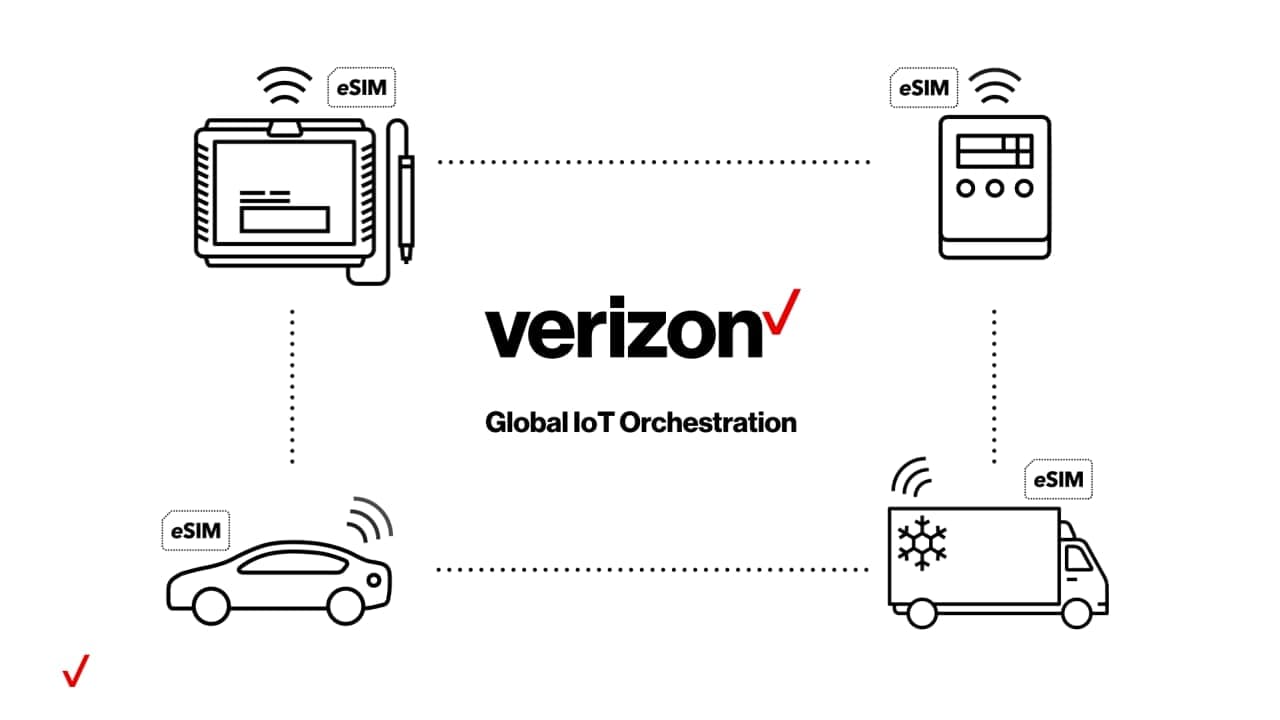
Managing a fleet of 50,000 sensors is vastly different from managing 50,000 smartphones. ThingSpace provides the technical framework for “Zero Touch Provisioning,” allowing devices to be activated and configured automatically as soon as they power up. Through the platform, engineers can perform Over-the-Air (OTA) firmware updates, monitor signal strength across the entire fleet, and troubleshoot individual nodes without physical intervention. This orchestration is vital for maintaining the technical integrity of large-scale deployments.
API Integration for Developers
Verizon IoT is built with an “API-first” philosophy. This means that developers can integrate Verizon’s network data directly into their own proprietary software or third-party cloud environments like AWS or Microsoft Azure. These APIs allow for the automation of connectivity lifecycle management—such as pausing data plans when a device is inactive or triggering alerts when a sensor exceeds a specific data threshold. This level of programmability is what allows tech companies to build custom, scalable solutions on top of Verizon’s hardware.
Security Protocols at the Edge
Security is the most significant hurdle in IoT technology. Verizon addresses this through a multi-layered approach that starts at the SIM level. Using Software Defined Perimeter (SDP) technology, Verizon IoT can isolate device traffic from the public internet, creating a private “tunnel” from the device to the data center. Furthermore, Verizon utilizes “ThingSpace Intelligence” to detect anomalies in device behavior. If a sensor that typically sends 10KB of data suddenly attempts to transmit 1GB, the system automatically flags the device as compromised and severs the connection, preventing a localized breach from becoming a network-wide vulnerability.
3. Key Industry Applications and Technological Solutions
Verizon IoT is not a monolithic product but a versatile toolkit applied across various sectors. By leveraging different combinations of the hardware and networks mentioned above, Verizon facilitates technological breakthroughs in several key industries.
Smart Cities and Grid Infrastructure
In the realm of urban technology, Verizon IoT provides the connectivity for smart lighting, intelligent traffic management, and waste management systems. Technically, this involves using NB-IoT sensors to monitor trash bin levels or air quality, while higher-bandwidth 5G nodes manage high-definition cameras for traffic flow optimization. By centralizing this data, municipalities can reduce energy consumption and improve emergency response times through real-time situational awareness.
Industrial IoT (IIoT) and Predictive Maintenance
In manufacturing, the focus is on “Predictive Maintenance.” By embedding vibration and temperature sensors into factory machinery, Verizon IoT enables the transition from reactive repairs to proactive upkeep. These sensors stream data to an analytics engine that identifies the microscopic signs of mechanical wear long before a failure occurs. This application relies heavily on the low latency of the Verizon network to ensure that if a critical threshold is met, the machinery can be automatically throttled or shut down to prevent damage.
Asset Tracking and Supply Chain Transparency
The global supply chain has become increasingly dependent on “Cold Chain” monitoring. Verizon IoT provides the technology to track high-value or temperature-sensitive assets (like pharmaceuticals) in real-time. These devices utilize a combination of GPS, cellular positioning, and sensor data to report not just where a pallet is, but also its internal temperature, humidity levels, and whether it has experienced any significant impacts. This ensures technical compliance with safety regulations and reduces loss due to spoilage.
4. The Future of Verizon IoT: AI Integration and Edge Computing
As we look toward the next decade of technology, Verizon IoT is pivoting toward the integration of Artificial Intelligence (AI) and Edge Computing. The goal is to move the “brain” of the operation closer to the data source.
Mobile Edge Compute (MEC)
Traditionally, data from an IoT device travels to a distant data center for processing before a command is sent back. Verizon’s Mobile Edge Compute (MEC) changes this by placing high-performance computing resources at the “edge” of the network—inside the cell towers themselves. This reduces the physical distance data must travel. For technologies like augmented reality (AR) in surgery or precision drone flight, MEC provides the near-instantaneous processing power required to make real-time decisions.
AI-Driven Analytics
The sheer volume of data generated by billions of IoT devices is too vast for human analysis. Verizon is increasingly incorporating AI and machine learning (ML) models into the ThingSpace ecosystem. These models can identify patterns in data that indicate long-term trends, such as shifting consumer habits or gradual environmental changes. By processing this data at the network level, Verizon provides “Intelligent Connectivity,” where the network itself can optimize data routing based on the urgency and nature of the information being sent.
The Expansion of Private 5G Networks
A significant trend in the tech sector is the deployment of Private 5G networks. Verizon allows large enterprises, such as shipyards or large-scale warehouses, to build their own dedicated 5G network on-site. This provides the security and reliability of a wired connection with the flexibility of wireless. A Private 5G network ensures that an enterprise’s IoT devices are not competing for bandwidth with the public, providing a “walled garden” for sensitive industrial data and high-speed robotic coordination.

Conclusion
Verizon IoT is a sophisticated convergence of hardware, diverse network protocols, and robust management software. By providing specialized connectivity like NB-IoT and 5G, alongside a developer-friendly platform in ThingSpace, Verizon has positioned itself as a critical enabler of the modern technological landscape. As AI and Edge Computing continue to mature, the role of Verizon IoT will only expand, transforming how we interact with the physical world through digital precision. For organizations looking to scale, the technical depth of the Verizon ecosystem offers a reliable, secure, and future-proof foundation for the next generation of connected devices.
aViewFromTheCave is a participant in the Amazon Services LLC Associates Program, an affiliate advertising program designed to provide a means for sites to earn advertising fees by advertising and linking to Amazon.com. Amazon, the Amazon logo, AmazonSupply, and the AmazonSupply logo are trademarks of Amazon.com, Inc. or its affiliates. As an Amazon Associate we earn affiliate commissions from qualifying purchases.