
In the vast and intricate world of materials science, few categories hold as much critical importance and versatile application as plastics. Among these, thermosetting plastics, or thermosets, stand out as a unique class, defined by their irreversible chemical transformation upon heating. Unlike their thermoplastic counterparts, which can be melted and reshaped multiple times, thermosets undergo a permanent change when cured, solidifying into a rigid, infusible, and insoluble network polymer. This fundamental characteristic underpins their ubiquitous presence in high-performance applications across almost every technological sector, from the micro-components of our most advanced electronics to the robust structural elements of aerospace vehicles.

Understanding thermosetting plastics is not merely an academic exercise; it is crucial for engineers, designers, and innovators seeking to leverage materials with exceptional heat resistance, chemical inertness, and structural integrity. This article will delve into the science behind thermosets, differentiate them from other plastic types, explore their diverse technological applications, and discuss their current challenges and future potential in a rapidly evolving tech landscape.
The Science Behind Thermosetting Plastics
At the heart of thermosetting plastics lies a fascinating chemical process that dictates their superior performance characteristics. This process, known as curing, involves the formation of a dense, three-dimensional network of covalent bonds, fundamentally altering the material’s molecular structure and, consequently, its physical properties.
Molecular Structure and the Curing Process
The initial state of a thermosetting plastic typically involves a resin (often a liquid or viscous material) composed of oligomers or polymers with reactive sites. When subjected to heat, pressure, or mixed with a hardener (catalyst), these reactive sites undergo a chemical reaction called cross-linking.
- Polymerization: Initially, the resin molecules are relatively small and linear or branched. The curing process initiates further polymerization, increasing molecular weight.
- Cross-linking: This is the defining step. As polymerization progresses, individual polymer chains begin to form strong, covalent bonds with neighboring chains. Instead of being separate entities, they become interlinked into a rigid, interconnected network. Imagine a tangle of loose strings suddenly being knotted together at countless points – the resulting structure is rigid and unyielding.
- Irreversible Hardening: Once this extensive cross-linking occurs, the material becomes set. Further heating will not soften it back into a liquid state; instead, excessive heat will cause degradation and decomposition, burning the material rather than melting it. This irreversible transformation is what gives thermosets their name and their distinctive properties.
Common examples of thermoset resins include epoxies, phenolics, polyesters (unsaturated), polyurethanes, and silicones, each with specific chemical structures and curing mechanisms tailored for different applications.
Key Properties Conferred by Cross-linking
The dense, network structure achieved through cross-linking imparts a unique combination of highly desirable properties to thermosetting plastics, making them indispensable in demanding technological environments:
- Heat Resistance: The extensive network of covalent bonds requires significantly more energy to break than the weaker intermolecular forces present in thermoplastics. This translates to high heat deflection temperatures, allowing thermosets to maintain their structural integrity and mechanical properties even at elevated temperatures where thermoplastics would soften or melt.
- Chemical Resistance: The tightly bound, cross-linked structure creates a formidable barrier against chemical attack. Solvents and aggressive chemicals often have difficulty penetrating and dissolving thermoset matrices, making them ideal for protective coatings and containers for harsh substances.
- Rigidity and Hardness: The interconnected molecular network results in materials that are inherently stiffer, harder, and have a higher modulus of elasticity compared to most thermoplastics. This rigidity is crucial for applications requiring dimensional stability under load.
- Mechanical Strength: Thermosets generally exhibit superior tensile strength, compressive strength, and creep resistance. They can withstand significant stress without deforming over time, which is critical for structural components.
- Dimensional Stability: Due to their rigid, cross-linked structure, thermosets exhibit minimal creep and excellent dimensional stability over a wide range of temperatures and loads, making them suitable for precision components.
- Electrical Insulation: Many thermosets are excellent electrical insulators, capable of withstanding high voltages and preventing current leakage, making them vital for electrical and electronic applications.
Distinguishing Thermosets from Thermoplastics
While both thermosets and thermoplastics fall under the broad umbrella of “plastics,” their fundamental molecular behavior and resulting properties set them apart as distinct material classes with different areas of optimal application. Understanding these differences is crucial for material selection in technological design.
Irreversible vs. Reversible Changes
The most critical distinction lies in their response to heat and their processing capabilities:
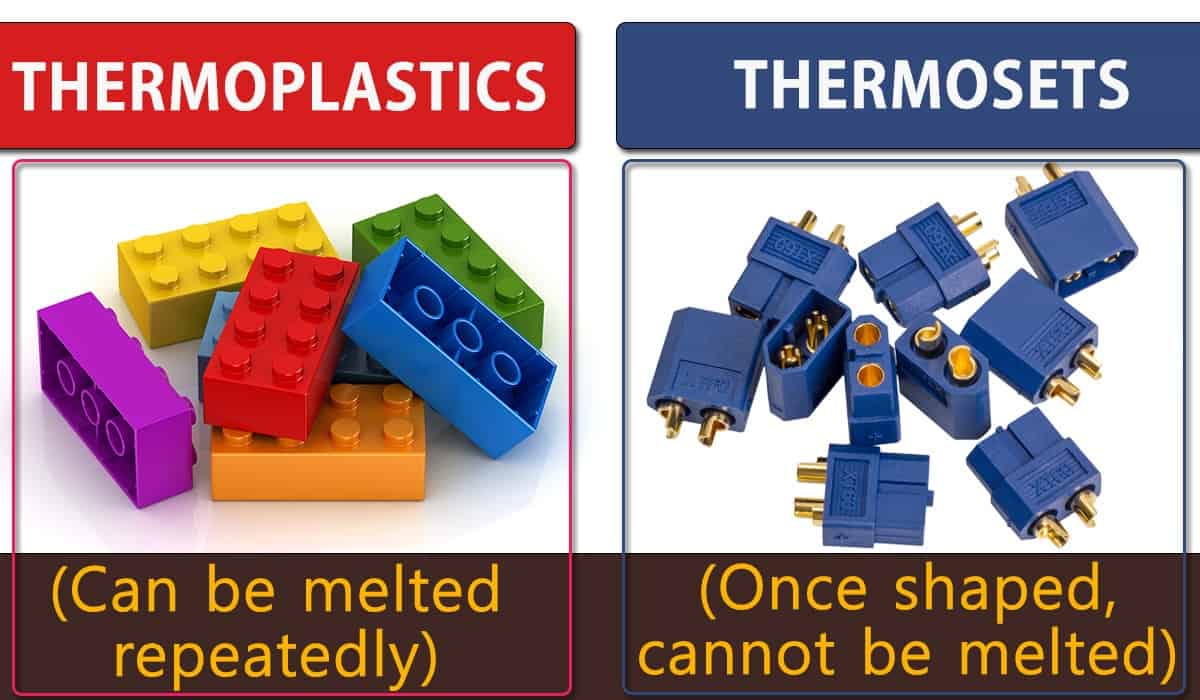
- Thermosetting Plastics (Irreversible): Once cured and hardened, thermosets cannot be re-melted or reshaped. The cross-linked molecular network is permanent. Attempting to re-heat them to their softening point will lead to thermal degradation, charring, and decomposition rather than melting. This characteristic implies that scrap thermoset material from manufacturing or end-of-life products is challenging to recycle through conventional melting and reprocessing methods.
- Thermoplastics (Reversible): In contrast, thermoplastics consist of long, linear or branched polymer chains that are held together by weaker intermolecular forces (e.g., van der Waals forces, hydrogen bonds). When heated, these forces weaken, allowing the chains to slide past each other, causing the material to soften and melt. Upon cooling, the material re-solidifies, retaining its shape. This process can be repeated multiple times, making thermoplastics highly recyclable through melting and re-molding. Common thermoplastics include polyethylene (PE), polypropylene (PP), polyvinyl chloride (PVC), and nylon.
Performance and Application Implications
These fundamental differences in molecular behavior directly translate into distinct performance profiles and dictate their suitability for various technological applications:
- High-Temperature Applications: Thermosets excel where high operating temperatures are a factor. Their inherent heat resistance makes them indispensable for engine parts, electronic components that generate heat, and high-temperature insulation. Thermoplastics, generally, would soften and lose their mechanical integrity in such environments.
- Structural Integrity and Strength: For applications requiring high strength-to-weight ratios and stiffness, especially when combined with reinforcing fibers (e.g., glass or carbon fiber), thermosets often outperform thermoplastics. They are less prone to creep and maintain their dimensions under continuous load.
- Chemical and Environmental Resistance: Thermosets often provide superior resistance to a wider range of aggressive chemicals and environmental degradation (e.g., UV radiation, moisture absorption) due to their tightly bound molecular network.
- Processing and Manufacturing: Thermoplastics offer easier and faster processing cycles (e.g., injection molding, extrusion) and are generally more amenable to recycling. Thermosets, while offering excellent final properties, often require longer cure times, more specialized molds, and are generally more challenging to process due to the irreversible nature of their curing. This can lead to higher manufacturing costs for thermoset components.
Diverse Applications Across Tech Industries
The unique blend of properties offered by thermosetting plastics makes them indispensable across a multitude of high-tech industries, enabling performance and reliability that other materials often cannot match.
Electronics and Electrical Components
The electrical insulation and heat resistance of thermosets are critical to the functionality and safety of modern electronics.
- Printed Circuit Boards (PCBs): Epoxy resins, often reinforced with fiberglass (e.g., FR-4 grade), form the substrate of nearly all PCBs. They provide excellent electrical insulation, mechanical stability, and resistance to soldering temperatures.
- Encapsulants and Potting Compounds: Thermosets like epoxies, silicones, and polyurethanes are used to encapsulate sensitive electronic components (e.g., integrated circuits, sensors, power modules). This protects them from moisture, dust, vibration, and thermal shock while providing electrical insulation.
- Electrical Connectors and Switches: Phenolic resins and urea-formaldehyde are commonly used for electrical switches, circuit breakers, and connector housings due to their excellent arc resistance, heat resistance, and dimensional stability.
Automotive and Aerospace Engineering
In sectors where lightweighting, high strength, and performance under extreme conditions are paramount, thermoset composites play a vital role.
- Lightweight Composites (FRPs): When combined with high-strength fibers like carbon fiber or glass fiber, thermoset resins (epoxies, polyesters, vinylesters) form Fiber-Reinforced Plastics (FRPs). These composites offer unparalleled strength-to-weight ratios, making them crucial for aircraft fuselages, wings, helicopter blades, racing car chassis, and high-performance automotive body panels.
- Engine and Braking Systems: Thermosets are used for various engine components, such as valve covers and intake manifolds, where high temperatures and chemical resistance are required. In braking systems, phenolic resins are a key component of brake pads, providing excellent friction stability and heat dissipation.
- Structural and Interior Components: From interior panels and seating structures in aircraft to high-stress components in automotive powertrains, thermosets provide durable and reliable solutions.
Industrial and Consumer Goods
Beyond specialized high-tech applications, thermosets enhance the durability and functionality of everyday industrial and consumer products.
- Appliance Handles and Cookware: Phenolic resins are favored for handles on pots, pans, and various kitchen appliances due to their ability to remain cool to the touch despite the high temperatures of the cooking surface, thanks to their excellent heat insulation.
- Tooling and Molds: In manufacturing, thermosets are used to create durable molds, jigs, and fixtures, particularly for composite fabrication or for applications requiring wear resistance and dimensional stability.
- Protective Coatings and Adhesives: Epoxy resins are widely used in robust protective coatings for floors, pipelines, and marine vessels, offering exceptional adhesion, hardness, and chemical resistance. Similarly, thermoset-based adhesives provide structural bonding for demanding applications.
Advantages and Limitations in Modern Manufacturing
While thermosetting plastics offer unparalleled performance in many areas, their application in modern manufacturing involves a careful consideration of their benefits and inherent drawbacks.
Strategic Advantages
The reasons for choosing thermosets in high-tech and demanding applications are compelling:
- Superior Thermal Stability: Maintains mechanical properties and structural integrity at significantly higher temperatures than most thermoplastics, crucial for engine parts, electronics, and aerospace components.
- High Mechanical Strength and Rigidity: Provides excellent load-bearing capabilities, creep resistance, and dimensional stability, essential for structural applications and precision components.
- Exceptional Chemical Inertness: Resists degradation from a wide range of chemicals, solvents, and corrosive environments, making them suitable for protective coatings and chemical processing equipment.
- Excellent Electrical Insulation: Many thermosets are outstanding insulators, preventing electrical current flow and protecting sensitive electronics from shorts and damage.
- Creep Resistance: Unlike thermoplastics, thermosets are highly resistant to deformation under prolonged stress at elevated temperatures, ensuring long-term reliability.
- Low Thermal Expansion: Exhibit lower coefficients of thermal expansion, meaning they are less prone to change size with temperature fluctuations, which is important for precision assemblies.
Manufacturing Challenges and Limitations
Despite their advantages, thermosets present certain challenges:
- Difficulty in Recycling: The irreversible cross-linked structure makes conventional recycling via melting and reprocessing impossible. This contributes to landfill waste and poses an environmental concern, although advancements in chemical recycling are emerging.
- Complex Processing: Curing is a chemical reaction that often requires precise temperature control, pressure, and specific catalysts or hardeners. This can lead to longer cycle times compared to thermoplastic molding, increasing manufacturing costs.
- Brittleness: While strong and rigid, many thermosets can be inherently brittle without reinforcement, prone to cracking under impact or sudden stress.
- Higher Cost: Some advanced thermoset resins and composites can be more expensive than commodity thermoplastics, limiting their use to applications where their specific properties are absolutely essential.
- Limited Repairability: Once cured, thermoset parts are difficult to repair if damaged, often requiring replacement rather than localized repair.
Future Trends and Innovations in Thermoset Technology
The challenges associated with thermosets, particularly their non-recyclability, are driving significant research and development. The future of thermosetting plastics is focused on overcoming these limitations while further enhancing their performance and expanding their utility.
Sustainable Thermosets
A major thrust in thermoset innovation is the development of more environmentally friendly materials and processes.
- Bio-based Resins: Researchers are developing thermosets derived from renewable biomass sources (e.g., plant oils, lignin, cellulose) to reduce reliance on petroleum-based feedstocks.
- Recyclable Thermosets (Vitrimers): A groundbreaking development is the class of materials known as vitrimers. These polymers possess dynamic covalent bonds that can break and re-form under specific conditions (e.g., heat or a catalyst), allowing the material to be reshaped, repaired, or even recycled while retaining the high-performance properties of traditional thermosets.
- Repairable and Self-Healing Thermosets: Integrating microcapsules containing healing agents or using reversible chemistries allows thermosets to “heal” cracks and damage, extending their lifespan and reducing waste.
Advanced Composites and Smart Materials
The integration of thermosets with novel materials and functionalities is opening new frontiers.
- Nanomaterial Integration: Incorporating nanoparticles (e.g., carbon nanotubes, graphene, nanoclay) into thermoset matrices can significantly enhance mechanical strength, thermal conductivity, electrical conductivity, and flame retardancy without adding significant weight.
- Multi-functional Thermosets: Developing thermosets with integrated sensing capabilities, electromagnetic shielding, or energy harvesting functions for advanced smart structures and next-generation electronics.
- High-Temperature Thermosets: Continuous research into new resin chemistries (e.g., polyimides, cyanate esters) to push the boundaries of thermal stability for extreme environment applications like hypersonic vehicles.
Additive Manufacturing (3D Printing)
The ability to 3D print thermosets is transforming prototyping and manufacturing of complex geometries.
- Specialized Resins: Development of thermoset photopolymers and liquid resins compatible with various additive manufacturing techniques (e.g., SLA, DLP, jetting) enables the creation of highly detailed, functional parts with thermoset properties.
- Tooling and Fixtures: 3D printed thermoset tools and molds can significantly reduce lead times and costs for low-volume production or custom tooling.
- High-Performance Prototypes: Rapid prototyping of components with realistic material properties for functional testing in demanding environments.
Conclusion
Thermosetting plastics represent a cornerstone of modern technological advancement, providing the foundational materials for high-performance applications across electronics, aerospace, automotive, and countless other industries. Their unique ability to form an irreversible, cross-linked molecular network upon curing endows them with exceptional heat resistance, mechanical strength, chemical inertness, and electrical insulation properties.
While challenges such as recyclability and processing complexity exist, ongoing innovations in sustainable chemistry, smart materials, and additive manufacturing are rapidly addressing these limitations. The future of thermoset technology promises even more versatile, environmentally responsible, and high-performing materials that will continue to push the boundaries of engineering and design, enabling the next generation of technological breakthroughs. Understanding “what is thermosetting plastic” is to grasp a fundamental building block of our high-tech world, poised for continuous evolution and expanding impact.
aViewFromTheCave is a participant in the Amazon Services LLC Associates Program, an affiliate advertising program designed to provide a means for sites to earn advertising fees by advertising and linking to Amazon.com. Amazon, the Amazon logo, AmazonSupply, and the AmazonSupply logo are trademarks of Amazon.com, Inc. or its affiliates. As an Amazon Associate we earn affiliate commissions from qualifying purchases.