
Thermogravimetric Analysis (TGA) stands as a foundational and indispensable technique within the realm of analytical chemistry and materials science. Far from being a mere laboratory curiosity, TGA is a powerful technological tool that measures the change in mass of a sample as a function of temperature or time, within a controlled atmosphere. In an era dominated by rapid technological advancement, understanding the composition, thermal stability, and decomposition kinetics of materials is paramount across myriad industries, from aerospace to pharmaceuticals, and from environmental science to consumer electronics. TGA provides a critical lens through which scientists and engineers can gain profound insights into material properties, directly impacting product development, quality control, and scientific research.
The significance of TGA extends beyond simple measurement; it’s a sophisticated technological process that yields quantitative and qualitative data on a material’s thermal behavior. This data is crucial for understanding how materials will perform under varying thermal conditions, identifying volatile components, assessing purity, determining moisture content, and even characterizing the degradation mechanisms of complex substances. As industries push the boundaries of material performance, the precision and versatility offered by TGA technology become increasingly vital, making it an essential component in any modern materials characterization toolkit.
The Technological Core: How TGA Works
At its heart, Thermogravimetric Analysis is an elegantly designed technological system that continuously monitors the mass of a sample while it undergoes a precisely controlled temperature program. The magic lies in its ability to isolate and quantify mass changes linked to specific thermal events, such as dehydration, decomposition, oxidation, or evaporation.
Fundamental Principles and Instrumentation
The core principle behind TGA is straightforward: when a material is heated, various physical and chemical processes can occur, leading to a change in its mass. For instance, water might evaporate, a polymer might decompose into gaseous products, or a mineral might lose carbon dioxide. A TGA instrument meticulously records these mass changes against temperature or time.
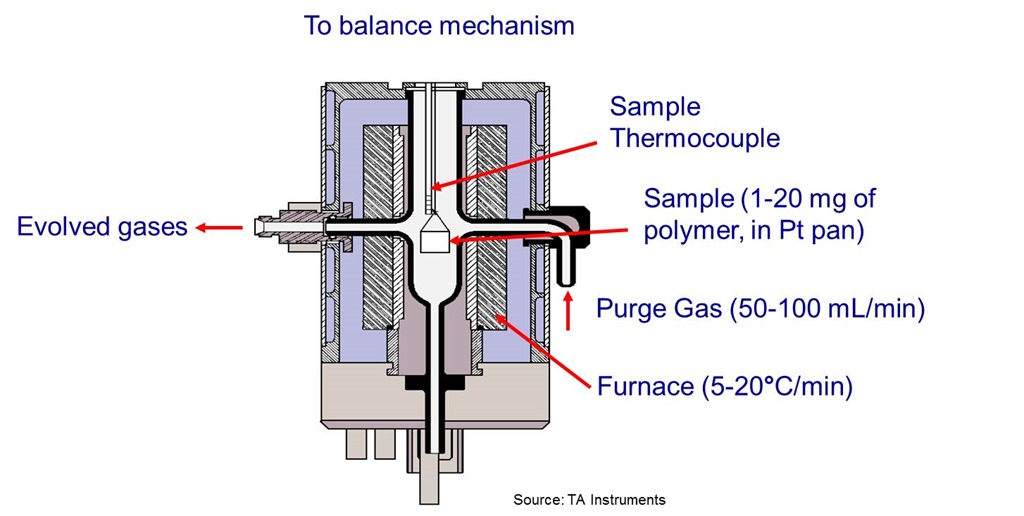
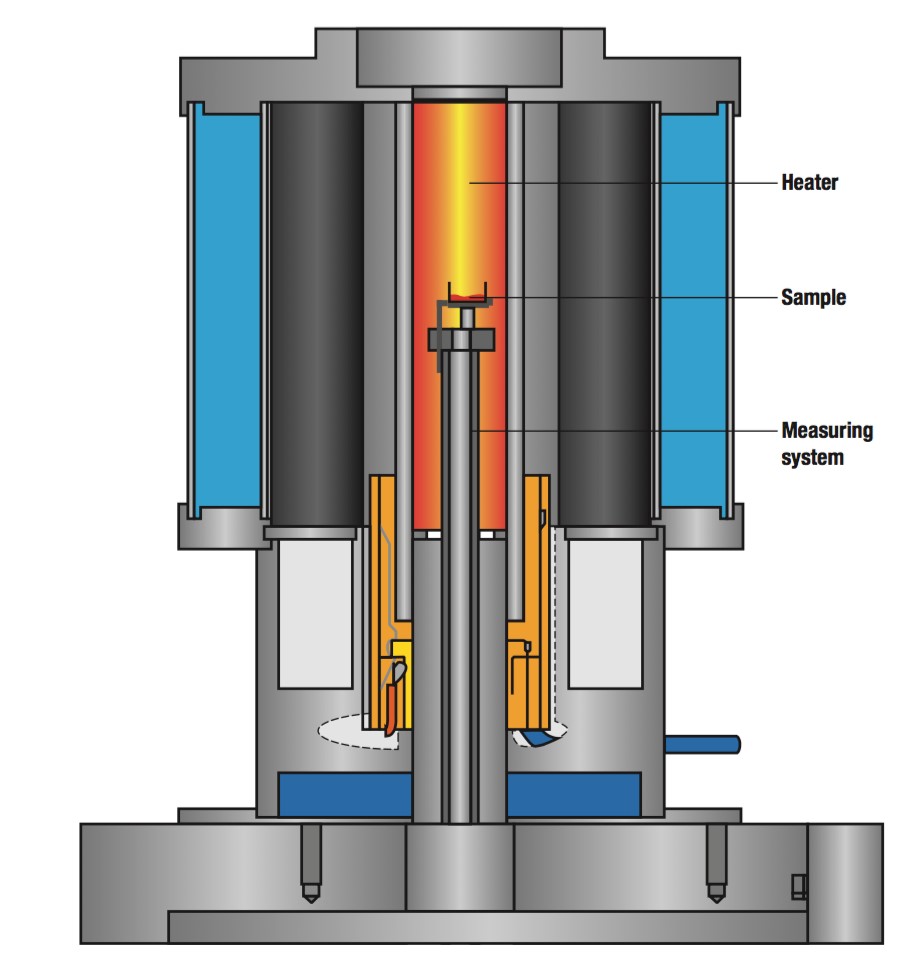
The instrument itself is a marvel of precision engineering. It consists of a high-precision microbalance, a furnace, a sample pan (typically made of platinum or alumina for thermal stability), a temperature programmer, and an atmosphere control system. The sample, usually weighing a few milligrams, is placed on the pan, which is then suspended from the microbalance inside the furnace. As the furnace heats the sample at a predetermined rate (e.g., 10°C/minute) or holds it isothermally, the microbalance continuously measures any mass loss or gain.
Key Components of a TGA System
Each component of a TGA system plays a crucial role in its technological sophistication:
- Microbalance: This is the heart of the instrument, capable of detecting mass changes down to sub-microgram levels. Modern balances use electromagnetic force compensation to provide highly accurate and stable readings, even in harsh thermal environments.
- Furnace: The furnace provides the controlled thermal environment. It must be capable of heating rapidly and uniformly across a wide temperature range (often up to 1000°C or even 1500°C), while maintaining excellent temperature stability. Precise temperature control is essential for reproducible results.
- Sample Pan: Inert materials like platinum are preferred due to their high melting points, resistance to oxidation, and lack of reactivity with most samples. The pan design is critical to ensure uniform heat transfer to the sample.
- Temperature Programmer: This electronic control unit allows for the precise programming of heating rates, isothermal holds, and cooling segments, defining the thermal profile applied to the sample. Advanced programmers enable complex, multi-segment thermal protocols.
- Atmosphere Control System: This system allows for the introduction of various gases (e.g., nitrogen for inert atmospheres, air or oxygen for oxidative studies, or reactive gases) into the furnace. Controlling the atmosphere is critical because it can significantly influence the thermal decomposition pathways and kinetics of a material. For example, a polymer will decompose differently in an inert nitrogen atmosphere compared to an oxidative air atmosphere.
- Data Acquisition and Processing Software: Modern TGA instruments are integrated with sophisticated software that not only controls the instrument’s operation but also collects, processes, and presents the data. This software enables real-time plotting of mass vs. temperature/time curves (TG curves), calculation of derivative thermogravimetric (DTG) curves (which show the rate of mass change), and advanced analysis functionalities.
Data Acquisition and Interpretation
The primary output of a TGA experiment is a thermogravimetric (TG) curve, which plots the percentage of remaining mass as a function of temperature or time. Steps or plateaus on this curve indicate events where mass is lost or gained. For example, a sharp drop in mass might signify the decomposition of a component, while a plateau indicates a stable phase.
Derivative Thermogravimetry (DTG) curves, obtained by differentiating the TG curve, are also highly valuable. DTG curves plot the rate of mass change with respect to temperature or time, often showing distinct peaks that correspond to the maximum rate of decomposition for different components. This peak resolution makes it easier to identify and quantify overlapping decomposition steps in multi-component materials. Interpretation involves analyzing these curves to determine:
- Decomposition Temperatures: The temperature at which a material starts to degrade.
- Mass Loss Percentages: The amount of material lost during each decomposition stage, allowing for quantitative analysis of components.
- Thermal Stability: The temperature range over which a material remains stable.
- Residual Mass: The inorganic residue or char left after heating to the maximum temperature.
Diverse Applications Across Industries
The technological versatility of TGA makes it an indispensable tool across a vast spectrum of industries. Its ability to provide precise quantitative data on thermal behavior enables critical decision-making in research, development, and quality assurance.
Polymer and Materials Science
In the world of polymers, TGA is a cornerstone technique. It is used to:
- Determine Polymer Composition: By identifying and quantifying components like plasticizers, fillers (e.g., carbon black, glass fibers), and flame retardants. Each component typically decomposes at a unique temperature range.
- Assess Thermal Stability: Essential for designing polymers that can withstand specific processing temperatures or end-use conditions.
- Study Degradation Mechanisms: Understanding how a polymer degrades helps in improving its longevity and performance.
- Analyze Blends and Copolymers: TGA can differentiate between individual polymers in a blend based on their distinct decomposition profiles.
- Measure Moisture Content and Volatiles: Crucial for quality control and preventing processing issues.
For other materials, TGA helps in characterizing ceramics, composites, and metals, particularly for oxidation studies or phase transitions involving mass changes.
Pharmaceutical Development and Quality Control
The pharmaceutical industry relies heavily on TGA for various applications:
- Purity Assessment: Identifying and quantifying impurities or residual solvents in active pharmaceutical ingredients (APIs).
- Moisture Content Determination: Crucial for drug stability, shelf-life, and processing, as moisture can affect drug efficacy and degradation.
- Characterizing Polymorphs and Salts: Different solid forms of a drug can exhibit varying thermal stabilities, which TGA can detect.
- Stability Studies: Predicting the long-term stability of drug formulations under various storage conditions.
- Excipient Compatibility: Studying how drug substances interact with excipients (inactive ingredients) during heating.
Environmental Analysis and Energy Research
TGA also plays a vital role in addressing global environmental and energy challenges:
- Waste Characterization: Analyzing municipal solid waste, plastics, or biomass to determine their calorific value and suitability for waste-to-energy processes.
- Catalyst Studies: Investigating the thermal stability and regeneration of catalysts, crucial for optimizing chemical reactions and reducing environmental impact.
- Biofuel Development: Characterizing the thermal decomposition of biomass feedstocks for pyrolysis and gasification processes to produce biofuels.
- Air Pollution Control: Analyzing filter samples for particulate matter and volatile organic compounds (VOCs).
Food Science and Others
In the food industry, TGA is used for moisture content determination, fat content analysis, and the characterization of food additives. Other applications include analyzing geological samples, forensic analysis, and evaluating the thermal performance of lubricants and oils.
Advantages and Limitations of TGA Technology
Like any analytical technology, TGA offers distinct advantages while also possessing certain limitations that necessitate its judicious application, often in conjunction with other techniques.
Precision and Versatility in Material Characterization
The primary advantage of TGA lies in its quantitative precision and versatility. It provides accurate and direct measurements of mass change, enabling precise quantification of material components. Its wide temperature range and ability to control the atmosphere make it adaptable to a vast array of samples and thermal conditions. The simplicity of sample preparation and the relatively quick analysis times further enhance its utility. TGA is particularly powerful for:
- Component Quantification: Accurately determining the percentages of various components in a mixture.
- Thermal Stability Ranking: Comparing the thermal degradation behavior of different materials.
- Kinetic Studies: Deriving kinetic parameters (activation energy, pre-exponential factor) for decomposition reactions, which are vital for predicting material lifetimes.
Challenges and Complementary Techniques
Despite its strengths, TGA has limitations. It provides information solely on mass changes, offering limited insight into the nature of the evolved gases or the structural changes occurring in the sample. For instance, two different compounds might decompose at similar temperatures, leading to mass loss, but without further analysis, their identity remains unknown.
To overcome these limitations and achieve a more comprehensive understanding of materials, TGA is frequently employed in hyphenated techniques. These involve coupling the TGA instrument with other analytical technologies:
- TGA-FTIR (Fourier Transform Infrared Spectroscopy): The evolved gases from the TGA furnace are channeled directly into an FTIR spectrometer. FTIR can identify the functional groups and molecular structures of the gaseous products, providing invaluable chemical identification for each mass loss step. This is incredibly powerful for elucidating decomposition mechanisms.
- TGA-MS (Mass Spectrometry): Similar to FTIR, MS analyzes the evolved gases, providing mass-to-charge ratios of the fragments. This allows for precise identification of individual gaseous components and their relative concentrations, offering highly detailed chemical information.
- TGA-GC/MS (Gas Chromatography/Mass Spectrometry): For complex mixtures of evolved gases, GC/MS first separates the components chromatographically before they enter the mass spectrometer, providing even greater specificity in identification.
- TGA-DSC/DTA (Differential Scanning Calorimetry/Differential Thermal Analysis): Combining TGA with DSC or DTA allows for simultaneous measurement of mass changes and heat flow (enthalpy changes). This reveals whether a mass loss event is exothermic or endothermic, providing a more complete picture of the thermal processes.
These hyphenated technologies elevate TGA from a purely gravimetric technique to a multi-dimensional analytical powerhouse, truly showcasing the integration of advanced technological tools for scientific discovery.
The Future of TGA: Integration with Advanced Technologies
The evolution of TGA technology continues, driven by the demand for more detailed, faster, and automated material characterization. The future of TGA is inextricably linked to its integration with other advanced technologies, pushing the boundaries of what is possible in analytical science.
Coupling with Spectroscopic and Chromatographic Methods
As highlighted, hyphenated techniques are already a reality, but their sophistication is continually advancing. Future developments will focus on:
- Miniaturization and Portability: Smaller, more robust TGA systems that can be deployed outside traditional laboratory settings for on-site analysis, particularly in industrial quality control or environmental monitoring.
- Increased Sensitivity and Speed: Enhancements in microbalance design, furnace heating/cooling rates, and data acquisition systems will allow for analysis of smaller samples and faster throughput, critical for high-volume research and industrial applications.
- Enhanced Software Integration: More powerful and intuitive software for data processing, kinetic modeling, and direct correlation with spectral libraries, making data interpretation more efficient and accurate.
- In-situ/Operando TGA: Developing TGA systems that can perform analyses under actual reaction conditions (e.g., high pressure, corrosive atmospheres), providing real-time insights into material behavior in dynamic environments.
AI, Automation, and Data Analytics in TGA
The burgeoning fields of Artificial Intelligence (AI) and machine learning are poised to revolutionize TGA data analysis and instrument operation:
- Automated Data Interpretation: AI algorithms can be trained to recognize common decomposition patterns, identify components, and even flag anomalies in TGA curves, significantly reducing the time and expertise required for data analysis. This could lead to more standardized and consistent interpretation across different laboratories.
- Predictive Modeling: Machine learning models, fed with vast datasets of TGA results and material properties, could predict the thermal stability or degradation mechanisms of new materials before experimental synthesis, accelerating materials discovery.
- Robot-Assisted Automation: Automated sample changers are already common, but future TGA systems will see greater integration with robotic platforms for completely hands-free sample preparation, loading, analysis, and data reporting, enabling 24/7 operation and increased efficiency in high-throughput laboratories.
- Digital Twins and Virtual Testing: Creating digital replicas of materials and simulating their thermal behavior based on TGA data, allowing for virtual testing and optimization of material performance without extensive physical experimentation.
- Cloud-Based Data Management: Centralized cloud platforms for TGA data storage, sharing, and collaborative analysis, facilitating global research efforts and enabling big data analytics across diverse material science applications.
These advancements underscore TGA’s transformation from a standalone analytical technique into an integral part of a sophisticated, interconnected technological ecosystem that drives innovation across scientific and industrial landscapes.

Conclusion
Thermogravimetric Analysis is far more than a simple analytical test; it is a critical technological platform that underpins our understanding of material properties. From determining the purity of pharmaceuticals to assessing the thermal stability of aerospace composites, TGA provides invaluable insights into how materials behave under heat. Its elegant design, precision instrumentation, and ability to quantify complex thermal events make it an indispensable tool in research and development, quality control, and failure analysis across virtually every industry dealing with physical matter.
As we look to the future, the power of TGA is only set to grow. Through advanced hyphenated techniques that combine its gravimetric measurements with spectroscopic and chromatographic data, and by embracing the transformative potential of AI, automation, and big data analytics, TGA will continue to evolve. It will remain at the forefront of material characterization, enabling scientists and engineers to design, innovate, and deploy the next generation of materials that will shape our technological future.
aViewFromTheCave is a participant in the Amazon Services LLC Associates Program, an affiliate advertising program designed to provide a means for sites to earn advertising fees by advertising and linking to Amazon.com. Amazon, the Amazon logo, AmazonSupply, and the AmazonSupply logo are trademarks of Amazon.com, Inc. or its affiliates. As an Amazon Associate we earn affiliate commissions from qualifying purchases.