
In the relentless pursuit of adrenaline and awe-inspiring feats of engineering, amusement park designers and structural engineers continually push the boundaries of what is possible. The quest for the “tallest rollercoaster” is not merely about setting a record; it is a profound testament to human ingenuity, advanced material science, complex computational design, and an unwavering commitment to safety. These towering steel giants are more than just thrill rides; they are sophisticated machines, each representing the zenith of technological innovation in their respective eras.
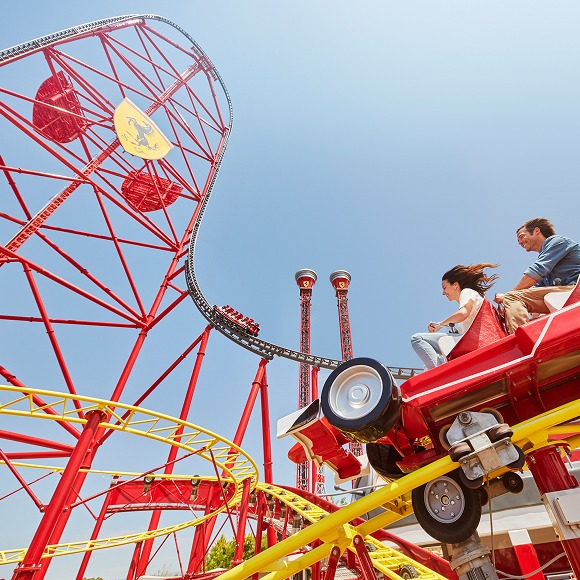
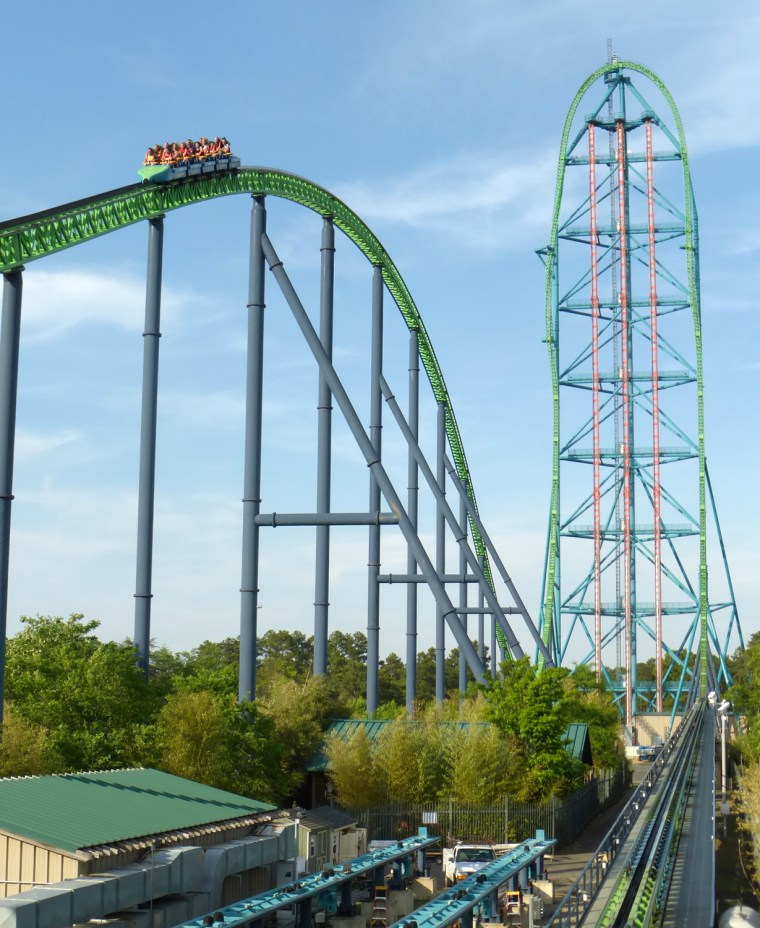
The question, “what is the tallest rollercoaster in the world?”, points directly to an engineering marvel that encapsulates decades of technological evolution. As of its opening in 2005, and retaining its title for over nearly two decades, the reigning champion of verticality is Kingda Ka, located at Six Flags Great Adventure in Jackson, New Jersey, USA. Standing an colossal 456 feet (139 meters) tall, Kingda Ka is not just the tallest rollercoaster but also held the record for the fastest (0 to 128 mph in 3.5 seconds) until the debut of Formula Rossa. Its staggering height and blistering speed make it an icon of modern engineering, a beacon for thrill-seekers, and a vibrant case study in the application of cutting-edge technology to create unforgettable experiences. Its construction and continued operation highlight the intricate dance between theoretical physics, practical application, and advanced safety protocols that define the high-tech amusement industry.

The Quest for Vertical Supremacy: A Technological Arms Race
The history of rollercoasters is a narrative of escalating ambition, with height being one of the most visible metrics of progress. From the wooden “switchback railways” of the 19th century to the sophisticated steel behemoths of today, each record-breaking coaster has built upon the technological advancements of its predecessors, setting new benchmarks for designers and engineers worldwide. This continuous push upwards is not just for bragging rights; it’s a strategic move to attract visitors, drive innovation, and redefine the very concept of amusement.
Historical Trajectory of Height Records
Early rollercoasters, while thrilling for their time, were constrained by primitive materials and gravitational limits. The advent of tubular steel tracks in the 1950s by companies like Arrow Development revolutionized the industry, allowing for inversions, sharper turns, and, crucially, significantly greater heights. Rides like the Great American Scream Machine (1976) and Magnum XL-200 (1989), the first hypercoaster to break the 200-foot mark, demonstrated the viability of increasingly taller structures. Then came the giga coasters, pushing past 300 feet, exemplified by Millennium Force (2000). Each leap required new structural analysis techniques, stronger steel alloys, and more powerful lift or launch mechanisms. The jump to stratospheric heights like Kingda Ka’s 456 feet demanded a complete re-evaluation of design principles, material tolerances, and kinetic energy management, paving the way for the development of entirely new technological solutions that became industry standards.
Why Build So Tall? The Engineering Imperative
The motivation behind building record-breaking coasters like Kingda Ka is multifaceted. Economically, a world-record attraction serves as an unparalleled marketing tool, drawing global attention and significantly boosting park attendance. Technologically, it presents an irresistible challenge for engineers. Designing a structure that can withstand immense forces, safely transport passengers to extreme altitudes, and then accelerate them at gravity-defying speeds requires innovation across multiple disciplines. It demands advancements in material science for track and support structures, sophisticated hydraulic or electromagnetic launch systems, and highly complex control mechanisms to ensure precision and safety. The engineering imperative is to solve complex problems: how to manage wind loads on a 450-foot structure, how to deliver hundreds of thousands of horsepower for a rapid ascent, and how to maintain structural integrity under constant dynamic stress. This pursuit pushes the boundaries of current technology, leading to breakthroughs that often trickle down into other areas of civil and mechanical engineering.
Engineering the Impossible: Overcoming Gravity and Stress
Building a rollercoaster that scrapes the clouds and then plunges riders back to earth at incredible speeds is a monumental engineering undertaking. It requires a profound understanding of physics, advanced computational modeling, and the selection of materials that can withstand extreme conditions. The design and construction of Kingda Ka illustrate the apex of these challenges, showcasing how engineers tackle the forces of nature and the limits of structural endurance.
Structural Integrity and Materials Science
The foundation of any skyscraper-sized rollercoaster is its structural integrity. For Kingda Ka, this meant designing a support structure capable of handling not only the immense static weight of the steel track and trains but also the dynamic forces generated by wind, seismic activity, and the constant passage of high-speed trains. Advanced high-strength steel alloys are critical, offering a superior strength-to-weight ratio and resistance to fatigue and corrosion. Each joint and weld must be meticulously designed and executed to distribute stress effectively across the entire structure. Finite Element Analysis (FEA) software plays a crucial role here, simulating various stress scenarios and identifying potential points of failure before construction even begins. This computational rigor ensures that every component, from the towering support columns to the intricate track segments, contributes to a cohesive, robust, and safe structure that can endure decades of operation under extreme loads.
The Power Behind the Ascent: Hydraulic Launch Technology
Unlike traditional rollercoasters that use a chain lift hill, Kingda Ka achieves its astounding speed and height through a state-of-the-art hydraulic launch mechanism. This technology is a significant engineering marvel in itself. It utilizes a powerful winch system driven by massive hydraulic motors, capable of spooling a cable at extraordinary speeds. This cable is attached to a “catch car” that propels the train from a standstill to 128 mph (206 km/h) in a mere 3.5 seconds. The sheer power involved is staggering, equivalent to thousands of horsepower, requiring robust pumping systems, high-pressure accumulators, and precision control valves. The synchronization of the hydraulic launch with the train’s release and the immediate engagement of safety braking systems after the launch demands real-time data processing and highly reliable programmable logic controllers (PLCs). This sophisticated interplay of mechanical power and digital control is what makes such rapid, high-energy launches possible and safe.
Mitigating Dynamic Forces: G-Forces and Beyond
Designing a ride experience that is thrilling yet safe requires careful management of G-forces – the forces of acceleration or gravity felt by riders. On Kingda Ka, riders experience intense positive G-forces during the launch and at the bottom of the drop, and significant negative G-forces (airtime) over the “top hat” element. Engineers use specialized software to plot the ride’s trajectory with exquisite precision, ensuring that the G-forces remain within human tolerance levels, preventing discomfort or injury while maximizing the thrill. Track shaping, banking angles, and the curvature of hills are all meticulously calculated. Furthermore, the immense energy of the descending train must be dissipated safely. This is achieved through magnetic brakes, which use eddy currents to create non-contact friction, providing smooth, consistent deceleration without wear and tear, and crucially, without relying on external power, ensuring fail-safe operation.
The Digital Blueprint: Design, Simulation, and Precision Manufacturing
The creation of a record-breaking rollercoaster like Kingda Ka is a testament to the power of digital technology in modern engineering. From the initial conceptualization to the final fabrication, advanced software and automated machinery are indispensable, ensuring precision, efficiency, and safety at every stage.
CAD/CAE in Rollercoaster Design
Computer-Aided Design (CAD) and Computer-Aided Engineering (CAE) are the foundational tools for modern rollercoaster development. Engineers use sophisticated CAD software to create detailed 3D models of every component, from the track sections and support columns to the individual bolts and welds. This allows for precise visualization and easy modification during the design phase. CAE tools, particularly Finite Element Analysis (FEA) and Computational Fluid Dynamics (CFD) software, are then employed to rigorously test these digital models. FEA simulates how the structure will react to various stresses – the weight of the train, wind loads, thermal expansion, and dynamic forces – ensuring structural integrity. CFD, on the other hand, models airflow around the towering structure, crucial for understanding wind resistance and potential vortex shedding effects, which could induce unwanted vibrations or stresses. This digital prototyping drastically reduces the need for expensive physical prototypes and speeds up the design iteration process, allowing for optimization before a single piece of steel is cut.
Virtual Prototyping and Rider Experience
Beyond structural analysis, virtual reality (VR) and advanced simulation software are increasingly used to virtually “ride” the coaster before it’s built. These simulations provide critical insights into the rider experience, allowing designers to fine-tune elements like the timing of forces, the visual cues, and the overall pacing of the ride. Engineers can identify areas where G-forces might be too high or too low, or where a particular transition might feel jarring. This “human-in-the-loop” simulation is invaluable for balancing maximum thrill with maximum comfort and safety. Furthermore, these virtual environments are used for crucial operational planning, including simulating evacuation procedures and maintenance access, identifying potential bottlenecks or hazards that might arise during the coaster’s operational life.
Robotic Fabrication and Construction Logistics
Once the digital design is finalized, precision manufacturing takes over. The complex, curvilinear track segments for Kingda Ka were fabricated using advanced robotic welding and cutting machines. These machines can achieve tolerances far beyond what is possible with manual labor, ensuring that each piece fits together perfectly. Laser scanning and GPS-guided equipment are used during site preparation and foundation pouring to ensure absolute accuracy in positioning the massive footings that support the coaster. The logistical challenge of transporting these enormous, heavy track segments and supports, sometimes hundreds of miles, and then lifting them into place with massive cranes, requires sophisticated project management software and highly coordinated teams. Advanced rigging techniques and safety systems are paramount during the assembly phase, as workers operate at extreme heights under demanding conditions, guided by the meticulously planned digital blueprint.
Safety at Stratospheric Heights: Advanced Control Systems
The breathtaking scale and speed of Kingda Ka necessitate an equally advanced and robust suite of safety technologies. These systems operate continuously, often unseen, to monitor every aspect of the ride, ensuring passenger well-being and preventing incidents. The integration of redundant systems, real-time diagnostics, and intelligent control mechanisms is paramount to maintaining the impeccable safety record of such a high-tech attraction.
Redundant Safety Systems
A hallmark of high-tech rollercoaster design is the implementation of multi-layered, redundant safety systems. Kingda Ka employs an intricate network of sensors that continuously monitor train speed, position, braking performance, and the status of all track-side components. These sensors feed data to multiple Programmable Logic Controllers (PLCs) – industrial computers designed for reliability in harsh environments. If one sensor fails or provides an anomalous reading, a secondary sensor acts as a backup, and the system can trigger a safe shutdown. Similarly, critical systems like brakes often have multiple, independent activation mechanisms. For instance, the magnetic brakes are inherently fail-safe, meaning they engage even if power is lost. All critical control logic is often duplicated, running on separate processors, to ensure that no single point of failure can lead to an unsafe condition. This “defense-in-depth” approach is a cornerstone of ensuring absolute operational integrity.
Predictive Maintenance and IoT Integration
Maintaining a colossal structure like Kingda Ka requires an intensive and proactive approach. Modern rollercoasters are increasingly leveraging IoT (Internet of Things) technology for predictive maintenance. Hundreds of sensors embedded throughout the track and support structure monitor vibration, stress, temperature, and even microscopic material fatigue. This data is collected in real-time, analyzed by specialized software, and compared against baseline performance parameters. Anomalies or trends indicating potential issues trigger alerts, allowing maintenance teams to address problems before they escalate into failures. This proactive approach minimizes downtime, extends the lifespan of components, and, most importantly, enhances safety by preventing unexpected mechanical issues. Drones equipped with high-resolution cameras and thermal imaging are also used for visual inspections of hard-to-reach areas, providing another layer of diagnostic capability.
Emergency Protocols and Evacuation Technologies
Despite all preventative measures, engineers must design for worst-case scenarios. Kingda Ka incorporates sophisticated emergency protocols and evacuation systems. If a train stalls at the highest point of the “top hat,” specialized winches and retrieval systems can be deployed to safely bring the train back to the station. Furthermore, the design includes access platforms and walkways at critical points along the structure to facilitate manual evacuation if necessary. Evacuation training for park staff is rigorous and includes simulated scenarios to ensure rapid and safe response. Communication systems, including two-way radios and public address systems, are integrated throughout the ride and along the structure to ensure clear communication during an emergency. These meticulously planned and regularly rehearsed protocols underscore the commitment to passenger safety, even in the most improbable situations.
The Future of Vertical Thrills: What’s Next?
While Kingda Ka continues to stand as a monumental achievement, the technological arms race in the amusement industry never truly ceases. The ambition to create even taller, faster, and more immersive experiences continues to drive innovation, promising a future where the boundaries of engineering are pushed even further.
Emerging Technologies and New Horizons
The next generation of record-breaking rollercoasters will likely incorporate advancements in various fields. New composite materials, lighter yet stronger than steel, could allow for even more towering structures with less mass, reducing construction costs and environmental impact. Magnetic levitation (maglev) technology, already used in high-speed trains, could replace traditional wheels and tracks, enabling unparalleled speeds, smoother rides, and reduced maintenance. Artificial intelligence (AI) is poised to play an increasing role in design, optimizing track layouts for maximum thrill and safety, and even dynamically adjusting ride parameters in real-time based on environmental conditions or passenger load. Beyond mere height, future rides might integrate augmented reality (AR) or full virtual reality (VR) headsets, creating immersive narrative experiences that transcend the physical ride itself, blending real-world sensations with digital worlds.
Sustainability and Energy Efficiency
As the focus on environmental responsibility grows, future extreme rollercoasters will also prioritize sustainability. Engineers are exploring methods to recover kinetic energy from braking systems, converting it back into electricity to power the ride or feed back into the park’s grid. Lighter materials will reduce the energy required for launches and lifts. Designs will incorporate more efficient construction methods and materials with lower carbon footprints. Water-saving measures in cooling systems and the use of renewable energy sources to power park operations will become standard, demonstrating that the pursuit of technological marvels can align with ecological stewardship.
Beyond Height: The Multidimensional Thrill Experience
While height will always be a compelling metric, the future of extreme thrill rides will likely focus on a more multidimensional experience. This could involve innovative ride dynamics that combine traditional coaster elements with freefall towers, rotating platforms, or even systems that mimic flight. The integration of sophisticated soundscapes, special effects, and projection mapping will create highly immersive environments, transforming a simple ride into a compelling story. The challenge for engineers will be to seamlessly integrate these diverse technologies into a cohesive, safe, and exhilarating experience that continually captivates audiences, proving that the cutting edge of amusement technology is about much more than just vertical supremacy.
aViewFromTheCave is a participant in the Amazon Services LLC Associates Program, an affiliate advertising program designed to provide a means for sites to earn advertising fees by advertising and linking to Amazon.com. Amazon, the Amazon logo, AmazonSupply, and the AmazonSupply logo are trademarks of Amazon.com, Inc. or its affiliates. As an Amazon Associate we earn affiliate commissions from qualifying purchases.