
In an era increasingly defined by data, precision, and miniaturization, understanding fundamental units of measurement is more critical than ever. While many units are instantly recognizable – the kilogram for mass, the meter for distance, the second for time – some, particularly those representing extremely small quantities, can pose unique challenges, especially in their digital representation. Among these, the microgram stands out. It’s a unit that underpins countless scientific, medical, and technological advancements, yet its symbol often sparks questions about correct usage, digital encoding, and systemic interpretation.

The seemingly simple question, “What is the sign for micrograms?”, opens a gateway into a complex landscape where accurate digital communication, software compatibility, and the seamless integration of data are paramount. In the vast and intricate web of modern technology, from AI-driven drug discovery to sophisticated sensor networks, the correct representation and interpretation of “µg” is not merely an academic exercise; it is a linchpin of reliability, safety, and innovation. This article delves into the symbol itself, explores the technological hurdles and solutions for its accurate digital portrayal, and highlights its indispensable role across various tech frontiers.
Deciphering the Microgram: The Symbol and Its Significance
At its core, the microgram represents a minuscule quantity of mass – precisely one-millionth of a gram (10⁻⁶ g). Its symbol is µg. The first part of this symbol, ‘µ’, is the Greek letter mu (pronounced “myoo”), which serves as the standard SI prefix for “micro-,” indicating a factor of 10⁻⁶. The second part, ‘g’, is the standard symbol for gram, the base unit of mass in the metric system. Together, µg unequivocally denotes a microgram.
The Anatomy of “µg”: Understanding the Micro Prefix
The ‘µ’ prefix is a cornerstone of the International System of Units (SI), allowing scientists and engineers worldwide to express extremely small (or large) quantities with clarity and conciseness. Beyond grams, “micro-” appears in various other contexts:
- Micrometer (µm): One-millionth of a meter, crucial in microscopy, nanotechnology, and semiconductor manufacturing.
- Microsecond (µs): One-millionth of a second, vital in high-speed computing, telecommunications, and laser physics.
- Microfarad (µF): One-millionth of a Farad, a common unit for capacitance in electronics.
The universality of the ‘µ’ prefix underscores its importance. It eliminates ambiguity and facilitates global scientific and technological communication, ensuring that a microgram of a substance in a laboratory in Tokyo means the exact same quantity as it does in a pharmaceutical plant in Berlin or a research facility in Silicon Valley. Without such standardized prefixes, expressing these minute quantities would be cumbersome, error-prone, and ultimately impede progress.
Historical Context and Standardization: Why Symbols Matter
The drive for standardized units and symbols emerged from the necessity of accurate scientific exchange and industrial collaboration. The metric system, and subsequently the SI, were developed to overcome the chaotic inconsistencies of diverse local measurement systems. The adoption of specific symbols for units and prefixes was a deliberate act of standardization, aimed at creating a universally understood language for measurement.
The ‘µ’ symbol itself, as the Greek letter mu, was chosen for its distinctiveness and historical use in various scientific contexts. Its adoption into the SI system solidified its role as the definitive representation for “micro-.” This standardization is not merely about aesthetic consistency; it is about establishing a foundation for verifiable data, reproducible experiments, and interoperable technologies. In the digital realm, this historical imperative translates directly into the need for consistent character encoding and display, ensuring that what one system sends as “µg” another system correctly interprets and renders. Misinterpretation, particularly in critical applications like medical dosing or precision engineering, can have severe, even catastrophic, consequences.
Digital Representation Challenges and Solutions
While “µg” is unambiguous on paper, its journey into the digital domain has been fraught with challenges. The very nature of digital text – composed of encoded characters rather than hand-drawn symbols – introduces complexities that require careful management.
Encoding Woes: ASCII, Unicode, and Font Compatibility
The primary challenge stems from character encoding. Early computing systems relied heavily on ASCII (American Standard Code for Information Interchange), which had a limited character set, primarily focused on English letters, numbers, and basic punctuation. The Greek letter ‘µ’ (mu) was not part of standard ASCII. This led to various workarounds:
- Substitution: Often, “ug” or “mcg” was used as a textual substitute. While understandable in context, these are not the official SI symbols and can sometimes lead to confusion or errors, especially in automated data processing where exact matches are expected.
- Proprietary Encodings: Some systems used extended ASCII character sets or proprietary encodings that included ‘µ’, but these were often not universally compatible, leading to “mojibake” (garbled text) when shared across different systems.
The advent of Unicode was a game-changer. Unicode is an international standard that provides a unique number (code point) for every character, regardless of the platform, program, or language. It includes a vast array of characters, including the Greek alphabet. The lowercase Greek letter mu has a specific Unicode code point (U+00B5 for the micro sign, and U+03BC for the Greek letter small mu, though U+00B5 is often preferred for the micro prefix).
However, even with Unicode, challenges persist:
- Font Availability: For ‘µ’ to display correctly, the font being used must contain the character. While modern operating systems and applications come with fonts that support Unicode, older systems or specialized, minimalist fonts might still struggle.
- Legacy Systems: Many industrial or scientific systems, particularly those designed decades ago, still rely on older character sets or custom software that might not fully support Unicode, creating data exchange hurdles.
- Input Methods: Typing ‘µ’ directly can be difficult for many users without specific keyboard layouts or knowledge of alt-codes/compose keys.
Best Practices for Digital Communication and Documentation
To mitigate these challenges, tech professionals and scientists adhere to best practices:
- Always Use Unicode ‘µ’: When possible, explicitly use the correct Unicode character (U+00B5) for “micro.” This ensures the highest level of accuracy and future compatibility.
- Contextual Clarity: If circumstances dictate the use of “ug” or “mcg” (e.g., character limitations in a legacy database field or a specific regulatory requirement that accepts alternatives), it’s crucial to document this clearly and ensure all stakeholders are aware of the substitution.
- Standardized Data Formats: Employing data formats that inherently support Unicode, such as XML, JSON, or modern database encodings (e.g., UTF-8), is essential for reliable data transmission and storage.
- Validation and Sanitization: Implement software routines that validate input data for correct unit symbols and sanitize output to ensure proper display, potentially converting non-standard representations to Unicode ‘µg’ internally.
Input Methods and Keyboard Shortcuts Across Platforms
Knowing how to input ‘µ’ is a practical skill for anyone working with precise measurements:
- Windows: Alt + 0181 (on the numeric keypad).
- macOS: Option + M.
- Linux: Compose Key + u + u (or directly from character map).
- HTML:
µorµ; - LaTeX:
mu(within math mode).
While seemingly minor, these input methods are crucial for accurate data entry in scientific instruments, software applications, and digital publications, reinforcing the importance of the correct symbol.
The Critical Role of Micrograms in Modern Technology
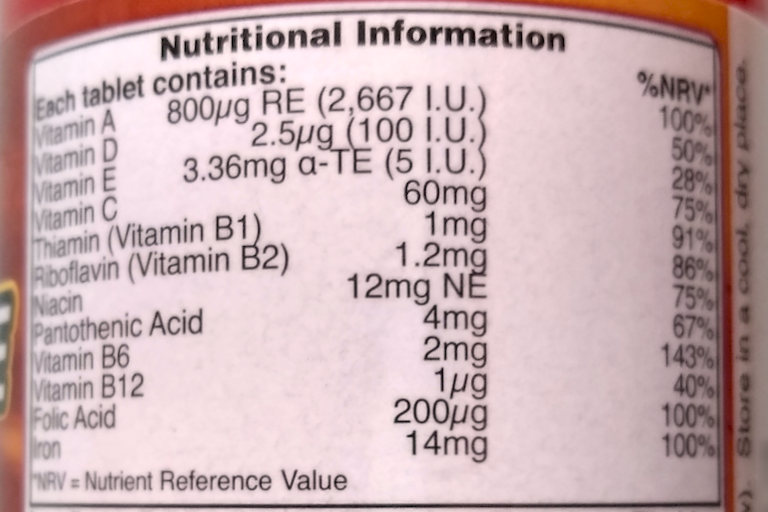
The microgram is not just a theoretical unit; it is a practical cornerstone in various high-tech fields, where minute quantities dictate performance, safety, and efficacy.
Microgram Precision in Nanotechnology and Advanced Materials
Nanotechnology operates at the atomic and molecular scales, where even fractions of a microgram of a substance can dramatically alter the properties of materials. For instance:
- Quantum Dots: The precise doping of semiconductor nanocrystals with specific elements, often measured in micrograms, is critical for tuning their optical and electronic properties for displays, solar cells, and biosensors.
- Thin Films: The deposition of ultra-thin layers of materials, where the mass of the deposited substance is in the microgram range, is fundamental to microelectronics, protective coatings, and optical devices.
- Catalysis: In developing novel catalysts, the active material’s concentration, often dosed in micrograms onto a substrate, is key to maximizing reaction efficiency and minimizing waste.
- 3D Printing at Micro Scale: Advanced additive manufacturing techniques can now create structures with incredible precision, where the amount of material extruded is meticulously controlled, often down to microgram quantities for specialized polymers or metals.
Pharmaceutical Tech: Dosage Accuracy and Device Integration
In the pharmaceutical and medical device industries, micrograms are a standard unit for active pharmaceutical ingredients (APIs). Precision is literally a matter of life and death:
- Drug Formulation: Many potent drugs, such as hormones, opioids, or certain cancer therapies, require microgram-level dosing. Formulations must ensure that this tiny amount is evenly distributed and accurately delivered.
- Smart Drug Delivery Systems: Advanced medical devices, like insulin pumps, continuous glucose monitors, or implantable drug delivery chips, are engineered to administer or measure substances at microgram (or even nanogram) precision, often wirelessly controlled and monitored through software.
- Biosensors: Devices that detect biomarkers in blood or tissue often measure substances in microgram quantities (e.g., microgram per deciliter), providing crucial diagnostic data to healthcare professionals via integrated software platforms.
- Automated Dispensing: Hospital pharmacies use robotic systems and software to precisely measure and dispense medications, frequently handling compounds in the microgram range to ensure patient safety and reduce human error. These systems rely on accurate digital representation and interpretation of “µg.”
Environmental Monitoring and Sensor Technology
Environmental tech also heavily relies on microgram measurements to detect pollutants and analyze ecological systems:
- Air Quality Sensors: Advanced sensors in smart cities or industrial settings detect particulate matter, volatile organic compounds, and other pollutants present in air at microgram per cubic meter (µg/m³) concentrations, feeding data into AI-driven environmental models.
- Water Quality Analysis: Detecting trace contaminants like heavy metals, pesticides, or pharmaceuticals in water supplies often involves measuring concentrations in micrograms per liter (µg/L) using sophisticated analytical instruments linked to data management platforms.
- Precision Agriculture: Monitoring nutrient levels in soil or plant tissue, sometimes at microgram per gram concentrations, guides precision farming techniques, optimized through IoT sensors and data analytics.
Ensuring Data Integrity: The Tech Behind Accurate Unit Handling
The digital representation of “µg” is merely the first step. The true challenge lies in ensuring that this unit is correctly understood, processed, and maintained across complex technological ecosystems.
Software Solutions for Unit Conversion and Validation
Sophisticated software is indispensable for handling units correctly:
- Scientific Software Suites: Programs like MATLAB, Wolfram Mathematica, or specialized laboratory information management systems (LIMS) integrate robust unit handling capabilities, allowing users to define units, perform calculations, and automatically convert between different systems while maintaining dimensional consistency.
- APIs for Unit Conversion: Many programming languages and frameworks offer libraries or APIs (e.g., Python’s
pint, JavaScript’smath.js) that specifically manage physical units, preventing common errors during data processing and ensuring that operations like “add 10µg to 5mg” are correctly resolved to “5010µg” rather than a type mismatch. - Data Validation Engines: In data pipelines, validation engines check for correct unit symbols and values, flagging inconsistencies or errors that could arise from manual entry or faulty sensor readings. These systems are crucial for maintaining the integrity of large datasets in scientific research or industrial operations.
AI and Machine Learning for Contextual Unit Interpretation
Artificial intelligence is increasingly being deployed to address the nuances of unit interpretation, especially when dealing with unstructured data:
- Natural Language Processing (NLP): AI models with NLP capabilities can parse scientific texts, research papers, and patient records to extract numerical values along with their associated units. This is particularly useful in pharmacovigilance or systematic reviews where microgram dosages might be mentioned in free text.
- Machine Learning for Data Cleaning: ML algorithms can identify patterns of incorrect unit usage (e.g., consistently typing “ug” instead of “µg”) and suggest corrections, improving the quality of historical datasets.
- Contextual Inference: In cases where a unit might be ambiguous or missing, advanced AI can infer the most probable unit based on the surrounding context, the domain of the data, and statistical probabilities, although this always carries a degree of risk and should be treated with caution in critical applications.
Digital Security Implications of Unit Misrepresentation
The integrity of unit representation also extends into the realm of digital security. A seemingly minor error in a unit symbol or value, whether accidental or malicious, can have significant consequences:
- Supply Chain Vulnerabilities: If a digital manifest for a chemical shipment specifies “50 mg” instead of “50 µg” due to an encoding error or tampering, it could lead to incorrect quantities being used in manufacturing, affecting product quality, safety, and potentially resulting in massive financial losses or legal liabilities.
- Medical System Exploitation: Malicious actors could target hospital information systems to alter drug dosages from “µg” to “mg” or vice-versa, with potentially lethal outcomes for patients. Protecting the accuracy of such critical data is a cybersecurity imperative.
- Research Data Manipulation: In scientific research, altering unit symbols or values could be a form of data manipulation or fraud, leading to erroneous conclusions, unreproducible results, and erosion of scientific trust. Securing research data, including its units, is paramount.
Implementing robust encryption, access controls, audit trails, and data integrity checks are essential cybersecurity measures for any system handling quantitative data, especially when dealing with units as sensitive as micrograms.
The Future of Measurement: IoT, AI, and Micro-Precision
The trajectory of technology points towards even greater precision, connectivity, and intelligence in measurement. The microgram will remain a central figure in this evolution.
Connected Devices and Real-time Microgram Monitoring
The Internet of Things (IoT) is revolutionizing how we collect and process data from the physical world. Miniaturized sensors, often capable of detecting substances at microgram levels, are becoming ubiquitous:
- Wearable Health Tech: Future wearables might non-invasively monitor metabolites or drug levels in sweat or interstitial fluid at microgram concentrations, providing real-time personalized health insights to users and medical professionals.
- Smart Factories: IoT sensors on production lines will continuously monitor the precise dispensing of ingredients, often in microgram amounts, ensuring consistent product quality and reducing waste through immediate feedback loops.
- Environmental Sensor Networks: Large-scale networks of interconnected sensors will provide granular, real-time data on microgram-level pollutants, enabling proactive environmental management and early warning systems for public health.

Predictive Analytics and Micro-Dosing Optimisation
The convergence of real-time microgram data from IoT devices with advanced AI and machine learning promises unprecedented capabilities:
- Personalized Medicine: AI models will analyze an individual’s unique biological data (derived from microgram-level measurements of biomarkers) to predict optimal drug dosages, micro-adjusting treatments dynamically for maximum efficacy and minimal side effects.
- Optimized Manufacturing: Predictive analytics, informed by microgram precision in ingredient dispensing, can anticipate potential quality issues before they occur, optimizing production processes and minimizing costly errors.
- Smart Agriculture: AI will process microgram-level soil nutrient data from vast sensor arrays to create highly localized fertilization plans, reducing environmental impact and improving crop yields.
In this future, the unassuming ‘µg’ symbol will transcend its basic definition to become a critical data point within complex algorithmic systems, driving decisions that impact health, sustainability, and technological advancement. Ensuring its correct digital representation and interpretation will therefore remain a fundamental challenge and a crucial enabler for the next generation of intelligent systems.
aViewFromTheCave is a participant in the Amazon Services LLC Associates Program, an affiliate advertising program designed to provide a means for sites to earn advertising fees by advertising and linking to Amazon.com. Amazon, the Amazon logo, AmazonSupply, and the AmazonSupply logo are trademarks of Amazon.com, Inc. or its affiliates. As an Amazon Associate we earn affiliate commissions from qualifying purchases.