
The fundamental forces of the universe are the bedrock upon which all existence, and by extension, all technology, is built. Among these, the interplay between mass and gravity stands as one of the most pervasive and impactful. While often discussed in theoretical physics and astronomy, the tangible relationship between mass and gravity is not merely an academic curiosity; it is a critical engineering principle, an enabling force for innovation, and a constant challenge that drives the very frontier of technological advancement. From the design of skyscrapers to the intricate dance of satellites in orbit, from the precision of navigation systems to the ambitious dreams of interstellar travel, understanding and leveraging the relationship between mass and gravity is central to the Tech landscape.

This article delves into how our grasp of these two foundational concepts has not only illuminated the cosmos but has also empowered humanity to build, explore, and innovate in ways that were once unimaginable, positioning itself firmly within the realm of technology’s ongoing evolution.
The Foundational Physics Driving Technological Innovation
The principles governing mass and gravity are not abstract concepts confined to textbooks; they are the invisible architects of our technological world. Every engineer, designer, and scientist working on physical systems must contend with these forces, whether they are building a bridge, launching a rocket, or even designing a microchip where slight gravitational variations can impact sensitive instruments.
Space Exploration and Satellite Technology
Perhaps the most direct and celebrated application of our understanding of mass and gravity lies in space exploration. The launch of a rocket is a monumental battle against Earth’s gravitational pull. Engineers meticulously calculate the mass of the rocket, its payload, and the fuel required to achieve escape velocity, a speed at which an object can break free from the planet’s gravitational influence. Newton’s laws of motion and universal gravitation are the fundamental equations guiding these complex calculations, determining everything from thrust requirements to trajectory paths.
Once in space, satellites become exemplars of gravitational mechanics. They orbit Earth in a delicate balance, constantly “falling” towards the planet but moving sideways fast enough to perpetually miss it. The mass of the satellite, its orbital altitude, and the gravitational pull of Earth dictate its orbital period and stability. Satellite positioning systems (like GPS), weather monitoring satellites, and communication networks all rely on precise orbital mechanics, which are entirely dependent on understanding the gravitational interaction between their mass and Earth’s mass. Deviations, even tiny ones caused by factors like solar radiation pressure or the non-uniform distribution of Earth’s mass (geoids), must be accounted for by on-board propulsion systems and sophisticated algorithms to maintain precise orbits.
Precision Engineering and Measurement Systems
Beyond the grand scale of space, the relationship between mass and gravity is crucial in terrestrial precision engineering. Consider the field of gravimetry, the measurement of gravitational fields. Gravimeters, highly sensitive instruments, measure minuscule variations in Earth’s gravity, which can be affected by the mass distribution beneath the surface. These devices, themselves marvels of engineering, employ highly stable components and often incorporate advanced sensor technology, such as atomic interferometers, to detect changes as small as a few parts per billion.
These measurements have profound technological implications:
- Geological Surveys: Identifying underground geological structures, including potential oil and gas reserves, mineral deposits, and fault lines.
- Civil Engineering: Monitoring subsidence, ensuring the stability of large structures like dams and bridges, and even detecting changes in groundwater levels.
- Navigation: Inertial navigation systems (INS) used in aircraft, submarines, and spacecraft rely on accelerometers, which measure accelerations relative to an inertial frame. While not directly measuring gravity, their operation requires careful calibration and understanding of how gravitational forces influence their readings, especially over long durations. Advanced INS can sometimes integrate gravimetric data for enhanced accuracy.
- Timekeeping: Atomic clocks, the pinnacle of precision timekeeping, are so sensitive that they can detect the minute time dilation predicted by Einstein’s theory of relativity due to differences in gravitational potential (i.e., altitude). This phenomenon, where time runs slightly faster at higher altitudes due to weaker gravity, must be factored into satellite navigation systems for extreme accuracy.
Material Science and Engineering
The mass of an object directly correlates with its inertia and its response to gravitational forces. In material science, understanding mass properties (density, moment of inertia) is critical for designing components that can withstand operational stresses, including those induced by gravity. For instance, in aerospace engineering, reducing the mass of components is a constant pursuit, as lower mass translates to lower fuel consumption and increased payload capacity. Advanced composites, lightweight alloys, and novel manufacturing techniques like additive manufacturing (3D printing) are all aimed at achieving optimal strength-to-weight ratios.
Furthermore, microgravity environments, such as those aboard the International Space Station (ISS), offer unique opportunities for material research. In the absence of significant gravitational sedimentation or convection, scientists can grow purer crystals, develop new alloys with enhanced properties, and study combustion processes in ways impossible on Earth. This “gravity-free” lab allows for the manipulation of materials’ intrinsic properties without the masking effects of buoyancy and settling, leading to the development of new technologies and materials with superior characteristics for various terrestrial and space-based applications.
Leveraging Gravity: From Terrestrial Applications to Off-World Endeavors
Technology often involves either working with gravity or actively working to overcome it. Our ingenuity in both these aspects defines much of our modern technological landscape.
Gravity’s Role in Earth-Bound Systems
On Earth, gravity provides a constant, reliable force that engineers have learned to harness. In civil engineering, gravity ensures the stability of structures. Architects and engineers design buildings and bridges to distribute their mass and withstand gravitational loads, using materials like steel and concrete that offer high compressive strength. The principles of static equilibrium, derived from understanding how masses interact with gravity, are fundamental to ensuring safety and durability.
In energy generation, gravity plays a silent yet powerful role. Hydroelectric power plants, for example, convert the potential energy of water held at a height (due to gravity) into kinetic energy as it flows downwards, driving turbines to generate electricity. This elegant solution demonstrates how natural gravitational forces can be effectively engineered into sustainable power sources. Even in simpler machines, gravity is often used to reset mechanisms, provide a consistent force (e.g., in pendulum clocks), or aid in material handling systems.
Overcoming Gravity: Rockets and Launch Systems
The most dramatic technological challenge posed by gravity is the endeavor to escape it. Rocket science is, at its heart, the science of generating enough thrust to overcome the gravitational pull of a celestial body. Newton’s third law of motion – for every action, there is an equal and opposite reaction – is paramount here. Rockets expel mass (exhaust gases) at high velocity, generating an equal and opposite force (thrust) that propels them upwards.
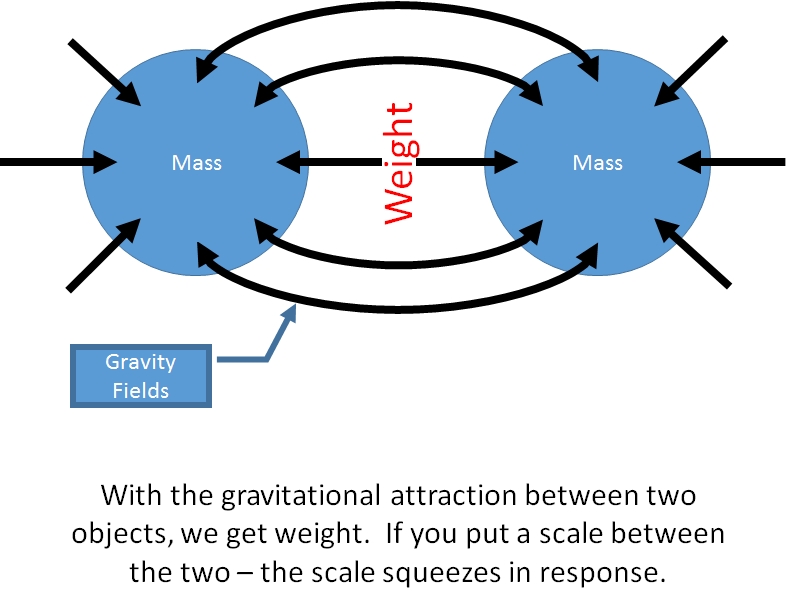
The efficiency of this process is directly related to the rocket’s mass. Every kilogram added to a rocket requires exponential increases in fuel. This intense mass sensitivity drives innovation in lightweight materials, efficient engine designs, and optimized trajectory planning. Multi-stage rockets, for instance, shed spent mass as they ascend, allowing subsequent stages to accelerate more effectively with less gravitational drag. The continuous quest for reusable launch systems (like SpaceX’s Falcon 9) is another technological leap aimed at making the battle against gravity more cost-effective and sustainable.
Microgravity Environments for Advanced Research
While overcoming gravity is about propulsion, creating microgravity environments is about isolation from significant gravitational forces. The International Space Station (ISS) is humanity’s premier microgravity laboratory, a technological marvel orbiting Earth. Here, the constant state of freefall creates an environment where objects behave as if weightless. This condition, where the local effect of gravity is dramatically reduced, opens doors for research not possible on Earth.
Examples of microgravity research and its technological implications include:
- Pharmaceuticals: Growing larger, more perfect protein crystals for drug development, leading to more effective medications.
- Biotechnology: Studying cell growth and behavior without the influence of gravity, which impacts cell signaling and gene expression. This can lead to new insights into disease mechanisms and treatments.
- Advanced Manufacturing: Creating new types of alloys, ceramics, and optical fibers with superior purity and structural integrity by eliminating buoyancy-driven convection and sedimentation during solidification processes.
- Fundamental Physics: Testing theories of gravity and relativity with unprecedented precision, contributing to our understanding of the universe’s basic laws.
The Digital Lens: AI, Simulation, and Understanding Gravitational Phenomena
In the 21st century, our ability to understand and manipulate the relationship between mass and gravity has been profoundly enhanced by digital technologies, particularly computational physics, AI, and advanced sensing gadgets. These tools allow us to model, predict, and interact with gravitational forces with unparalleled precision.
Computational Physics and Gravitational Modeling
Complex gravitational systems, such as the interactions of multiple celestial bodies (N-body simulations), galactic dynamics, or the extreme gravity near black holes, are virtually impossible to solve analytically. Computational physics, leveraging supercomputers and sophisticated algorithms, allows scientists to simulate these phenomena. These simulations are not just theoretical exercises; they underpin the design of interplanetary missions, predict asteroid trajectories, and even inform our understanding of the universe’s evolution. Software tools that model gravitational fields around irregular bodies (like asteroids or comets) are crucial for missions aiming to land on or orbit these objects, accounting for their unique mass distributions.
AI in Space Operations and Navigation
Artificial intelligence (AI) is increasingly vital in managing the intricate dance of spacecraft where mass and gravity dictate every move. AI algorithms can optimize trajectories for fuel efficiency, autonomously detect and correct orbital anomalies, and assist in docking procedures by predicting gravitational influences and control responses. For deep-space missions, where communication delays make real-time human intervention difficult, AI-powered autonomous navigation systems can make critical adjustments based on sensor data and pre-programmed models of gravitational fields from distant planets and moons. The development of intelligent agents that can adapt to unexpected gravitational perturbations or optimize the mass distribution of a spacecraft for stability are pushing the boundaries of space technology.
Sensing and Measuring Gravity with Advanced Gadgets
The evolution of sensors and gadgets has revolutionized our ability to measure mass and gravity. Modern gravimeters, often leveraging quantum mechanics (e.g., atomic gravimeters), are becoming smaller, more portable, and astonishingly precise. These devices can detect minute changes in gravity caused by tides, shifts in groundwater, or even the movement of tectonic plates. These advancements have implications for:
- Environmental Monitoring: Tracking changes in ice sheet mass or water table levels, providing critical data for climate change research.
- Defense Applications: Highly precise navigation in environments where GPS is unavailable or jammed.
- Fundamental Research: The search for gravitational waves, ripples in spacetime caused by massive cosmic events (like colliding black holes), has led to the development of incredibly sensitive interferometers (e.g., LIGO, Virgo). These monumental technological endeavors aim to detect minuscule distortions in spacetime caused by changes in gravitational fields, opening a new window into the universe.
Future Frontiers: Manipulating Mass and Gravity (Theoretical Tech)
While much of current technology works within the known framework of mass and gravity, the scientific community and engineers are constantly pushing the boundaries, exploring theoretical concepts that could fundamentally alter our interaction with these forces. These are often speculative but represent the ultimate aspirations of technological mastery over the universe’s fundamental laws.
Gravity Modification and Propulsion Concepts
The dream of “anti-gravity” or gravity modification is a persistent theme in science fiction, but it also spurs theoretical research in physics and engineering. While no known mechanism currently exists to generate negative mass or shield gravity, research into exotic matter, warped spacetime (as explored in general relativity), and quantum gravity theories continues. Concepts like Alcubierre’s warp drive, which proposes local spacetime distortion to achieve faster-than-light travel without violating relativity, remain highly theoretical. However, the pursuit of such ideas pushes the limits of our understanding of physics and encourages the development of highly advanced propulsion systems that aim to minimize the effects of inertial mass or gravity, even if it’s within the confines of traditional rocket science, like magnetoplasma rockets or ion propulsion. The energy requirements for these theoretical technologies are astronomical, but the ongoing research fuels innovations in high-energy physics and propulsion systems.
Advanced Materials for Gravity Management
Another future frontier involves the development of materials with unprecedented properties related to mass. Metamaterials, engineered to have properties not found in nature, offer tantalizing possibilities. While not “anti-gravity” in the traditional sense, they could potentially be designed to manipulate waves (including gravitational waves, theoretically) or create structures with incredibly low effective mass or density for specific applications. Research into ultralight, high-strength materials continues to evolve, pushing the boundaries of what is possible in aerospace and other industries where mass reduction is paramount. Imagine structures that are incredibly strong yet almost massless, or technologies that can actively manage their inertial properties.
The Quest for Gravitational Waves and Next-Gen Detectors
The successful detection of gravitational waves by LIGO and Virgo has opened an entirely new observational astronomy window. This monumental technological achievement confirmed a major prediction of Einstein’s general relativity and demonstrated humanity’s ability to build instruments sensitive enough to detect ripples in spacetime caused by the most violent events in the cosmos. The next generation of gravitational wave detectors, both ground-based (like the Einstein Telescope) and space-based (like LISA), represent a massive technological undertaking. These future observatories will involve colossal interferometers spanning millions of kilometers in space or buried deep underground, pushing the limits of laser technology, ultra-high vacuum systems, and precision measurement. They promise to reveal an “acoustic” universe previously hidden, offering new insights into black holes, neutron stars, and the very early universe, all through the subtle dance of mass and gravity.
In conclusion, the relationship between mass and gravity is far from a purely academic subject; it is the fundamental engine driving a vast spectrum of technological innovation. From the satellites guiding our lives to the rockets taking us to other worlds, from the microscopic precision of atomic clocks to the theoretical blueprints for future space travel, our understanding and mastery of mass and gravity are continually reshaping the future of technology and our place within the cosmos.
aViewFromTheCave is a participant in the Amazon Services LLC Associates Program, an affiliate advertising program designed to provide a means for sites to earn advertising fees by advertising and linking to Amazon.com. Amazon, the Amazon logo, AmazonSupply, and the AmazonSupply logo are trademarks of Amazon.com, Inc. or its affiliates. As an Amazon Associate we earn affiliate commissions from qualifying purchases.