
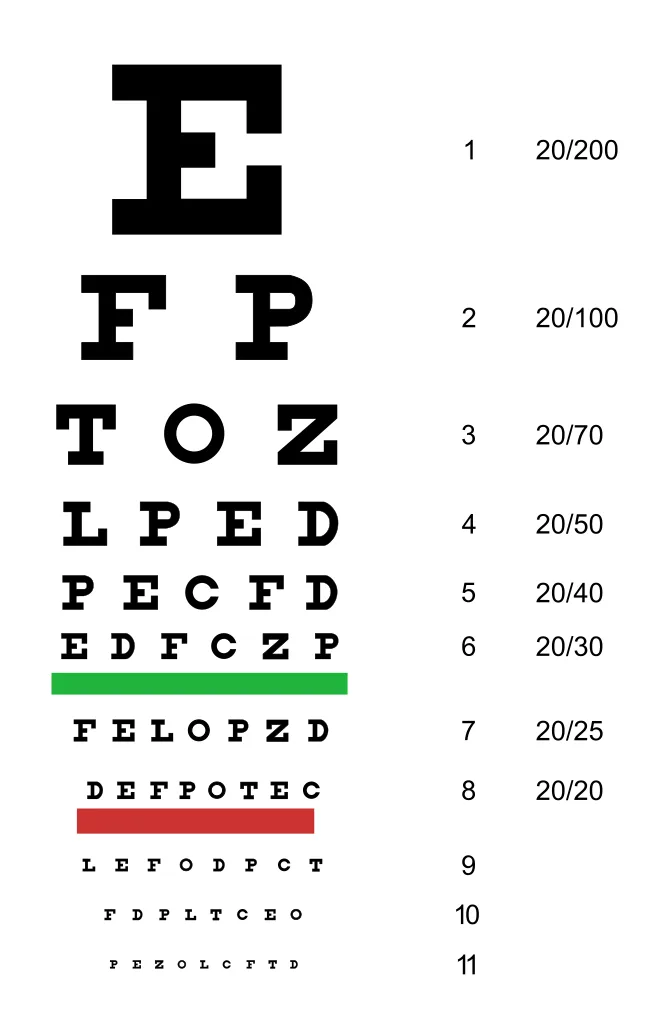
In the medical world, a “prescription” for the legally blind usually involves high-powered corrective lenses or surgical interventions. However, in the modern technological landscape, the definition of a prescription has evolved. For an individual with a visual acuity of 20/200 or less in their better eye, the most effective prescription is no longer found solely at the pharmacy or the optometrist’s office—it is found in the Silicon Valley labs and software development hubs specializing in assistive technology.
As we move deeper into the decade, the “tech prescription” for the legally blind has become a sophisticated stack of hardware, artificial intelligence, and software ecosystems. These tools do not merely “correct” vision; they bypass the physiological limitations of the eye entirely, converting visual data into auditory and haptic feedback. This article explores the cutting-edge technological innovations that constitute the modern prescription for visual independence.
Redefining Sight Through Wearable Assistive Hardware
The most visible shift in technology for the legally blind is the transition from stationary magnification tools to wearable, mobile hardware. These devices act as external sensory organs, using high-definition cameras and sensors to feed information to the user in real-time.
The Rise of Smart Glasses and AR Overlays
While Augmented Reality (AR) is often marketed for gaming, its most profound application is in low-vision assistance. Companies like eSight and NuEyes have developed wearable headsets that use high-speed cameras to capture live video, which is then processed and projected onto high-resolution screens positioned directly in front of the user’s eyes.
For many who are legally blind, the issue is not a total lack of sight but “blind spots” or extreme blurriness. These AR headsets allow users to zoom in on distant objects, adjust contrast, and shift images into the user’s peripheral vision where they may still have functional sight. This “digital prescription” allows a person to see a loved one’s face or watch a movie—activities that were previously impossible with traditional glasses.
AI-Powered Vision Sensoring: The OrCam Evolution
Beyond magnification, there is the category of wearable AI sensors. The OrCam MyEye is a prime example of a device that fits the modern tech prescription. It is a small, lightweight camera that magnetically mounts to any pair of eyeglass frames. Using advanced computer vision and Optical Character Recognition (OCR), it reads text from any surface, recognizes faces, and identifies consumer products.
The “tech prescription” here is the elimination of the need for sight to consume information. When a user points at a newspaper or a menu, the device whispers the text into their ear. This represents a fundamental shift from trying to fix the eye to providing a technological workaround that delivers the same result: the acquisition of information.
Software Ecosystems: Navigating the Digital and Physical World
The smartphone is perhaps the most powerful tool in the arsenal of a legally blind individual. However, the hardware is only as good as the software ecosystem supporting it. The modern prescription for digital accessibility relies on deep integration between operating systems and specialized applications.
Screen Readers and Haptic Feedback Systems
For a legally blind professional, the “prescription” for productivity is a robust screen reader. Software like JAWS (Job Access With Speech) for Windows and VoiceOver for macOS and iOS have revolutionized how the visually impaired interact with data. These are not merely text-to-speech tools; they are complex navigation systems that allow users to parse through spreadsheets, code, and web architectures using keyboard shortcuts and gestures.
Recent advancements have integrated haptic feedback—subtle vibrations—into these systems. This allows a user to “feel” the layout of a screen or the boundaries of an image. By combining auditory and haptic signals, the software creates a multi-sensory map of the digital environment, providing a level of “vision” that is purely data-driven.
Mobile Apps as Real-Time Navigators
Mobile applications have become essential components of the daily prescription for independence. Apps like “Seeing AI” by Microsoft and “Be My Eyes” leverage the smartphone’s camera and internet connectivity to provide instant environmental context.
Seeing AI uses on-device machine learning to describe people, predict their emotions, identify currency, and even describe the layout of a room. Meanwhile, Be My Eyes introduces a human element, connecting legally blind users with sighted volunteers or specialized tech support via live video calls. This blend of automated AI and crowdsourced human intelligence ensures that the user is never truly “blind” to their surroundings, provided they have a stable data connection.
The Role of Generative AI in Visual Interpretation
The most recent and perhaps most exciting addition to the prescription for the legally blind is the advent of Multimodal Large Language Models (LLMs). This technology has moved beyond simple object recognition into the realm of true visual interpretation and contextual understanding.
Multimodal LLMs as Digital Assistants
In the past, an app might identify a “chair” or a “door.” Today, using models like GPT-4o or Google’s Gemini, the technology can provide a nuanced description: “There is a wooden swivel chair positioned three feet to your left, slightly tucked under a mahogany desk that has a laptop and a steaming cup of coffee on it.”
This level of detail is a game-changer. It allows for a “conversational vision” where the user can ask follow-up questions: “Is there enough room for me to sit down without hitting the desk?” The AI can analyze the spatial geometry and provide an informed answer. This “prescriptive” AI acts as a continuous cognitive overlay, providing a level of environmental awareness that mimics natural sight more closely than ever before.
Real-Time Audio Description and Media Accessibility
The tech prescription also extends to how the legally blind consume media. Generative AI is being used to create real-time audio descriptions for videos that lack them. By “watching” the video frames, AI can generate a synchronized narrative of the visual action, ensuring that no part of the cultural conversation is off-limits. This technology is being integrated into streaming platforms and web browsers, making the internet a more inclusive space by design rather than as an afterthought.
Future Trends: Neural Interfaces and Bionic Sight
As we look toward the future, the “prescription” for the legally blind is moving closer to the human biology through the field of Neurotech. We are entering an era where technology doesn’t just sit on the face or in the pocket—it interacts directly with the nervous system.
Retinal Implants and Brain-Computer Interfaces (BCI)
Research into bionic eyes and retinal implants like the Argus II has paved the way for more direct interventions. These devices involve a surgical implant that bypasses damaged photoreceptors in the retina to stimulate the remaining healthy cells.
Furthermore, companies like Neuralink and various academic labs are exploring Brain-Computer Interfaces (BCIs) that could theoretically send visual data directly to the visual cortex. While still in the experimental stages, the goal is to create a digital bypass for the entire optic nerve. In this future, the “prescription” would be a literal neural link, a piece of hardware that translates digital camera feeds into the language of the human brain.
The Integration of IoT and Smart Cities
The final piece of the future tech prescription is the environment itself. The “Smart City” movement aims to embed sensors and beacons throughout urban infrastructure. For a legally blind person, this means their cane or smartphone could receive signals from a bus stop, a crosswalk, or a store entrance.
Imagine a world where a “smart prescription” includes a GPS system accurate to within inches, guiding a user through a complex subway station via bone-conduction headphones. By turning the physical world into an “Internet of Things” (IoT) mesh, technology removes the barriers of navigation entirely, making the concept of legal blindness less of a disability and more of a different way of processing the world.

Conclusion: A New Vision for Accessibility
The “prescription for the legally blind” is no longer a static document or a single pair of glasses. It is a dynamic, multi-layered technological stack that evolves as rapidly as the chips and algorithms that power it. From wearable AR headsets and AI-powered mobile apps to the burgeoning field of neural interfaces, technology is redefining what it means to be blind in the 21st century.
As these tools become more affordable, portable, and intelligent, the focus shifts from the limitations of the eye to the limitless potential of the mind. For the legally blind, the ultimate tech prescription is one that provides agency, independence, and an unhindered connection to the digital and physical world. The future of vision is not just biological; it is coded, connected, and incredibly bright.
aViewFromTheCave is a participant in the Amazon Services LLC Associates Program, an affiliate advertising program designed to provide a means for sites to earn advertising fees by advertising and linking to Amazon.com. Amazon, the Amazon logo, AmazonSupply, and the AmazonSupply logo are trademarks of Amazon.com, Inc. or its affiliates. As an Amazon Associate we earn affiliate commissions from qualifying purchases.