
In the landscape of modern software development, Python has emerged as a dominant force due to its readability and versatility. At the heart of Python’s functionality lies a fundamental concept that every developer, from novice to expert, must master: the operator. To understand what an operator is in Python is to understand the very mechanics of how data is manipulated, how logic is constructed, and how complex algorithms are executed.
In technical terms, an operator is a reserved symbol or a keyword that directs the Python interpreter to perform a specific mathematical, relational, or logical operation on one or more operands. If we think of a line of code as a sentence, the operands (data) are the nouns, and the operators are the verbs. They are the primary tools that transform static data into dynamic, functioning applications. This guide explores the diverse ecosystem of Python operators, their technical nuances, and how they empower developers to build sophisticated software solutions.

The Fundamental Role of Operators in Python Development
Operators are not merely shorthand for calculations; they are the building blocks of program flow. In Python, operators are categorized based on the type of operation they perform. Understanding these categories is essential for writing clean, efficient, and bug-free code.
Arithmetic Operators: The Mathematical Core
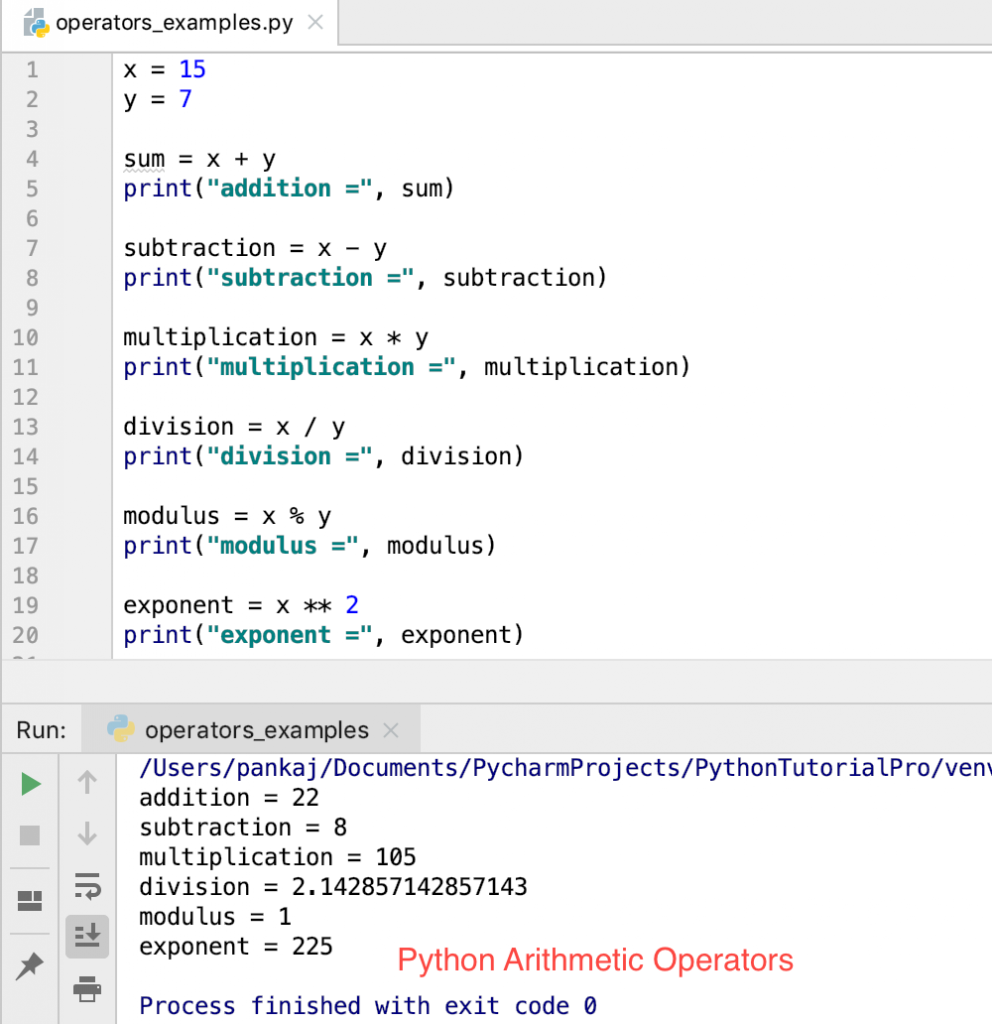
Arithmetic operators are perhaps the most familiar, as they mirror basic mathematics. However, in the context of a high-level language like Python, they carry specific technical behaviors.
- Addition (+), Subtraction (-), and Multiplication (*): These perform standard math on integers and floats. Interestingly, Python also uses the addition operator for string concatenation and the multiplication operator for string repetition, showcasing the language’s polymorphic nature.
- Division (/) and Floor Division (//): While standard division returns a float, floor division returns the largest possible integer less than or equal to the result. This distinction is critical in algorithms where integer-based indexing or discrete steps are required.
- Modulo (%): This operator returns the remainder of a division. It is a staple in tech for tasks such as determining if a number is even or odd or creating circular buffers in data structures.
- Exponentiation ():** Used for calculating powers, this is frequently utilized in data science and AI for scaling features or calculating Euclidean distances.
Comparison and Logical Operators: Powering Decision Making
In software engineering, the ability for a program to “decide” which path to take is governed by comparison and logical operators. These return Boolean values: True or False.
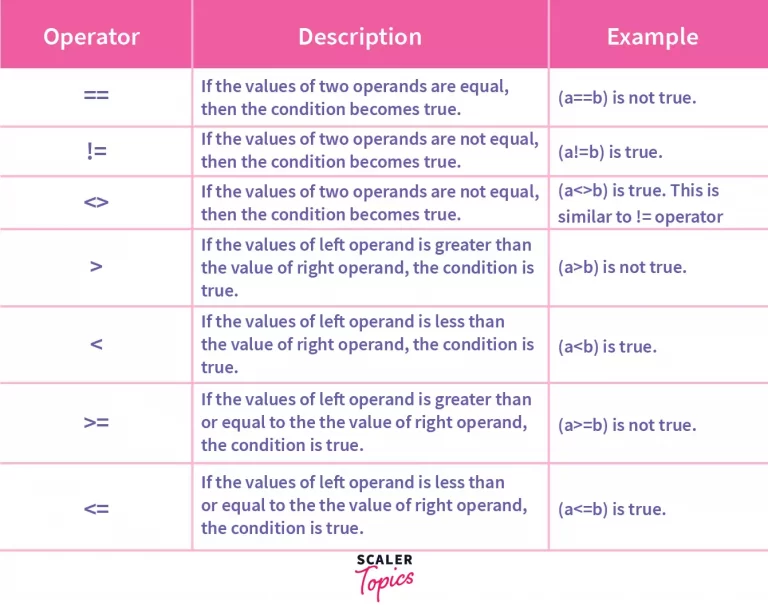
- Comparison Operators: These include
==(equal to),!=(not equal to),>(greater than),<(less than),>=(greater than or equal to), and<=(less than or equal to). These are the engines behindifstatements andwhileloops, allowing code to react to changing data states. - Logical Operators: The keywords
and,or, andnotallow for the combination of multiple comparison expressions. In complex software architectures, these operators manage the “gatekeeping” of logic, ensuring that processes only execute when specific, multifaceted conditions are met. For instance, a security tool might useandto verify both a username and a valid security token before granting access.
Advanced and Specialized Operators for Efficient Coding
Beyond basic math and logic, Python provides specialized operators designed to handle memory, data structures, and low-level bit manipulation. These operators are what distinguish a functional script from a high-performance application.
Assignment and Bitwise Operators
Assignment operators are used to store values in variables. While the basic = is universal, Python offers compound assignment operators like +=, -=, *=, and /=. These provide a more concise way to update variables, which enhances code readability and can slightly improve performance by reducing the number of lookups the interpreter must perform.
On the more technical end of the spectrum, Python includes Bitwise Operators (&, |, ^, ~, <<, >>). These operate on the binary representations of integers. While less common in web development, they are indispensable in fields like systems programming, cryptography, and digital signal processing, where manipulating individual bits of data is a requirement for speed and memory efficiency.
Membership and Identity Operators
Python includes unique operators that handle the relationship between objects and containers, which are vital for data validation and memory management.
- Membership Operators (
in,not in): These are used to test whether a value exists within a sequence (like a list, tuple, or string). In the tech world, this is a highly optimized way to search through datasets. - Identity Operators (
is,is not): Unlike the equality operator (==), which checks if two variables have the same value, the identity operator checks if two variables point to the same object in memory. This is a crucial distinction when working with large-scale applications where memory optimization and object referencing are paramount. Usingisincorrectly can lead to subtle bugs, making its understanding a mark of a sophisticated Python developer.
The Ternary Operator and Operator Precedence
To write professional-grade Python, one must understand how operators interact with each other and how they can be condensed to improve the “Pythonic” nature of the code.
Streamlining Logic with Conditional Expressions
Commonly referred to as the Ternary Operator, the conditional expression in Python allows a developer to write an if-else block in a single line. The syntax follows the pattern: X if condition else Y.
In the development of user interfaces or API responses, the ternary operator is used to keep code succinct. For example, assigning a “Guest” status if a user ID is missing can be done in one line rather than four. This leads to more maintainable codebases, a key priority in collaborative software environments.
Understanding Order of Operations
Just as in algebra, Python follows a strict hierarchy known as operator precedence. For example, exponentiation is performed before multiplication, and multiplication is performed before addition.
When building complex AI models or financial tools, a misunderstanding of precedence can result in catastrophic errors. Professional developers use parentheses () not just to change the order of operations, but to explicitly define it for other developers who may read the code later. Clarity in operator precedence is a hallmark of high-quality digital security and financial software.
Operator Overloading: Customizing Behavior in Object-Oriented Programming
One of the most powerful “Tech” features of Python is the ability to redefine how operators work for custom objects. This is known as Operator Overloading.
How Magic Methods Transform Operators
Python achieves operator overloading through “magic methods” (also called dunder methods because they start and end with double underscores). For instance, if you create a custom class representing a 3D coordinate, you can define the __add__ method. Once defined, you can use the + operator to add two coordinate objects together as if they were simple integers.
This capability allows developers to create highly intuitive APIs and libraries. Libraries like NumPy and Pandas, which underpin the modern AI and data science sectors, rely heavily on operator overloading to allow mathematical operations on massive arrays and dataframes with simple, readable syntax.
Best Practices for Overloading
While powerful, operator overloading must be used judiciously. In professional software development, operators should only be overloaded if the operation is intuitive and logical within the context of the object. Overloading the subtraction operator to perform a network request, for example, would be poor practice. The goal is always to enhance the readability and predictability of the software.
Modern Python Operators and the Evolution of the Language
The Python language is not static; it evolves to meet the needs of modern computing. Recent updates have introduced new operators that solve long-standing challenges in code structure.
The Walrus Operator (Assignment Expressions)
Introduced in Python 3.8, the assignment expression operator :=, affectionately known as the Walrus Operator, allows you to assign a value to a variable within an expression.
This is particularly useful in while loops and list comprehensions where you need to calculate a value and then immediately test it. In tech-heavy applications involving data parsing or real-time stream processing, the Walrus operator reduces redundancy and can lead to more performant code by avoiding double-calculations of the same data point.
The Impact on Modern Software Architecture
The continuous refinement of operators in Python reflects the industry’s shift toward more expressive and efficient coding patterns. From the simple arithmetic that powers basic scripts to the complex dunder methods that enable massive data manipulation libraries, operators are the silent engines of Python.
For the modern tech professional, mastering operators is not just about learning syntax; it is about learning how to translate complex logic into a format that is both understandable by humans and executable by machines. Whether you are securing a network, training a machine learning model, or building the next big app, the way you use Python operators will ultimately define the elegance and efficiency of your digital solution.
aViewFromTheCave is a participant in the Amazon Services LLC Associates Program, an affiliate advertising program designed to provide a means for sites to earn advertising fees by advertising and linking to Amazon.com. Amazon, the Amazon logo, AmazonSupply, and the AmazonSupply logo are trademarks of Amazon.com, Inc. or its affiliates. As an Amazon Associate we earn affiliate commissions from qualifying purchases.