
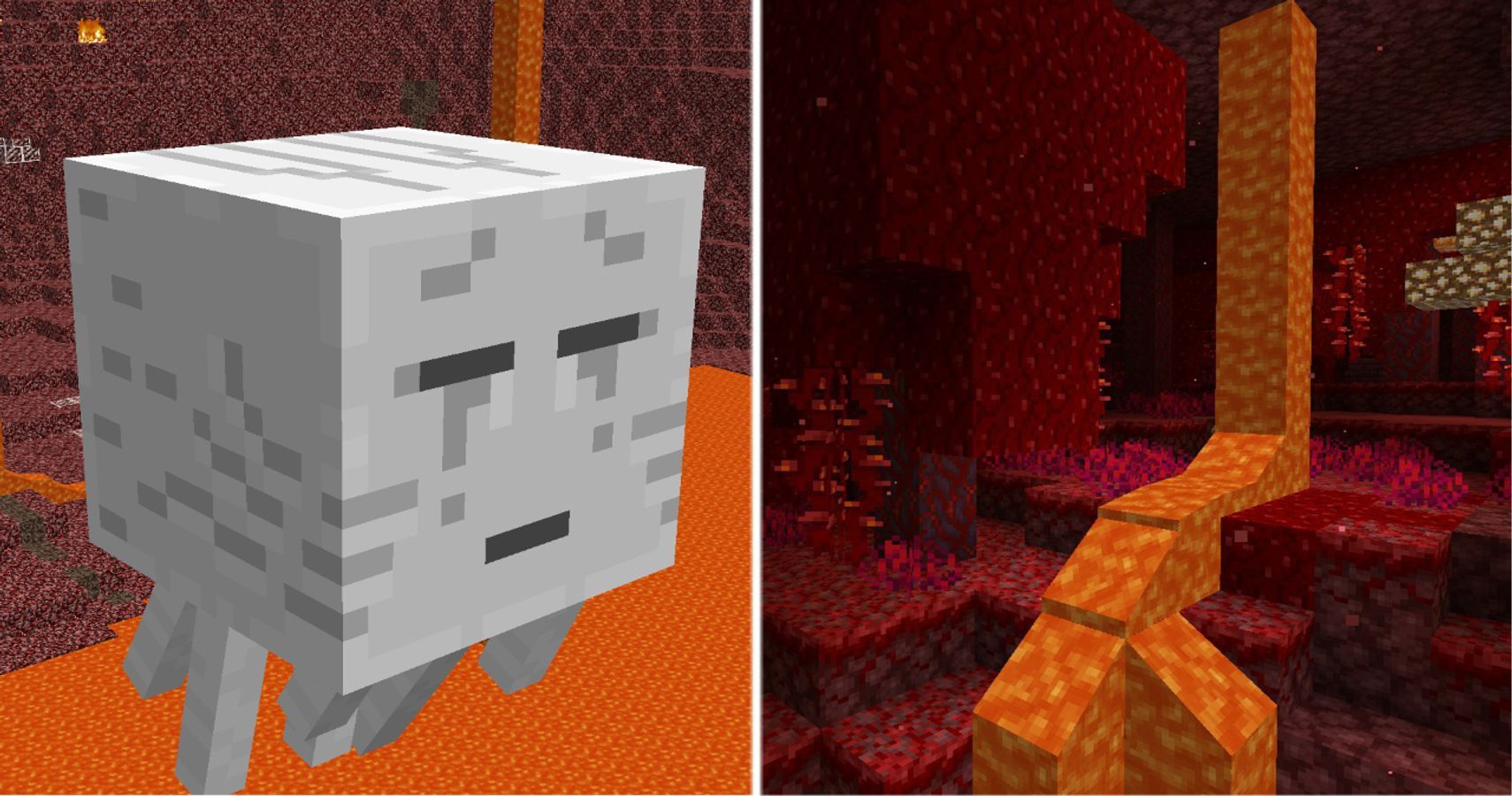
In the landscape of modern software development and interactive entertainment, few titles have achieved the architectural complexity and cultural permanence of Minecraft. At the heart of its procedurally generated universe lies a secondary dimension known as the Nether. While casual players often view it simply as a “hell-like” environment filled with lava and peril, from a technical and software engineering perspective, the Nether represents a sophisticated implementation of dimensional layering, spatial compression, and data-driven environmental design.
To understand what the Nether is, one must look beyond the aesthetics of red rock and fire. It is a masterclass in how game engines handle multi-environment synchronization and how developers utilize procedural algorithms to create distinct, high-stakes ecosystems within a single software framework.

The Nether as a Dimensional Layer: Understanding Software Mechanics
In the technical framework of Minecraft, the world is not a single contiguous file but a series of interconnected dimensions. The Nether is the first of these secondary dimensions, accessible via a specific software handshake: the construction of an obsidian portal.
Chunk Generation and the Procedural Algorithm
The Nether operates on the same procedural generation principles as the Overworld, utilizing Perlin noise and seed-based algorithms to create infinite terrain. However, the technical parameters are inverted. While the Overworld generates a “surface” with an atmosphere above, the Nether is designed as a “caveside” dimension.
From a coding standpoint, the Nether utilizes a “ceiling” of bedrock at Y=128 (in the Java Edition) or higher, creating a closed-loop environment. This requires the engine to calculate two layers of horizontal surfaces—the floor and the ceiling—simultaneously. For the software, this increases the density of block data per chunk, as the engine cannot simply “air-fill” the top half of the world. Each chunk must account for complex verticality, hanging “glowstone” light sources, and cascading lava flows, which are more computationally expensive than the static water of the Overworld.
Spatial Compression and Coordinate Logic
One of the most significant technical features of the Nether is its implementation of spatial compression. Within the game’s code, the Nether operates on a 1:8 coordinate scale relative to the Overworld. Moving one block in the Nether is equivalent to moving eight blocks in the primary dimension.
This is not merely a gameplay mechanic; it is a sophisticated solution to “fast travel” within a procedurally generated sandbox. By calculating the player’s X and Z coordinates and dividing or multiplying them by eight during the portal-teleportation event, the software allows for efficient traversal across massive datasets. This requires precise synchronization between the two world-save files to ensure that portals link correctly without causing “chunk-clipping” or “ghost-loading,” where a player might spawn into a solid wall because the rounding logic failed.
Technical Evolution: From Monolithic Biomes to Multi-Biome Ecosystems
Originally, the Nether was a monolithic biome—a repetitive landscape of netherrack and lava. However, recent software updates, specifically the 1.16 “Nether Update,” transformed it into a complex, multi-biome ecosystem. This transition highlights the shift toward data-driven design in modern game development.
The 1.16 Update and Data-Driven Design
The modernization of the Nether introduced biomes such as the Crimson Forest, Warped Forest, Soul Sand Valley, and Basalt Deltas. For developers, this meant moving away from hard-coded terrain generation toward a more flexible, JSON-driven system.
By using data packs and external configuration files, the developers at Mojang (a subsidiary of Microsoft) were able to define unique “surface builders” for each biome. For instance, the Soul Sand Valley utilizes a specific “fog” color variable and a unique particle-density setting that overrides the default Nether atmosphere. This modular approach allows the game to load specific assets—like the blue fire of soul sand or the spores of a warped forest—only when the player is within the relevant coordinate bounds, optimizing memory usage.
Entity AI and Pathfinding in Hostile Environments
The Nether is home to a unique set of mobs (mobile entities) with complex AI routines. The introduction of Piglins brought a “bartering” system, which is essentially a randomized loot-table logic triggered by an entity interaction.

From a technical perspective, the pathfinding in the Nether is significantly more complex than in the Overworld. The terrain is jagged, filled with vertical drops and liquid hazards (lava). The AI must constantly calculate “safe paths” through a 3D grid where the “floor” is often only one block wide. Furthermore, the “hostility” logic of Piglins—which changes based on whether the player is wearing gold armor—requires the game engine to perform a continuous check of the player’s NBT (Named Binary Tag) data during every tick of the AI’s update cycle.
Hardware and Performance Considerations of Nether Rendering
Rendering the Nether poses unique challenges for both CPUs and GPUs. Unlike the Overworld, where the sun acts as a single, global light source, the Nether is illuminated primarily by localized “block light.”
Lighting Engines and Ambient Fog Effects
Minecraft’s lighting engine calculates how light spreads from block to block. In the Nether, the prevalence of lava—a light-level 15 block—means the engine is constantly recalculating light gradients across vast distances. When lava flows, every new block update triggers a re-calculation of the surrounding light levels.
To maintain performance, the developers utilize “fog” as a technical tool. Nether fog isn’t just for atmosphere; it acts as a “culling” mechanism. By limiting the player’s vision, the game can reduce the number of rendered polygons and stop the GPU from processing distant, complex geometry that the player cannot see. In more recent technical iterations, the “rendering distance” is dynamically managed to prevent the “internal server” (the logic part of the game) from desyncing with the “client” (the visual part of the game).
Optimizing Server Resources for Multi-Dimensional Play
In a multiplayer environment, the Nether creates a significant load on server resources. Because the Nether exists as a separate “folder” or “world” within the server’s directory, the server must essentially run two games at once if one player is in the Overworld and another is in the Nether.
This is managed through “multi-threading” or “asynchronous chunk loading” in advanced server software. The server must keep the Nether’s chunks loaded in RAM while simultaneously processing the Overworld’s entities. If the server’s RAM is insufficient, the “Tick Per Second” (TPS) will drop, leading to lag. This makes the Nether a benchmark for server stability; high-performance Minecraft servers often use dedicated SSDs to handle the rapid read/write operations required when players move quickly through compressed Nether coordinates.
The Role of the Nether in the Sandbox Tech Stack
The Nether is more than just a place to find rare resources like Ancient Debris or Netherite; it is a critical component of the game’s “tech stack.” It provides the materials necessary for advanced automation and “Redstone” engineering.
Crafting Mechanics as Systems Engineering
Items found exclusively in the Nether, such as Quartz and Blaze Rods, are fundamental to the game’s logic-gate system. Quartz is required to craft Redstone Comparators—blocks that can “read” the state of a container (e.g., how full a chest is). This introduces a layer of systems engineering into the game.
Players use these Nether-sourced components to build “automatic sorters,” “clock circuits,” and “binary counters.” In this sense, the Nether acts as a “mid-game” unlock that expands the player’s ability to manipulate the game’s underlying code-like logic. Without the Nether, the technical complexity of Minecraft builds would be severely limited, as players would lack the components needed for advanced signal processing.
The Future of Dimensional Tech in Gaming
The Nether serves as a blueprint for how other sandbox titles handle “parallel dimensions.” By mastering the transition between these worlds, Minecraft has shown that software can maintain persistent, interconnected states without crashing or losing data integrity.
As we look toward the future of game engines, the Nether’s implementation of “seamless” dimensional travel (where the player feels they are moving between worlds) is a precursor to more advanced concepts like “server-meshing” in MMOs. It proves that a game can scale its complexity by layering environments on top of one another rather than just expanding a single, flat map.
Conclusion
The Nether is a vital technical pillar of the Minecraft experience. It is a sophisticated environment that challenges the game engine through complex vertical generation, intense lighting calculations, and innovative spatial compression. For the user, it is a realm of danger and discovery; for the technologist, it is a fascinating example of how procedural generation and data-driven design can create a multi-layered, interactive universe. By understanding the software mechanics behind the Nether, we gain a deeper appreciation for the technical ingenuity that allows Minecraft to remain the world’s premier digital sandbox.
aViewFromTheCave is a participant in the Amazon Services LLC Associates Program, an affiliate advertising program designed to provide a means for sites to earn advertising fees by advertising and linking to Amazon.com. Amazon, the Amazon logo, AmazonSupply, and the AmazonSupply logo are trademarks of Amazon.com, Inc. or its affiliates. As an Amazon Associate we earn affiliate commissions from qualifying purchases.