
In the world of finance, few concepts carry as much weight or influence as the interest rate. Often described as the “price of money,” the interest rate is the fundamental mechanism that dictates how we save, spend, and invest. Whether you are a first-time homebuyer looking at mortgage options, a seasoned investor analyzing bond yields, or a small business owner seeking a line of credit, the interest rate is the invisible hand guiding your financial decisions.
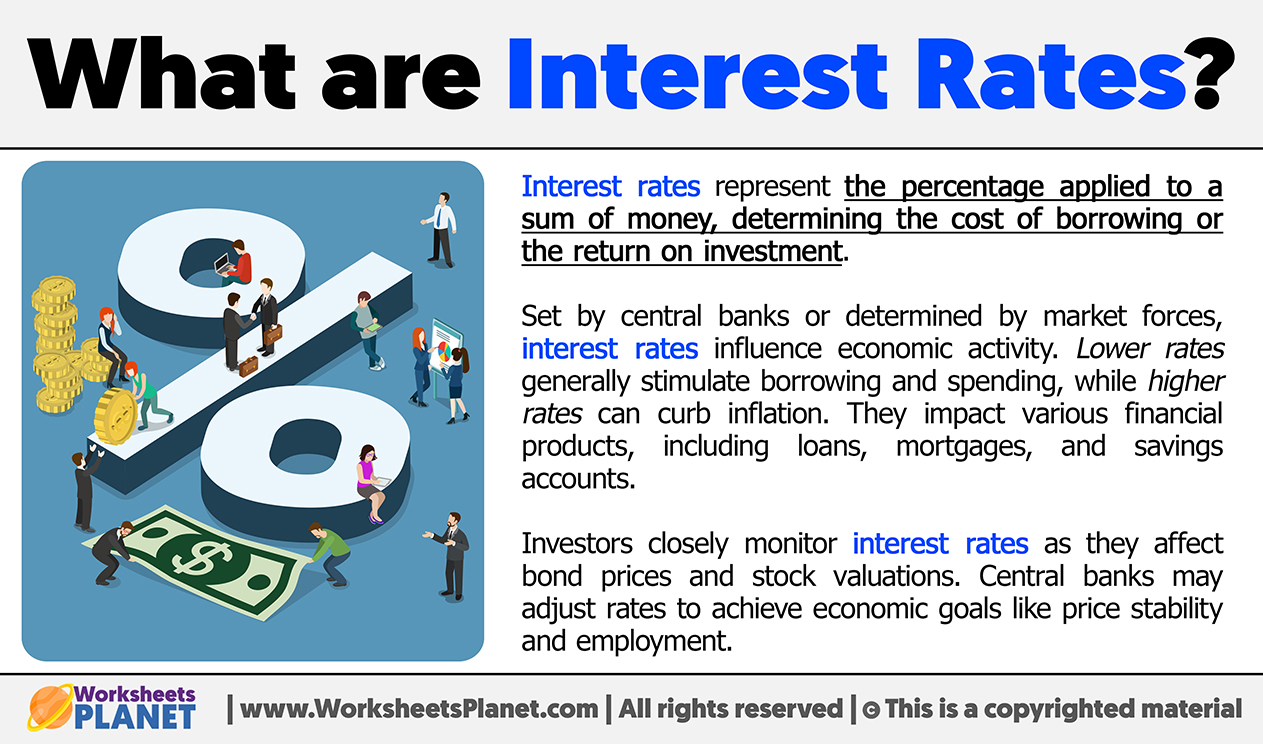
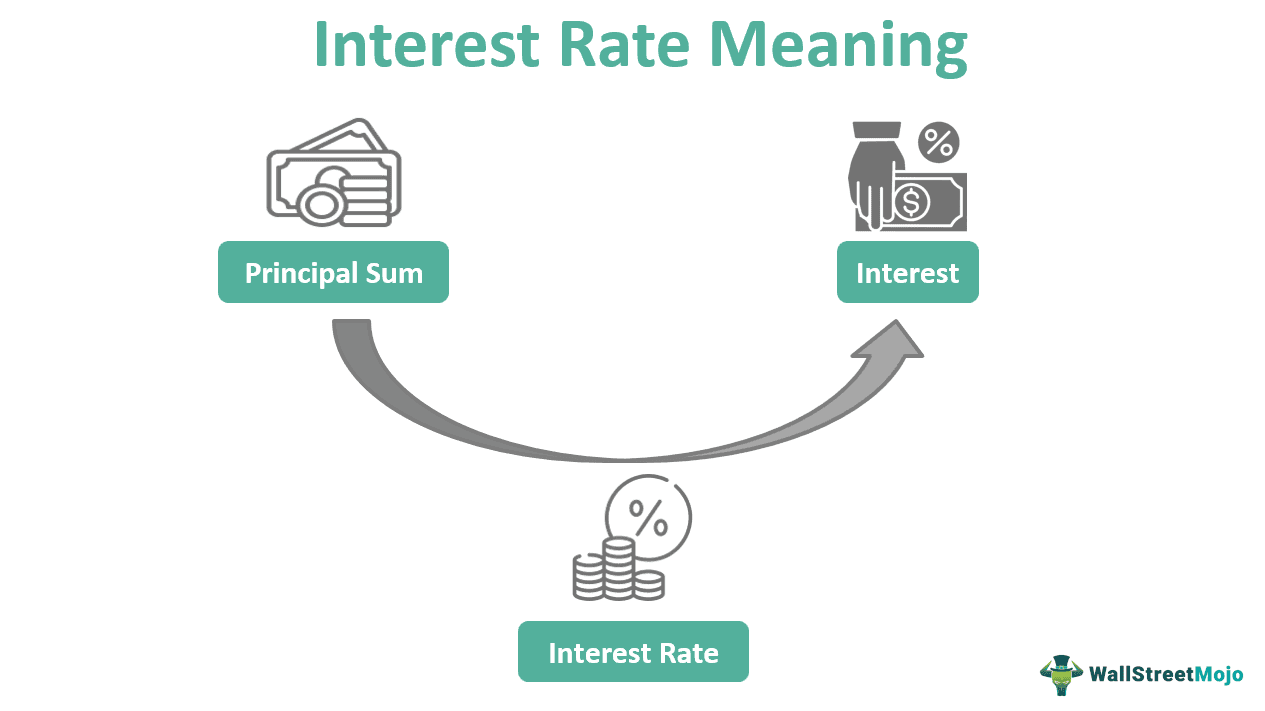
At its core, an interest rate represents two things: the cost of borrowing capital and the reward for lending it. When you borrow money from a bank, the interest rate is the premium you pay for the privilege of using that capital today rather than waiting until you have saved it. Conversely, when you deposit money into a savings account, the bank pays you interest as a “rental fee” for using your funds to provide loans to others. Understanding the nuances of these rates is essential for navigating the modern economic landscape.
The Fundamentals: Defining Interest Rates and Their Core Mechanics
To grasp the broader economic implications of interest rates, one must first understand the different ways they are calculated and expressed. Not all interest rates are created equal, and the way they are structured can significantly impact the total amount of money paid or earned over time.
Nominal vs. Real Interest Rates
The most common figure cited in the media is the nominal interest rate. This is the “advertised” rate—the percentage a bank says it will charge on a loan or pay on a deposit. However, savvy investors focus on the real interest rate. The real interest rate is the nominal rate adjusted for inflation. For example, if a savings account offers a 5% nominal interest rate but inflation is running at 3%, your “real” purchasing power is only growing by 2%. If inflation exceeds the nominal rate, you are effectively losing money in terms of purchasing power, even if your account balance is increasing.
Fixed vs. Variable Rates
In the realm of personal and business finance, loans generally fall into two categories: fixed and variable. A fixed interest rate remains constant throughout the life of the loan, providing predictability and protection against rising rates. In contrast, a variable (or floating) interest rate is tied to a benchmark, such as the Prime Rate or the Secured Overnight Financing Rate (SOFR). While variable rates often start lower than fixed rates, they carry the risk of increasing over time, which can lead to higher monthly payments.
Simple vs. Compound Interest
The method of calculation is perhaps the most critical factor in wealth accumulation. Simple interest is calculated only on the principal amount borrowed or invested. Compound interest, however, is calculated on the principal plus any accumulated interest from previous periods. Einstein famously called compound interest the “eighth wonder of the world” because of its ability to grow wealth exponentially over long periods. In the context of debt, however, compounding can be a double-edged sword, leading to a cycle of mounting balances if only minimum payments are made.
How Interest Rates are Determined: The Macroeconomic Engine
Interest rates do not exist in a vacuum. They are the result of a complex interplay between government policy, market demand, and global economic health.
The Role of Central Banks
In most modern economies, the “base rate” is set by a central bank, such as the Federal Reserve in the United States or the European Central Bank in the EU. Central banks use interest rates as a primary tool for monetary policy. When the economy is sluggish, central banks typically lower rates to make borrowing cheaper, encouraging businesses to expand and consumers to spend. When the economy is “overheating” and inflation is rising too quickly, central banks raise rates to cool down demand and stabilize prices.
Inflation and Economic Growth
Inflation is the greatest enemy of fixed-income returns. When the cost of goods and services rises, the purchasing power of money falls. Lenders demand higher interest rates to compensate for the fact that the money they are paid back in the future will be worth less than the money they lent out today. Consequently, periods of high inflation are almost always accompanied by high interest rates.
Credit Risk and the Individual Borrower
While central banks set the baseline, the interest rate you receive as an individual or business depends heavily on your creditworthiness. Lenders assess the “risk premium”—the additional interest required to cover the possibility that the borrower might default. Factors such as your credit score, debt-to-income ratio, and the value of collateral provided all influence the final rate. A borrower with a pristine credit history will always secure a lower interest rate than one viewed as high-risk.
The Impact of Interest Rates on Personal Finance
Interest rates act as a regulator for household budgets. Even a small shift in basis points can result in a significant change in discretionary income for the average family.
Mortgages and Housing Affordability
For most people, a home is the largest purchase they will ever make. Because mortgages are typically paid over 15 to 30 years, interest rates have a massive impact on affordability. A 1% increase in mortgage rates can decrease a buyer’s purchasing power by tens of thousands of dollars, or significantly increase the monthly payment for the same house. This relationship often creates an inverse correlation between interest rates and home prices; when rates rise, demand often cools, putting downward pressure on prices.
Credit Cards and Consumer Debt
Credit cards usually carry variable interest rates that are significantly higher than mortgages or auto loans. Because these rates are often tied to the federal funds rate, when the central bank hikes rates, credit card APRs (Annual Percentage Rates) follow suit almost immediately. For consumers carrying a balance, this means a larger portion of their monthly payment goes toward interest rather than principal, making it harder to escape the cycle of debt.
Savings Accounts and Fixed Deposits
On the flip side, higher interest rates are a boon for savers. During periods of low interest rates, traditional savings accounts and Certificates of Deposit (CDs) offer negligible returns. However, in a high-rate environment, “cash” becomes a viable asset class again. High-yield savings accounts (HYSAs) and money market funds allow individuals to earn a meaningful return on their emergency funds and short-term savings without taking on the risks associated with the stock market.
Interest Rates and the Investment Landscape
Investors must constantly recalibrate their portfolios in response to interest rate cycles. Different asset classes react in vastly different ways to changes in the cost of money.
The Inverse Relationship with Bond Prices
There is a fundamental rule in finance: when interest rates go up, bond prices go down. This happens because new bonds being issued will offer the higher current rate, making existing bonds with lower rates less attractive to investors. If you hold a bond to maturity, you will still receive your principal and the promised interest, but the market value of that bond will fluctuate based on prevailing rates.
Stock Market Volatility and Sector Performance
The relationship between stocks and interest rates is more nuanced. Generally, rising rates are seen as a headwind for the stock market. Higher borrowing costs can squeeze corporate profit margins, and the higher “discount rate” used by analysts makes future earnings look less valuable in today’s dollars. This is particularly true for high-growth tech companies. Conversely, certain sectors, such as banking and insurance, often benefit from higher rates as they can earn a wider “spread” on the money they lend.
Real Estate Investment Trusts (REITs)
REITs are popular income-generating investments, but they are highly sensitive to interest rates. Since REITs often rely on debt to acquire properties, rising rates increase their operational costs. Furthermore, as yields on “safe” investments like Treasury bonds rise, the high dividends offered by REITs become relatively less attractive, often leading to a sell-off in the sector.
Strategies for a Changing Interest Rate Environment
Navigating the shifts in interest rates requires a proactive approach to financial management. You cannot control what the central bank does, but you can control how your portfolio and debt are structured.
Refinancing Debt
When interest rates are falling, one of the most effective wealth-building moves is to refinance high-interest debt. This applies to mortgages, student loans, and private business loans. By securing a lower rate, you can either reduce your monthly payment to improve cash flow or keep the payment the same to pay off the principal significantly faster.
Diversifying Asset Allocation
In a rising rate environment, it is often wise to look at “short-duration” fixed-income investments, which are less sensitive to rate changes than long-term bonds. Additionally, diversifying into inflation-protected securities, such as Treasury Inflation-Protected Securities (TIPS), can help preserve the real value of your capital when rates are rising alongside inflation.
Building a “Ladder” Strategy
For conservative investors using CDs or bonds, a “laddering” strategy can mitigate interest rate risk. Instead of putting all your money into a single five-year CD, you split the investment into five parts: one-year, two-year, three-year, four-year, and five-year terms. As each “rung” of the ladder matures, you reinvest it at the current market rate. This ensures you always have liquidity and are never locked into a low rate for your entire portfolio if rates happen to rise.

Conclusion
The interest rate is far more than just a percentage on a bank statement; it is the heartbeat of the global economy. It dictates the flow of capital, influences the valuation of every asset class, and determines the purchasing power of every dollar you earn. By understanding how interest rates are set, how they affect your personal debt, and how they drive investment returns, you can move from being a passive participant in the economy to a strategic manager of your own financial future. Whether rates are at historic lows or climbing to new highs, the key to financial success lies in staying informed and remaining adaptable to the ever-shifting cost of money.
aViewFromTheCave is a participant in the Amazon Services LLC Associates Program, an affiliate advertising program designed to provide a means for sites to earn advertising fees by advertising and linking to Amazon.com. Amazon, the Amazon logo, AmazonSupply, and the AmazonSupply logo are trademarks of Amazon.com, Inc. or its affiliates. As an Amazon Associate we earn affiliate commissions from qualifying purchases.