
In the world of personal finance and career investment, few decisions carry as much weight as the choice of a university. While many view higher education through the lens of academic enrichment, a more pragmatic approach treats it as one of the most significant financial investments an individual will ever make. When we ask, “What is the hardest university to get into?” we are not just discussing academic rigor or low acceptance rates; we are discussing the acquisition of a high-value asset. In the modern economy, an elite degree functions as a gatekeeper to high-finance, venture capital, and the upper echelons of corporate earnings.

Understanding which institutions are the most difficult to access requires an analysis of supply, demand, and the “scarcity premium” that drives up the value of their degrees. This article explores the hardest universities to get into through the lens of financial strategy, ROI (Return on Investment), and the long-term wealth-building potential of elite credentials.
1. The Economics of Elite Admissions: Supply, Demand, and Scarcity
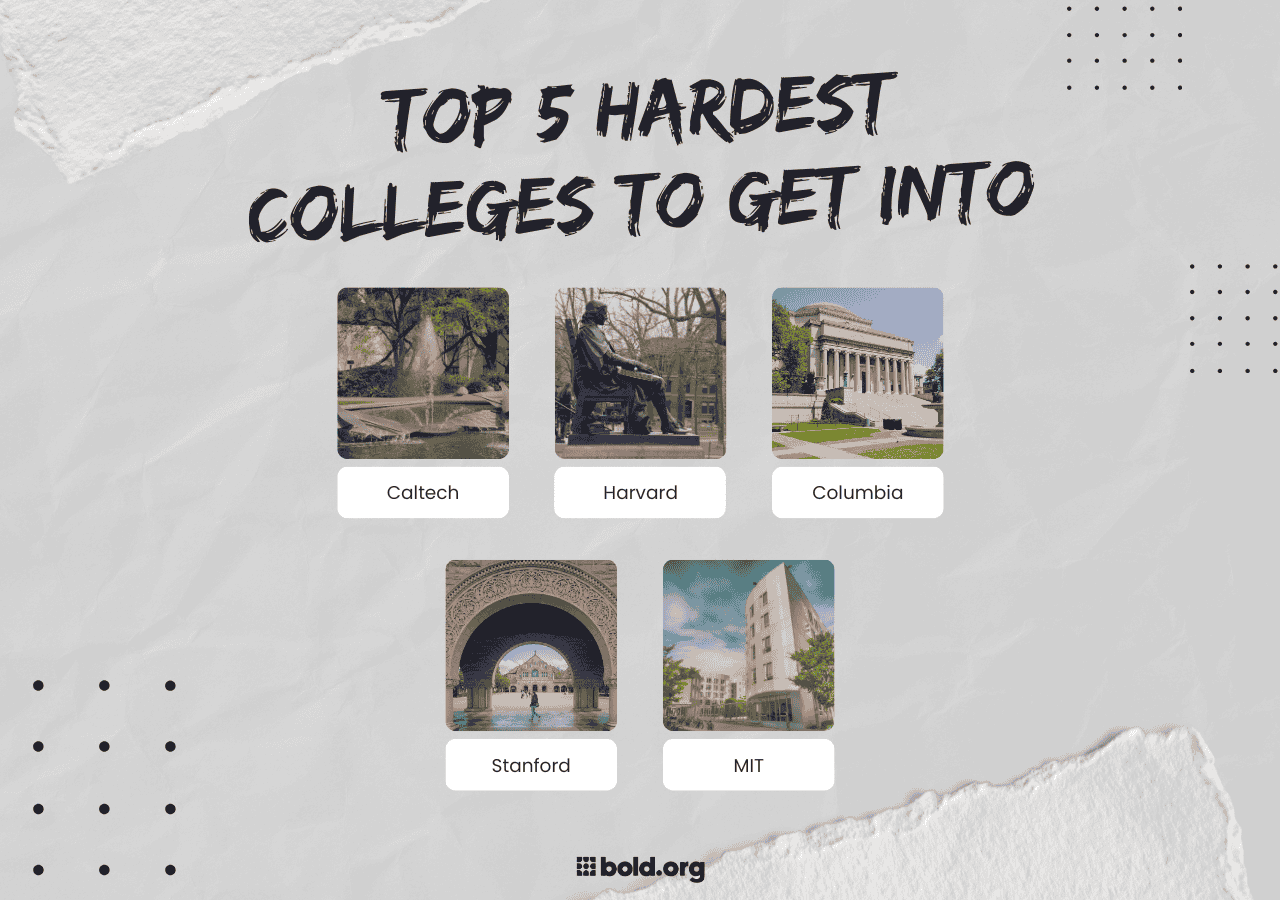
The difficulty of entering a university is often quantified by its acceptance rate. From an economic perspective, these institutions operate as “luxury brands” with a fixed supply and an ever-increasing global demand. Institutions like Harvard, Stanford, and the California Institute of Technology (Caltech) consistently report acceptance rates below 4%.
Supply, Demand, and the Scarcity Principle
In any market, when supply is restricted and demand is high, the value of the commodity increases. Top-tier universities intentionally limit their class sizes to maintain their prestige and high rankings. For a student or an investor in their own education, this scarcity creates a “prestige premium.” The harder a school is to get into, the more valuable its “signal” becomes to the labor market. Employers in high-paying sectors—such as investment banking at Goldman Sachs or management consulting at McKinsey—often use these acceptance rates as a proxy for talent density, effectively outsourcing their initial screening process to the university’s admissions office.
The Financial Barrier: Tuition vs. Accessibility
While academic merit is the primary filter, the financial reality of these institutions cannot be ignored. The “sticker price” of the hardest universities to get into now often exceeds $80,000 per year when accounting for tuition, room, board, and fees. However, from a financial planning perspective, the “net price” is the more relevant metric. Many of the most selective universities have the largest endowments in the world, allowing them to offer generous need-based financial aid. For an applicant from a lower-income bracket, Harvard may actually be cheaper than a local state school. This creates a unique financial paradox: the hardest schools to get into can sometimes be the most affordable for those who clear the merit hurdle, while remaining a significant capital outlay for upper-middle-class families.
2. Measuring the Hardest Universities by Financial Outcome
When determining the “hardest” school, one must consider the competition for the specific career outcomes they provide. If the goal of an education is wealth generation and high-income potential, the difficulty of admission is a direct reflection of the expected lifetime earnings associated with the degree.
Ivy League and the Pipeline to High-Finance
The Ivy League—comprising Harvard, Yale, Princeton, Columbia, Brown, Dartmouth, UPenn, and Cornell—represents the gold standard of educational branding and financial ROI. Specifically, the University of Pennsylvania (UPenn) and its Wharton School of Business are arguably the hardest to get into for those targeting the financial sector.
Wharton graduates are among the highest earners immediately following graduation, often securing roles in private equity and hedge funds that are virtually inaccessible to graduates of lower-ranked institutions. The “difficulty” here isn’t just about SAT scores; it’s about the competition for a seat in a classroom that serves as a direct pipeline to the world’s most concentrated sources of capital.
STEM Powerhouses and the Tech Wealth Explosion
While the Ivy League dominates the world of finance, institutions like MIT and Caltech are the most difficult to get into for those seeking wealth through technological innovation and engineering. These schools prioritize quantitative excellence above all else. From a money-management perspective, a degree from MIT is an insurance policy against unemployment. The ROI of an MIT degree is often calculated not just in salary, but in the valuation of the startups founded by its alumni. For an aspiring entrepreneur, the “difficulty” of getting into these schools is the price of admission to a network of venture capitalists and technical co-founders that can facilitate 7- and 8-figure exits.
3. The Cost of Entry: A Personal Finance Perspective
Achieving admission to the world’s most selective universities requires more than just high grades; it often requires a decade-long financial commitment to “profile building.” This section examines the hidden costs and the financial trade-offs involved in pursuing a spot at a top-tier institution.
Beyond the Sticker Price: Calculating True Net Cost
When evaluating the financial wisdom of attending a hard-to-reach university, one must calculate the opportunity cost. If a student spends four years at Stanford, they are not only paying for tuition but are also forgoing four years of potential income. However, the “compounding effect” of an elite degree usually outweighs these early losses. Data from the Equality of Opportunity Project suggests that students from the bottom income quintile who attend elite universities have a remarkably high chance of reaching the top income quintile. Thus, the “cost” of entry should be viewed as a capital investment in a high-yield asset.
Student Loans and the Long-term Debt Burden
A critical part of the financial conversation around selective universities is the management of student debt. While the ROI is high, the initial debt load can be staggering. Professional financial advisors often suggest that a student should not borrow more than their expected first-year salary. For graduates of the hardest universities to get into, this rule is easier to follow, as starting salaries in tech and finance often range from $100,000 to $200,000. For those pursuing less lucrative fields, however, the “prestige” of a hard-to-get-into school may not justify the interest payments on a six-figure loan.
4. Wealth Management Strategies for Prospective Students
For those aiming for the most competitive universities, financial preparation starts years before the first application is submitted. Treating education as a business venture requires a strategic approach to funding and income generation.
Financing an Elite Education Through Early Investing
For parents and students, 529 plans and other tax-advantaged investment vehicles are essential tools. Because the hardest universities are also among the most expensive, the power of compound interest is the best defense against rising tuition costs. If a family starts investing in a dedicated education fund at the child’s birth, the financial burden of a $350,000 four-year degree becomes manageable. This proactive wealth management ensures that when the acceptance letter from a school like Yale or Princeton arrives, the decision is based on fit and future opportunity rather than immediate liquidity constraints.
Leveraging the Alumni Network for Accelerated Income
The final piece of the financial puzzle is the “Network ROI.” The hardest universities to get into are those that offer the most powerful alumni networks. In the world of business and finance, who you know is often as important as what you know.
Successful students view their university years as a period of high-level networking. By leveraging the career services and alumni databases of a top-tier school, a student can secure internships that pay upwards of $10,000 per month, effectively subsidizing their own education. Furthermore, the ability to raise seed capital for a side hustle or a new business venture is significantly higher when the “founder” is backed by the brand equity of a prestigious institution.

Conclusion: Is the Hardest University Always the Best Investment?
In conclusion, the “hardest” university to get into—whether it be Harvard, Stanford, or MIT—is defined by a confluence of academic excellence and extreme market demand. From a money and finance perspective, these institutions are not merely schools; they are wealth-multipliers. They offer a unique combination of high-income potential, access to exclusive capital markets, and a lifelong brand that protects against economic downturns.
However, the financial success of the investment depends on the individual’s ability to manage the costs and leverage the opportunities provided. While the barrier to entry is high, the long-term financial dividends of attending one of the world’s most selective universities remain among the most robust in the global economy. For the savvy student-investor, the goal is not just to get in, but to turn that admission into a foundation for lifelong financial independence and growth.
aViewFromTheCave is a participant in the Amazon Services LLC Associates Program, an affiliate advertising program designed to provide a means for sites to earn advertising fees by advertising and linking to Amazon.com. Amazon, the Amazon logo, AmazonSupply, and the AmazonSupply logo are trademarks of Amazon.com, Inc. or its affiliates. As an Amazon Associate we earn affiliate commissions from qualifying purchases.