
In the landscape of modern technology, we are surrounded by invisible signals. From the high-speed fiber optic cables buried beneath our streets to the 5G signals pulsating through our mobile devices, the backbone of our digital existence is built upon wave mechanics. To understand how our data travels, how our wireless networks are optimized, and how emerging hardware functions, one must master the fundamental physics of the spectrum. At the heart of this understanding lies a singular, vital question: what is the formula to calculate wavelength?
As we delve into the technicalities of wave theory, we see that wavelength is not just a theoretical concept for physicists; it is a critical parameter for network engineers, software developers working with signal processing, and hardware designers building the next generation of gadgets.

The Fundamental Formula: Decoding the Math of the Spectrum
To calculate wavelength, we must understand the relationship between speed, frequency, and the physical distance of a single wave cycle. In the realm of technology and telecommunications, the formula is elegantly simple but carries profound implications for signal integrity and data transmission.
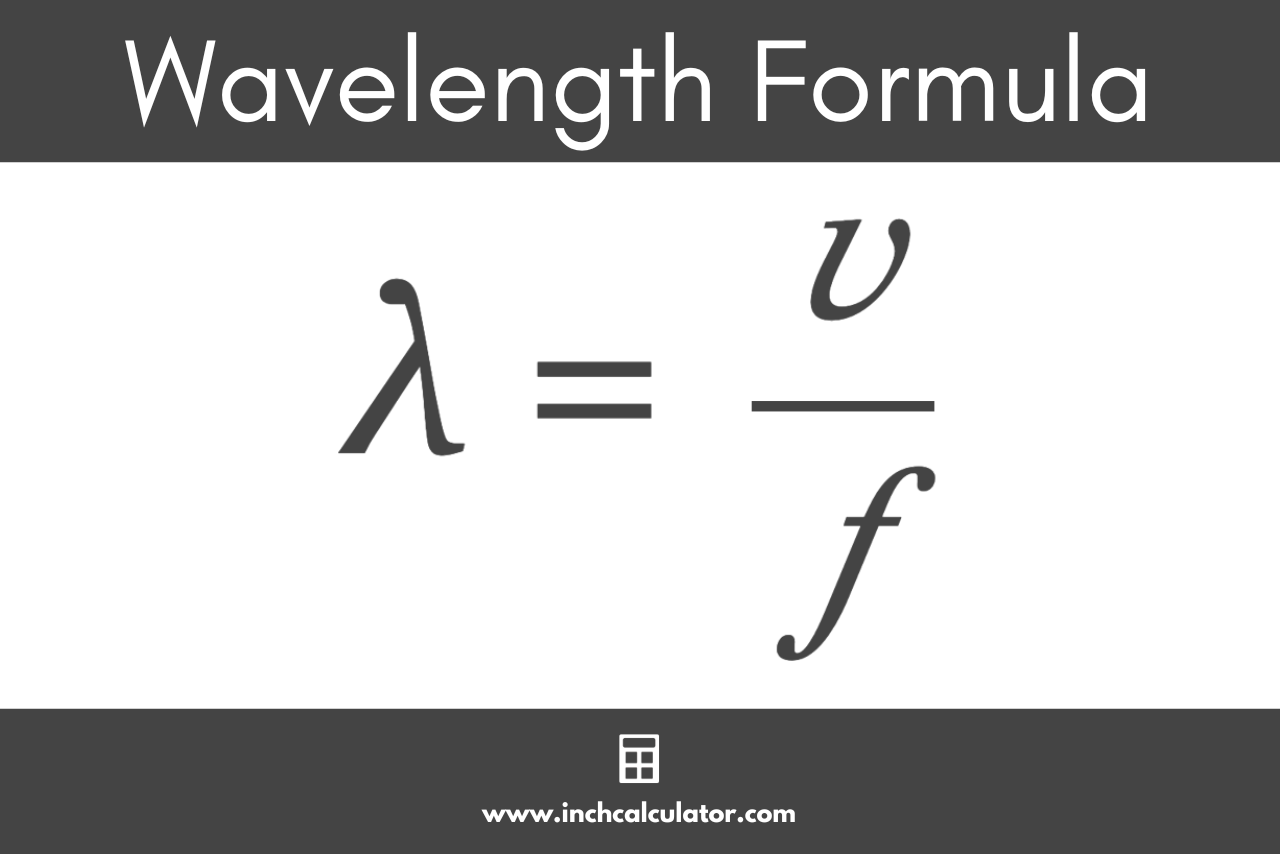
The standard formula for wavelength is:
λ = v / f
Where:
- λ (Lambda) represents the wavelength (the distance between two consecutive peaks of a wave).
- v (Velocity) represents the phase velocity of the wave (the speed at which the wave travels through a medium).
- f (Frequency) represents the number of cycles per second, measured in Hertz (Hz).
Defining the Variables in a Tech Context
In a technological environment, these variables are rarely static. For instance, the frequency is often determined by the regulatory bodies (like the FCC) that allocate “spectrum” to different technologies. Your Wi-Fi router might operate at 2.4 GHz or 5 GHz. This frequency is the denominator in our formula, meaning as the frequency increases, the wavelength must decrease. This inverse relationship is the reason why higher-frequency signals (like 5G mmWave) have shorter ranges but can carry significantly more data.
The Constant Speed of Light and Signal Propagation
When we calculate wavelength for electromagnetic waves (including light and radio waves) in a vacuum, the velocity (v) is replaced by the constant c (the speed of light, approximately 299,792,458 meters per second).
However, tech professionals must account for the “Velocity Factor.” Signals do not travel at the full speed of light when moving through copper wire or glass fiber optics. In a standard Category 6 cable or a silica-based fiber, the velocity might be only 60% to 99% of c. Ignoring this discrepancy during the calculation can lead to “timing jitters” and synchronization errors in high-speed data centers.
Wavelength in Telecommunications: From Fiber Optics to 5G
The application of the wavelength formula is most visible in how we architect our global communications networks. As the demand for bandwidth grows, engineers are forced to manipulate wavelengths with surgical precision.
Optimizing Fiber Optic Networks
In fiber optic technology, we use a technique called Wavelength Division Multiplexing (WDM). Instead of sending a single stream of data through a glass strand, we use the wavelength formula to “carve” the light spectrum into multiple distinct channels.
By calculating specific wavelengths—usually in the infrared spectrum around 1310 nm or 1550 nm—engineers can transmit dozens of different data streams simultaneously over the same physical fiber. The 1550 nm wavelength is particularly prized in tech because it experiences the lowest “attenuation” (loss of signal) in silica glass, allowing data to travel hundreds of kilometers without needing a repeater.
Scaling 5G and mmWave Technology
The shift from 4G LTE to 5G is essentially a shift in wavelength. 4G typically operates in lower frequency bands with longer wavelengths that can easily pass through walls and travel long distances. 5G, particularly the “millimeter wave” (mmWave) variety, operates at much higher frequencies (24 GHz to 71 GHz).
Using our formula (λ = v / f), a 30 GHz 5G signal has a wavelength of approximately 10 millimeters. Because these waves are so small, they are easily blocked by rain, foliage, or even a person’s hand. This physical reality, dictated by the formula, forces tech companies to build “small cell” architectures—placing thousands of mini-antennas across a city rather than one large tower—to ensure the signal remains viable.
Signal Integrity and Hardware Design: The Engineering Challenge
For hardware designers and digital security experts, wavelength calculations are essential for maintaining signal integrity. When we shrink transistors on a microchip or design antennas for a new smartphone, the physical size of the components must be mathematically “tuned” to the wavelengths they handle.
Antenna Design and Resonant Frequencies
An antenna is most efficient when its physical length is a specific fraction of the wavelength it is intended to receive (usually half-wavelength or quarter-wavelength). If a software-defined radio (SDR) is being used for digital security audits or signal interception, the hardware must be tuned based on the λ = v / f calculation. If the antenna is not correctly sized for the wavelength, much of the signal energy is reflected back into the transmitter—a phenomenon known as the Standing Wave Ratio (SWR)—which can overheat hardware and corrupt data packets.
Multipath Interference and Phase Shifts
In complex environments like automated warehouses or smart factories, signals bounce off metallic surfaces. This creates “multipath interference,” where the same signal reaches a receiver at different times.
By understanding the wavelength, developers can write algorithms for “MIMO” (Multiple Input, Multiple Output) systems. These systems use the phase of the wavelength to reconstruct scrambled signals, effectively turning interference into an advantage. This is the logic behind “beamforming” technology, where multiple antennas calculate the wavelength’s phase to steer a concentrated beam of data directly toward a specific device.
The Role of Wavelength in Emerging AI and Remote Sensing
As we move toward a future of autonomous vehicles and AI-driven robotics, the formula for wavelength becomes the primary tool for environmental perception.
LiDAR and Autonomous Systems
LiDAR (Light Detection and Ranging) is the “eyes” of most self-driving cars. It works by emitting laser pulses and measuring the time it takes for them to bounce back. To achieve high-resolution mapping, LiDAR systems typically use wavelengths in the 905 nm or 1550 nm range.
The choice of wavelength here is a calculated tech trade-off. The 905 nm wavelength is cheaper to produce with silicon-based sensors, but the 1550 nm wavelength is “eye-safe” because it is absorbed by the cornea before reaching the retina. Tech firms must use the wavelength formula to ensure their sensors provide enough “resolution” (which is limited by the wavelength size) to distinguish a pedestrian from a street sign at high speeds.
Spectroscopic AI Analysis
Artificial Intelligence is now being integrated with hyper-spectral imaging. By analyzing how different materials reflect specific wavelengths of light, AI models can identify the chemical composition of objects. This technology is being deployed in everything from automated quality control in tech manufacturing to the sensors in future smartphones that might be able to tell you if your food is fresh or if a skin lesion is dangerous. All of these AI applications rely on the software’s ability to categorize and process inputs based on their spectral wavelength.
Conclusion: The Strategic Importance of Spectral Literacy
The formula to calculate wavelength is more than a relic of high school physics; it is the fundamental logic gate of the physical world. In the tech industry, wavelength dictates the limits of speed, the distance of our reach, and the precision of our sensors.
As we look toward the future—exploring Terahertz communications for 6G and the complexities of quantum networking—the ability to calculate and manipulate wavelength will remain the dividing line between stagnant hardware and cutting-edge innovation. For the tech professional, mastering the spectrum starts with this simple equation, allowing us to bridge the gap between the digital code we write and the physical waves that carry it across the globe. Whether you are optimizing a cloud server’s fiber backbone or designing the next wearable gadget, the wavelength is the constant pulse of your success.
aViewFromTheCave is a participant in the Amazon Services LLC Associates Program, an affiliate advertising program designed to provide a means for sites to earn advertising fees by advertising and linking to Amazon.com. Amazon, the Amazon logo, AmazonSupply, and the AmazonSupply logo are trademarks of Amazon.com, Inc. or its affiliates. As an Amazon Associate we earn affiliate commissions from qualifying purchases.