
In the modern digital economy, the question “what is the flight price?” is deceptively simple. To a consumer, it appears as a numerical value on a screen. However, to a data scientist or a software engineer in the aviation industry, a flight price is a volatile, high-dimensional data point generated by some of the most sophisticated algorithms in existence. Unlike a retail product with a fixed MSRP, a flight ticket is a perishable commodity whose value fluctuates based on real-time supply, predictive demand, and complex computational models.
Understanding flight pricing requires peeling back the layers of travel technology, from the legacy Global Distribution Systems (GDS) to the cutting-edge Artificial Intelligence (AI) that now dictates the cost of a seat. This article explores the technological infrastructure that determines what you pay, how algorithms “think,” and the digital tools shaping the future of aviation commerce.
The Evolution of Revenue Management Systems (RMS)
The backbone of airline pricing is the Revenue Management System (RMS). This is a specialized suite of software designed to solve a singular problem: selling the right seat to the right customer at the right time for the right price. This tech-driven discipline, which originated in the post-deregulation era of the 1980s, has evolved from basic spreadsheets into cloud-native, automated powerhouses.
From Static Fares to Real-Time Adjustments
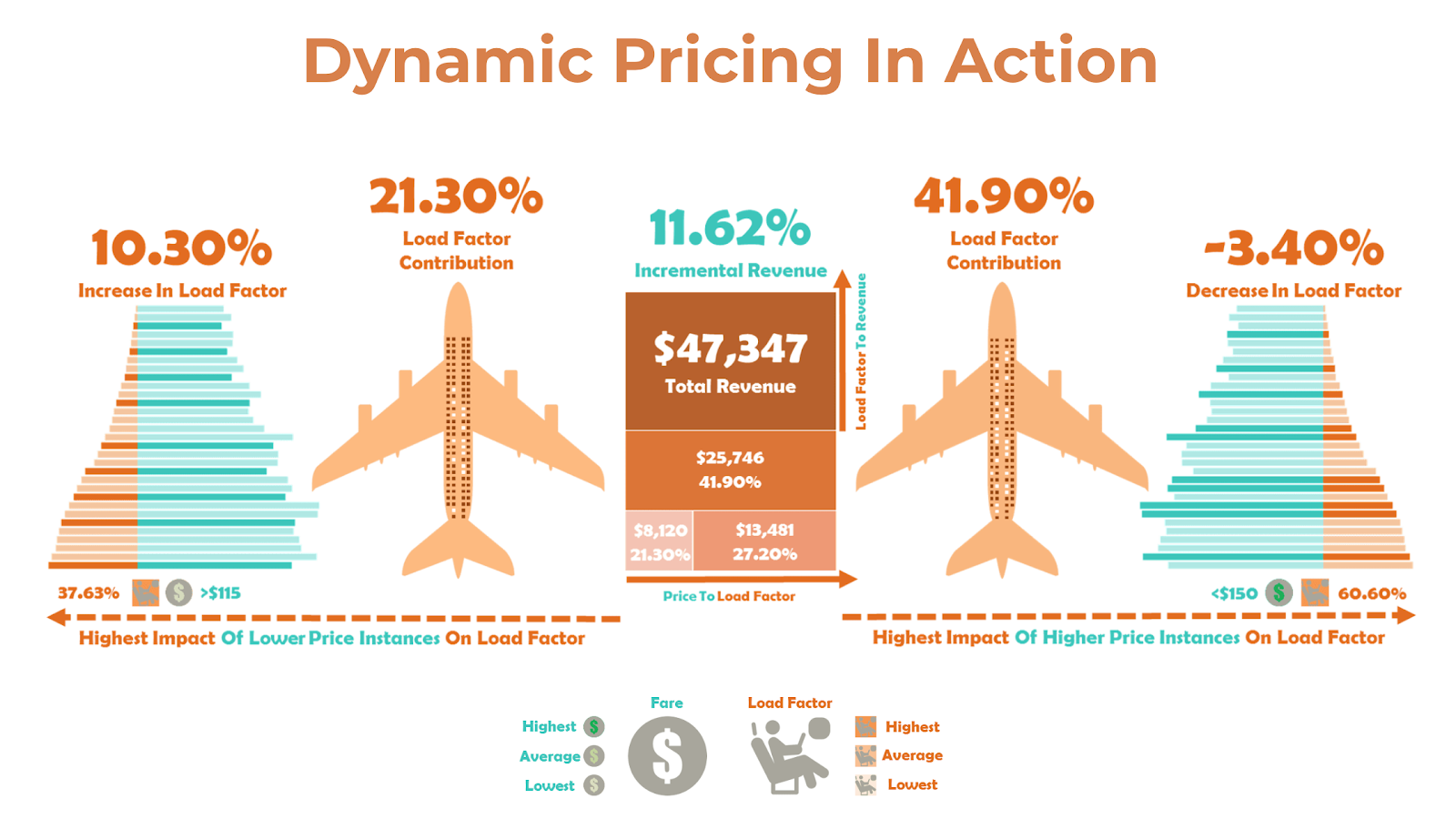
In the early days of aviation technology, flight prices were relatively static. Fares were filed with central clearinghouses and changed infrequently. Today, the tech stack of a major airline allows for thousands of price adjustments per second across their entire network. Modern RMS software uses “Expected Marginal Seat Revenue” (EMSR) algorithms to determine whether to sell a seat now at a lower price or hold it for a potential high-paying business traveler later. This involves solving complex optimization problems in real-time, balancing the risk of an empty seat against the reward of a premium fare.
The Role of Global Distribution Systems (GDS)
While the airline’s internal RMS sets the price, the Global Distribution System (GDS) acts as the massive digital circulatory system that pumps this data to travel agents and online platforms. Systems like Amadeus, Sabre, and Travelport are the giants of this space. These are not merely databases; they are high-speed communication networks that handle trillions of transactions. When you query a flight price, the GDS must reconcile the airline’s inventory with real-time availability across multiple booking classes (buckets), a feat of low-latency engineering that ensures two people booking simultaneously don’t “overfill” a plane.
Artificial Intelligence and Machine Learning in Fare Prediction
The most significant shift in travel tech over the last decade has been the integration of Artificial Intelligence (AI) and Machine Learning (ML). While traditional RMS relied on historical averages, AI-driven models look at the “now” and the “near-future” with uncanny precision.
Predictive Modeling and Historical Data Analysis
AI tools today ingest more than just “last year’s sales.” They analyze vast datasets including global weather patterns, major sporting events, geopolitical shifts, and even social media sentiment. If an AI detects a surge in digital mentions of a specific destination, it can proactively adjust the price curve before a human analyst even notices the trend. For the consumer, tools like Google Flights or Hopper utilize ML to provide “Price Predictions,” telling users whether to “Buy Now” or “Wait.” These consumer-facing apps are essentially simplified interfaces for massive neural networks that simulate millions of potential price paths.
Neural Networks and Demand Forecasting
Deep learning models, specifically recurrent neural networks (RNNs), are increasingly used to forecast demand. These models are particularly good at identifying non-linear patterns—scenarios where traditional statistics fail. For example, a neural network can identify that a price increase of 5% on a Tuesday morning for a specific route has a negligible impact on conversion, whereas the same increase on a Friday might collapse demand. By identifying these “price elasticities” through continuous machine learning, airlines can fine-tune their pricing engines to maximize load factors (the percentage of seats filled) while optimizing yield.
The Tech Behind Personalization and Behavioral Tracking
When a user asks “what is the flight price,” the answer might vary depending on who is asking. This brings us into the controversial but technologically fascinating realm of dynamic personalization and the “New Distribution Capability” (NDC).
Cookies, IP Addresses, and Device Fingerprinting
There is a long-standing debate about whether airlines use “browser sniffing” to raise prices for specific users. While many airlines deny individual price discrimination based on search history, the technology to perform “device fingerprinting” is ubiquitous. High-end travel platforms can identify if a user is searching from a latest-model MacBook in a high-income ZIP code versus an older Android device in a different demographic. From a tech perspective, this data is used to build a “User Profile” that helps the software determine which ancillary products (like extra legroom or lounge access) to bundle with the base fare to increase the total transaction value.
Dynamic Packaging and Ancillary Revenue Tech
The “price” of a flight is increasingly becoming unbundled. Modern airline APIs (Application Programming Interfaces) are designed to facilitate “Dynamic Packaging.” Instead of a single fare, the server returns a customized offer. This is powered by the IATA’s NDC standard, an XML-based data transmission standard that allows airlines to bypass the limitations of older GDS systems. NDC enables the airline to send rich content—like photos of the seat or personalized meal options—directly to the booking interface, turning the “price” from a static number into a personalized offer generated in milliseconds by a recommendation engine.
Future Tech Trends in Aviation Pricing
The horizon of flight pricing tech is defined by decentralization and even higher speeds of processing. As we move toward “Offer and Order” management systems, the legacy structures of the 1970s are being replaced by modern, modular software architectures.
Blockchain for Transparent Fare Distribution
One of the most promising applications of blockchain in travel is the decentralization of inventory. Currently, the GDS middlemen take a significant cut of every ticket sold. Blockchain startups are building decentralized marketplaces where airlines can “tokenize” their seats. In this ecosystem, the “price” is governed by a smart contract. This could theoretically lower prices by removing intermediary fees and providing a single, immutable “source of truth” for seat availability, preventing the overbooking glitches that often plague traditional software stacks.
The Impact of 5G and Edge Computing on Instant Bookings
As 5G networks become the standard, the “latency” of a flight search is disappearing. Edge computing—processing data closer to the user rather than in a centralized data center—allows for instantaneous price refreshes. For high-frequency travelers, this means the “flight price” can be updated based on their physical location or real-time movement. Imagine a travel app that detects you are at a train station experiencing delays and instantly pushes a notification with a discounted “last-minute” flight price to your destination. This level of hyper-contextual pricing is only possible through the convergence of high-speed mobile tech and edge-based AI.

Conclusion: The Digital Reality of the Fare
In conclusion, when we ask “what is the flight price,” we are interacting with a complex digital ecosystem. The price is not a fixed value; it is the output of an intense computational process involving RMS logic, GDS distribution, AI-driven demand forecasting, and personalized data packets.
For the tech-savvy traveler, understanding this infrastructure is the key to navigating the modern travel landscape. We have moved beyond the era of “Saturday night stay” rules into an era of algorithmic transparency and predictive analytics. As machine learning continues to refine its ability to understand human behavior and as blockchain potentially flattens the distribution layer, the “price” of a flight will become even more fluid, more personalized, and more integrated into our digital lives. The flight price is no longer just a cost—it is a sophisticated piece of data, reflecting the state of global technology in real-time.
aViewFromTheCave is a participant in the Amazon Services LLC Associates Program, an affiliate advertising program designed to provide a means for sites to earn advertising fees by advertising and linking to Amazon.com. Amazon, the Amazon logo, AmazonSupply, and the AmazonSupply logo are trademarks of Amazon.com, Inc. or its affiliates. As an Amazon Associate we earn affiliate commissions from qualifying purchases.