
In the fast-paced world of global finance, few phrases are as ubiquitous as “the Dow.” Whether you are tuning into a nightly news broadcast, scrolling through a financial news app, or sitting in a boardroom, the question “What is the Dow right now?” serves as a shorthand for the general health of the American economy. However, for the modern investor, understanding the Dow Jones Industrial Average (DJIA) requires looking beyond a single numerical value. It involves understanding the mechanics of price-weighted indices, the influence of blue-chip corporations, and the psychological impact of market volatility on personal wealth.

To answer what the Dow is “right now” is to take a snapshot of a living, breathing ecosystem of thirty of the most significant companies in the United States. This guide explores the structure, influence, and investment implications of the world’s most famous stock market index.
The Mechanics of the Index: How the Dow is Calculated
To understand what the Dow is at any given moment, one must first understand how it is constructed. Unlike the S&P 500 or the Nasdaq Composite, which are market-capitalization-weighted indices, the Dow Jones Industrial Average is a price-weighted index. This distinction is fundamental to interpreting the “point” moves you see on your screen.
The Price-Weighting Methodology
In a price-weighted index, companies with higher stock prices have a greater influence on the index’s total value than those with lower stock prices. For example, if a company trading at $200 per share sees a 1% increase, it will move the Dow significantly more than a company trading at $50 per share seeing the same 1% increase, regardless of the actual size (market cap) of the company.
This methodology is a legacy of the late 19th century when Charles Dow first created the index. While some modern critics argue that this approach is outdated compared to market-cap weighting, the Dow remains a remarkably accurate mirror of the broader market over long periods because it tracks “blue-chip” leaders that tend to move in tandem with the general economy.
The Role of the Dow Divisor
You might wonder how thirty stocks, some priced at $100 and others at $500, can result in an index value in the tens of thousands. This is handled by the “Dow Divisor.” The divisor is a mathematical constant used to account for stock splits, spin-offs, and other structural changes in the component companies.
When a company in the Dow undergoes a 2-for-1 stock split, its share price drops by half, but the value of the company hasn’t actually changed. To prevent the Dow from “dropping” thousands of points due to a simple split, the divisor is adjusted. Right now, the divisor is a decimal much smaller than one, meaning that every $1 change in a component’s stock price translates into a much larger movement in the overall Dow points.
What Drives the Numbers? Key Influencers of Daily Fluctuations
When investors ask “what is the Dow right now,” they are often looking for the “why” behind the movement. The index does not move in a vacuum; it reacts to a complex web of macroeconomic data, corporate performance, and geopolitical sentiment.
Federal Reserve Policy and Interest Rates
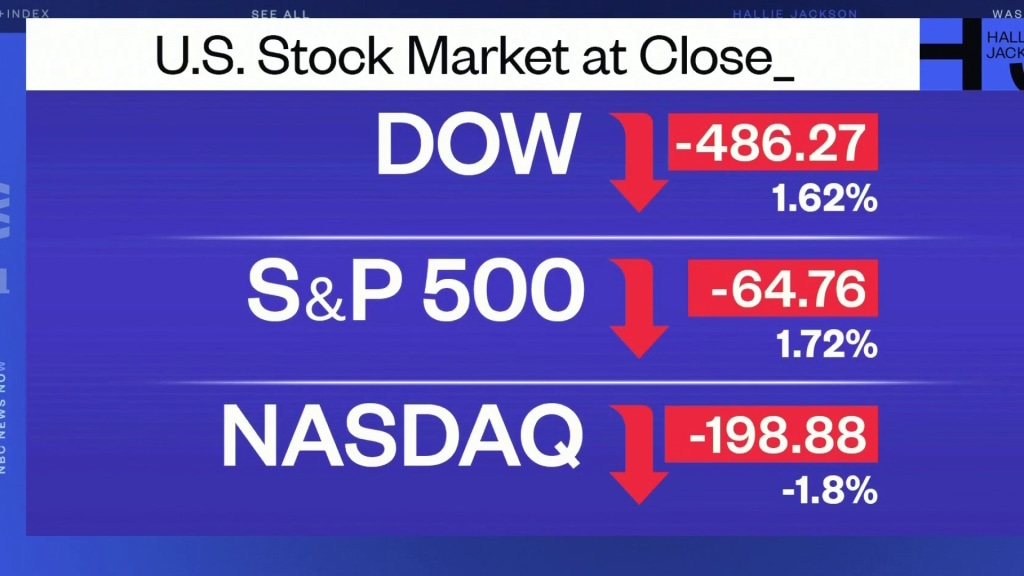
In the current financial climate, the Federal Reserve is perhaps the single largest driver of the Dow’s daily fluctuations. The “Money” niche is currently dominated by discussions of inflation and interest rate trajectories. When the Fed signals a “hawkish” stance (higher rates), the Dow often retreats. This is because higher interest rates increase borrowing costs for the 30 industrial giants that make up the index, potentially squeezing profit margins. Conversely, “dovish” signals (lower rates) often send the Dow surging as investors anticipate cheaper capital and robust consumer spending.
Corporate Earnings Season
Four times a year, the companies within the Dow report their quarterly earnings. Because the Dow only contains 30 companies, a single “miss” or “beat” by a heavyweight member can swing the entire index. If a massive component like UnitedHealth Group or Goldman Sachs reports earnings that exceed analyst expectations, the positive momentum can pull the entire index upward, even if other sectors are lagging.
Global Macro-Economic Data
Beyond the US borders, the Dow reacts to global trade data, employment reports, and manufacturing indices. Since many Dow components—such as Apple, Boeing, and Coca-Cola—are multinational behemoths, their valuations are tied to global stability. A slowdown in European manufacturing or a shift in Asian consumer demand will reflect almost instantly in the “live” price of the Dow.
The Components: Examining the 30 Blue-Chip Pillars
The Dow is often criticized for being “too small” because it only tracks 30 companies. However, these thirty companies represent a massive cross-section of the American industrial and financial landscape. Understanding what the Dow is right now requires looking at who is currently “in the room.”
Sector Diversification in the Modern Dow
While the name includes “Industrial,” the index has evolved far beyond smoke-stack industries. Today, it includes:
- Information Technology: Microsoft, Apple, and Salesforce.
- Financials: JPMorgan Chase, Visa, and American Express.
- Healthcare: Johnson & Johnson, Amgen, and UnitedHealth.
- Consumer Staples and Discretionary: Walmart, Home Depot, and McDonald’s.
This diversification ensures that the Dow captures the transition of the US economy from a manufacturing base to a service- and tech-oriented powerhouse.
The Selection Process
Unlike other indices that use strict quantitative rules for inclusion, the Dow components are selected by a committee at S&P Dow Jones Indices. There are no permanent members. When a company loses its relevance or its stock price becomes too low to impact the index effectively, it is replaced. A recent example was the removal of Walgreens Boots Alliance to make room for Amazon, a move that signaled the index’s recognition of e-commerce as a primary pillar of the modern “Industrial” landscape.
Using the Dow as a Financial Compass
For the individual investor, knowing “what the Dow is right now” is less about day-trading and more about gauging market sentiment and long-term trends. It serves as a psychological benchmark for the investing public.
The “Pulse Check” for Main Street
While professional fund managers might prefer the S&P 500 or the Russell 2000 for technical analysis, the Dow remains the most cited index by the general public. When the Dow hits “all-time highs,” it boosts consumer confidence, often leading to increased spending and further investment. Conversely, a “correction” in the Dow (a 10% drop from recent highs) can trigger a defensive posture among retail investors.
Investing in the Dow
You cannot “buy” the Dow Jones Industrial Average directly because it is an index, not a stock. However, financial tools have made it incredibly easy to track its performance in a portfolio. The most prominent method is through Exchange-Traded Funds (ETFs), such as the SPDR Dow Jones Industrial Average ETF Trust (ticker: DIA), often referred to as “Diamonds.” By holding a single ETF, an investor gains proportional exposure to all 30 blue-chip companies, benefiting from their collective dividends and growth.
Avoiding the Noise
In the age of 24-hour financial news, it is easy to become obsessed with the minute-by-minute movement of the Dow. However, the most successful “Money” strategists emphasize that the Dow’s value “right now” is a data point, not a destination. For those focused on personal finance and long-term wealth building, the Dow is best viewed through the lens of years and decades rather than hours and days.
Conclusion: The Enduring Legacy of the Dow
The question “what is the Dow right now?” will continue to be asked as long as there is a New York Stock Exchange. Despite its quirks—its price-weighted nature and its small sample size—it remains the most prestigious barometer of American corporate success. It tracks the giants that provide our medicines, build our technology, and manage our finances.
By understanding that the Dow is a curated collection of industry leaders, influenced by the Federal Reserve and global economic shifts, investors can move past the “noise” of daily price swings. Whether the index is up 500 points or down 200 on any given day, its true value lies in its ability to tell the story of the American economy’s resilience and evolution. For those managing their own “Money” and investments, the Dow is not just a number—it is a map of the corporate landscape, providing direction for those seeking to build long-term financial security.
aViewFromTheCave is a participant in the Amazon Services LLC Associates Program, an affiliate advertising program designed to provide a means for sites to earn advertising fees by advertising and linking to Amazon.com. Amazon, the Amazon logo, AmazonSupply, and the AmazonSupply logo are trademarks of Amazon.com, Inc. or its affiliates. As an Amazon Associate we earn affiliate commissions from qualifying purchases.