
The financial markets are a complex ecosystem of indices, stocks, bonds, and derivatives, each playing a unique role in price discovery, risk management, and capital allocation. Among the most closely watched barometers of U.S. economic health is the Dow Jones Industrial Average (DJIA), an index representing thirty of the largest and most influential publicly traded companies. However, for active traders, institutional investors, and those seeking to manage exposure to the broader market, the Dow Jones Futures Index—more commonly referred to as Dow futures—offers a dynamic and leveraged alternative. This sophisticated financial instrument provides a crucial mechanism for speculating on the future direction of the DJIA and hedging against potential price movements, acting as a real-time pulse of market sentiment even before the stock market officially opens. Understanding what the Dow Jones Futures Index entails, how it functions, and its significance is paramount for anyone navigating the intricate world of modern finance.
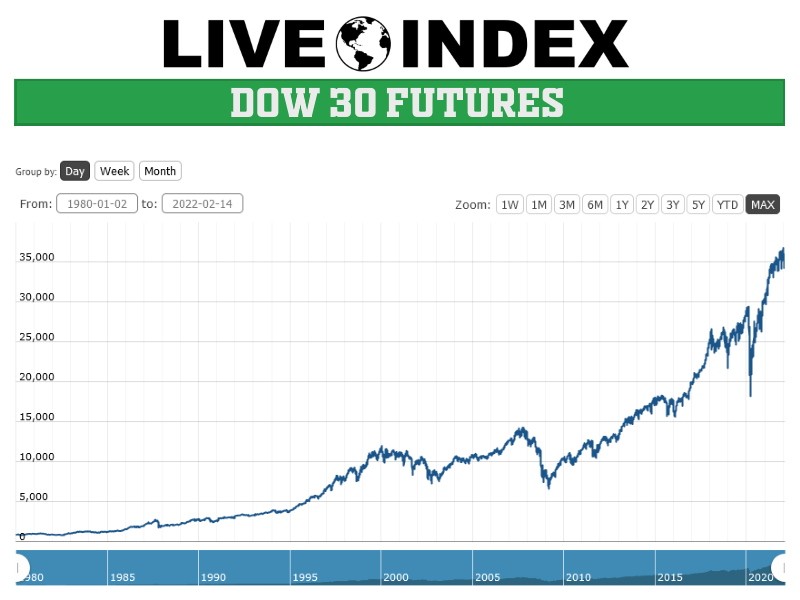
Understanding Futures Contracts and the DJIA
To fully grasp the essence of the Dow Jones Futures Index, it’s essential to first establish a clear understanding of its two core components: the underlying index, the Dow Jones Industrial Average, and the derivative instrument itself, a futures contract. These elements combine to create a powerful tool for financial professionals and savvy individual investors.
The Dow Jones Industrial Average (DJIA) Unpacked
The Dow Jones Industrial Average is arguably the most recognized stock market index globally. Established in 1896 by Charles Dow, it comprises 30 prominent American companies chosen by the editors of The Wall Street Journal. Unlike market-capitalization-weighted indices such as the S&P 500, the DJIA is a price-weighted index. This means that stocks with higher share prices are given greater weight in the index’s calculation, irrespective of their company’s total market value.
The DJIA’s significance stems from its long history and its inclusion of blue-chip companies that represent a substantial portion of the U.S. economy. Its movements are often seen as a bellwether for the overall health of the American stock market and, by extension, the economy. While some critics argue that its limited number of components and price-weighted methodology make it less representative than broader indices, the Dow’s psychological and historical importance remains undeniable. Its daily fluctuations are headline news, influencing investor confidence and market narratives across the globe.
Basics of Futures Contracts
A futures contract is a standardized legal agreement to buy or sell a specific commodity or financial instrument at a predetermined price on a specified date in the future. These contracts are traded on organized exchanges, such as the Chicago Mercantile Exchange (CME) Group, and are highly standardized in terms of quantity, quality, and delivery dates. Futures were initially developed for agricultural commodities to allow producers and consumers to lock in prices, thereby reducing risk. Over time, their application expanded to financial assets like stock indices, currencies, and interest rates.
Key characteristics of futures contracts include:
- Standardization: All contracts for a given asset are identical, facilitating liquidity and fair pricing.
- Leverage: Futures trading typically requires only a small percentage of the contract’s total value as initial margin, allowing traders to control a large position with relatively little capital. This magnifies both potential gains and losses.
- Daily Settlement: Futures accounts are marked to market daily, meaning profits and losses are credited or debited to the trader’s account at the end of each trading day. This ensures financial integrity and prevents large accumulations of debt.
- Expiration Dates: Each contract has a defined expiry date, after which it ceases to trade. Traders must either close their position before expiration or roll it over to a later contract month.
The primary purposes of futures contracts are hedging and speculation. Hedgers use futures to mitigate price risk on an underlying asset they own or plan to acquire, while speculators aim to profit from anticipating future price movements without intending to take or make physical delivery of the underlying asset.
The Mechanics of the Dow Jones Futures Index
When market participants refer to the “Dow Jones Futures Index,” they are almost exclusively talking about the E-mini Dow futures contract. This electronically traded contract provides a highly liquid and accessible way to gain exposure to the movements of the Dow Jones Industrial Average.
E-mini Dow Futures: The Primary Contract
The E-mini Dow futures contract (typically referred to by its ticker symbol, YM) is a smaller, electronically traded version of the original full-sized Dow futures contract. Launched by the CME Group, E-mini contracts have become incredibly popular due to their lower margin requirements and greater accessibility for individual traders. Each E-mini Dow futures contract is valued at $5 times the Dow Jones Industrial Average. For example, if the DJIA is trading at 35,000 points, one E-mini Dow contract would represent a notional value of $175,000 (35,000 x $5).
These contracts trade nearly 24 hours a day, five days a week, allowing for continuous price discovery and reaction to global economic events. The tick size, or minimum price fluctuation, for E-mini Dow futures is 1 point, which translates to a value of $5 per contract. This high level of granularity and constant trading availability makes E-mini Dow futures a vibrant and responsive market.
How Futures Prices are Determined
The price of a Dow Jones futures contract is not simply the current value of the DJIA. Instead, it reflects the market’s collective expectation of what the DJIA will be worth at the contract’s expiration date. Several factors influence this price:
- Underlying Index Performance: The most significant factor is the current and anticipated movements of the DJIA itself. Positive economic news, strong corporate earnings, or favorable geopolitical developments tend to push both the DJIA and its futures higher.
- Interest Rates: Since futures involve a deferral of payment, prevailing interest rates play a role. Higher interest rates typically lead to higher futures prices (contango) because holding the underlying assets would incur financing costs.
- Dividends: Expected dividends from the underlying stocks tend to reduce futures prices, as the futures buyer does not receive these dividends.
- Supply and Demand: Like any traded asset, the balance of buyers and sellers significantly impacts futures prices. High demand for contracts drives prices up, while an excess of supply pushes them down.
- Economic Data and Geopolitical Events: Macroeconomic reports (e.g., inflation, employment, GDP), central bank policy decisions, and international events can trigger rapid and substantial shifts in futures prices as traders adjust their outlook.
The difference between the current spot price of the DJIA and the futures price is known as the “basis.” This basis can be positive (futures trade at a premium, known as contango) or negative (futures trade at a discount, known as backwardation), reflecting various market forces and expectations.
Margin Requirements and Leverage
One of the defining characteristics of futures trading, including Dow futures, is the concept of margin. Unlike equity trading where margin refers to borrowed money, in futures, margin is a performance bond or collateral deposited with a broker to cover potential losses. There are two main types:
- Initial Margin: The amount required to open a new futures position. This is typically a small percentage (e.g., 5-10%) of the contract’s total notional value.
- Maintenance Margin: A minimum equity level that must be maintained in the account. If the account balance falls below the maintenance margin due to adverse price movements, a “margin call” is issued, requiring the trader to deposit additional funds to bring the account back to the initial margin level.
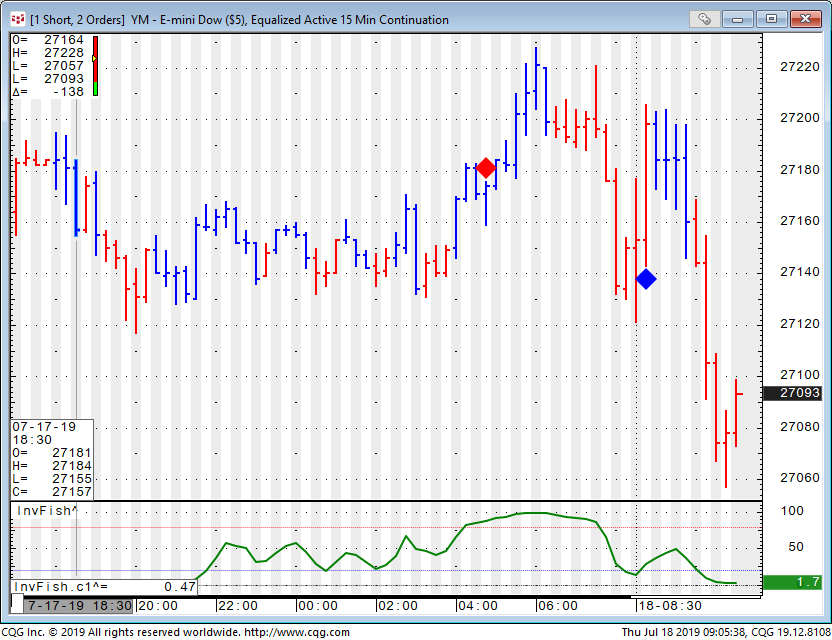
The low initial margin requirement allows for significant leverage. While leverage amplifies potential profits, it also magnifies potential losses. A small adverse price movement can quickly deplete an account, making rigorous risk management and understanding margin requirements absolutely critical for anyone trading Dow futures.
Why the Dow Jones Futures Index Matters
The Dow Jones Futures Index holds a pivotal position in the financial markets, serving multiple functions beyond simple speculation. Its influence extends to market sentiment, risk management, and broader economic analysis.
A Key Market Sentiment Indicator
One of the most important roles of Dow futures is as a real-time barometer of market sentiment. Because they trade almost continuously, they provide an immediate reaction to news, economic reports, and global events that occur outside of regular U.S. stock market hours. Traders and analysts closely watch Dow futures before the opening bell of the New York Stock Exchange to gauge the likely direction of the DJIA and the broader market.
- Pre-Market Indicator: A strong positive move in Dow futures before the U.S. market opens often signals a bullish start to the trading day, while a sharp decline can foreshadow a negative opening.
- Global Market Impact: Movements in Dow futures reflect global investor reactions and can influence other markets, offering insights into broader economic confidence.
- Price Discovery: The continuous trading helps to discover and establish prices more efficiently, incorporating new information as it becomes available.
Hedging Against Market Volatility
For institutional investors, portfolio managers, and even individual investors with substantial equity holdings that mirror or are highly correlated with the DJIA, Dow futures offer an effective hedging mechanism. Hedging involves taking an offsetting position in futures to protect against potential losses in an underlying portfolio.
- Portfolio Protection: If a portfolio manager holds a diverse portfolio of U.S. large-cap stocks and anticipates a market downturn, they can sell (short) Dow futures contracts. If the market does indeed fall, the profits from the short futures position can offset some or all of the losses in their stock portfolio.
- Risk Management: Futures allow for precise and cost-effective risk management without having to liquidate actual stock holdings, which can be expensive and logistically challenging.
Speculation and Trading Opportunities
For active traders, both institutional and retail, Dow futures present significant opportunities for speculation. Given their high liquidity, leverage, and nearly 24-hour trading, they are popular instruments for:
- Day Trading: Capitalizing on short-term price fluctuations within a single trading day.
- Swing Trading: Holding positions for several days or weeks to profit from larger market swings.
- Directional Trading: Taking long positions if expecting the DJIA to rise, or short positions if anticipating a fall.
The accessibility of E-mini Dow futures allows individual traders to participate in broader market movements with a relatively smaller capital outlay compared to buying all 30 underlying stocks or an equivalent ETF.
Economic Barometer
Beyond market mechanics, the Dow Jones Futures Index acts as an economic barometer. Its reactions to key economic data releases (e.g., non-farm payrolls, CPI, FOMC announcements) are immediate and often pronounced. Analysts and economists frequently cite the movement of Dow futures as an indicator of how market participants are interpreting new information and what they expect for the future economic landscape. This real-time feedback loop makes it an invaluable tool for understanding and forecasting economic trends.
Risks and Considerations for Trading Dow Futures
While the Dow Jones Futures Index offers compelling opportunities for profit and risk management, it is imperative to acknowledge and understand the inherent risks associated with trading these leveraged instruments.
High Volatility and Leverage
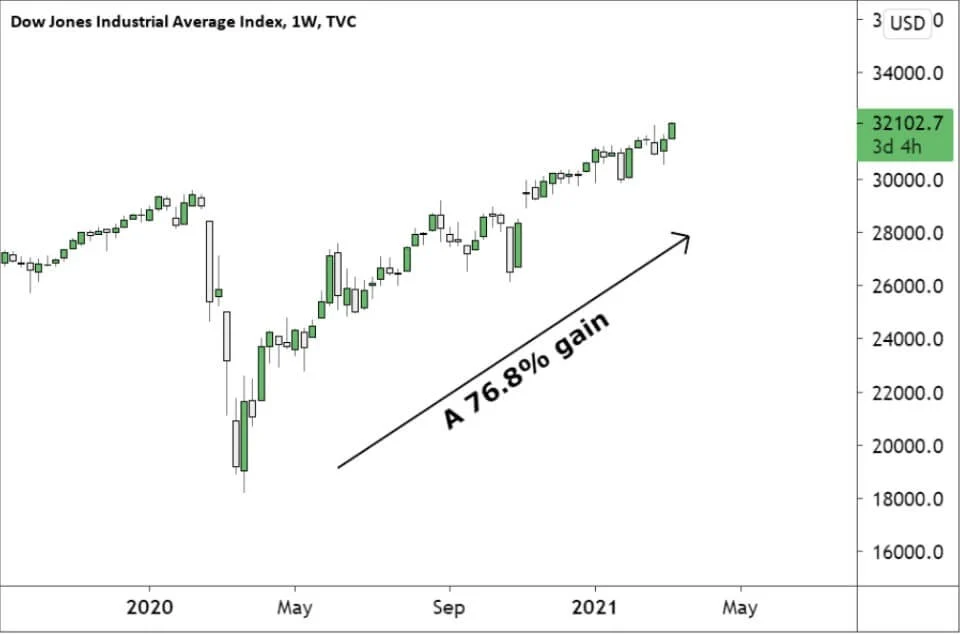
The very advantages of Dow futures—high leverage and liquidity—also constitute their primary risks. Leverage magnifies gains, but it equally magnifies losses. A small adverse price movement can lead to substantial financial losses, potentially exceeding the initial margin deposit. The rapid price swings common in futures markets, especially during periods of high volatility or around major news events, can quickly trigger margin calls or even wipe out an entire trading account if not managed prudently.
Market Gaps and Overnight Risk
Futures markets, despite trading nearly 24/5, can still experience significant “gaps” in price. These often occur when substantial news breaks during non-trading hours or over a weekend, causing the opening price to be drastically different from the previous closing price. Holding a futures position overnight or over a weekend exposes a trader to this “gap risk,” where the market might open significantly against their position, potentially leading to substantial losses before they even have a chance to react.
Complexity and Learning Curve
Trading Dow futures is not suitable for novice investors without a thorough understanding of financial markets, technical analysis, risk management principles, and the specific mechanics of futures contracts. It requires:
- Market Knowledge: A deep understanding of the factors that influence the DJIA and the broader economy.
- Technical Analysis: Proficiency in interpreting charts, patterns, and indicators to identify potential entry and exit points.
- Risk Management Strategy: A well-defined plan for position sizing, stop-loss orders, and managing capital.
- Discipline and Emotional Control: The ability to stick to a trading plan and avoid impulsive decisions, especially during volatile periods.
Regulatory Oversight
Futures markets are highly regulated environments, overseen by bodies such as the Commodity Futures Trading Commission (CFTC) in the United States. While this provides a layer of protection against fraud and manipulation, traders must ensure they are using reputable, regulated brokers. Understanding the rules and regulations governing futures trading is crucial for compliance and safeguarding investments.
In conclusion, the Dow Jones Futures Index, primarily represented by the E-mini Dow futures contract, is a sophisticated and powerful financial instrument deeply integrated into the fabric of global markets. It serves as a critical indicator of market sentiment, a versatile tool for hedging against market volatility, and a fertile ground for speculative trading opportunities. However, its leveraged nature and inherent complexity demand a high degree of knowledge, discipline, and robust risk management strategies. For those prepared to navigate its intricacies, Dow futures offer an unparalleled way to engage with and potentially profit from the dynamic movements of one of the world’s most iconic stock market indices.