
The automotive market has undergone a radical transformation over the past few years, evolving from a period of historic lows to a climate defined by volatility and higher borrowing costs. For the average consumer, the most critical variable in the car-buying equation is no longer just the sticker price, but the cost of the capital used to acquire the vehicle. Understanding the current interest rate landscape for car loans is essential for anyone looking to maintain their financial health while securing reliable transportation.
In the current economic environment, interest rates are a moving target. Influenced by central bank policies, inflationary pressures, and the appetite of private lenders, the “current” rate is rarely a single number. Instead, it is a spectrum based on creditworthiness, vehicle age, and loan duration. This article provides a deep dive into the mechanics of current car loan rates, how they are determined, and how you can navigate this complex financial terrain to secure the most favorable terms.

The Macroeconomic Landscape: Why Car Loan Rates Are Rising
To understand what you will pay at the dealership or the bank today, you must first understand the broader economic forces at play. Car loan rates do not exist in a vacuum; they are closely tied to the federal funds rate and the health of the global economy.
The Federal Reserve and the Cost of Borrowing
The primary driver of auto loan interest rates in recent years has been the Federal Reserve’s aggressive stance against inflation. When the Fed raises the benchmark interest rate, it increases the cost for banks to borrow money. To maintain their profit margins, these financial institutions pass those costs down to consumers in the form of higher Annual Percentage Rates (APRs) on personal loans, mortgages, and car loans.
While car loans are not directly pegged to the Fed’s rate, they track closely with the yields on short-term Treasury notes. As these yields rise, the “floor” for auto loan rates rises with them. Currently, even borrowers with “Super Prime” credit (scores above 780) are seeing rates that are significantly higher than the 0% to 2.9% offers that were common just a few years ago.
Inflationary Pressures and Lender Risk
Beyond central bank policy, lenders are also pricing in the risk of inflation. If a bank lends you $40,000 today at a fixed rate of 5%, and inflation runs at 4% for the next five years, the real value of the interest the bank earns is significantly diminished. Consequently, lenders have adjusted their baseline rates upward to protect against the eroding purchasing power of future repayments. Furthermore, as the cost of living increases, lenders become more cautious about default risks, leading to tighter lending standards and higher premiums for those with less-than-perfect credit.
Analyzing Rates by Credit Tier and Vehicle Type
The “average” car loan rate is often a misleading metric because it blends together disparate groups of borrowers. To get an accurate picture of what you will likely pay, you must categorize the market by credit score and the type of vehicle being financed.
The Correlation Between Credit Scores and APR
In the world of personal finance, your credit score is your most valuable asset when shopping for a loan. Lenders typically categorize borrowers into five tiers:
- Super Prime (781–850): These borrowers currently command the lowest rates, often ranging from 5.5% to 6.5% for new vehicles.
- Prime (661–780): A majority of buyers fall here. Rates are typically between 7.0% and 9.0%.
- Nonprime (601–660): Rates begin to climb significantly, often reaching 11% to 13%.
- Subprime (501–600): Borrowers in this tier may face rates between 15% and 20%.
- Deep Subprime (300–500): Rates can exceed 20%, sometimes reaching the legal limits set by state usury laws.
The gap between a Super Prime and a Subprime rate can result in tens of thousands of dollars in extra interest over the life of a 60-month loan, highlighting the importance of credit repair before entering the car market.
New vs. Used Vehicle Financing
Another critical factor in determining the current rate is whether the car is new or used. Historically, new car loans carry lower interest rates. This is because new cars have a more predictable resale value, making them better collateral for the bank. If a borrower defaults, the bank can recover a larger percentage of the loan balance by selling a newer vehicle.
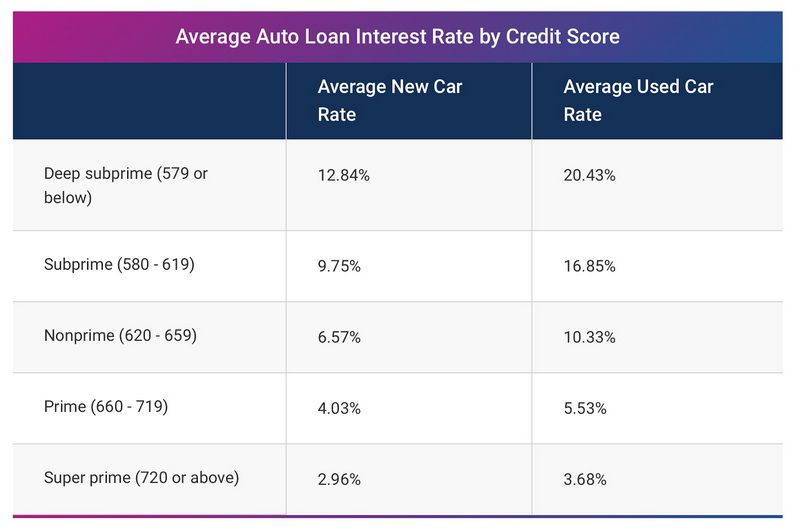
Currently, used car rates are often 2% to 5% higher than new car rates for the same borrower. For instance, if a borrower qualifies for a 6% rate on a new sedan, they might see an 8.5% or 9% rate for a three-year-old version of the same model. When calculating the total cost of ownership, it is sometimes more financially sound to buy a new car with a lower interest rate than a used car with a higher rate, depending on the price differential and the loan term.
Strategic Approaches to Securing the Best Rate
While you cannot control the Federal Reserve, you can control how you present yourself to lenders and where you choose to shop for financing.
The Power of Pre-approval and Credit Unions
One of the most common mistakes car buyers make is relying solely on dealership financing. Dealerships often act as intermediaries, “marking up” the interest rates provided by banks to earn a commission. This is known as the “dealer reserve.”
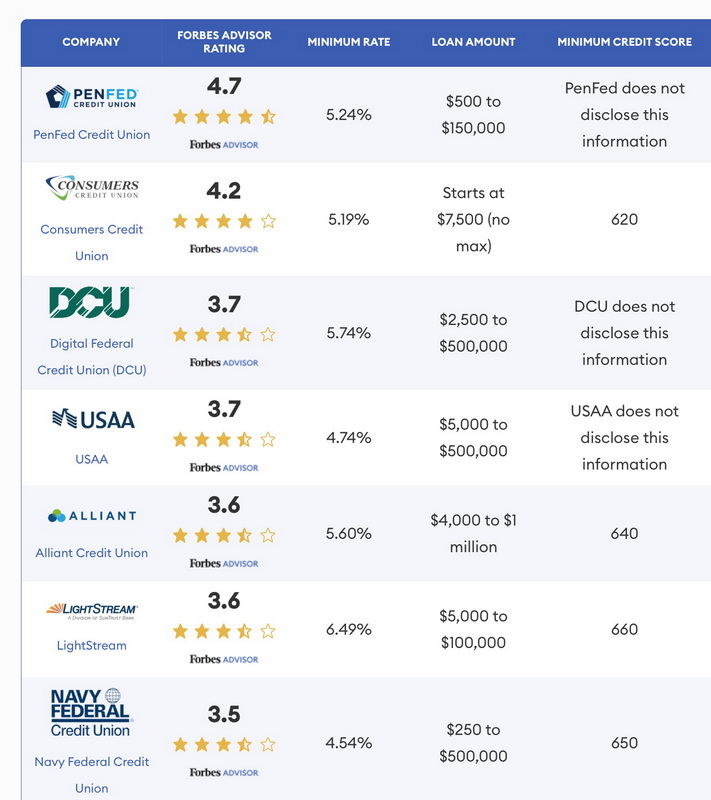
To combat this, savvy consumers should seek pre-approval from a credit union or an online bank before stepping foot on a lot. Credit unions are member-owned cooperatives; they don’t have to answer to shareholders, allowing them to return profits to members in the form of lower interest rates. By arriving at the dealership with a pre-approval letter for 6.2%, you force the dealer to beat that rate if they want your financing business. This shifts the power dynamic back to the consumer.
Understanding the Impact of Loan Terms
In response to rising vehicle prices, many lenders have extended loan terms to 72, 84, or even 96 months. While this lowers the monthly payment—making a $50,000 truck look “affordable”—it is a dangerous financial trap.
Interest rates generally increase as the loan term lengthens. A 48-month loan might carry a 6% rate, while an 84-month loan might carry 8%. More importantly, the longer the term, the more interest you pay over the life of the loan. Additionally, long-term loans increase the risk of “negative equity,” where you owe more on the car than it is worth. From a financial management perspective, it is almost always better to choose the shortest term you can comfortably afford.
The Long-Term Financial Impact of Your Interest Rate
The interest rate on a car loan is not just a monthly expense; it is a significant factor in your overall net worth and long-term financial flexibility.
Calculating the Total Cost of Interest
To truly grasp the weight of current interest rates, one must look at the “total interest paid” figure. For example, on a $35,000 loan over 60 months:
- At a 4% interest rate, you would pay approximately $3,648 in total interest.
- At an 8% interest rate, that total jumps to $7,532.
- At a 15% interest rate, you are paying $14,964 just for the privilege of borrowing the money.
That $11,000 difference between a 4% and 15% rate is money that could have been directed toward a retirement IRA, a high-yield savings account, or a child’s education fund. In the “Money” niche, we view every percentage point as a leak in your financial bucket that needs to be plugged.
Refinancing as a Secondary Strategy
If you are forced to take a high interest rate today because of a temporary dip in your credit score or urgent transportation needs, you are not necessarily stuck with that rate forever. Car loan refinancing is a powerful tool. If your credit score improves by 50 points or if the overall market rates drop in the next 12 to 18 months, you can replace your high-interest loan with a new one from a different lender. This can significantly reduce your monthly payments and the total interest you will pay, effectively “re-aligning” your car debt with your improved financial profile.
Final Thoughts: Navigating the High-Rate Era
We are no longer in an era of “cheap money.” As interest rates for car loans remain elevated, the burden of financial due diligence falls squarely on the consumer. To protect your wealth, you must look beyond the monthly payment and focus on the APR, the loan term, and the total cost of borrowing.
By maintaining a high credit score, shopping at credit unions, opting for shorter loan terms, and being prepared to refinance when the market shifts, you can mitigate the impact of current high rates. In the world of personal finance, knowledge is the best hedge against inflation and rising costs. Being informed about why rates are where they are—and how to navigate around the highest ones—is the first step toward securing both a vehicle and a stable financial future.
aViewFromTheCave is a participant in the Amazon Services LLC Associates Program, an affiliate advertising program designed to provide a means for sites to earn advertising fees by advertising and linking to Amazon.com. Amazon, the Amazon logo, AmazonSupply, and the AmazonSupply logo are trademarks of Amazon.com, Inc. or its affiliates. As an Amazon Associate we earn affiliate commissions from qualifying purchases.