
When we discuss the world’s most influential brands, names like Apple, Nike, and Coca-Cola inevitably dominate the conversation. However, from a strategic communication and brand identity perspective, one of the most successful “brand launches” in human history occurred in February 1848. “The Communist Manifesto,” authored by Karl Marx and Friedrich Engels, is frequently analyzed through the lenses of history and economics, but its enduring legacy is equally a result of its revolutionary approach to branding.
In the world of brand strategy, a manifesto is a declaration of intent—a document that defines a brand’s “Why,” identifies its audience, and outlines a vision for the future. Marx and Engels did not just write a political pamphlet; they created a powerful brand identity that utilized emotional hooks, clear positioning, and a viral distribution strategy that modern marketing experts still study today.

1. Defining the Brand Identity: The Power of the “Spectre” Hook
Every iconic brand starts with a compelling narrative hook. In marketing terms, the first few seconds of an interaction determine whether a consumer will engage or move on. The Communist Manifesto opens with one of the most famous hooks in literary history: “A spectre is haunting Europe—the spectre of communism.”
The Psychology of Interest
By using the metaphor of a “spectre,” the authors immediately created a sense of mystery, power, and inevitability. In brand strategy, this is known as “positioning against the status quo.” By acknowledging that the powers of “Old Europe” were afraid, Marx and Engels positioned their brand as a disruptive force. They didn’t wait to be defined by their competitors; they took control of the narrative from the first sentence.
Clarity of Purpose
A brand without a clear “Why” (as Simon Sinek famously posited) is destined to fail. The Manifesto provided an immediate and visceral purpose. It wasn’t just a list of grievances; it was a mission statement. For a brand to achieve global recognition, it must offer a simplified solution to a complex problem. The Manifesto reduced the chaotic industrial world of the 19th century into a singular, understandable struggle, creating a brand promise of total systemic change.
2. Narrative Positioning: Creating the Ultimate Challenger Brand
At the heart of any successful brand strategy is the “Challenger Brand” mentality. This involves identifying a dominant incumbent and positioning your brand as the heroic alternative. Marx and Engels utilized a binary narrative structure that is still used today in “Us vs. Them” marketing campaigns.
The Bourgeoisie and Proletariat as Market Segments
The Manifesto brilliantly segmented the population into two distinct categories: the Bourgeoisie (the owners) and the Proletariat (the workers). By doing this, they created a target audience that felt seen and understood. In modern brand design, this is equivalent to creating a “customer persona.” The Proletariat was the disenfranchised user base, and the Manifesto was the product designed specifically for their needs.
The Conflict-Resolution Framework
Most successful brand stories follow a classic hero’s journey. The “user” (the worker) is the hero facing a villainous obstacle (exploitation). The Manifesto acts as the “mentor” or “tool” that allows the hero to overcome the obstacle. By framing the economic struggle as a narrative of inevitable victory, the authors provided their audience with something every brand strives to offer: hope and a sense of belonging to a larger movement.
3. Visual and Linguistic Identity: How a Brand Becomes a Symbol
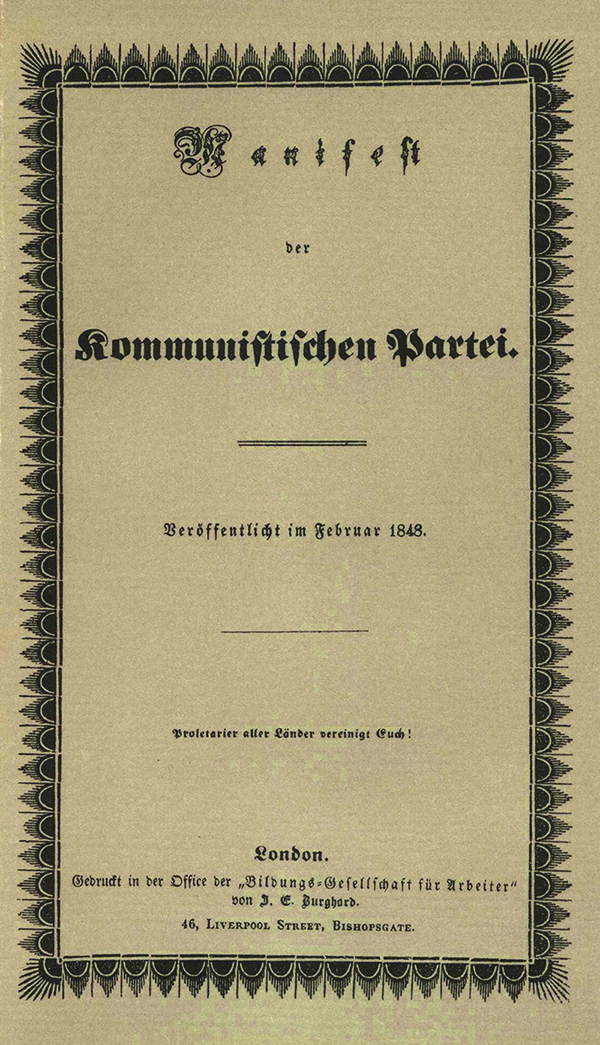
A brand is more than just words; it is a visual and linguistic ecosystem. While the Manifesto itself was a text, it laid the groundwork for a visual language that would eventually dominate the 20th century.
Iconic Slogans and Call to Action
The Manifesto concludes with what might be the most effective “Call to Action” (CTA) ever written: “Working Men of All Countries, Unite!” From a marketing perspective, this is a masterstroke. It is actionable, inclusive, and urgent. Effective brands don’t just ask people to buy; they ask them to join. The repetition of keywords like “struggle,” “revolution,” and “freedom” created a brand vocabulary that was easily translatable across different languages and cultures.
Consistency Across Borders
One of the hallmarks of a global brand is consistency. The Manifesto was designed to be modular and scalable. Whether it was being read in Germany, France, or Russia, the core brand message remained identical. This “global-local” (glocal) strategy allowed the ideology to maintain its core identity while being adapted to local revolutionary “markets.” The eventual adoption of the red flag and the hammer and sickle are extensions of the visual identity established by the Manifesto’s tone—bold, industrial, and uncompromising.
4. Movement Marketing: From Awareness to Global Scale
In the digital age, we talk about “viral marketing” and “growth hacking.” Long before the internet, the Communist Manifesto utilized a grassroots distribution model that allowed it to scale with incredible speed.
Community Building and Advocacy
A brand is only as strong as its community. The Manifesto encouraged the formation of “cells” or small groups—essentially brand advocates who would meet, discuss the text, and spread the message. This organic word-of-mouth marketing ensured that the brand lived on through personal recommendations rather than just top-down advertising. It created a “fandom” that was willing to sacrifice for the brand’s success.
Radical Transparency and Boldness
Modern consumers, particularly Gen Z and Millennials, gravitate toward brands that take a stand. The Manifesto was an exercise in radical transparency. It did not hide its goals; it stated them with shocking bluntness. “The Communists disdain to conceal their views and aims,” the authors wrote. In a world of PR-speak and corporate jargon, this level of authenticity—however controversial—is a powerful tool for building brand loyalty. It tells the audience exactly who the brand is and what it stands for, forcing them to choose a side.
5. Lessons for Modern Brand Strategists
What can a 21st-century brand manager or entrepreneur learn from a 175-year-old political document? The Communist Manifesto provides several timeless lessons in brand strategy and corporate identity.
Authenticity in the Face of Complexity
Today’s marketplace is saturated with information. Brands that survive are those that can simplify the narrative. The Manifesto took the incredibly complex transition from feudalism to industrial capitalism and made it understandable for the average person. Brands that can simplify their “value proposition” in a way that resonates emotionally will always outperform those that rely solely on technical specifications.
The Power of the “Anti-Brand”
Sometimes, the best way to build a brand is to define yourself by what you are not. The Manifesto was the ultimate anti-brand. It rejected the “luxury” and “prestige” of the ruling class, instead finding value in the “utility” and “labor” of the working class. This is a strategy used by companies like Patagonia or Tesla (in its early days), which position themselves against the traditional, “wasteful” practices of their respective industries.

Designing for Longevity
The goal of a brand strategist is to create something that lasts. The Communist Manifesto remains relevant because it addresses fundamental human desires: the need for fairness, the desire for community, and the hope for a better future. When a brand taps into these universal “human truths,” it ceases to be a mere product and becomes a part of the cultural fabric.
In conclusion, “What is the Communist Manifesto?” is a question with many answers. While it is a political and economic treatise, it is also a seminal example of high-impact branding. It demonstrates that with a powerful hook, clear audience segmentation, a bold visual identity, and a compelling call to action, a brand can not only change an industry—it can change the world. For modern strategists, the Manifesto serves as a reminder that the most powerful tool in any brand’s arsenal is not a budget, but a story that people are willing to believe in.
aViewFromTheCave is a participant in the Amazon Services LLC Associates Program, an affiliate advertising program designed to provide a means for sites to earn advertising fees by advertising and linking to Amazon.com. Amazon, the Amazon logo, AmazonSupply, and the AmazonSupply logo are trademarks of Amazon.com, Inc. or its affiliates. As an Amazon Associate we earn affiliate commissions from qualifying purchases.