
The emergence of THCa (Tetrahydrocannabinolic acid) flower represents one of the most significant financial disruptions in the agricultural and specialty retail sectors over the last decade. While the broader cannabis industry has spent years navigating a fragmented landscape of state-by-state legalization and federal prohibition, a specific interpretation of the 2018 Farm Bill has unlocked a multi-billion dollar market. To the uninitiated, THCa flower is a botanical product that remains non-psychoactive in its raw state but serves as the direct precursor to Delta-9 THC. To the investor, entrepreneur, and financial analyst, however, THCa flower is a masterclass in regulatory arbitrage and market agility.

This article explores the financial architecture of the THCa flower market, examining how businesses are leveraging legal loopholes to scale operations, the investment risks associated with shifting federal oversight, and the long-term economic viability of this high-growth niche.
The Financial Architecture of the 2018 Farm Bill
The cornerstone of the THCa flower economy is the Agriculture Improvement Act of 2018, commonly known as the 2018 Farm Bill. By federally legalizing hemp—defined as cannabis containing less than 0.3% Delta-9 THC by dry weight—the government inadvertently created a massive “Money” niche.
Understanding Regulatory Arbitrage as a Growth Engine
In finance, regulatory arbitrage refers to the practice of taking advantage of a gap between different sets of rules. THCa flower exists precisely in this gap. Because THCa is not Delta-9 THC, flower that tests high in THCa but below the 0.3% threshold for Delta-9 is legally classified as hemp. This distinction is worth billions. It allows hemp-derived products to bypass the restrictive “Section 280E” of the Internal Revenue Code, which prevents traditional cannabis businesses from deducting standard business expenses. For THCa flower retailers and wholesalers, the ability to deduct marketing, payroll, and rent provides a massive competitive advantage in terms of net profit margins.
The Decoupling of State and Federal Economic Zones
The financial allure of THCa flower lies in its portability across state lines. Unlike “marijuana,” which cannot be transported across state borders due to federal prohibition, THCa flower is frequently shipped via the United States Postal Service (USPS) and private carriers under the protections of the Farm Bill. This has created a unified national market for a product that was previously restricted to localized, state-regulated silos. For the business owner, this means lower customer acquisition costs (CAC) and a significantly larger Total Addressable Market (TAM).
Market Dynamics: Disruption of the Traditional Cannabis Economy
The entry of THCa flower into the marketplace has sent shockwaves through the established legal cannabis industry. Multi-state operators (MSOs) that have invested hundreds of millions into state-licensed facilities are now finding themselves competing with lean, e-commerce-heavy hemp brands that face fewer regulatory hurdles and lower tax burdens.
The Direct-to-Consumer (DTC) Advantage
One of the primary drivers of profitability in the THCa space is the Direct-to-Consumer model. In the traditional dispensary model, a product passes through a complex supply chain of cultivators, processors, distributors, and retailers, each taking a margin and paying high state excise taxes. THCa flower brands often operate vertically, selling directly to the consumer through sophisticated e-commerce platforms. By cutting out the “middleman” and avoiding high-street retail overhead, these businesses can offer lower prices to consumers while maintaining higher EBITDA (Earnings Before Interest, Taxes, Depreciation, and Amortization) margins than their licensed dispensary counterparts.
Pricing Volatility and Commodity Valuation
As with any agricultural commodity, the price of THCa flower is subject to supply and demand fluctuations. However, the “legal status” premium adds a layer of complexity. Currently, high-quality THCa flower commands a premium price comparable to top-shelf dispensary products. As more cultivators pivot from CBD-heavy hemp to THCa-rich genetics, we are seeing a shift in the wholesale market. Smart investors are watching these price points closely; as the market matures and supply increases, the “green rush” margins of 2023 and 2024 are expected to compress, favoring companies with the most efficient scaling operations.
Investment Risks and the Landscape of Financial Compliance
Despite the staggering growth figures, the THCa flower market is not without significant financial peril. For institutional investors and personal finance enthusiasts alike, the “gray market” nature of this industry requires a sophisticated understanding of risk management.
The “Total THC” Regulatory Threat
The most immediate risk to the THCa economy is a potential change in federal or state definitions. Several states have already moved to adopt a “Total THC” standard, which combines the percentages of THCa and Delta-9 THC in their testing requirements. If the upcoming 2024 or 2025 Farm Bill revisions adopt a “Total THC” standard federally, the THCa flower market could evaporate overnight. From a financial planning perspective, this makes THCa businesses “high-risk, high-reward” assets. Companies in this space must maintain high liquidity and be prepared to pivot their inventory or business models at a moment’s notice.
Banking, Payment Processing, and Merchant Services
For most “Money” niches, banking is a utility. For THCa flower businesses, it is a strategic hurdle. Because many Tier-1 banks still associate hemp with high-risk activity, merchant processing fees for THCa sales are often significantly higher than in standard retail. Businesses frequently face “rolling reserves,” where a percentage of their revenue is held by the processor to mitigate risk. Navigating these financial waters requires specialized CFOs who understand the nuances of high-risk merchant accounts and the importance of maintaining multiple banking redundancies to prevent a total freeze of operational capital.
Scaling for Profitability: The Supply Chain and ROI
To achieve long-term financial success in the THCa flower niche, companies are focusing on the industrialization of their supply chains. The transition from “garage-scale” operations to institutional-grade cultivation is where the real wealth is being generated.
Genetic Specialization and IP Value
In the world of business finance, intellectual property (IP) is a key asset. In the THCa world, that IP is found in genetics. Cultivators who can produce flower that consistently tests at 20-25% THCa while remaining under the 0.3% Delta-9 threshold possess a valuable trade secret. The Return on Investment (ROI) for specialized breeding programs is immense, as these genetics allow for the production of a “compliant” product that meets the high-potency demands of the modern consumer.
The Role of Lab Testing in Asset Protection
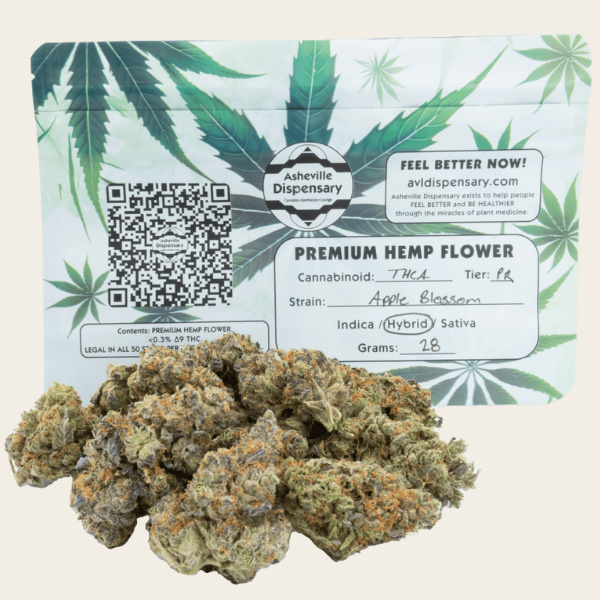
In this niche, a Certificate of Analysis (COA) is more than a safety document; it is a financial instrument. A COA proves the legality of the inventory, protecting the business from asset seizure and legal liability. For large-scale wholesalers, investing in rigorous, third-party laboratory testing is a non-negotiable business expense. Inaccurate testing can lead to “hot” crops (those exceeding the legal THC limit), which must be destroyed, resulting in a 100% loss of the capital invested in that harvest. Thus, quality control is inextricably linked to the company’s balance sheet.
The Future of the THCa Economy
As we look toward the future, the THCa flower market sits at a crossroads between underground success and mainstream financial integration. If the regulatory environment remains stable, we can expect to see significant consolidation. Larger agricultural firms may begin acquiring successful THCa brands to capture their e-commerce infrastructure and customer databases.
The “THCa flower” phenomenon is a testament to the power of market innovation. It has proven that even in a highly regulated environment, savvy entrepreneurs can find ways to create value, satisfy consumer demand, and build profitable enterprises. For the financial world, the lesson is clear: when technology, consumer preference, and a small window of legal opportunity align, a new asset class can emerge almost overnight. Whether THCa flower remains a permanent fixture of the financial landscape or a fleeting moment of regulatory oversight, its impact on the modern economy is undeniable.
Investors and business leaders who understand the underlying financial mechanics—from 280E tax advantages to the complexities of the Farm Bill—will be the ones best positioned to capitalize on this unique intersection of agriculture, law, and high-finance.
aViewFromTheCave is a participant in the Amazon Services LLC Associates Program, an affiliate advertising program designed to provide a means for sites to earn advertising fees by advertising and linking to Amazon.com. Amazon, the Amazon logo, AmazonSupply, and the AmazonSupply logo are trademarks of Amazon.com, Inc. or its affiliates. As an Amazon Associate we earn affiliate commissions from qualifying purchases.