
In the modern financial landscape, few institutions hold as much power or influence as the stock exchange. To the uninitiated, it may seem like a chaotic whirl of numbers, flashing screens, and fast-talking traders. However, at its core, a stock exchange is a sophisticated, highly regulated marketplace that serves as the heartbeat of the global economy. It is the platform where capital meets innovation, allowing individuals to own a piece of the world’s most successful companies while providing those companies with the funds they need to grow.
Understanding what a stock exchange is, how it operates, and why it matters is fundamental to financial literacy. Whether you are a casual saver, a dedicated retail investor, or a business professional, the stock exchange is the primary vehicle through which wealth is generated and distributed in a capitalist society.
The Mechanics of the Marketplace: How Stock Exchanges Function
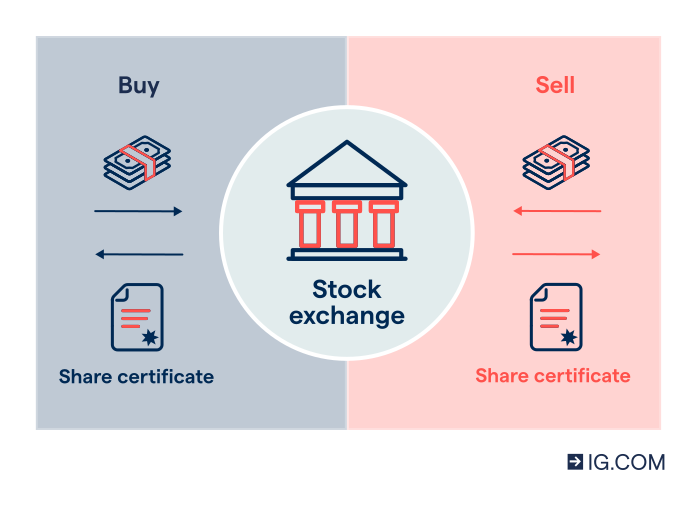
At its simplest level, a stock exchange is a centralized location—nowadays mostly digital—where shares of publicly traded companies are bought and sold. It serves as a facilitator, ensuring that transactions are conducted in an orderly, fair, and transparent manner. Without the exchange, buying a share in a company like Apple or Microsoft would require finding a private seller, negotiating a price manually, and verifying the legal transfer of ownership—a process that would be prohibitively slow and risky.
The Distinction Between Primary and Secondary Markets
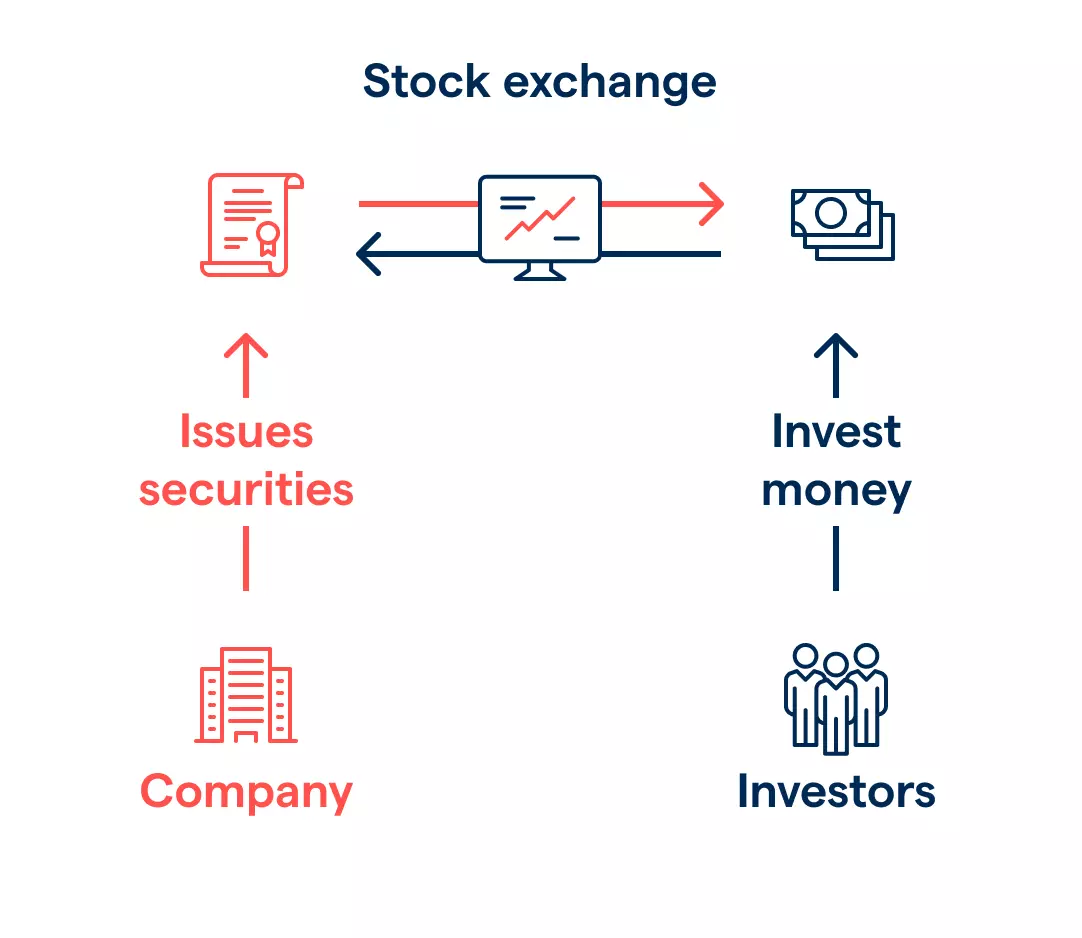
To understand the exchange, one must distinguish between the primary and secondary markets. The primary market is where a company first “goes public” through an Initial Public Offering (IPO). In this stage, the company issues new shares to institutional investors, and the money raised goes directly into the company’s coffers to fund expansion, research, or debt repayment.
Once those shares are issued, they move to the secondary market—the stock exchange itself. Here, investors trade shares among themselves. When you buy a stock on the NYSE or the London Stock Exchange, you are usually not buying it from the company; you are buying it from another investor who wishes to sell. The exchange ensures that this hand-off happens instantaneously and securely.
The Role of Listing Requirements and Regulation
Not every company can be traded on a major exchange. To protect investors, exchanges impose strict “listing requirements.” These include minimum standards for financial health, the number of shares available to the public, and regular reporting of earnings. This regulatory framework is what gives investors the confidence to participate. By providing a transparent environment where information is shared equally, the exchange minimizes the risk of fraud and ensures that the “price discovery” process—the way a stock’s value is determined by supply and demand—is accurate.
Order Matching and the Digital Evolution
Historically, exchanges were physical “pits” where traders used hand signals and shouting (open outcry) to strike deals. Today, the vast majority of trading is handled by powerful computers known as “matching engines.” These systems process millions of orders per second, matching a buyer’s “bid” (the price they are willing to pay) with a seller’s “ask” (the price they are willing to accept). This digital transformation has lowered the cost of trading and made the markets accessible to anyone with a smartphone and a few dollars.
Pillars of Global Finance: The World’s Major Exchanges
While there are dozens of stock exchanges worldwide, a handful of them dominate the global financial landscape. These institutions represent the bulk of the world’s market capitalization and serve as benchmarks for economic health.
The New York Stock Exchange (NYSE) and NASDAQ
The New York Stock Exchange, located on Wall Street, is the world’s largest exchange by market capitalization. It is often referred to as the “Big Board” and is home to some of the oldest and most established industrial companies in the world. The NYSE utilizes a hybrid model that combines electronic trading with physical floor brokers who can step in during times of extreme volatility to maintain order.
In contrast, the NASDAQ is an entirely electronic exchange. It is famously the home of the “tech giants.” Because of its digital-first nature, it became the preferred destination for growth-oriented companies in the software, biotechnology, and internet sectors. Together, these two American exchanges form the epicenter of global finance, influencing markets from Tokyo to London.
Regional Giants: LSE, TSE, and HKEX
Beyond the United States, the London Stock Exchange (LSE) serves as a critical hub for international business, particularly for companies operating in Europe, Africa, and the Middle East. In Asia, the Tokyo Stock Exchange (TSE) and the Hong Kong Stock Exchange (HKEX) are vital indicators of the economic vitality of the Eastern hemisphere. Each of these exchanges operates under its own set of rules and trading hours, creating a “24-hour” global market cycle where news in one region can trigger immediate reactions in another.
Market Capitalization as an Economic Barometer

The total value of all companies listed on a stock exchange is known as its market capitalization. Economists and policymakers monitor these figures closely. When the total market cap of an exchange is rising, it typically indicates investor confidence and economic growth. Conversely, a sustained decline can signal a recession. In this way, the stock exchange acts as a leading economic indicator, reflecting the collective expectations of millions of participants regarding the future of the economy.
The Strategic Importance of the Stock Exchange for Investors
For the individual, the stock exchange is more than just a pillar of the economy; it is a tool for personal financial empowerment. It provides a level playing field where a small retail investor can own the same assets as a multi-billion-dollar hedge fund.
Wealth Creation and the Power of Compounding
The primary reason individuals participate in the stock exchange is for wealth creation. Historically, the stock market has outperformed most other asset classes, including bonds and real estate, over the long term. By purchasing shares, an investor participates in a company’s profits through two main avenues: capital appreciation (the stock price going up) and dividends (a portion of profits paid out to shareholders). When these returns are reinvested over decades, the power of compounding can turn modest savings into a significant retirement fund.
Liquidity: The Ability to Pivot
One of the greatest advantages of the stock exchange is liquidity. Liquidity refers to how quickly an asset can be converted into cash without affecting its price. Unlike real estate, which can take months to sell, or a private business, which requires finding a specific buyer, a stock listed on a major exchange can usually be sold in seconds. This flexibility allows investors to react to life changes, economic shifts, or new opportunities with ease.
Diversification and Risk Management
The stock exchange offers an unparalleled variety of investment options. Through the exchange, an investor can achieve diversification—the practice of spreading investments across different sectors and geographies to reduce risk. Instead of betting everything on one company, an investor can use the exchange to buy Exchange-Traded Funds (ETFs) or Mutual Funds that track hundreds of companies simultaneously. This ability to manage risk is what makes the stock exchange a cornerstone of modern portfolio theory.
Modern Evolution: The Digital Shift and the Rise of the Retail Investor
The stock exchange of the 21st century is vastly different from that of the 20th. Technology has democratized access, but it has also introduced new complexities that every investor must navigate.
From Trading Floors to High-Frequency Algorithms
Today, the majority of trading volume on exchanges is not driven by humans, but by algorithms. High-frequency trading (HFT) involves computers executing thousands of trades per second based on mathematical patterns. While this has increased liquidity and narrowed the “spread” (the difference between buying and selling prices), it has also led to “flash crashes” and increased market sensitivity to technical glitches. Understanding that the exchange is now a tech-driven ecosystem is crucial for modern participants.
The Democratization of Investing
Perhaps the most significant change in recent years is the rise of the retail investor. Mobile apps and commission-free trading have stripped away the barriers to entry. Now, anyone with a smartphone can access the same exchanges that were once the exclusive playground of the wealthy elite. This shift has changed market dynamics, as seen in “meme stock” rallies where collective retail action moved prices in ways that traditional analysts could not predict.
The Role of Financial Literacy in a High-Speed Market
With increased access comes increased responsibility. The stock exchange is a place of opportunity, but it is also a place of risk. Prices can be volatile, and market sentiment can shift in an instant based on geopolitical events, interest rate changes, or corporate scandals. Financial literacy—understanding how to read a balance sheet, the importance of long-term thinking, and the risks of leverage—is the only true protection for the modern investor.
Conclusion: The Enduring Legacy of the Exchange
The stock exchange is far more than a “casino” for the wealthy. It is a vital social and economic utility that facilitates the flow of capital to where it is most needed. It rewards innovation, provides a mechanism for retirement savings, and offers a transparent way to value the world’s most important businesses.
As we move further into the digital age, the stock exchange will continue to evolve—perhaps incorporating blockchain technology or further AI integration—but its core mission will remain the same. It exists to provide a fair and efficient marketplace where the dreams of entrepreneurs and the goals of investors can intersect. For anyone looking to secure their financial future, the stock exchange is not just an option; it is an essential landscape to master. By understanding its mechanics, its major players, and its strategic benefits, you can move from being a mere observer of the economy to an active participant in global prosperity.
aViewFromTheCave is a participant in the Amazon Services LLC Associates Program, an affiliate advertising program designed to provide a means for sites to earn advertising fees by advertising and linking to Amazon.com. Amazon, the Amazon logo, AmazonSupply, and the AmazonSupply logo are trademarks of Amazon.com, Inc. or its affiliates. As an Amazon Associate we earn affiliate commissions from qualifying purchases.