
The concept of the stock market often conjures images of frantic traders on a floor or complex digital tickers scrolling across financial news networks. However, at its core, the stock market is one of the most powerful engines for wealth creation ever devised. For the individual investor, it represents a gateway to participate in the growth of the world’s most successful companies. Understanding how this system operates is not merely an academic exercise; it is a fundamental pillar of modern personal finance and long-term economic security.
In the broadest sense, the stock market is a collection of exchanges where the issuing and trading of shares of publicly held companies take place. It is a sophisticated ecosystem where capital meets innovation. By buying a “share,” you are quite literally purchasing a piece of a business. This article explores the mechanics of this market, the strategies for successful participation, and the foundational principles of risk management within the “Money” niche.

1. The Fundamentals of Stocks and the Share Market
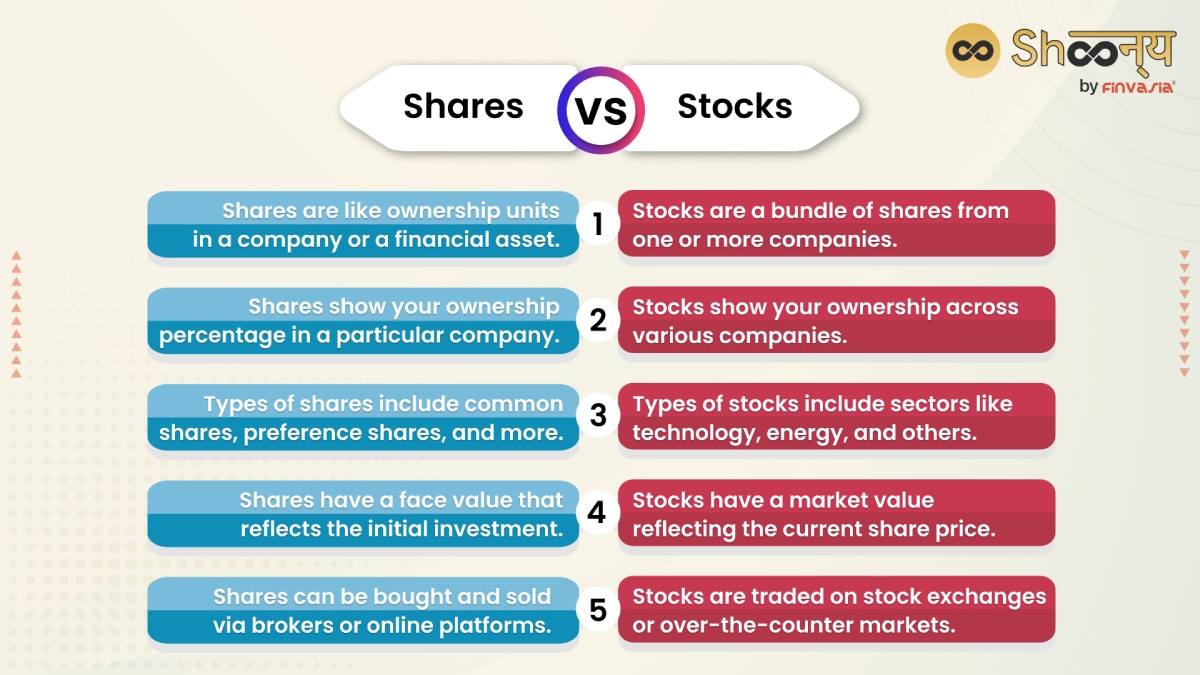
To navigate the financial world, one must first master its vocabulary. While the terms “stock market” and “share market” are often used interchangeably, they carry slight nuances. The stock market is an umbrella term for the overarching system where various financial instruments are traded, whereas the share market specifically refers to the trading of equity—ownership stakes in companies.
Defining Shares and Ownership
A share is a unit of ownership in a corporation. When a company decides to grow—perhaps to build new factories, develop new technology, or expand into international markets—it requires capital. One way to raise this money is by “going public” through an Initial Public Offering (IPO). In this process, the company carves its ownership into millions of small pieces called shares.
When you purchase a share, you become a shareholder. This entitles you to a portion of the company’s profits (often paid out as dividends) and, in many cases, voting rights on corporate policies. The value of your investment is directly tied to the company’s performance and the market’s perception of its future potential.
The Role of the Stock Exchange
The stock exchange is the physical or virtual marketplace where these shares are traded. Well-known examples include the New York Stock Exchange (NYSE), the Nasdaq, the London Stock Exchange (LSE), and the National Stock Exchange (NSE).
The exchange acts as a facilitator and a regulator. It ensures that trading is fair, transparent, and efficient. It provides liquidity, which is the ability to quickly convert an asset into cash without significantly affecting its price. Without these centralized exchanges, buying or selling a piece of a company would be an arduous, manual process prone to fraud and pricing discrepancies.
Primary vs. Secondary Markets
Understanding the distinction between the primary and secondary markets is crucial for any investor. The primary market is where securities are created. This is where firms sell new stocks and bonds to the public for the first time (the IPO). In this transaction, the money flows directly from the investor to the company.
The secondary market is what most people refer to when they talk about “the stock market.” This is where investors trade previously issued securities among themselves. If you buy shares of Apple or Microsoft today, you are not buying them from the companies themselves; you are buying them from another investor who wishes to sell. The company does not receive any money from these daily trades, but the stock price serves as a “report card” for the company’s perceived value.
2. How the Stock Market Functions: The Mechanics of Trading
The stock market operates on the fundamental economic principle of supply and demand. If more people want to buy a stock (demand) than sell it (supply), the price moves up. Conversely, if more people want to sell than buy, the price moves down.
The Ecosystem of Buyers, Sellers, and Brokers
In the modern era, the “pit” where traders shouted at one another has largely been replaced by high-speed electronic networks. To participate, an individual investor typically uses a brokerage firm. The broker acts as an intermediary, executing trades on behalf of the client.
When you place a “buy” order, your broker communicates with the exchange to find a “sell” order that matches your price. This process happens in milliseconds. The rise of digital financial tools and mobile apps has democratized this process, allowing anyone with a smartphone and a small amount of capital to enter the market.
Price Discovery and Market Volatility
Price discovery is the process by which the market determines the “fair” price of a security. This is influenced by a myriad of factors, including company earnings reports, economic data (like inflation or interest rates), geopolitical events, and even investor psychology.
Volatility refers to the frequency and magnitude of price movements. While high volatility is often viewed as “risky,” it is also where the opportunity for profit lies. Professional investors view volatility not as a threat, but as a characteristic of a liquid, functioning market.
Indices: Measuring Market Performance
To understand how “the market” is doing, we look at stock market indices. An index is a statistical measure of the change in a representative group of individual securities.
- The S&P 500: Tracks 500 of the largest companies in the United States.
- The Dow Jones Industrial Average (DJIA): Tracks 30 prominent blue-chip companies.
- The Nasdaq Composite: Heavily weighted toward the technology sector.
These indices serve as benchmarks. If an investor’s portfolio grows by 8% in a year while the S&P 500 grows by 12%, the investor has “underperformed the market.”
3. Strategies for Investing: Navigating Different Asset Classes
Entering the share market requires a strategy. Blindly picking stocks is akin to gambling. Successful “Money” management involves understanding the different categories of stocks and how they fit into a broader financial plan.
Growth Stocks vs. Value Stocks
Investors generally gravitate toward one of two philosophies:
- Growth Investing: This focuses on companies that are expected to grow at a rate significantly above the average for the market. These companies often reinvest their earnings into research and expansion rather than paying dividends. Think of tech giants or innovative biotech firms. The goal is capital appreciation—selling the stock later for much more than you paid.
- Value Investing: This is the “bargain hunting” of the financial world. Value investors look for companies that appear to be trading for less than their intrinsic value. These are often established companies that have fallen out of favor temporarily but have strong fundamentals.
Dividend Investing for Passive Income
For those focused on cash flow, dividend investing is a popular strategy. Some established companies share a portion of their profits with shareholders regularly. For a retiree or someone seeking passive income, a portfolio of “Dividend Aristocrats” (companies that have increased their dividends for at least 25 consecutive years) can provide a steady paycheck regardless of whether the stock price goes up or down in the short term.
Sectoral and Market Cap Categorizations
The market is also divided by sectors (e.g., Technology, Healthcare, Energy, Consumer Staples) and market capitalization:
- Large-Cap: Companies with a market value of $10 billion or more. These are generally stable, “Blue Chip” companies.
- Mid-Cap: Companies with a market value between $2 billion and $10 billion. These offer a balance between growth and stability.
- Small-Cap: Companies with a market value between $300 million and $2 billion. These are high-risk but offer the potential for explosive growth.
4. Risk Management and Long-term Wealth Building
The most critical aspect of the “Money” niche is not just how to make it, but how to keep it. The stock market involves inherent risks, and managing those risks is the hallmark of a sophisticated investor.
The Importance of Diversification
The only “free lunch” in investing is diversification. This involves spreading your investments across various assets, sectors, and geographies. If you put all your money into a single tech company and that company fails, you lose everything. However, if you own an Index Fund or an Exchange-Traded Fund (ETF) that holds 500 different companies, the failure of one company has a negligible impact on your total wealth.
Understanding Market Risks and Inflation
Investors face two primary types of risk:
- Market Risk: The risk that the entire market will decline due to a recession or global crisis.
- Inflation Risk: The risk that the purchasing power of your cash will decline over time.
Ironically, the biggest risk many people take is not investing. If you keep all your money in a traditional savings account earning 0.5% interest while inflation is at 3%, you are effectively losing money every year. The stock market has historically provided returns that significantly outpace inflation, making it a vital tool for preserving purchasing power.
The Power of Compounding and Time Horizons
The greatest ally of the investor is time. Compound interest is the process where the value of an investment increases because the earnings on an investment, both capital gains and interest, earn interest as time passes.
Consider two investors: one who starts at age 25 and another who starts at age 35. Even if the younger investor stops contributing after ten years, they will often end up with more money at retirement than the older investor who saves for thirty years, simply because the money had more time to compound. In the share market, “time in the market” is almost always superior to “timing the market.”

Conclusion: The Path to Financial Literacy
The stock and share market is more than just a place to trade numbers; it is a reflection of human progress and a vehicle for personal freedom. By providing companies with the capital they need to innovate, and providing individuals with a way to share in that success, the market facilitates a cycle of growth that benefits society as a whole.
For the individual, the journey begins with education. Understanding the difference between a primary and secondary market, recognizing the value of diversification, and respecting the power of compounding are the first steps toward financial independence. While the market will always have its ups and downs, a disciplined, long-term approach remains the most proven method for building lasting wealth in the modern world. Success in the “Money” niche is not about finding the “next big thing” overnight; it is about consistent participation, informed decision-making, and the patience to let the global economy work for you.
aViewFromTheCave is a participant in the Amazon Services LLC Associates Program, an affiliate advertising program designed to provide a means for sites to earn advertising fees by advertising and linking to Amazon.com. Amazon, the Amazon logo, AmazonSupply, and the AmazonSupply logo are trademarks of Amazon.com, Inc. or its affiliates. As an Amazon Associate we earn affiliate commissions from qualifying purchases.