
In the complex ecosystem of global finance, the term “exchange” often conjures images of chaotic trading floors or sophisticated digital interfaces where billions of dollars change hands in milliseconds. While many investors are familiar with the concept of buying stocks or trading options, the bedrock of the global financial system is actually the spot exchange. Whether you are a corporate treasurer managing international payroll, a retail investor diversifying into commodities, or a traveler exchanging currency at an airport, you are participating in the spot market. Understanding the mechanics, benefits, and risks of spot exchanges is essential for anyone looking to navigate the modern financial landscape with precision and confidence.
The Fundamentals of Spot Exchanges
At its core, a spot exchange is a financial market where assets are traded for immediate delivery. The term “spot” is derived from the phrase “on the spot,” referring to the fact that the trade is settled and the asset is delivered almost instantly. This stands in stark contrast to derivatives markets, where contracts are settled at a future date.
Defining the “Spot” Transaction
A spot transaction involves the direct purchase or sale of a financial instrument, commodity, or currency. In this arrangement, the buyer pays the agreed-upon price in cash, and the seller delivers the asset. While the term “immediate” is used, in the professional financial world, this usually accounts for a short settlement period required for administrative and banking transfers. The hallmark of a spot transaction is the transfer of ownership; once the trade is executed, the buyer becomes the legal owner of the asset.
The Mechanics of Spot Pricing
The price at which a spot transaction occurs is known as the “spot price.” This price is determined by the real-time intersection of supply and demand. Unlike futures prices, which incorporate “cost of carry” factors such as interest rates, storage costs, or dividends over time, the spot price is a pure reflection of the asset’s value at this exact moment. Global events, economic data releases, and shifts in market sentiment cause spot prices to fluctuate continuously. Because spot exchanges provide the most current valuation of an asset, they serve as the primary benchmark for all other financial instruments related to that asset.
Settlement vs. Delivery: The T+2 Standard
While the price is locked in the moment the trade is executed, the actual movement of funds and assets often follows a standardized schedule known as “settlement.” In most international spot markets—particularly in Foreign Exchange (Forex) and many equity markets—the standard settlement period is “T+2.” This means the transaction is finalized two business days after the trade date (T). However, with the advent of blockchain technology and high-speed electronic communication networks (ECNs), some spot exchanges are moving toward “T+0” or atomic settlement, where the transfer happens truly instantaneously.
Primary Assets Traded on Spot Markets
Spot exchanges are not limited to a single type of asset. They facilitate the movement of various financial instruments that keep the global economy functioning. From the liquid world of currencies to the physical reality of raw materials, spot markets provide the liquidity necessary for global commerce.
Foreign Exchange (Forex) Spot Trading
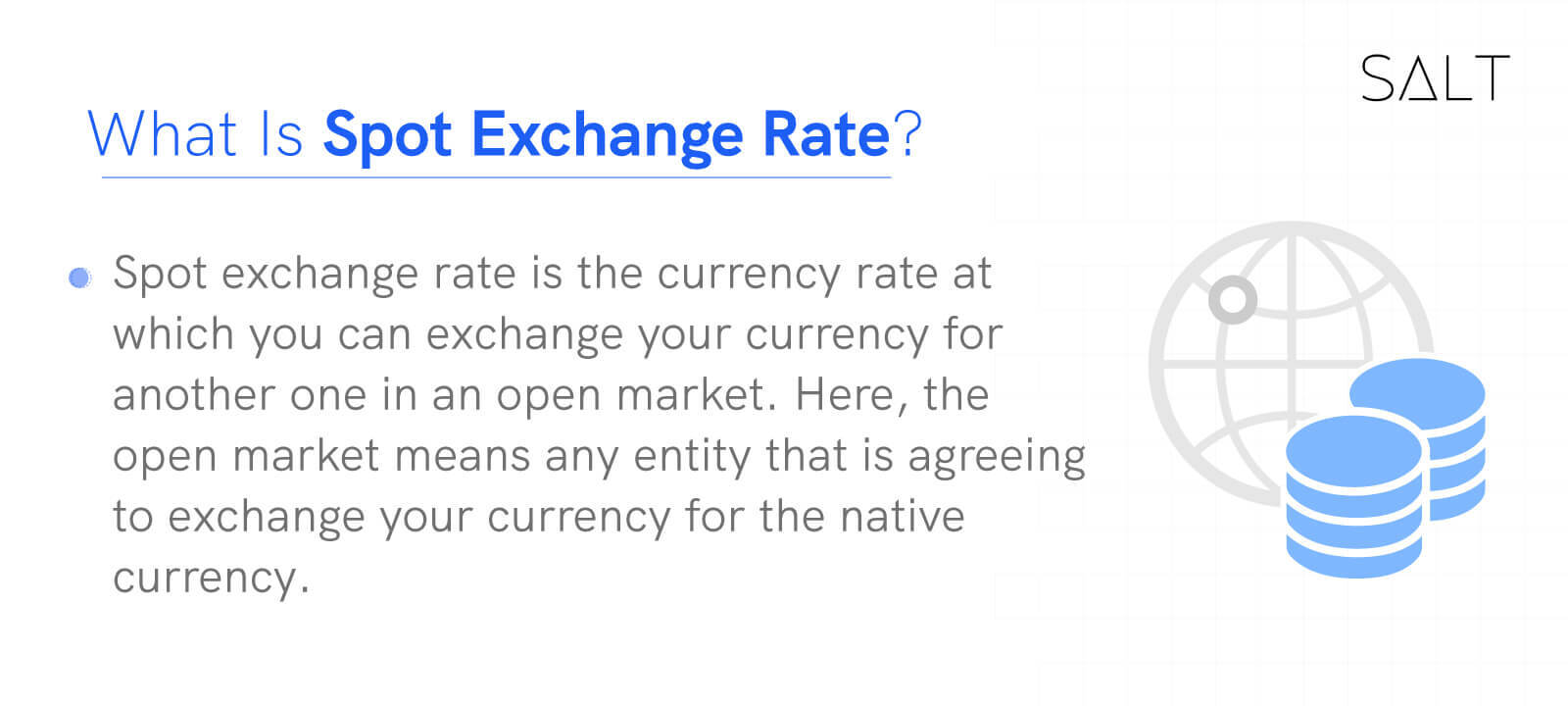
The Forex spot market is the largest and most liquid financial market in the world, with trillions of dollars traded daily. In this arena, participants trade currency pairs, such as EUR/USD or GBP/JPY. When a company in the United States needs to pay a supplier in Germany, it enters the spot exchange to sell Dollars and buy Euros at the current rate. Because of its massive volume and 24-hour operation, the Forex spot market is considered the most accurate reflection of a nation’s economic health and geopolitical standing.
Commodity Spot Markets
Commodity spot exchanges deal with physical goods such as gold, silver, crude oil, and agricultural products like wheat or coffee. Unlike futures contracts, which are often used by speculators who never intend to take delivery of the physical goods, spot commodity trading is frequently utilized by industrial users. For example, a jewelry manufacturer might use the spot market to buy physical gold bullion for immediate use in production. These markets are highly sensitive to logistical factors, such as weather patterns affecting crops or geopolitical tensions affecting oil pipelines.
The Rise of Digital Asset Spot Exchanges
In the last decade, the concept of the spot exchange has expanded into the realm of digital assets. Cryptocurrency spot exchanges allow investors to buy and sell tokens like Bitcoin or Ethereum for immediate delivery to their digital wallets. Unlike “paper” Bitcoin (such as ETFs or futures), spot crypto trading involves the transfer of the actual underlying asset. These platforms have revolutionized the way retail and institutional investors access 24/7 liquidity, although they operate under a different regulatory framework than traditional equities or commodities.
Spot Markets vs. Derivatives: Key Distinctions for Investors
For those managing a portfolio or a business balance sheet, it is vital to distinguish between spot exchanges and the derivatives markets (Futures, Forwards, and Options). While they are interconnected, they serve very different financial purposes.

Spot vs. Futures Contracts
The primary difference between spot and futures markets lies in the timing of the delivery and the pricing structure. In a spot exchange, you pay the current price and take delivery now. In a futures market, you agree to a price today for an asset that will be delivered at a specific date in the future. Futures are often used for “hedging”—locking in a price to protect against future volatility. However, futures involve “contango” or “backwardation,” where the future price may be higher or lower than the spot price due to storage costs or interest rates.
Spot vs. Forward Contracts
While futures are standardized contracts traded on an exchange, “forwards” are private, customizable agreements between two parties. Like futures, forwards settle at a later date. Investors choose spot exchanges over forwards when they require immediate liquidity and do not want to be tied into a long-term contractual obligation. Spot trading is generally more transparent, as prices are publicly quoted on an exchange, whereas forward rates are negotiated privately.
Risk Profiles and Speculative Utility
From an investment perspective, spot trading is often viewed as less “leveraged” than derivatives. When you buy an asset on a spot exchange, you generally pay the full value of the asset. In derivatives, you can often trade on margin, controlling a large position with a small amount of capital. While margin can amplify gains, it also increases the risk of total loss. Spot trading is the preferred method for long-term “buy and hold” investors who want to avoid the complexities of rolling over expiring contracts and the risks associated with high leverage.
Strategic Advantages and Risks of Spot Trading
Engaging in spot exchanges offers several strategic advantages for both personal finance and corporate treasury management, but it is not without its inherent risks.
Liquidity and Transparency
One of the greatest advantages of spot exchanges is high liquidity. Because these markets represent the immediate demand for an asset, there are almost always buyers and sellers available. This allows investors to enter and exit positions quickly without significantly moving the price. Furthermore, because spot prices are the global standard, there is a high level of price transparency. Investors can see exactly what an asset is worth at any given second, reducing the information asymmetry often found in more niche financial products.
Minimizing Counterparty Risk
In many derivative transactions, there is a risk that the other party might fail to fulfill their end of the contract months down the line (counterparty risk). Spot exchanges minimize this risk because the transaction happens almost immediately. Once the T+2 settlement is complete, the buyer has the asset, and the seller has the cash. This “settlement finality” provides a layer of security for businesses that cannot afford to have capital tied up in long-term, uncertain contracts.
Volatility and Market Exposure
The primary risk of the spot exchange is market volatility. Because you are buying the asset outright, you are fully exposed to price fluctuations. If you buy a currency on the spot market and its value drops by 10% the next day, your portfolio value drops by 10%. Unlike options, which can provide “downside protection” for a premium, spot trading offers no such safety net. Investors must be prepared for the “gap risk” where prices can jump or drop significantly between market sessions.
Navigating the Spot Exchange: Practical Considerations for Business and Finance
To successfully use spot exchanges, one must move beyond theory and look at the practical application of these tools in a professional financial context.
Managing Corporate Cash Flows
For businesses operating internationally, the spot exchange is a vital tool for managing cash flow. Companies often use spot trades to convert foreign revenue back into their functional currency to cover operational expenses like payroll and rent. By monitoring spot rates, a CFO can time these conversions to take advantage of favorable exchange rate movements, directly impacting the company’s bottom line and net profit margins.
Choosing the Right Trading Platform
Not all spot exchanges are created equal. When selecting a platform—whether it’s a bank’s portal, a dedicated Forex broker, or a commodity exchange—investors must consider transaction costs (spreads), execution speed, and regulatory compliance. High “bid-ask spreads” (the difference between the buy and sell price) can eat into profits, especially for high-frequency traders. Professional investors look for platforms that offer “deep liquidity,” ensuring that large orders can be filled without causing “slippage,” where the price changes during the execution of the trade.

Tax and Regulatory Implications
Finally, every spot transaction has tax implications. In many jurisdictions, gains made from selling an asset on a spot exchange are subject to capital gains tax. For businesses, these may be treated as ordinary income or losses. Furthermore, since the global financial crisis, regulations such as Dodd-Frank in the US and MiFID II in Europe have increased the reporting requirements for spot trades to prevent market manipulation. Staying compliant requires meticulous record-keeping of every trade, including the timestamp, the spot price, and the settlement date.
In conclusion, the spot exchange is more than just a marketplace; it is the heartbeat of global finance. It provides the essential functions of price discovery, liquidity, and asset transfer that allow the world to trade. By understanding the nuances of spot pricing, the differences between spot and derivatives, and the practicalities of settlement, investors and business leaders can better position themselves to thrive in an ever-changing economic environment. Whether you are hedging a multi-million dollar corporate exposure or simply building a personal investment portfolio, the spot market remains the most direct and transparent path to participating in the global economy.
aViewFromTheCave is a participant in the Amazon Services LLC Associates Program, an affiliate advertising program designed to provide a means for sites to earn advertising fees by advertising and linking to Amazon.com. Amazon, the Amazon logo, AmazonSupply, and the AmazonSupply logo are trademarks of Amazon.com, Inc. or its affiliates. As an Amazon Associate we earn affiliate commissions from qualifying purchases.