
In the hyper-competitive landscape of modern commerce, attention is the most valuable currency. For brand strategists and marketing leaders, the challenge is no longer just about having a high-quality product; it is about ensuring that your product is the one being talked about when a consumer is ready to buy. This brings us to a critical metric that has evolved from a simple advertising ratio into a comprehensive indicator of brand health: Share of Voice (SOV).
Originally, Share of Voice was a way to measure a brand’s presence in traditional media—think television commercials, radio spots, and print ads. If your brand owned 30% of the total advertising spend in your industry, your SOV was 30%. However, in the digital age, Share of Voice has expanded to encompass every digital touchpoint where a brand is mentioned, seen, or heard. It is a holistic measurement of a brand’s visibility compared to its competitors across various channels.
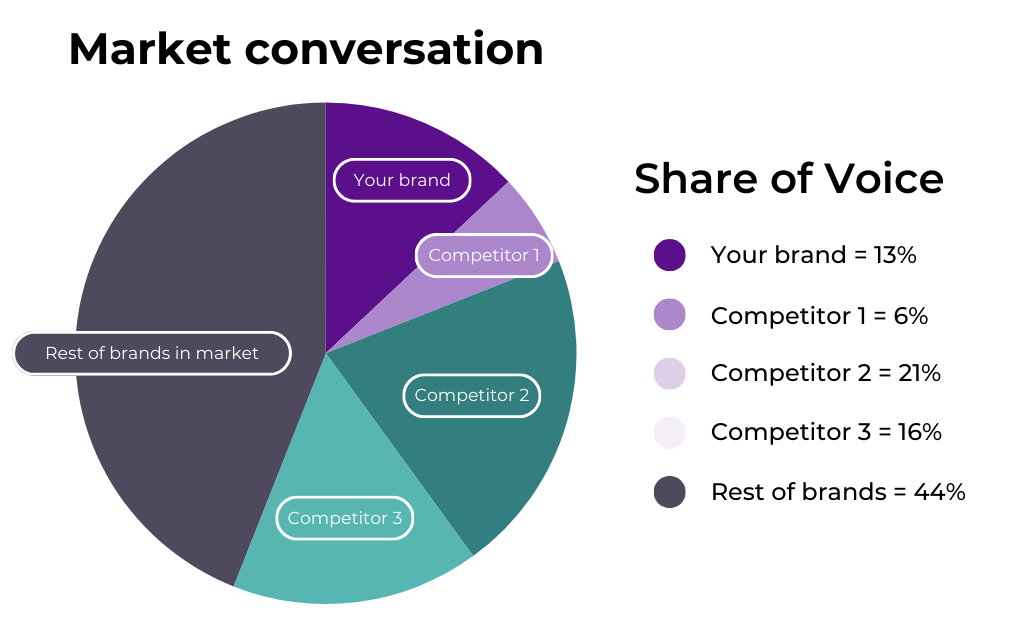
Understanding Share of Voice is essential for any brand looking to establish a dominant market position. It provides a roadmap for where a brand stands today and offers a predictive look at where it might be tomorrow.
The Evolution of Share of Voice in Modern Brand Strategy
The concept of Share of Voice has undergone a radical transformation. In the mid-20th century, branding was largely a game of “who has the largest budget.” If a brand could outspend its rivals on billboard space and primetime TV slots, it naturally commanded a larger Share of Voice. Today, the democratization of media through social platforms and search engines has changed the rules of engagement.
From Traditional Media to Digital Dominance
In the past, SOV was synonymous with Share of Spend. If a beverage company spent $1 million on ads while the total industry spend was $10 million, their SOV was 10%. This was a linear, predictable model. Today, digital SOV is multifaceted. It includes organic search rankings, social media mentions, news coverage, forum discussions, and even consumer reviews. A brand can have a massive advertising budget but a low Share of Voice if their content fails to resonate or if competitors are generating more organic “buzz.”
The Shift from Quantity to Quality
In modern branding, it is no longer enough to be loud; you must be relevant. Modern SOV analysis doesn’t just look at how many times a brand is mentioned, but the context of those mentions. This is where brand strategy intersects with data science. Strategists now distinguish between “volume” and “sentiment.” A high Share of Voice driven by negative publicity is a crisis, not a victory. Therefore, the goal of a modern brand is to achieve a high “Positive Share of Voice,” ensuring that the brand is the primary choice in the consumer’s “mental availability.”
How to Measure Share of Voice Effectively
To manage what you measure, you must first define the parameters of your brand’s ecosystem. Measuring SOV requires a multi-channel approach that looks at both paid and earned media. By calculating your brand’s percentage of total mentions or visibility within a specific category, you can gauge your true competitive standing.
Calculating the SOV Formula
The basic mathematical formula for Share of Voice is:
(Your Brand’s Metrics / Total Market Metrics) x 100 = SOV%
Depending on your goals, “metrics” could refer to social media mentions, search volume, or ad impressions. For example, if there are 1,000 total mentions of “luxury watches” on social media in a month, and your brand is mentioned 200 times, your Social SOV is 20%.
Social Media Share of Voice
Social media is perhaps the most dynamic arena for SOV. It measures how much people are talking about your brand compared to your competitors. Using social listening tools, brands can track hashtags, direct tags, and even untagged mentions. This data allows a brand to see who is winning the “conversation wars.” Are you the brand people turn to for advice? Are you the brand people tag in “lifestyle” posts? This organic visibility is often more valuable than paid ads because it represents authentic brand advocacy.
Search Engine Visibility (PPC and SEO)
Search engines are the primary way consumers discover new brands. Measuring SOV in search involves two components: organic (SEO) and paid (PPC).
- Organic SOV: This is measured by how often your website appears in the top results for industry-specific keywords. If your brand occupies the first three spots for “sustainable skincare,” you own a significant portion of the organic SOV for that category.
- Paid SOV: Also known as Impression Share, this measures how often your ads were shown out of the total number of times they were eligible to be shown. A high paid SOV ensures that when a customer is actively looking to buy, your brand is the first thing they see.
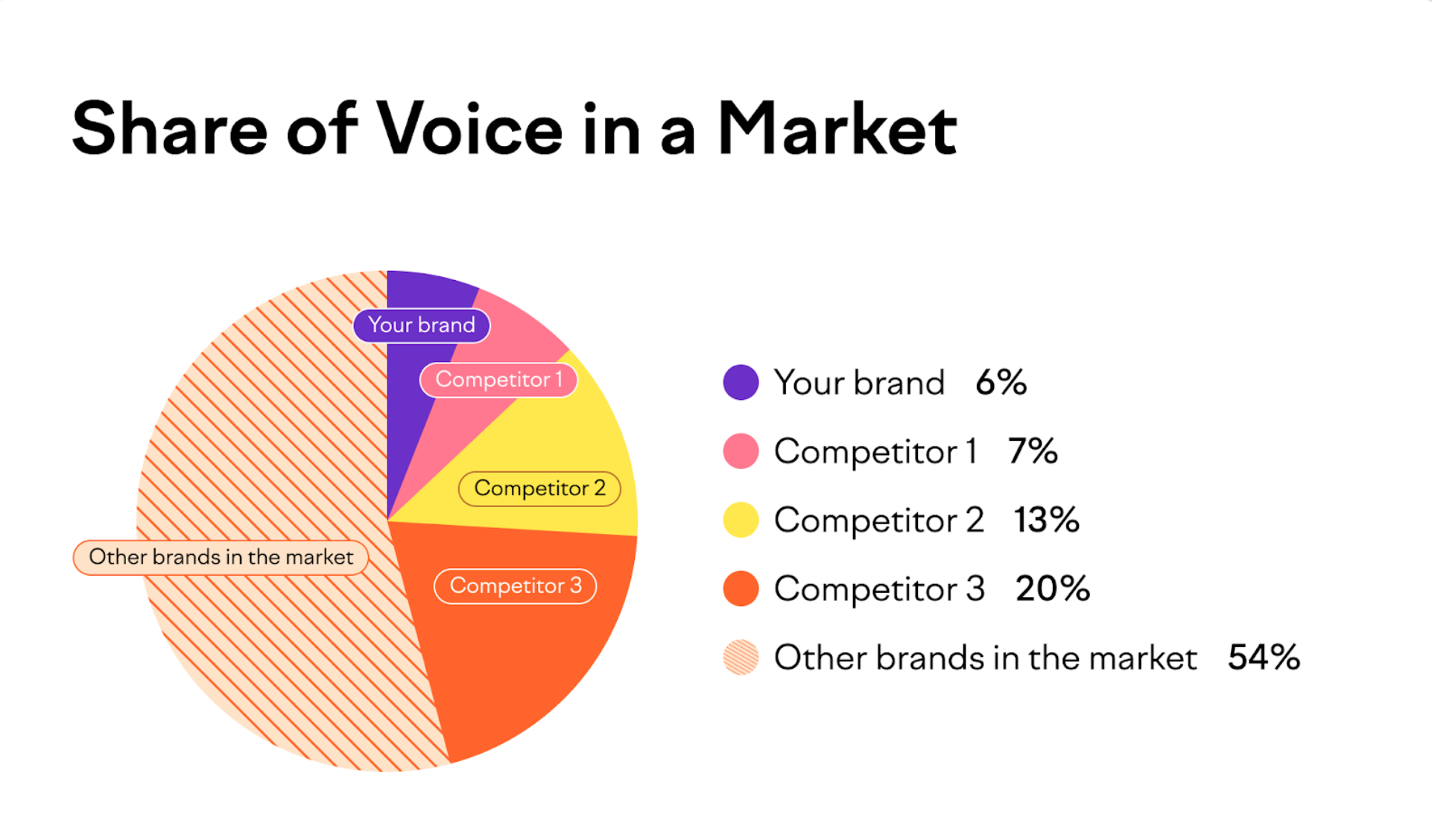
Why Share of Voice is the North Star for Brand Health
Share of Voice is more than just a vanity metric; it is a leading indicator of market share. Extensive research in the field of marketing science has shown a direct correlation between a brand’s SOV and its Share of Market (SOM).
Predicting Market Share and the eSOV Rule
The “Excess Share of Voice” (eSOV) rule is one of the most powerful concepts in brand strategy. It states that if a brand’s Share of Voice is higher than its current Market Share (SOV > SOM), the brand is likely to grow. Conversely, if a brand stops investing in its visibility and its SOV falls below its market share, its market share will eventually decline to match. This makes SOV a predictive tool that allows executives to forecast growth based on their current communication efforts.
Identifying Competitor Blind Spots
Monitoring SOV isn’t just about looking at yourself; it’s about watching the competition. By analyzing where competitors are failing to maintain their voice, a brand can pivot its strategy to capture that “empty” space. For instance, if a major competitor has a high SOV on Facebook but a low SOV on TikTok, a brand can aggressively target the TikTok demographic to build an early-mover advantage.
Enhancing Customer Sentiment Analysis
Integrating SOV with sentiment analysis provides a clear picture of brand reputation. A brand might discover they have a high SOV in the “customer service” category, but if the sentiment is overwhelmingly negative, it signals a need for operational changes rather than more marketing. By aligning SOV with brand perception, strategists can ensure that their growth is sustainable and built on a foundation of consumer trust.
Strategies to Increase Your Brand’s Share of Voice
Increasing your SOV requires a deliberate, multi-pronged approach that balances immediate visibility with long-term brand equity. It is about being present where your audience lives and providing value that encourages them to speak on your behalf.
Content Strategy and Authority Building
To increase organic SOV, a brand must become an authority. This is achieved through a robust content strategy that answers the questions consumers are asking. By creating high-value blog posts, white papers, and videos, a brand can dominate the “information space” of their industry. When your brand becomes the go-to source for information, your search visibility and organic mentions naturally rise, inflating your SOV without a proportional increase in ad spend.
Leveraging Influencer Partnerships
In the digital age, a brand’s voice is often amplified by others. Influencer marketing is a highly effective way to “borrow” Share of Voice. By partnering with creators who already have the attention of your target audience, you can inject your brand into conversations that you might not have reached otherwise. This strategy is particularly effective for lifestyle brands where community recommendation carries more weight than corporate messaging.
Strategic Paid Media Placement
While organic growth is the goal, paid media remains the fastest way to boost SOV. However, the modern approach is not “spray and pray.” Strategic brands use “Always On” paid campaigns to maintain a baseline level of visibility, combined with “Burst” campaigns during high-intent periods (like product launches or seasonal holidays). By dominating the ad space during critical windows, a brand can temporarily spike its SOV, creating a halo effect that lingers long after the campaign ends.
Beyond the Numbers: The Future of Brand Awareness
As we look toward the future, the way we define and measure Share of Voice will continue to evolve alongside technology. The rise of artificial intelligence and voice search will introduce new variables into the SOV equation.
The Role of AI in Competitive Intelligence
AI-powered tools are making it easier for brand strategists to track SOV in real-time across thousands of sources. Predictive analytics can now suggest when a brand should increase its spend to maintain its eSOV or warn when a competitor is starting to gain traction in a niche sub-sector. This allows for a more agile brand strategy that can react to market shifts in days rather than quarters.
Integrating SOV into Holistic Brand Identity
Ultimately, Share of Voice is a reflection of a brand’s resonance with the world. It is not just a number on a spreadsheet; it is a measure of a brand’s cultural relevance. In an era where consumers are bombarded with thousands of messages daily, the brands that win will be those that use their voice not just to sell, but to connect.
A high Share of Voice is a testament to a brand’s ability to remain top-of-mind. By consistently monitoring SOV, understanding the nuances of digital visibility, and strategically investing in the right channels, a brand can ensure that it doesn’t just participate in the market—it leads the conversation. In the battle for the consumer’s mind, Share of Voice is the ultimate indicator of who is winning the war for attention.
aViewFromTheCave is a participant in the Amazon Services LLC Associates Program, an affiliate advertising program designed to provide a means for sites to earn advertising fees by advertising and linking to Amazon.com. Amazon, the Amazon logo, AmazonSupply, and the AmazonSupply logo are trademarks of Amazon.com, Inc. or its affiliates. As an Amazon Associate we earn affiliate commissions from qualifying purchases.