
In the dynamic world of enterprise technology, the acronym SAP stands as a ubiquitous pillar, representing Systems, Applications & Products in Data Processing – a global leader in enterprise resource planning (ERP) software. Within its vast ecosystem of modules designed to manage diverse business functions, SAP FICO emerges as one of the most critical and widely implemented components. But what exactly is SAP FICO, and why does it hold such paramount importance in the operational fabric of countless organizations worldwide?
At its core, SAP FICO is a comprehensive module within the SAP ERP system that meticulously handles the financial accounting (FI) and controlling (CO) functions of an enterprise. It is the backbone for managing financial transactions, generating financial statements, and providing sophisticated tools for planning, monitoring, and reporting on business performance. Far from being a mere accounting software, SAP FICO offers an integrated solution that automates and streamlines complex financial processes, providing real-time insights and enabling better strategic decision-making across all levels of an organization. It’s a testament to the power of technology in transforming cumbersome manual processes into efficient, accurate, and interconnected digital workflows.
The Foundation of Enterprise Resource Planning (ERP)
To truly understand SAP FICO, one must first grasp the broader context of SAP itself and the fundamental concept of Enterprise Resource Planning (ERP). ERP systems are integrated software applications that manage all internal and external information across an entire organization, encompassing finance, manufacturing, human resources, supply chain, and more.
Understanding SAP as a Global Leader
Founded in 1972, SAP revolutionized business operations by developing one of the world’s first successful ERP systems. Over five decades, SAP has grown into a multinational software corporation, serving over 400,000 customers in more than 180 countries. Its software is designed to integrate various business processes, allowing data to flow seamlessly between different departments and functions. This integration eliminates data silos, reduces redundancies, and provides a single source of truth for all enterprise information. SAP’s dominance stems from its robust architecture, scalability, and ability to cater to diverse industry requirements, offering specialized solutions for sectors ranging from manufacturing and retail to healthcare and public services. The continuous evolution of SAP, from its early R/2 and R/3 versions to the current S/4HANA, showcases its commitment to innovation and adapting to the changing technological landscape.
The Role of ERP in Modern Business
In today’s fast-paced global economy, businesses operate with immense complexity. Managing diverse operations, regulatory compliance, customer relationships, and supply chains requires a centralized and efficient system. This is where ERP systems, and specifically SAP, become indispensable. An ERP system acts as the central nervous system of an organization, consolidating data from various departments into a unified database. This integration fosters cross-functional collaboration, improves operational efficiency, and provides managers with real-time visibility into every aspect of their business. For finance, this means having up-to-the-minute data on transactions, cash flow, and financial performance, which is crucial for compliance, reporting, and strategic planning. The move from disparate, siloed systems to an integrated ERP platform represents a paradigm shift, enabling organizations to operate with greater agility, transparency, and control.
Deconstructing SAP FICO: FI and CO Modules
The name “FICO” is an acronym derived from its two core components: FI (Financial Accounting) and CO (Controlling). While both modules are tightly integrated and often implemented together, they serve distinct yet complementary purposes within an organization’s financial ecosystem. Understanding each module’s specific functionalities is key to appreciating the comprehensive power of SAP FICO.
SAP FI (Financial Accounting): Core Components and Functionality
SAP FI is primarily concerned with external reporting and compliance. It records, processes, and manages all financial transactions that occur within a company, ensuring that financial data is accurate, consistent, and adheres to regulatory standards such as GAAP (Generally Accepted Accounting Principles) and IFRS (International Financial Reporting Standards). The module generates vital financial statements, including balance sheets, profit and loss statements, and cash flow statements, which are essential for external stakeholders like investors, creditors, and government agencies.
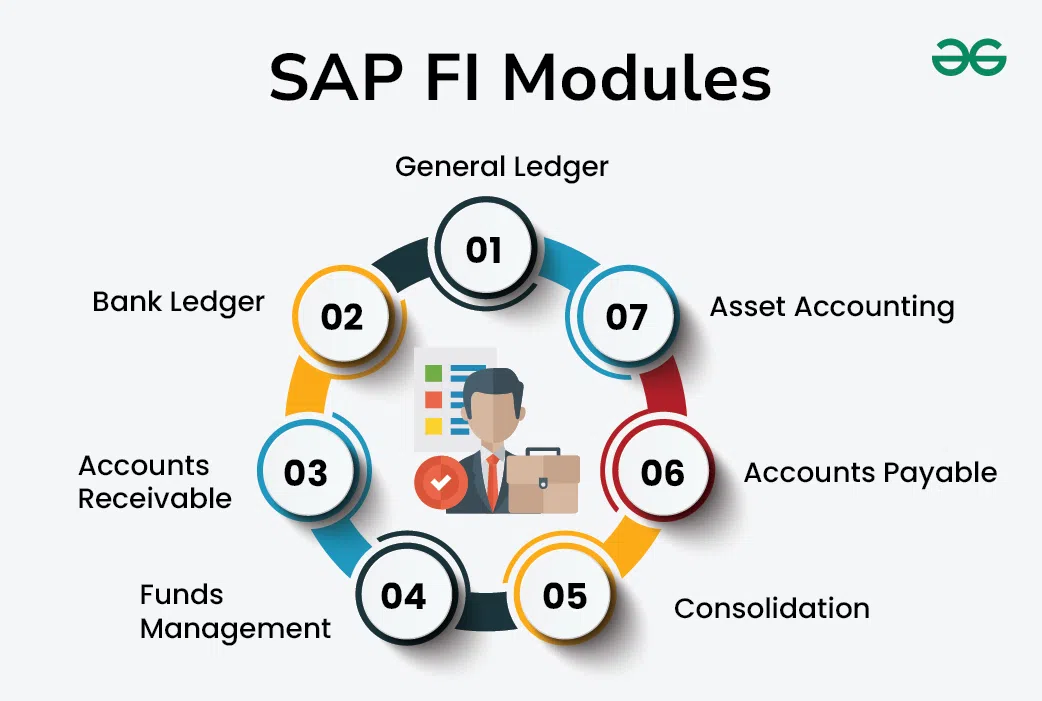
Key sub-modules within SAP FI include:
- General Ledger Accounting (GL): This is the central repository for all financial transactions, providing a complete record of financial data. It manages all accounts, including assets, liabilities, equity, revenues, and expenses, and forms the basis for creating primary financial statements.
- Accounts Payable (AP): Manages all vendor-related transactions, from recording invoices to processing payments. It helps track liabilities to suppliers, optimize payment terms, and ensure timely and accurate disbursements, thus maintaining good vendor relationships.
- Accounts Receivable (AR): Handles all customer-related transactions, from billing and invoicing to managing incoming payments. It helps track outstanding receivables, manage credit limits, and optimize cash collection, directly impacting a company’s liquidity.
- Asset Accounting (AA): Manages a company’s fixed assets, such as machinery, buildings, and vehicles. It handles the entire lifecycle of an asset, including acquisition, depreciation, revaluation, and retirement, ensuring accurate asset valuation and compliance with accounting standards.
- Bank Accounting: Facilitates the integration of bank accounts with the SAP system, managing cash balances, bank statements, and reconciliations. It streamlines banking operations and provides real-time visibility into cash flow.
SAP CO (Controlling): Driving Internal Performance and Decision-Making
While SAP FI focuses on external reporting, SAP CO is dedicated to internal management accounting. Its primary goal is to support decision-making processes within the organization by tracking, analyzing, and allocating costs and revenues. CO provides management with insights into profitability, cost centers, internal orders, and other performance metrics, enabling them to make informed choices that drive operational efficiency and achieve strategic objectives.
Key sub-modules within SAP CO include:
- Cost Element Accounting: Categorizes all expenses and revenues based on their nature (e.g., salaries, utilities, sales revenue). It serves as the primary link between FI and CO, bringing financial data from the general ledger into the controlling module for detailed analysis.
- Cost Center Accounting: Analyzes costs incurred within specific organizational units or departments (cost centers) to monitor and control expenditures. It helps managers understand where costs are generated and allocate resources more effectively.
- Internal Orders: Used to track costs and revenues associated with specific, short-term projects or events within the organization, such as marketing campaigns, research projects, or repairs. This allows for detailed analysis of the profitability or cost-effectiveness of individual initiatives.
- Profitability Analysis (CO-PA): Provides detailed insights into the profitability of market segments, products, customers, and other dimensions. It helps companies analyze sales data, calculate margins, and identify profitable areas, supporting strategic pricing and marketing decisions.
- Product Costing: Calculates the cost of producing a product or delivering a service. This includes direct materials, direct labor, and manufacturing overheads, providing crucial information for pricing strategies, inventory valuation, and production planning.
Key Features and Benefits of SAP FICO
The synergistic integration of the FI and CO modules provides a powerful suite of tools that offer profound benefits to businesses of all sizes and across all industries. The technological sophistication behind SAP FICO translates directly into tangible improvements in financial management and overall business performance.
Streamlined Financial Operations
SAP FICO automates a vast array of financial processes, from invoice processing and payment runs to bank reconciliations and period-end closings. This automation significantly reduces manual effort, minimizes the risk of human error, and accelerates the speed at which financial tasks are completed. The result is a more agile and efficient finance department capable of handling higher volumes of transactions with greater precision.
Enhanced Data Accuracy and Reporting
By centralizing all financial data in a single, integrated system, SAP FICO ensures data consistency and accuracy across the organization. This “single source of truth” eliminates discrepancies that often arise from disparate systems, leading to more reliable financial reports. With robust reporting capabilities, businesses can generate custom reports, dashboards, and analytics, providing clear and actionable insights into their financial health at any given moment.
Improved Regulatory Compliance
Compliance with local and international accounting standards (like GAAP, IFRS) and tax regulations is a non-negotiable aspect of modern business. SAP FICO is designed with built-in functionalities and configurations that help organizations meet these stringent requirements. Its audit trails, internal controls, and transparent reporting capabilities simplify the auditing process and reduce the risk of non-compliance, safeguarding the company’s reputation and avoiding potential penalties.
Better Strategic Decision-Making
With real-time access to accurate financial and controlling data, management can make more informed and strategic decisions. Whether it’s analyzing product profitability, optimizing cost structures, assessing investment opportunities, or forecasting future financial performance, SAP FICO provides the analytical tools and data necessary for sound judgment. This capability empowers leaders to proactively respond to market changes and steer the company towards sustainable growth.
Scalability and Integration
As a core component of the SAP ERP suite, FICO is inherently scalable and designed for seamless integration with other SAP modules (e.g., Sales and Distribution – SD, Materials Management – MM, Production Planning – PP) and even third-party applications. This modularity allows businesses to expand their SAP footprint as their needs grow, ensuring that the financial system remains robust and adaptable to evolving business requirements without disruptive overhauls.
Who Uses SAP FICO and Why It Matters
Given its comprehensive capabilities, SAP FICO is not just another piece of software; it’s a critical tool for various stakeholders and a cornerstone for numerous career paths within the technology and finance sectors.
Target Users and Industries
SAP FICO is deployed across a vast spectrum of organizations, from multinational corporations to small and medium-sized enterprises (SMEs) that require robust financial management. It’s particularly prevalent in industries with complex financial operations, such as manufacturing, retail, banking, utilities, and professional services. Within these organizations, the primary users of SAP FICO include:
- Accountants and Financial Analysts: Directly use the system for recording transactions, generating reports, managing ledgers, and performing financial analysis.
- Controllers: Leverage the CO module for cost center accounting, profitability analysis, and budgeting to monitor and control internal performance.
- CFOs and Senior Management: Rely on the aggregated data and reports for strategic planning, performance evaluation, and investor relations.
- IT Professionals and SAP Consultants: Are responsible for implementing, configuring, maintaining, and customizing the SAP FICO system to meet specific business requirements.
The sheer breadth of its application underscores its importance: if a company processes a significant volume of financial transactions and requires detailed oversight of its financial health, SAP FICO is likely a foundational technology for their operations.
Career Prospects in SAP FICO
The widespread adoption of SAP FICO has created a vibrant and in-demand job market for professionals skilled in this domain. A career in SAP FICO typically falls into one of several categories:
- SAP FICO Consultant: These professionals specialize in implementing, configuring, and customizing SAP FICO solutions for clients. They translate business requirements into technical specifications and ensure the system meets the client’s financial and controlling needs.
- SAP FICO End-User: Individuals working in finance or accounting departments who directly use the SAP FICO module for their daily tasks.
- SAP FICO Support Analyst: Provides ongoing technical support and troubleshooting for SAP FICO users and systems.
- SAP FICO Developer: Focuses on programming and developing custom solutions or integrations within the SAP FICO environment, often using ABAP (Advanced Business Application Programming).
The continuous evolution of SAP technology ensures that skills in SAP FICO remain valuable and sought after, making it an attractive specialization for individuals looking to blend finance acumen with technological expertise.
The Future Landscape of SAP FICO
Technology is never static, and neither is SAP FICO. The module continues to evolve, adapting to new business challenges and technological advancements, particularly with the advent of SAP S/4HANA.
Integration with S/4HANA
SAP S/4HANA is the next-generation intelligent ERP suite designed for in-memory computing. It represents a significant leap forward, offering simplified data models, a user-friendly Fiori interface, and real-time analytics. For FICO, S/4HANA brings fundamental changes, such as the Universal Journal, which consolidates FI and CO data into a single line item table, eliminating redundancies and speeding up reporting. This integration provides unparalleled speed and flexibility for financial operations and analysis, positioning S/4HANA Finance as the modern iteration of what was traditionally known as SAP FICO. Organizations migrating to S/4HANA are seeing their FICO functionalities enhanced with greater agility and predictive capabilities.
Cloud-Based Solutions and Emerging Technologies
The shift towards cloud computing is undeniable, and SAP FICO, under the S/4HANA umbrella, is increasingly available as a cloud-based solution. This offers greater flexibility, reduced infrastructure costs, and easier access to updates. Furthermore, SAP is actively integrating emerging technologies like Artificial Intelligence (AI) and Machine Learning (ML) into its finance solutions. These technologies promise to automate routine tasks further, detect anomalies, forecast trends with greater accuracy, and provide predictive insights into financial performance, transforming the role of finance professionals from data entry to strategic analysis.

Continuous Evolution and Adaptation
The future of SAP FICO is one of continuous evolution. As regulatory environments change, global economies fluctuate, and new technologies emerge, SAP will continue to enhance its financial management solutions. The focus will remain on delivering real-time insights, improving automation, simplifying user experience, and ensuring robust compliance, solidifying SAP FICO’s (or S/4HANA Finance’s) position as an indispensable tool for managing the financial heartbeat of enterprises worldwide.
In conclusion, SAP FICO is far more than just accounting software; it is a sophisticated, integrated technology solution that serves as the financial backbone for enterprises globally. By seamlessly managing both financial accounting and internal controlling functions, it provides unparalleled data accuracy, streamlines operations, ensures compliance, and empowers organizations with the insights needed to make strategic decisions. As technology continues its relentless march forward, SAP FICO, in its evolving forms, remains at the forefront of driving financial excellence and operational efficiency in the digital age.
aViewFromTheCave is a participant in the Amazon Services LLC Associates Program, an affiliate advertising program designed to provide a means for sites to earn advertising fees by advertising and linking to Amazon.com. Amazon, the Amazon logo, AmazonSupply, and the AmazonSupply logo are trademarks of Amazon.com, Inc. or its affiliates. As an Amazon Associate we earn affiliate commissions from qualifying purchases.