
In the landscape of business finance, few metrics are as fundamental—or as frequently misunderstood—as the “operating cost.” Whether you are a solo entrepreneur launching a side hustle or a CFO of a multinational corporation, understanding the flow of capital required to keep your business running is the difference between sustainable growth and sudden insolvency.
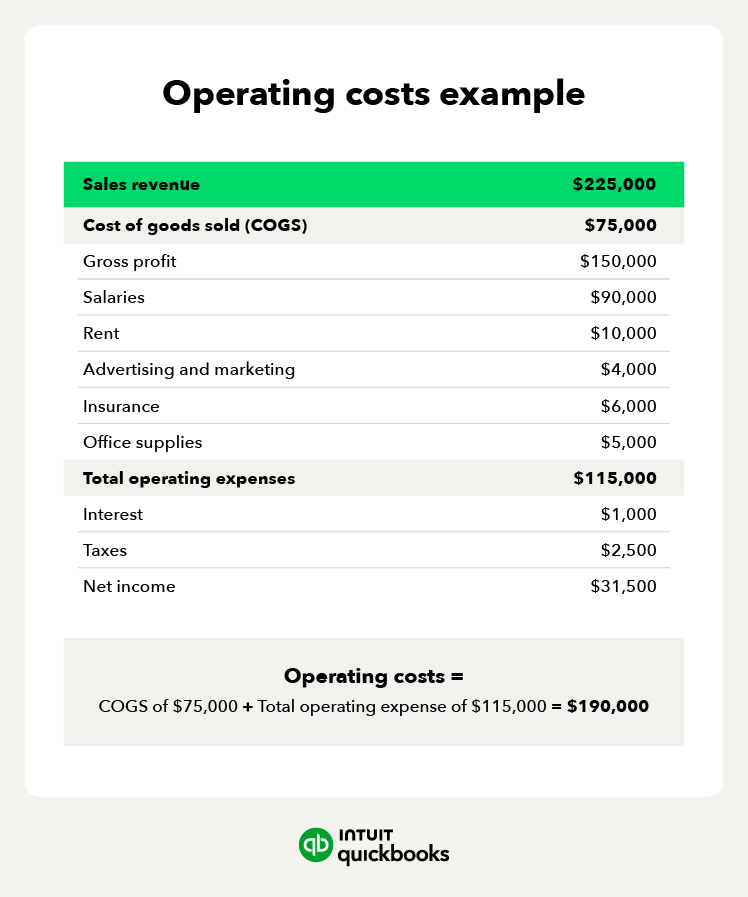
Operating costs, often referred to as operating expenses (OPEX), represent the day-to-day expenditures necessary to maintain a business’s core activities. Unlike capital expenditures (CAPEX), which involve long-term investments in assets like buildings or heavy machinery, operating costs are the “fuel” that keeps the engine running. This guide delves deep into the nuances of operating costs, how to categorize them, and strategies to optimize them for maximum profitability.
Understanding the Fundamentals of Operating Costs
To manage money effectively, one must first define what constitutes an operating cost. At its simplest, an operating cost is any expense incurred through the normal course of business operations. However, within the realm of business finance, it is essential to distinguish between different types of outgoings to ensure accurate reporting and tax compliance.
Fixed vs. Variable Costs
The most basic breakdown of operating costs involves categorizing them as either fixed or variable.
- Fixed Costs: These are expenses that remain constant regardless of your business’s production volume or sales performance. Common examples include monthly rent for office space, insurance premiums, and the salaries of permanent staff. Because these costs do not fluctuate with business activity, they represent the “baseline” or “burn rate” that a company must cover every month just to stay in existence.
- Variable Costs: These expenses fluctuate in direct proportion to business activity. If you run a manufacturing plant, your electricity usage and raw material consumption are variable costs. In a service-based business, variable costs might include sales commissions or shipping fees. Understanding your variable costs is crucial for determining your “break-even point”—the moment when your revenue covers all costs.
Non-Operating Costs: The Crucial Distinction
One of the most common mistakes in business finance is conflating operating costs with non-operating costs. Non-operating costs are expenses unrelated to the core business functions. This includes interest payments on loans, taxes, and losses from the sale of assets.
For an investor or a business owner, separating these is vital. A company might show a high operating profit (meaning its core business is healthy), but a low net income due to massive interest payments on debt. By isolating operating costs, you gain a clear picture of the efficiency of the actual business model, stripped of external financial engineering or one-time events.
The Components of Operating Expenses (OPEX)
To get a granular view of where money is going, businesses typically categorize their operating expenses into several key buckets. These categories appear on the income statement and are scrutinized by analysts to determine a company’s operational health.
Labor and Personnel Costs
For most modern businesses, especially in the service and tech sectors, labor is the largest operating cost. This includes more than just base salaries. It encompasses payroll taxes, health insurance contributions, 401(k) matching, bonuses, and worker’s compensation insurance. Managing labor costs requires a delicate balance; underpaying can lead to high turnover (which increases recruitment costs), while overstaffing can erode profit margins.
Rent and Utilities
Physical infrastructure remains a significant line item for many. This includes the lease of office space, retail storefronts, or warehouse facilities. Accompanying these are utilities such as electricity, water, internet, and phone services. In the wake of the remote work revolution, many businesses have managed to drastically reduce this specific operating cost by downsizing physical footprints, though this often shifts costs toward digital infrastructure.
Maintenance and Inventory Management
Operating a business requires tools, and tools require upkeep. Maintenance costs cover the repair of equipment, software updates, and office supplies. For retail or manufacturing businesses, inventory-related operating costs are also significant. This includes the cost of storing goods (warehousing), insurance for that inventory, and the costs associated with “shrinkage” (lost or damaged goods). It is important to note that while the purchase of raw materials is often categorized under Cost of Goods Sold (COGS), the storage and management of those goods fall under operating expenses.
Why Tracking Operating Costs is Vital for Business Success
Tracking operating costs is not merely an exercise in accounting; it is a strategic necessity. Without a clear understanding of these costs, a business cannot accurately price its products or forecast its future.
Calculating the Operating Ratio
The Operating Ratio is a powerful financial tool used to measure a company’s efficiency. It is calculated by dividing total operating expenses by net sales.
Formula: Operating Ratio = Operating Expenses / Net Sales
A lower ratio indicates that a company is efficient at generating revenue relative to its costs. For example, if a company has an operating ratio of 0.70, it means it spends $0.70 to generate $1.00 in sales. Monitoring this ratio over time allows a business to see if it is becoming more or less efficient as it scales. Investors often use this metric to compare companies within the same industry to see who is managing their “Money” more effectively.
Impact on Profitability and Cash Flow
Profitability is often mistaken for cash flow, but they are different animals. A business can be profitable on paper but go bankrupt because its operating costs are due before its customers pay their invoices. By tracking the timing and magnitude of operating costs, business owners can manage “cash flow cycles.”
High operating costs increase the “operating leverage” of a company. A company with high fixed operating costs needs to maintain a high level of sales to stay profitable. Conversely, a company with low operating costs (a “lean” business) can survive market downturns much more easily because their “break-even” requirement is lower.
Strategies to Optimize and Reduce Operating Costs
In an era of inflation and market volatility, cost optimization is a competitive advantage. However, “cutting costs” should not be confused with “slashing quality.” Strategic optimization involves finding ways to do more with less.
Leveraging Technology for Efficiency
Digital transformation is one of the most effective ways to lower operating costs in the long term. While there is an initial investment (CAPEX), the resulting reduction in OPEX can be massive.
- Automation: Using software to handle repetitive tasks like invoicing, data entry, or customer support (via AI chatbots) reduces the need for additional labor.
- Cloud Computing: Moving from on-premise servers to cloud-based solutions shifts high maintenance and utility costs to a more predictable, scalable subscription model.
- Remote Work Tools: Utilizing video conferencing and project management software can eliminate the need for expensive travel and large office overheads.
Outsourcing and Process Improvement
Sometimes, the most cost-effective way to handle a business function is to not do it yourself. Outsourcing non-core activities—such as payroll processing, IT support, or digital marketing—allows a company to turn fixed labor costs into variable costs. You pay for what you need, when you need it.
Furthermore, adopting methodologies like “Lean” or “Six Sigma” can help identify “waste” in business processes. Waste can be anything from unnecessary steps in a production line to redundant software subscriptions that no one uses. Regularly auditing subscriptions and vendor contracts can often shave 5–10% off operating costs without any impact on output.
Operating Costs in Different Industries: A Comparison
It is important to understand that “normal” operating costs vary wildly depending on the industry. A software-as-a-service (SaaS) company and a grocery store operate on entirely different financial planes.
- Technology and SaaS: These businesses often have very low variable costs. Once the software is built, the cost of adding one more user is negligible. However, their operating costs are heavily weighted toward high salaries for engineers and massive marketing budgets to acquire customers.
- Retail and Grocery: These industries operate on razor-thin margins. Their operating costs are dominated by rent, electricity (for refrigeration), and labor. Because their margins are small, even a 1% increase in operating costs can be the difference between profit and loss.
- Professional Services: For law firms or consulting agencies, operating costs are almost entirely tied to “human capital.” Rent for prestigious office locations and high salaries are the primary drivers.

Conclusion
Operating costs are the pulse of a business’s financial health. By meticulously tracking fixed and variable expenses, distinguishing between operating and non-operating items, and using financial ratios to measure efficiency, business owners can make informed decisions that protect their bottom line.
In the world of money and business finance, the goal isn’t necessarily to have the lowest operating costs, but to have the most efficient ones. Every dollar spent on operations should be viewed as an investment in the company’s ability to generate revenue. When you master your operating costs, you gain the freedom to innovate, the resilience to weather economic storms, and the clarity to scale your business toward long-term prosperity.
aViewFromTheCave is a participant in the Amazon Services LLC Associates Program, an affiliate advertising program designed to provide a means for sites to earn advertising fees by advertising and linking to Amazon.com. Amazon, the Amazon logo, AmazonSupply, and the AmazonSupply logo are trademarks of Amazon.com, Inc. or its affiliates. As an Amazon Associate we earn affiliate commissions from qualifying purchases.