
The term “Open Era” is often used by sports commentators to mark a boundary in history, but in the realms of finance and business, it represents something far more significant: the professionalization of an entire industry. Before 1968, tennis was a fractured sport, divided between “amateurs” who played for prestige and “professionals” who played for a paycheck but were banned from the world’s most prestigious tournaments. The transition to the Open Era was not just a rule change; it was a total overhaul of the sport’s economic engine.

By allowing professional players to compete in the Grand Slams, the tennis world unlocked a level of commercialization that has since transformed athletes into global conglomerates and tournaments into billion-dollar assets. To understand the Open Era is to understand the intersection of labor rights, market expansion, and the sophisticated monetization of a global brand.
From Amateurism to Commercialization: The Financial Genesis of the Open Era
To appreciate the economic impact of the Open Era, one must first understand the “Shamateurism” that preceded it. Prior to 1968, the major tournaments—Wimbledon, the US National Championships, the French Championships, and the Australian Championships—were strictly reserved for amateurs. These players were officially prohibited from receiving prize money, though many received under-the-table payments from organizers to ensure their participation.
The “Shamateurism” Crisis and the Breaking of the Financial Ceiling
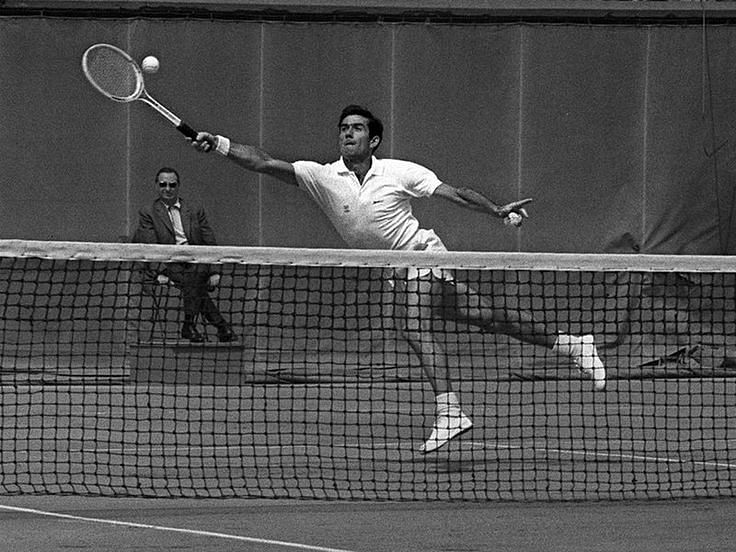
The financial model of pre-1968 tennis was unsustainable. The best players in the world, such as Rod Laver and Ken Rosewall, were eventually forced to turn professional to support themselves. However, by turning pro, they were barred from the Grand Slams, the very stages that provided the most visibility. This led to a “brain drain” of talent, where the most marketable stars were invisible to the general public, and the “amateur” tournaments featured inferior competition.
The breaking point came when the commercial interests of the tournaments began to suffer. Without the best players, ticket sales and nascent television interest stagnated. The decision to “go open” in 1968 was a strategic business move intended to reunify the sport and capitalize on the growing demand for professional-grade entertainment. It effectively deregulated the labor market of tennis, allowing players to openly negotiate their worth for the first time.
1968: The Pivot Point for Professional Earnings
In 1968, the first Open Era tournament, the British Hard Court Championships, offered a total prize pool of roughly £2,142. While modest by today’s standards, it signaled a radical shift in the sport’s financial philosophy: meritocracy. For the first time, a player’s income was directly proportional to their performance on the court, rather than their ability to secure illicit “travel expenses” from tournament directors.
This pivot point allowed for the creation of the ATP (Association of Tennis Professionals) and the WTA (Women’s Tennis Association) in the 1970s. These organizations functioned as labor unions and business entities, standardizing tournament structures and negotiating collective bargaining agreements that ensured a larger slice of the revenue pie for the players.
The Revenue Engines of Modern Tennis: Prize Money, Endorsements, and Media Rights
The Open Era paved the way for a multi-layered revenue model that defines modern professional sports. Today, the “Big Four” Grand Slams are not just sporting events; they are massive financial ecosystems that generate hundreds of millions of dollars in annual revenue through a mix of broadcast rights, sponsorships, and high-ticket hospitality.
The Explosive Growth of Prize Money Pools
The trajectory of prize money since the start of the Open Era is a testament to the sport’s commercial success. In 1973, the US Open became the first Grand Slam to offer equal prize money to men and women, a landmark moment in sports finance. To put the growth into perspective, the 1968 Wimbledon men’s champion received £2,000. In 2023, the winners took home over £2.3 million ($2.9 million).
This exponential growth is driven primarily by the globalization of media rights. As tennis expanded its reach into Asian and Middle Eastern markets, the value of the television product skyrocketed. Networks and streaming services now pay billions for multi-year broadcast deals, providing the liquidity needed to fund record-breaking prize pools year after year.
Off-Court Capital: The Power of Personal Brand Monetization
The Open Era also birthed the “athlete-as-a-brand” model. Because tennis is an individual sport, players have a unique level of control over their personal intellectual property. For the top tier of professionals, prize money represents only a fraction of their total net worth.
Players like Roger Federer and Maria Sharapova redefined the “Money” aspect of tennis by leveraging their on-court success into long-term corporate partnerships. Federer, for instance, famously left Nike for a $300 million deal with Uniqlo and took an equity stake in the footwear company On Holding. This shift from “endorser” to “equity partner” represents the highest level of financial sophistication in the Open Era, moving beyond simple cash-for-services contracts toward long-term wealth preservation and capital gains.
Tennis as an Asset Class: The Investment Side of the Open Era
As the Open Era matured, the sport began to attract the attention of institutional investors and private equity firms. No longer seen as just a pastime, tennis is now viewed as a high-growth asset class with predictable cash flows and a high-net-worth audience.
Private Equity and the Acquisition of Tennis Interests
In recent years, we have seen a surge of “smart money” entering the tennis space. CVC Capital Partners, a massive private equity firm, recently invested $150 million into the WTA, aiming to centralize commercial rights and boost the tour’s valuation. Similar discussions have occurred regarding a “Premium Tour” model, which would seek to consolidate the Grand Slams and Masters 1000 events into a single, high-value investment vehicle.
These moves are designed to fix the fragmented nature of tennis governance. By treating the sport as a unified business entity, investors believe they can unlock significant “hidden value” in digital rights, sports betting integrations, and global merchandising that has previously been hampered by bureaucratic infighting.
The Economic Impact of the Grand Slams
The four Grand Slams function as the “blue-chip” stocks of the tennis world. They are recession-resistant events that anchor the sport’s economy. The Australian Open, for example, contributes nearly $400 million annually to the Victorian economy. These tournaments are not just about ticket sales; they are platforms for high-level B2B networking.
The luxury market is intrinsically linked to the Open Era. Brands like Rolex, Emirates, and Morgan Stanley use these events to engage with their wealthiest clients. For an investor, the stability of the Grand Slam brand provides a level of security that few other sports properties can match.
Managing Professional Wealth: Financial Literacy for the Modern Athlete
The Open Era has created a generation of “millionaire athletes,” but it has also highlighted the need for rigorous financial management. Because tennis players are independent contractors, they are responsible for their own coaching staff, travel expenses, and—most importantly—their own tax and investment strategies.
The Shift from Player to Entrepreneur
Modern tennis stars are essentially CEOs of their own micro-corporations. A top-ten player may oversee a staff of five to ten people and manage a global portfolio of sponsors. This requires a level of financial literacy that was unnecessary in the amateur era.
We are increasingly seeing players move into venture capital and “side hustles” that align with their personal brands. Serena Williams, through Serena Ventures, has invested in dozens of startups, focusing on diversity and fintech. This represents a strategic diversification of income, ensuring that their earning potential does not end when their physical peak does.
Lessons in Diversification and Long-Term Capital Preservation
The financial volatility of a tennis career—where an injury can instantly halt income—has led to a culture of disciplined investing among the elite. The Open Era has taught players the value of diversification. By spreading wealth across real estate, equity markets, and private businesses, modern pros are avoiding the “broke athlete” trope that plagued previous generations.
For the mid-tier professional, the Open Era presents a different challenge: the “business of breaking even.” While the top 100 players earn significant wealth, those ranked 101 to 200 often operate on razor-thin margins. This has led to recent financial innovations, such as the ATP’s “Baseline” program, which provides a guaranteed minimum income to ensure the sport remains a viable career path for up-and-coming talent.

Conclusion: The Enduring Legacy of the 1968 Pivot
The Open Era did more than just allow professionals to play at Wimbledon; it validated tennis as a legitimate commercial enterprise. By merging the prestige of amateur tradition with the efficiency of professional capitalism, the sport created a framework for exponential growth.
Today, the Open Era stands as a testament to the power of market liberalization. It turned a niche hobby for the elite into a global financial powerhouse that generates billions in revenue, supports thousands of jobs, and provides a platform for athletes to build generational wealth. As the sport continues to attract private equity and explore new digital frontiers, the “Open” in Open Era remains its most valuable asset—signaling a sport that is open for business, open to innovation, and open to the global market.
aViewFromTheCave is a participant in the Amazon Services LLC Associates Program, an affiliate advertising program designed to provide a means for sites to earn advertising fees by advertising and linking to Amazon.com. Amazon, the Amazon logo, AmazonSupply, and the AmazonSupply logo are trademarks of Amazon.com, Inc. or its affiliates. As an Amazon Associate we earn affiliate commissions from qualifying purchases.