
In the modern financial landscape, few ticker symbols command as much attention, awe, and scrutiny as NVDA. Representing NVIDIA Corporation, NVDA has transitioned from a specialized component manufacturer for PC gamers into a global titan of the technology and financial sectors. For investors, NVDA is no longer just a “tech stock”; it has become a barometer for the health of the global artificial intelligence (AI) revolution and a cornerstone of the S&P 500.
Understanding NVDA stock requires looking beyond the daily price fluctuations. It involves analyzing a company that sits at the intersection of high-performance computing, enterprise software, and the future of industrial automation. Whether you are a seasoned institutional investor or a retail trader looking to diversify your portfolio, grasping the fundamentals, risks, and growth drivers of NVIDIA is essential for navigating today’s market.
The Fundamentals of NVDA: More Than Just a Semiconductor Play
To understand NVDA stock, one must first understand the underlying business model that has undergone a radical transformation over the last decade. While many investors still categorize NVIDIA as a “chipmaker,” the company identifies more as an “accelerated computing” firm. This distinction is vital for its financial valuation.
The Shift from Gaming to the Data Center
For much of its history, NVIDIA’s primary revenue driver was the gaming industry. Its Graphics Processing Units (GPUs) were the gold standard for rendering high-fidelity video games. However, the internal architecture of the GPU—designed to handle thousands of small tasks simultaneously (parallel processing)—turned out to be the perfect engine for training large language models (LLMs) and running AI workloads.
Today, the Data Center segment is the crown jewel of NVIDIA’s balance sheet. This department provides the hardware and software infrastructure for cloud service providers like Amazon (AWS), Microsoft (Azure), and Google Cloud. As these tech giants race to build out their AI capabilities, their capital expenditure flows directly into NVIDIA’s coffers, making NVDA a “picks and shovels” play for the AI gold rush.
Revenue Streams and Diversification
While data centers dominate the narrative, NVDA stock is supported by several other pillars. The Professional Visualization segment serves industries like architecture and engineering through its Omniverse platform, a tool for creating digital twins and industrial metaverses. Additionally, its Automotive segment is positioning itself as the brain behind autonomous driving systems. This diversification ensures that while one sector may face cyclical headwinds, the company has multiple avenues for long-term capital appreciation.
Analyzing the Financial Growth Trajectory
From a purely quantitative perspective, NVDA’s financial performance over the last few years has been nothing short of historic. Investors look at NVDA not just for its current earnings, but for its unprecedented growth rate, which has defied the “law of large numbers” that typically slows down companies of this size.
Exponential Earnings and Profit Margins
When evaluating NVDA stock, the most striking metrics are its gross margins. Unlike many hardware companies that struggle with thin margins due to manufacturing costs, NVIDIA maintains gross margins often exceeding 70%. This is because the company’s value lies in its intellectual property and its software ecosystem rather than just the physical silicon.
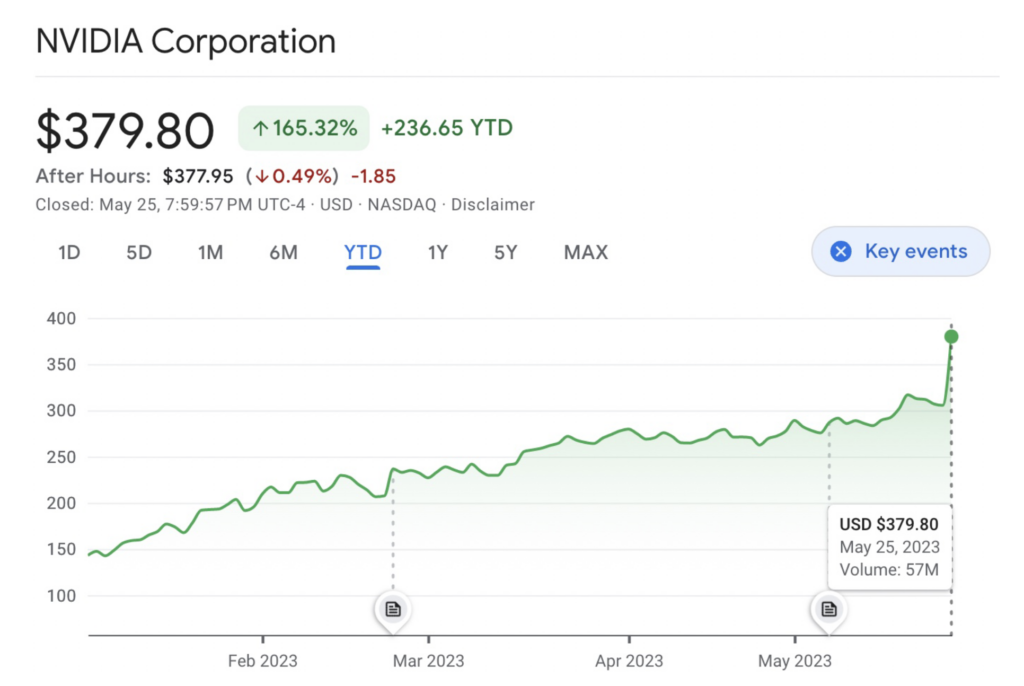
In recent fiscal years, NVIDIA has reported triple-digit percentage increases in year-over-year revenue. For an investor, these “beats and raises”—where a company exceeds analyst expectations and raises its future guidance—are the primary catalysts for the stock’s upward momentum. When NVIDIA reports its quarterly earnings, the entire market often moves in sympathy, reflecting the stock’s role as a systematic leader.
Market Capitalization and S&P 500 Influence
As of the mid-2020s, NVIDIA has cemented its place among the most valuable companies in the world, often rivaling or surpassing the market caps of Apple and Microsoft. This massive valuation means that NVDA stock is a heavily weighted component of major indices like the S&P 500 and the Nasdaq-100. Consequently, many investors “own” NVDA through their 401(k)s and index funds without even realizing it. Its performance has a disproportionate impact on the broader market’s retirement accounts and institutional portfolios.
The “AI Moat”: Why Investors Value NVIDIA Differently

A common question among skeptical investors is: “Why is NVDA stock so expensive compared to its competitors?” The answer lies in the concept of a “moat”—a competitive advantage that protects a company’s market share. NVIDIA’s moat is not just hardware; it is a complex synergy of hardware and software.
The CUDA Ecosystem as a Financial Barrier to Entry
The secret weapon of NVIDIA is CUDA (Compute Unified Device Architecture). Introduced in 2006, CUDA is a parallel computing platform and programming model that allows developers to use GPUs for general-purpose processing. Over nearly two decades, millions of developers have built their AI applications, research projects, and enterprise tools exclusively on the CUDA platform.
For an investor, this creates a “sticky” ecosystem. If a company wants to switch to a competitor’s chip (like those from AMD or Intel), they would have to rewrite massive amounts of code and retrain their staff. This high switching cost protects NVIDIA’s pricing power and ensures a steady stream of recurring demand, making the stock a more secure long-term bet than a company selling a commodity product.
Partnerships and Enterprise Integration
NVIDIA doesn’t just sell chips; it sells entire AI factories. Through strategic partnerships with companies like Dell, Cisco, and ServiceNow, NVIDIA integrates its technology into the very fabric of corporate IT infrastructure. These enterprise relationships provide a level of stability and “locked-in” revenue that is highly prized by value and growth investors alike.
Risk Assessment: Navigating Volatility in the Tech Sector
No investment is without risk, and NVDA stock is known for its high beta—meaning it can be significantly more volatile than the broader market. Investors must weigh the potential for high returns against several significant risk factors.
Supply Chain Dependencies and Geopolitical Risks
NVIDIA is a “fabless” semiconductor company, meaning it designs its chips but does not manufacture them. It relies heavily on Taiwan Semiconductor Manufacturing Company (TSMC) for production. This creates a geographic concentration risk. Any geopolitical instability in the Taiwan Strait or disruptions in the global supply chain can lead to immediate and severe sell-offs in NVDA stock.
Furthermore, export controls imposed by the U.S. government on high-end AI chips to certain regions (such as China) present a direct threat to a portion of NVIDIA’s revenue. While the company has been adept at creating “lite” versions of its chips to comply with regulations, the shifting landscape of international trade remains a primary concern for institutional holders.
Valuation Concerns: Is the Stock Overbought?
The meteoric rise of NVDA has frequently led to debates about its valuation. Traditional metrics, like the Price-to-Earnings (P/E) ratio, often look astronomical compared to the historical average of the S&P 500. Bears argue that the stock is in a bubble fueled by AI hype, while bulls argue that the “Forward P/E” (which accounts for future growth) is actually reasonable given the company’s earnings trajectory. For the individual investor, the challenge lies in determining whether the current price reflects the company’s future value or if the market has already “priced in” several years of perfect execution.
Long-Term Outlook: NVDA in the Future Economy
Looking ahead, the narrative surrounding NVDA stock is shifting from “What is it doing now?” to “How will it dominate the next decade?” The company is positioning itself at the center of the next industrial revolution.
The Role of Sovereign AI and Global Demand
A new growth driver for NVDA is “Sovereign AI.” This refers to nations building their own domestic AI computing capacity to ensure data security and economic competitiveness. Countries across Europe, Asia, and the Middle East are investing billions into national AI infrastructure, almost all of which is currently being built on NVIDIA hardware. This adds a new layer of demand that is independent of the capital cycles of big tech companies in Silicon Valley.
Dividends, Buybacks, and Shareholder Value
As NVIDIA matures into a cash-flow powerhouse, it has increased its efforts to return value to shareholders. While the dividend yield remains low compared to utility or consumer staple stocks, the company has engaged in massive share buyback programs. Buybacks reduce the total number of shares outstanding, which can increase the earnings per share (EPS) and provide a floor for the stock price during periods of market turbulence.

Conclusion
NVDA stock is more than just a ticker; it is a financial instrument that represents the world’s transition into an AI-driven economy. While its volatility and high valuation require a disciplined investment approach, its dominant market position, unparalleled software ecosystem, and relentless innovation make it a foundational asset in the modern “Money” landscape. Whether it continues its upward trajectory or enters a period of consolidation, NVIDIA’s influence on the financial markets is undeniable, making it an essential study for anyone looking to understand the intersection of business finance and the future of technology.
aViewFromTheCave is a participant in the Amazon Services LLC Associates Program, an affiliate advertising program designed to provide a means for sites to earn advertising fees by advertising and linking to Amazon.com. Amazon, the Amazon logo, AmazonSupply, and the AmazonSupply logo are trademarks of Amazon.com, Inc. or its affiliates. As an Amazon Associate we earn affiliate commissions from qualifying purchases.