
In the world of equity markets, few tickers provoke as much debate, excitement, and scrutiny as MSTR. Representing MicroStrategy Incorporated, MSTR has transformed from a conventional enterprise software firm into a unique financial instrument that sits at the intersection of corporate finance and the burgeoning digital asset economy. For investors asking “what is MSTR stock,” the answer is no longer found solely in the realm of business intelligence software, but rather in a groundbreaking—and some might say aggressive—treasury reserve strategy centered on Bitcoin.
Understanding MSTR requires a shift in perspective. It is a company that has effectively turned its balance sheet into a leveraged bet on the future of decentralized finance, making it a “must-watch” for anyone interested in the evolution of modern investing.

Understanding MicroStrategy’s Core Business and Strategic Pivot
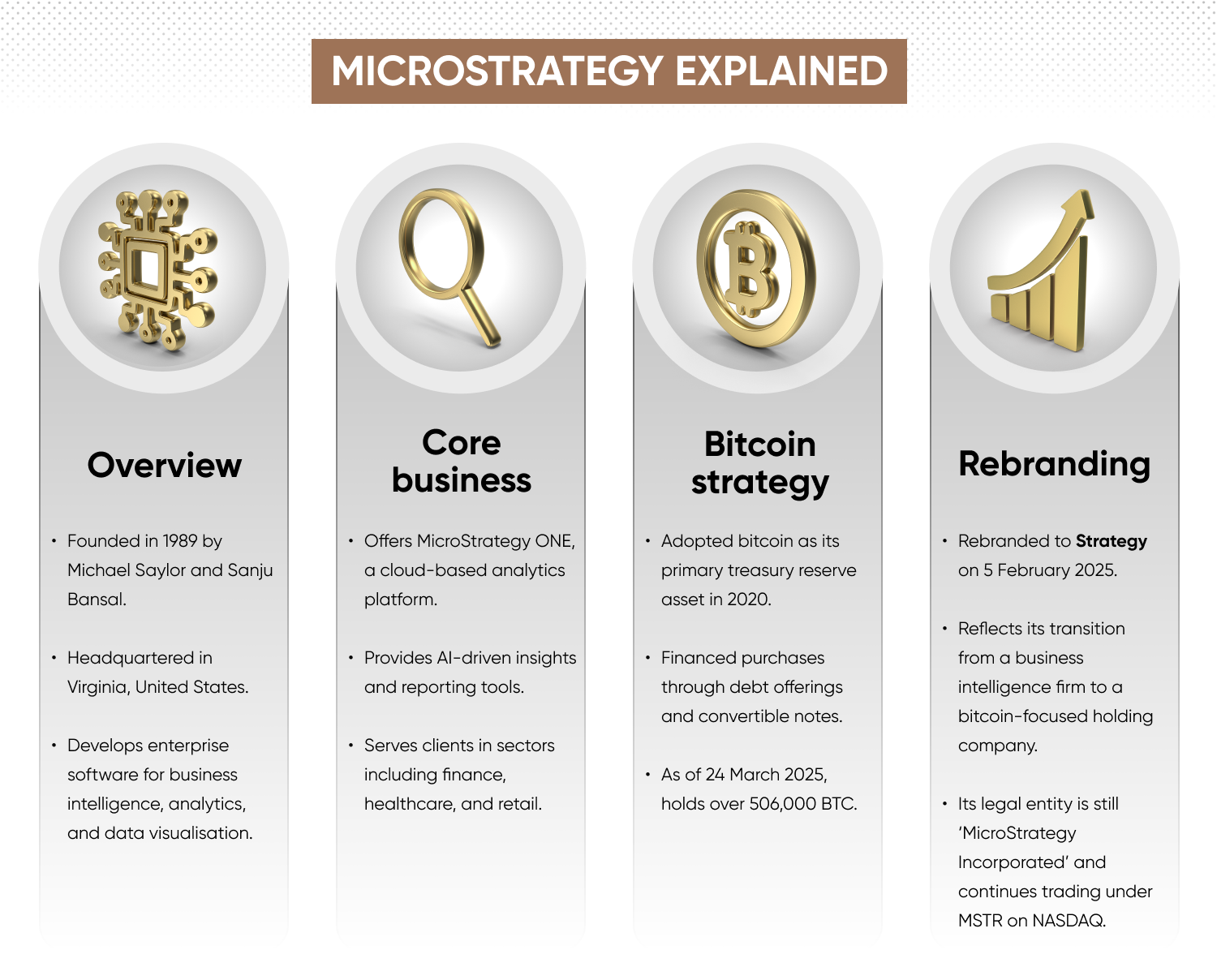
To understand MSTR stock today, one must first understand where it began. Founded in 1989 by Michael Saylor and Sanju Bansal, MicroStrategy spent decades as a stalwart in the Business Intelligence (BI) sector. The company developed sophisticated software that allowed large corporations to analyze internal data to make better business decisions.
From Enterprise Analytics to Digital Reserve
For most of its history, MSTR was valued like any other mid-cap tech stock: based on its software subscriptions, maintenance contracts, and consulting revenue. However, the landscape shifted dramatically in August 2020. Facing a stagnant stock price and a mountain of “melting” cash—devalued by global inflationary pressures—the company announced it would adopt Bitcoin as its primary treasury reserve asset.
This was not a mere experimental purchase. It was a complete redefinition of the company’s financial identity. By converting its fiat currency reserves into Bitcoin, MicroStrategy moved away from being a pure-play software company and became a pioneer in corporate treasury management. Today, when you buy MSTR stock, you are buying into a software business that serves as a cash-flow engine to support a massive, growing hoard of digital gold.
The Dual Nature of MSTR: Software and Asset Management
Investors now view MSTR as a hybrid entity. On one side is the “Operating Business”—the legacy BI software which continues to transition toward a cloud-based SaaS (Software as a Service) model. This segment provides the company with steady, predictable cash flow.
On the other side is the “Bitcoin Property,” a vast treasury that has grown to hundreds of thousands of BTC. This dual nature is what makes the stock unique. Unlike a standard tech company whose value is tied to P/E ratios and growth projections, or a Bitcoin ETF which simply tracks the price of the coin, MSTR offers a “synthetic” exposure. The software business funds the acquisition of the digital asset, while the digital asset provides a valuation floor and massive upside potential that far outstrips the growth of the BI market.
The Bitcoin Treasury Reserve Policy
The defining characteristic of MSTR stock is its aggressive acquisition of Bitcoin. Under the leadership of Executive Chairman Michael Saylor, MicroStrategy has institutionalized a “Bitcoin Standard” for corporate finance, a move that has rewritten the playbook for how publicly traded companies manage their capital.
Why Michael Saylor Bet the Balance Sheet
The rationale behind the MSTR strategy is rooted in the “Money” niche’s most fundamental concern: the preservation of purchasing power. Saylor argued that holding USD on a balance sheet was a “liability” because the expansion of the M2 money supply leads to the debasement of currency. By choosing Bitcoin—an asset with a hard-coded supply limit of 21 million—MicroStrategy sought an “apex predatory asset” that could outpace inflation and the cost of capital.
For investors, this means MSTR stock acts as a hedge against monetary debasement. When the dollar weakens or inflation rises, the underlying value of MicroStrategy’s Bitcoin holdings typically appreciates, driving the stock price higher regardless of how many software licenses the company sells in a given quarter.
Leverage and Convertible Debt: How the Company Acquires BTC
Perhaps the most sophisticated aspect of MSTR’s financial strategy is its use of the capital markets. MicroStrategy does not just buy Bitcoin with excess profits; it uses its stock and creditworthiness to borrow billions of dollars to buy more.
The company frequently issues “convertible senior notes.” These are debt instruments that pay a very low interest rate (sometimes 0% or 1%) and give the lender the option to convert that debt into MSTR shares at a later date. MicroStrategy takes the cash from these loans and immediately purchases Bitcoin. If the price of Bitcoin rises, the value of the company’s assets far exceeds the debt owed, creating massive value for shareholders. This “leveraged” approach allows MSTR to grow its Bitcoin-per-share ratio—a metric the company tracks closely to prove it is creating value for its investors.

Evaluating MSTR as an Investment Vehicle
For the individual investor, MSTR stock presents a different set of opportunities and risks compared to direct Bitcoin ownership or the recently approved Spot Bitcoin ETFs (Exchange Traded Funds). Understanding these nuances is essential for anyone looking to add MSTR to their portfolio.
MSTR vs. Spot Bitcoin ETFs: Understanding the Premium
Since the launch of Spot Bitcoin ETFs in early 2024, many wondered if MSTR would lose its luster. Why buy a software company when you can buy the Bitcoin price directly through an ETF? The answer lies in the “MSTR Premium.”
Historically, MSTR stock has traded at a valuation higher than the “Net Asset Value” (NAV) of its Bitcoin holdings. This premium exists because:
- Operating Cash Flow: MSTR has a real business that generates cash to buy more Bitcoin, something an ETF cannot do.
- Low-Cost Leverage: Through its debt issuances, MSTR provides investors with “intelligent leverage.” You get more Bitcoin exposure per dollar invested than you would by holding the coin directly, without the liquidation risk of a typical margin account.
- Active Management: Unlike a passive ETF, the management team at MicroStrategy actively looks for ways to optimize the balance sheet and increase the amount of Bitcoin held per share.
Volatility and Risk Factors for Investors
While the upside of MSTR can be astronomical during a crypto bull market, the risks are equally significant. Because the stock is leveraged, it is often much more volatile than Bitcoin itself. If the price of Bitcoin drops by 10%, MSTR might drop by 20% or more.
There is also the “Key Man Risk.” Much of the market’s confidence in MSTR is tied to Michael Saylor’s vision. Furthermore, the company’s heavy debt load means it must maintain a certain level of confidence among lenders. If Bitcoin were to experience a multi-year “crypto winter” where prices stagnated or fell significantly, the company would have to manage its debt obligations carefully to avoid insolvency—though their current debt is structured with long-dated maturities to mitigate this specific risk.
Market Dynamics and Future Outlook
As we look toward the future of MSTR stock, it is clear that the company is no longer just a software firm; it is a pioneer in a new asset class of “Bitcoin-backed equities.” Its performance is now a bellwether for institutional sentiment toward digital assets and unconventional corporate finance.
The Role of Institutional Adoption
One of the primary drivers for MSTR’s price action is the increasing participation of institutional investors. Large pension funds, hedge funds, and insurance companies that may be restricted from holding “raw” Bitcoin often use MSTR as a proxy. Because it is a regulated security listed on the NASDAQ, it fits easily into traditional brokerage accounts and institutional mandates.
As more corporations consider adding Bitcoin to their balance sheets—following the lead of companies like Tesla and Block—MicroStrategy stands as the “case study.” If the trend of corporate Bitcoin adoption accelerates, MSTR will likely be viewed as the leader of the movement, potentially sustaining its premium valuation.
Navigating Economic Cycles and Regulatory Shifts
The future of MSTR is also tied to the broader macroeconomic environment. In a high-interest-rate environment, the cost of issuing new debt to buy Bitcoin increases. Conversely, in a “loose money” environment where rates are cut, MSTR’s strategy of borrowing cheap fiat to buy scarce digital assets becomes even more profitable.
Furthermore, regulatory clarity in the United States regarding how companies account for digital assets (such as the recent FASB changes allowing for fair-value accounting) will benefit MSTR. These changes allow the company to report its Bitcoin holdings at current market prices on its balance sheet, rather than just marking them down during price drops. This leads to a more accurate and often more attractive financial picture for mainstream investors.
Conclusion
MSTR stock is far more than a ticker for an analytics software company. It represents a bold experiment in business finance—a “Money” play that challenges the traditional notions of how a corporation should store its wealth. By merging a cash-generating software business with a massive, leveraged Bitcoin treasury, MicroStrategy has created a unique financial vehicle that offers high-octane exposure to the digital asset market.
For the investor, MSTR is a tool for capital appreciation and a hedge against the traditional financial system. However, it requires a high tolerance for volatility and a deep belief in the long-term value of Bitcoin. As the company continues to execute its “Bitcoin Standard” strategy, MSTR will remain at the forefront of the conversation regarding the future of money, corporate treasury, and the evolution of the stock market in the digital age.