
Lysergic acid, a fascinating and historically significant compound, often conjures images of altered states of consciousness. However, its journey extends far beyond the realm of psychedelics, delving into crucial applications within medicine and scientific research. This article aims to demystify lysergic acid, exploring its primary uses and the impact it has had, while also considering how its underlying principles might intersect with the technological, branding, and financial landscapes that shape our modern world.
While the immediate association with lysergic acid might be its psychoactive derivatives, understanding its core chemical structure and its more recognized medicinal applications is paramount. This exploration will not only address its established roles but also ponder the broader implications and potential future directions, viewed through the lens of innovation and strategic thinking inherent in technology, branding, and finance.

The Medicinal Core: Lysergic Acid in Pharmaceutical Applications
The most prominent and scientifically validated uses of lysergic acid lie within the pharmaceutical industry. It serves as a crucial precursor for a range of medications that address diverse medical conditions. These applications are not about inducing hallucinations but rather about precise pharmacological interventions.
Migraine Management: A Cornerstone of Lysergic Acid Therapy
One of the most significant therapeutic applications of lysergic acid derivatives is in the management of migraines. The ergot alkaloids, which are derived from lysergic acid, have been used for decades to treat these debilitating headaches.
How Ergot Alkaloids Combat Migraines
Migraines are often characterized by the dilation of blood vessels in the brain, leading to throbbing pain. Ergot alkaloids, such as ergotamine and dihydroergotamine, act as vasoconstrictors, meaning they narrow these blood vessels. This constriction helps to alleviate the pressure and pain associated with a migraine attack. They achieve this by interacting with serotonin receptors, particularly the 5-HT1B/1D subtypes, which play a role in regulating vascular tone.
The development of these medications represented a significant advancement in migraine treatment, offering relief to millions of individuals who previously had limited options. While newer classes of migraine medications have emerged, ergotamine and its derivatives remain important tools in the clinician’s arsenal, especially for severe or refractory cases. The precision with which these compounds can target specific physiological pathways highlights the power of chemical synthesis and understanding molecular interactions.
Other Pharmaceutical Uses: Beyond Migraines
While migraines are a primary focus, the therapeutic potential of lysergic acid derivatives extends to other areas of medicine, though some applications are more niche or historical.
Postpartum Hemorrhage Control
Historically, ergonovine, another ergot alkaloid derived from lysergic acid, was used to prevent or treat postpartum hemorrhage. It achieves this by causing uterine contractions, helping the uterus to clamp down and reduce bleeding after childbirth. While newer and potentially safer medications are often preferred now, its efficacy in certain situations made it a valuable drug for many years. This application demonstrates how compounds derived from natural sources can be harnessed for critical life-saving interventions.
Parkinson’s Disease and Hyperprolactinemia
Certain lysergic acid derivatives have also found applications in treating conditions like Parkinson’s disease and hyperprolactinemia. For Parkinson’s, some ergot derivatives act as dopamine agonists, helping to compensate for the dopamine deficiency characteristic of the disease. In the case of hyperprolactinemia, which involves excessive production of prolactin, specific ergot compounds can help to lower prolactin levels by acting on dopamine receptors in the pituitary gland.
These varied applications underscore the versatility of the lysergic acid molecule and its ability to interact with different receptor systems in the body, leading to a range of therapeutic effects. The ongoing research into these compounds and their analogues continues to explore new possibilities for their use in medicine.
The Scientific Frontier: Lysergic Acid in Research and Development
Beyond its direct medicinal applications, lysergic acid and its derivatives are invaluable tools in scientific research, particularly in the fields of neuroscience and pharmacology. Their unique interaction with serotonin receptors makes them crucial for understanding the brain’s complex chemical signaling pathways.
Understanding Serotonin Receptors: A Key Research Tool
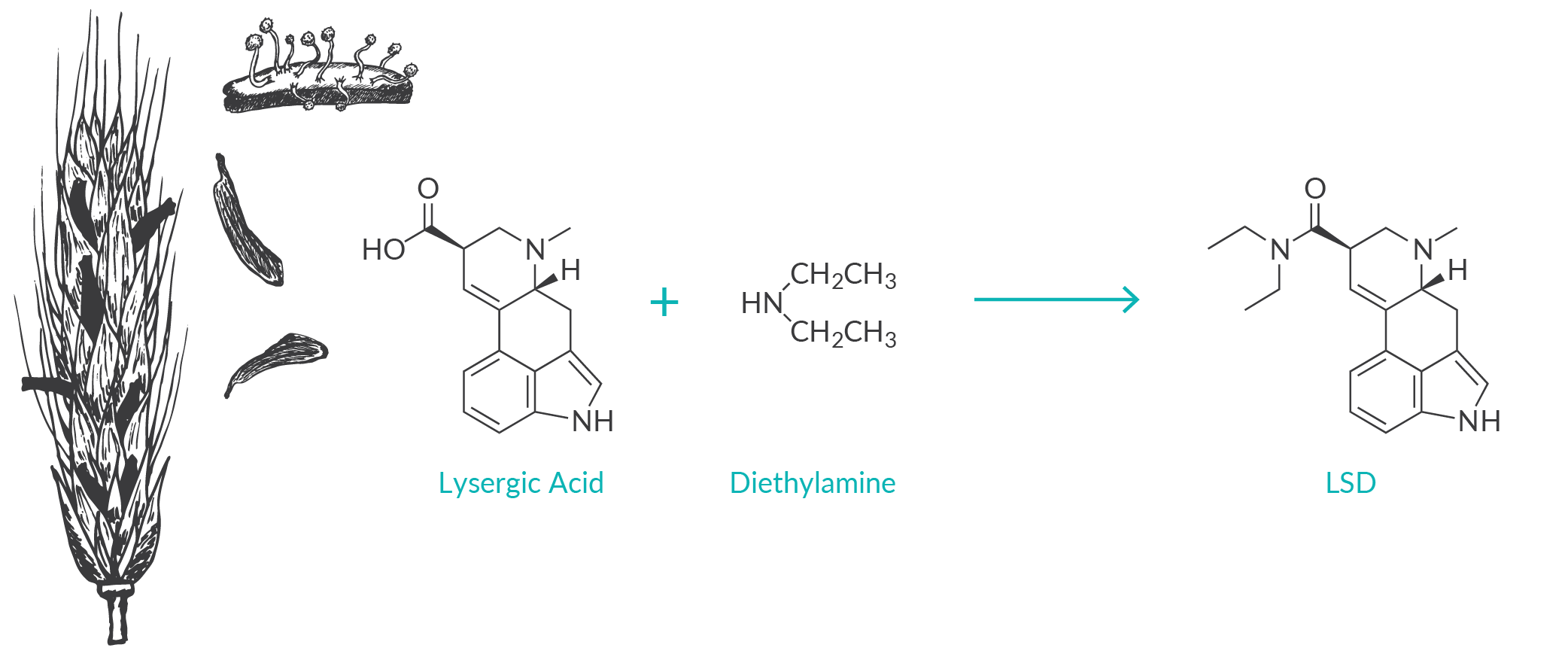
Serotonin, also known as 5-hydroxytryptamine (5-HT), is a neurotransmitter that plays a vital role in regulating mood, sleep, appetite, and cognitive functions. The diverse array of serotonin receptor subtypes means that serotonin has a wide-ranging impact on the body and brain. Lysergic acid diethylamide (LSD), while primarily known for its psychedelic effects, also binds to a multitude of serotonin receptor subtypes.
Researchers utilize LSD and other lysergic acid derivatives as probes to study the function and distribution of these receptors. By observing how these compounds affect brain activity and behavior, scientists can gain insights into the roles of specific serotonin receptors in various neurological and psychological processes. This research is fundamental to developing new treatments for mental health disorders, neurological diseases, and other conditions influenced by serotonin pathways.
Applications in Neuroscience
In neuroscience, these compounds help to map neural circuits and understand how neurotransmitters influence behavior. For instance, studying the effects of LSD on brain imaging techniques like fMRI can reveal which brain regions are activated and how they communicate. This understanding is critical for unraveling the complexities of consciousness, perception, and the underpinnings of conditions like depression, anxiety, and schizophrenia.
The ability to selectively activate or block certain receptors with lysergic acid derivatives allows researchers to isolate the effects of specific pathways, paving the way for targeted drug development. This meticulous scientific exploration is a testament to the power of chemical compounds in unlocking biological mysteries.
The Renaissance of Psychedelic Research
The historical stigma surrounding LSD has somewhat clouded its scientific potential. However, in recent years, there has been a significant resurgence in psychedelic research, with lysergic acid derivatives like psilocybin and LSD being investigated for their therapeutic potential in treating conditions such as depression, PTSD, and addiction.
Early studies suggest that under controlled, therapeutic conditions, these compounds can induce profound psychological experiences that, for some individuals, lead to lasting positive changes in mood, outlook, and behavior. This “renaissance” is built upon decades of foundational research into the pharmacology of these compounds, much of which relies on understanding their interaction with the serotonergic system, an area where lysergic acid has been instrumental.

This research is not about recreational use but about carefully guided therapeutic interventions. The focus is on the potential for these substances to facilitate introspection, break down rigid thought patterns, and promote emotional healing. This area of research highlights how compounds with historically controversial reputations can, with rigorous scientific inquiry and ethical frameworks, offer novel therapeutic avenues.
Broader Implications: Lysergic Acid’s Influence on Innovation and Strategy
While the direct uses of lysergic acid are primarily medical and scientific, the principles it embodies – innovation, strategic application, and understanding complex systems – resonate deeply with the core tenets of technology, branding, and finance.
Technological Parallels: Precision, Optimization, and New Interfaces
The development of lysergic acid derivatives for specific medical applications mirrors the drive for precision and optimization in technology.
AI and Drug Discovery
In the realm of AI, we see parallels in the development of intelligent systems designed to identify and optimize complex molecules for specific purposes. Just as lysergic acid derivatives were meticulously synthesized to target particular biological receptors, AI algorithms are now being used to discover new drug candidates, predict their efficacy, and even design novel molecular structures. This process involves analyzing vast datasets and understanding intricate relationships, much like the early pharmacologists studied the intricate interactions of lysergic acid with biological systems.
User Interface and Experience Design
The concept of creating an “interface” for the brain, as psychedelics effectively do, also finds echoes in user interface (UI) and user experience (UX) design in technology. The goal in both is to create an interaction that is both effective and leads to a desired outcome. While the outcomes are vastly different, the underlying principle of designing an experience that elicits a specific response is shared. Think of how intuitive software or well-designed apps guide users through complex processes, creating a seamless and productive experience. Similarly, controlled psychedelic therapy aims to create a therapeutic “interface” for the mind.
Digital Security and Chemical Security
The careful handling and controlled application of lysergic acid derivatives in pharmaceutical settings also bring to mind the importance of digital security and robust security protocols. Just as unauthorized access or misuse of potent compounds can have severe consequences, safeguarding sensitive digital information and critical infrastructure is paramount in the technological world. The principles of containment, controlled access, and understanding the potential for misuse are relevant in both domains.
Branding and Reputation: Perception, Narrative, and Strategic Positioning
The story of lysergic acid is a powerful case study in how perception, narrative, and strategic positioning can shape the reputation of a compound, a company, or an idea.
Reclaiming a Narrative
For decades, the narrative surrounding LSD and related compounds was dominated by fear and prohibition. However, through rigorous scientific research and the strategic communication of its therapeutic potential, this narrative is gradually shifting. This mirrors how brands must actively manage their reputation, adapt to changing societal views, and strategically reposition themselves to maintain relevance and trust. The “rebranding” of psychedelic therapy is a compelling example of this.
Strategic Application and Market Differentiation
The development of specific lysergic acid derivatives for distinct medical conditions – one for migraines, another for postpartum bleeding – exemplifies strategic application. This is akin to how companies identify specific market needs and develop tailored products or services to fill those gaps. The success of these pharmaceutical applications hinges on understanding the precise mechanism of action and applying it to a specific problem, a core principle in successful branding and marketing.
Building Trust Through Evidence
Ultimately, the scientific validation of lysergic acid’s medicinal uses has been crucial in building trust and acceptance. In the world of branding and marketing, establishing credibility through evidence-based claims, transparent practices, and demonstrated value is essential for long-term success. The rigorous clinical trials that support the use of these compounds are a form of high-stakes “proof of concept” that informs both medical practice and broader strategic thinking.
Financial Considerations: Investment, Innovation, and Market Potential
The journey of lysergic acid from laboratory curiosity to valuable therapeutic agent also involves significant financial considerations, mirroring the dynamics of investment and market development in the business world.
Investment in Research and Development
The development of any novel therapeutic, including those derived from lysergic acid, requires substantial investment in research and development. This is directly comparable to the financial world, where venture capital and corporate investment fuel innovation in technology, biotech, and other growth sectors. The “boom” in psychedelic research has attracted significant investment, signaling a recognition of its potential market value.
Market Value and Economic Impact
The pharmaceutical market for migraine treatments, for instance, is substantial. The development of effective drugs derived from lysergic acid has generated significant economic value, not only for the pharmaceutical companies involved but also for healthcare providers and patients who benefit from improved health outcomes. This highlights how scientific innovation can translate into tangible economic impact.
The “Side Hustle” of Discovery
While not a direct financial parallel, one can draw a loose analogy to the concept of “side hustles” in the financial realm. Just as individuals explore side hustles to diversify income and explore new skills, scientific exploration, even of compounds with unconventional origins, can lead to unexpected and valuable discoveries that create entirely new economic opportunities. The initial research into the pharmacological properties of lysergic acid, driven by scientific curiosity, has ultimately led to lucrative markets.
In conclusion, while lysergic acid’s notoriety may stem from its association with altered states, its true utility lies in its profound impact on medicine and scientific understanding. Its applications in migraine management, its historical use in obstetrics, and its ongoing role in neuroscience research highlight its multifaceted importance. Furthermore, the principles of precision, strategic application, and evidence-based development that govern its use offer valuable insights that resonate across the technological, branding, and financial sectors, demonstrating how a single molecule can touch upon and inform diverse aspects of our modern world. The continued exploration of lysergic acid and its derivatives promises further advancements, underscoring the enduring power of scientific inquiry and strategic innovation.
aViewFromTheCave is a participant in the Amazon Services LLC Associates Program, an affiliate advertising program designed to provide a means for sites to earn advertising fees by advertising and linking to Amazon.com. Amazon, the Amazon logo, AmazonSupply, and the AmazonSupply logo are trademarks of Amazon.com, Inc. or its affiliates. As an Amazon Associate we earn affiliate commissions from qualifying purchases.