
In recent months, the financial landscape has felt like a high-stakes rollercoaster, leaving both seasoned investors and retail newcomers asking the same question: what exactly is going on with the stock market? To the untrained eye, the movements can seem erratic—record highs followed by sudden pullbacks, driven by a dizzying array of headlines regarding interest rates, artificial intelligence, and global instability. However, underneath the daily noise lies a complex tapestry of macroeconomic shifts and fundamental changes in how capital is valued.
Understanding the current state of the market requires moving beyond the tickers and looking at the structural forces at play. We are currently transitioning from a decade of “easy money” into a new era of higher costs and focused growth. This article explores the primary drivers of today’s market behavior, the sectors leading the charge, and the psychological factors influencing global price action.
The Macroeconomic Engine: Interest Rates and the Federal Reserve
The single most influential factor in the current stock market is the cost of money. For years, following the 2008 financial crisis and again during the 2020 pandemic, central banks maintained near-zero interest rates. This environment was a boon for stocks, as cheap borrowing fueled corporate expansion and made equities the only viable place for investors to find returns. Today, the landscape has fundamentally shifted.
The Federal Reserve’s Balancing Act
The Federal Reserve, along with other global central banks, has been engaged in a delicate balancing act to tame inflation without triggering a deep recession—a scenario often referred to as a “soft landing.” When inflation surged to 40-year highs, the Fed responded with the most aggressive rate-hiking cycle in decades. High interest rates act as a gravity on stock prices; they increase the discount rate used to value future cash flows, making companies (especially growth-oriented ones) less valuable in the present. Investors are constantly trying to predict when the Fed will pivot to cutting rates, leading to significant volatility every time a new inflation report or employment figure is released.
The Impact of the Yield Curve and Fixed Income
As interest rates rose, the “TINA” (There Is No Alternative) era for stocks ended. For the first time in fifteen years, investors can earn a guaranteed 4% to 5% return on government bonds and high-yield savings accounts. This has created a “competing” asset class for stocks. When the stock market appears overvalued or risky, capital tends to flow out of equities and into the safety of fixed income. This migration of capital is a primary reason why the market experiences sudden “breathers” or rotations, where money moves from high-growth tech stocks into more stable, dividend-paying “value” sectors.
The Concentration of Growth: AI and the “Magnificent Seven”
While the broader market indices like the S&P 500 often show positive performance, a closer look reveals a significant divergence. Much of the market’s recent resilience has been driven by a tiny handful of ultra-large-cap technology companies, often dubbed the “Magnificent Seven.” These companies—including Nvidia, Microsoft, and Apple—have become the primary engines of market growth, leading to concerns about market concentration.
Artificial Intelligence as a Fundamental Shift
The primary narrative driving these gains is the explosion of Generative Artificial Intelligence (AI). Unlike previous “hype cycles” in the market, such as the initial metaverse craze or the NFT boom, AI is seen by institutional investors as a fundamental shift in productivity. Companies that provide the hardware (semiconductors) and the software (cloud infrastructure) for AI have seen their valuations skyrocket. This has created a “barbell” market: on one end, AI-linked tech giants are seeing massive capital inflows; on the other, many traditional industries—like manufacturing and retail—are struggling to keep pace with rising labor and material costs.
The Risk of Over-Concentration
From a financial health perspective, having a market led by only a few stocks is a double-edged sword. While it keeps the major indices afloat, it creates a “thin” market. If one of these giants misses an earnings target or experiences a regulatory setback, it can drag the entire market down with it. This concentration makes the current market feel more volatile than it actually is for the average diversified investor, as the movement of just two or three stocks can dictate whether the S&P 500 ends the day in the red or the green.
Geopolitical Friction and the Global Supply Chain

We no longer live in a world of frictionless globalization. The stock market is increasingly reacting to “geopolitical risk premiums”—the added cost of uncertainty resulting from international conflicts and changing trade policies. These factors do not just affect sentiment; they have a direct impact on corporate bottom lines.
Energy Markets and Inflationary Shocks
Energy is the lifeblood of the global economy. Ongoing tensions in the Middle East and Eastern Europe have created a floor for oil and gas prices. For the stock market, high energy prices are a “tax” on both consumers and corporations. When energy costs rise, discretionary spending drops, and shipping costs increase, squeezing profit margins. Investors are currently hyper-sensitive to any news that might disrupt the flow of commodities, as energy-led inflation could force central banks to keep interest rates higher for longer.
De-risking and Onshoring Trends
The “just-in-time” supply chain model that dominated the last thirty years is being replaced by a “just-in-case” model. Many Western corporations are “onshoring” or “friend-shoring” their operations—moving manufacturing back home or to allied nations to avoid geopolitical disruptions. While this move increases long-term stability, it is expensive in the short term. The stock market is currently pricing in these higher structural costs, which is why we are seeing a resurgence in industrial and domestic infrastructure stocks, even as global trade volumes fluctuate.
Market Psychology: The Tug-of-War Between Fear and Greed
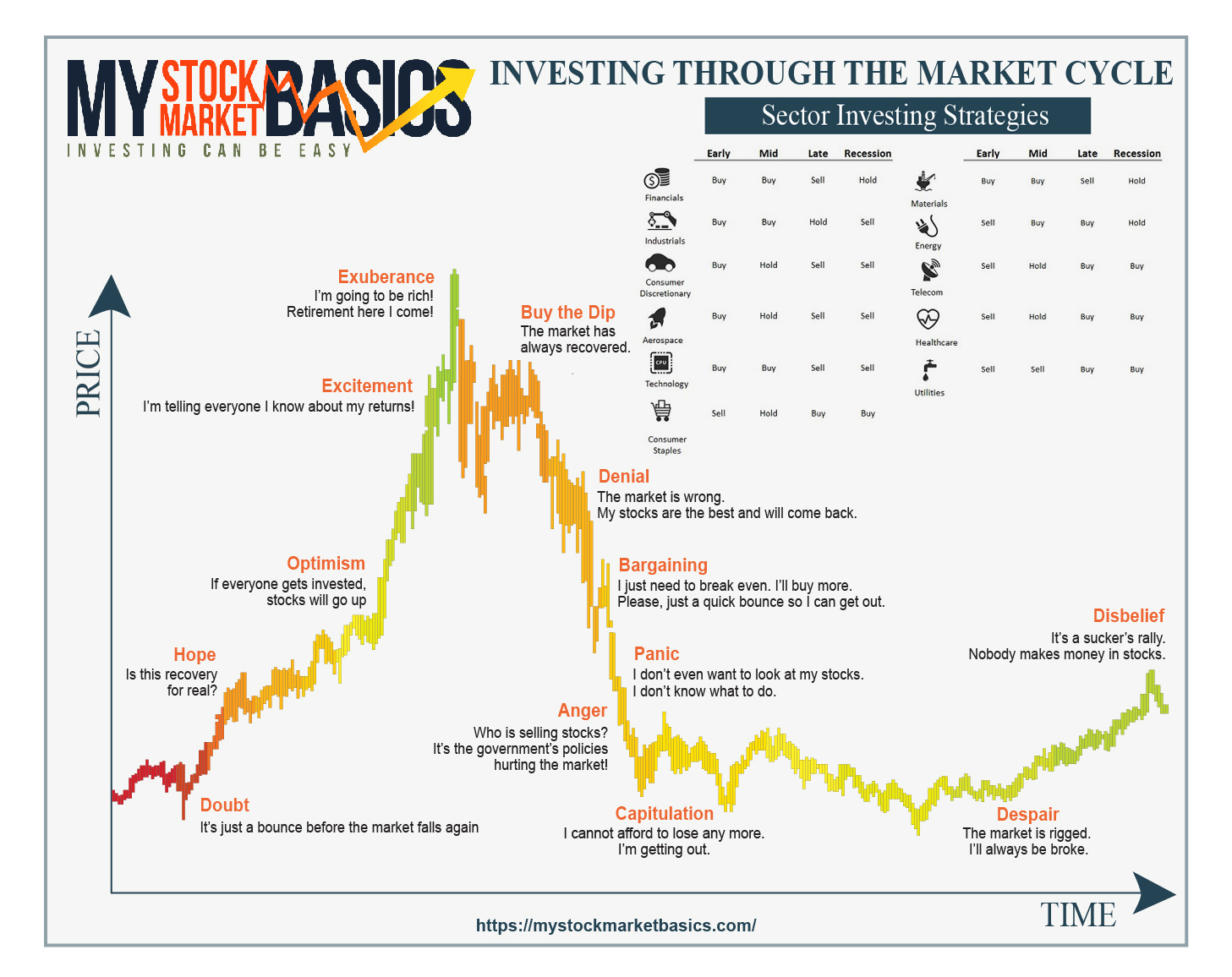
Beyond the math of interest rates and earnings, the stock market is a reflection of human psychology. Currently, the market is characterized by a high degree of “FOMO” (Fear Of Missing Out) regarding AI, contrasted against a deep-seated fear of a looming recession.
The Retail Investor and the Digital Age
The democratization of trading through apps and social media has introduced a new level of “noise” to the market. Retail sentiment can now move billions of dollars in hours, as seen with various “meme stock” resurgences. However, professional money managers often view this as a contrarian indicator. When retail optimism reaches an extreme, institutional “smart money” often begins to trim positions, leading to the sharp, unexplained pullbacks we have seen recently.
Managing Expectations in a High-Valuation Environment
Historically, the stock market trades at a Price-to-Earnings (P/E) ratio of around 15 to 17. Currently, many parts of the market are trading well above 20. This means investors are paying a premium for every dollar of corporate profit. In such an environment, the market becomes “perfection-priced.” If a company reports good earnings but provides slightly cautious guidance for the future, its stock price might still plummet. This creates a high-stress environment where even “good news” can be met with selling pressure if it wasn’t “great news.”
Navigating the Future: Strategies for the Modern Investor
With all these moving parts, how should one approach the market today? The complexity of the current financial climate suggests that the “easy gains” of the post-pandemic era are over, and a more disciplined approach to personal finance and investing is required.
The Importance of Diversification and Rebalancing
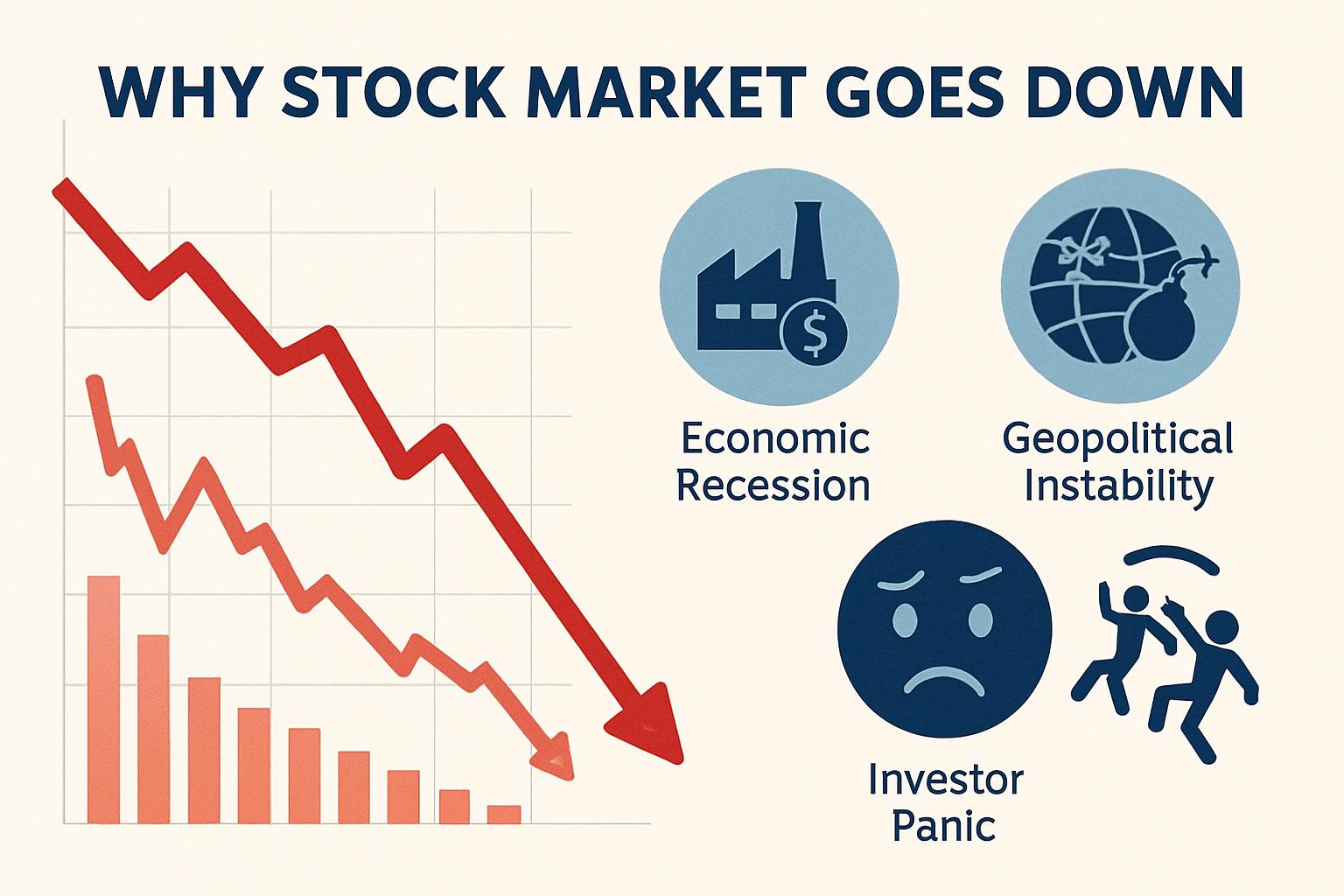
In a concentrated market, the temptation to “chase” winners like AI stocks is high. However, financial history is littered with investors who entered at the peak of a trend. A robust financial strategy today focuses on diversification—not just across different stocks, but across different asset classes, including international equities, bonds, and real estate. Regular rebalancing—selling a bit of what has gone up and buying what has lagged—is essential to maintaining a risk profile that won’t lead to panic during a market correction.
Long-Term Perspective vs. Market Timing
The most successful investors understand that “time in the market” is more important than “timing the market.” While the headlines may suggest that a crash is always around the corner or that a moonshot is just beginning, the underlying strength of the economy remains resilient. For those focused on long-term wealth building, the current volatility is not a reason to exit, but rather an opportunity to use strategies like Dollar-Cost Averaging (DCA). By investing a fixed amount regularly, you naturally buy more shares when prices are low and fewer when they are high, smoothing out the peaks and valleys of this turbulent market.
In conclusion, what is “going on” with the stock market is a fundamental recalibration. We are moving away from a world defined by zero interest rates and toward a world defined by technological disruption, geopolitical shifts, and a renewed focus on corporate profitability. While the path forward will undoubtedly be bumpy, understanding these core pillars—macroeconomics, sector concentration, and geopolitical reality—allows investors to navigate the noise with a clear head and a steady hand.
aViewFromTheCave is a participant in the Amazon Services LLC Associates Program, an affiliate advertising program designed to provide a means for sites to earn advertising fees by advertising and linking to Amazon.com. Amazon, the Amazon logo, AmazonSupply, and the AmazonSupply logo are trademarks of Amazon.com, Inc. or its affiliates. As an Amazon Associate we earn affiliate commissions from qualifying purchases.