
In the rapidly evolving landscape of the Internet of Things (IoT), the automotive industry has shifted from mechanical engineering toward software-defined mobility. At the forefront of this transition for Ford Motor Company is FordPass Connect. More than just a simple mobile application, FordPass Connect represents a sophisticated suite of connectivity technologies that bridge the gap between a driver’s digital life and their physical vehicle. By leveraging embedded hardware and cloud-based software, this system transforms the modern car into a powerful mobile gadget, capable of remote communication, real-time data analysis, and seamless over-the-air updates.

1. The Core Infrastructure: How FordPass Connect Works
To understand FordPass Connect, one must first distinguish between the FordPass App and the FordPass Connect modem. While the app serves as the user interface on a smartphone, the “Connect” aspect refers to the hardware embedded within the vehicle itself. This integration represents a significant leap in automotive telematics.
The Embedded 4G LTE Modem
The heart of FordPass Connect is an onboard 4G LTE modem. Unlike earlier systems that relied on a user’s tethered smartphone for data, the embedded modem has its own dedicated cellular connection. This allows the vehicle to stay “online” even when the driver is miles away. The modem facilitates a constant handshake between the vehicle’s Electronic Control Units (ECUs) and Ford’s cloud servers. This persistent connection is what enables the high-latency-sensitive features that modern tech enthusiasts expect.
The SYNC Infotainment Ecosystem
FordPass Connect does not operate in a vacuum; it is deeply integrated with the SYNC infotainment system (specifically SYNC 3 and the newer, cloud-based SYNC 4). While SYNC handles the internal user experience—such as navigation, voice commands, and media—FordPass Connect handles the external data flow. For instance, when a user searches for a destination on their phone, the FordPass Connect architecture allows that data to be “pushed” directly to the vehicle’s SYNC navigation system, ensuring the car is ready to go the moment the driver enters the cabin.
Data Security and Encryption
With constant connectivity comes the necessity for robust digital security. FordPass Connect utilizes end-to-end encryption for data transmitted between the vehicle, the cloud, and the mobile device. This technical layer ensures that remote commands, such as unlocking doors or starting the engine, are authenticated through secure tokens, preventing unauthorized third-party access to the vehicle’s internal CAN bus (Controller Area Network).
2. Transforming the Driving Experience Through Software Features
The primary appeal of FordPass Connect lies in its functional software suite. By digitizing traditional vehicle interactions, Ford has created an ecosystem where the car acts as a responsive smart device.
Remote Command and Control
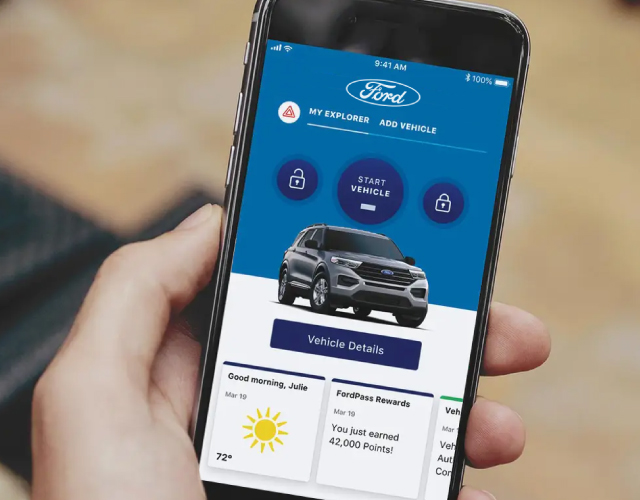
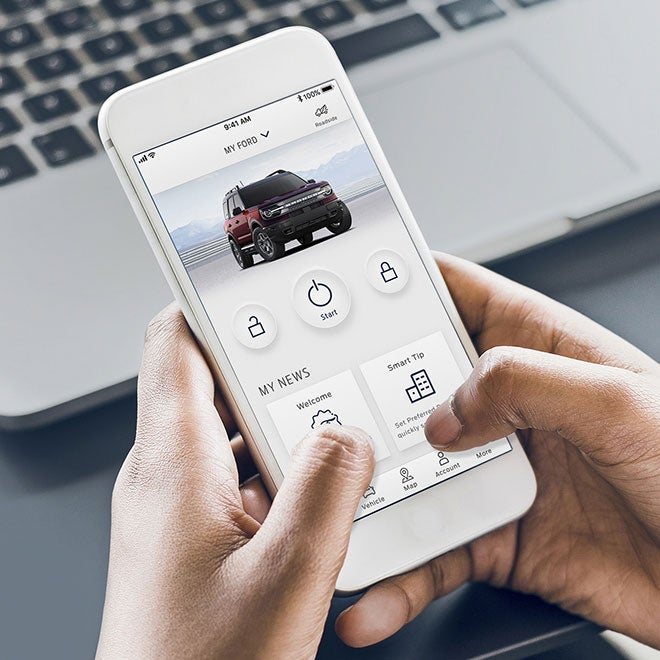
The most visible benefit of FordPass Connect is the ability to control the vehicle via the FordPass app. Through the cloud-to-vehicle link, users can execute several commands:
- Remote Start/Stop: Ideal for climate pre-conditioning, allowing the software to activate the HVAC system before the driver arrives.
- Remote Lock/Unlock: Utilizing the cellular modem to bypass the distance limitations of a traditional Keyless Entry fob.
- Vehicle Locator: Using the vehicle’s onboard GPS to pin the car’s location on a map within the app interface.
Vehicle Health Monitoring and Telemetry
FordPass Connect acts as a diagnostic tool that provides real-time telemetry data. The system monitors various sensors throughout the vehicle and relays that information to the user’s dashboard. This includes fuel levels, oil life percentage, tire pressure (TPMS), and even specific “Vehicle Health Alerts.” If the onboard diagnostics (OBD) system detects a fault code, FordPass Connect can notify the user immediately, often providing a technical description of the issue and the urgency of the repair.
The In-Vehicle Wi-Fi Hotspot
One of the most hardware-intensive features of FordPass Connect is the ability to transform the vehicle into a rolling Wi-Fi hotspot. Powered by the 4G LTE modem (and 5G in newer models), the system can support up to ten devices simultaneously within a 50-foot radius. This is particularly relevant for the “digital nomad” or families, as the external antenna of the vehicle often provides a stronger and more stable signal than a standard handheld smartphone in fringe coverage areas.
3. The Evolution of Over-the-Air (OTA) Updates
Perhaps the most technologically significant aspect of FordPass Connect is its role in “Power-Up” software updates. In the past, a vehicle’s software was static from the moment it left the assembly line. FordPass Connect changes this paradigm by allowing for Over-the-Air (OTA) updates.
Software-Defined Enhancements
OTA updates allow Ford to refine the vehicle’s performance and feature set long after the purchase. Through the Connect modem, the vehicle can download large data packets while parked. These updates can range from simple bug fixes in the infotainment system to complex recalibrations of the powertrain or battery management systems in electric vehicles (EVs). This capability ensures that the technology within the car stays current with the latest software trends and security patches.
Reducing Physical Maintenance Dependencies
From a technical support perspective, OTA updates facilitated by FordPass Connect significantly reduce the need for physical dealership visits. When a software recall or a non-critical module update is required, the system can deploy the fix autonomously. This “self-healing” aspect of the software architecture is a hallmark of modern tech-centric automotive design, placing Ford in direct competition with tech-heavy manufacturers like Tesla.
Predictive Maintenance Algorithms
By collecting anonymized data across thousands of vehicles, Ford’s cloud systems can use machine learning to identify patterns in component failures. FordPass Connect feeds this data back to the engineers, who can then push updates to prevent similar issues in other vehicles. This creates a feedback loop where the software is constantly learning from the hardware’s real-world performance.
4. FordPass Connect in the Era of Electric Vehicles (EVs)
As the industry pivots toward electrification, FordPass Connect has become an essential tool for managing the complex requirements of high-capacity battery systems. For owners of the Mustang Mach-E or F-150 Lightning, the “Connect” features transition from luxury to necessity.
Intelligent Range and Charging Logistics
The “Intelligent Range” feature uses FordPass Connect to aggregate data regarding weather, traffic, and even the driving habits of other Ford EV owners to provide a highly accurate estimate of remaining battery life. Furthermore, the system integrates with the BlueOval Charge Network, allowing the car to communicate with charging stations to handle authentication and payment automatically via the “Plug & Charge” protocol.
Remote Battery Pre-Conditioning
Batteries are chemical devices that perform best at specific temperatures. Through FordPass Connect, users can schedule “Departure Times.” The vehicle’s software will then use shore power (if plugged in) to heat or cool the battery to its optimal operating temperature before the journey begins, thereby preserving range and extending the lifespan of the battery cells.
Phone as a Key (PaaK) Technology
For many of Ford’s newest tech-forward models, FordPass Connect enables “Phone as a Key.” This uses Bluetooth Low Energy (BLE) and the FordPass Connect architecture to allow a smartphone to act as the primary ignition and entry tool. The technology utilizes multiple sensors around the vehicle to locate the phone’s specific proximity, ensuring the doors only unlock when the user is within a secure range, and allowing for “walk-away” locking.
5. The Future of Connectivity: 5G and V2X Communication
Looking ahead, the roadmap for FordPass Connect involves a transition to even faster and more responsive networks. The shift from 4G to 5G will unlock new possibilities for the software ecosystem.
Enhanced Real-Time Mapping
With the increased bandwidth of 5G, FordPass Connect will be able to handle high-definition map streaming in real-time. This is a critical prerequisite for advanced driver assistance systems (ADAS) and eventual autonomous driving features, where the car must “see” beyond its physical sensors by communicating with the cloud.
V2X (Vehicle-to-Everything) Possibilities
The ultimate goal of automotive connectivity is V2X. This would allow a FordPass Connect-enabled vehicle to talk to smart city infrastructure, such as traffic lights and road sensors. By receiving data about upcoming traffic patterns or hazardous road conditions directly into the cockpit, the vehicle becomes a node in a larger, smarter urban grid.
The Marketplace and Third-Party Integration
As the platform matures, we can expect more third-party software integration. Whether it is in-car payment systems for parking and tolls or smart-home integration where your car can turn on your house lights as you pull into the driveway, FordPass Connect is the foundational layer for a fully integrated digital life.
In conclusion, FordPass Connect is far more than a marketing term; it is the technical backbone of Ford’s digital strategy. By combining embedded cellular hardware with a robust cloud-based software suite, it transforms the vehicle into a proactive, upgradable, and highly communicative gadget. For the modern consumer, it represents the shift of the automobile from a standalone machine to a vital component of the broader technological ecosystem.
aViewFromTheCave is a participant in the Amazon Services LLC Associates Program, an affiliate advertising program designed to provide a means for sites to earn advertising fees by advertising and linking to Amazon.com. Amazon, the Amazon logo, AmazonSupply, and the AmazonSupply logo are trademarks of Amazon.com, Inc. or its affiliates. As an Amazon Associate we earn affiliate commissions from qualifying purchases.