
In the pantheon of classical physics, few disciplines have undergone a more radical digital transformation than fluid mechanics. At its core, fluid mechanics is the study of how fluids—liquids, gases, and plasmas—behave when at rest and in motion. However, in the 21st century, this field has migrated from the dusty laboratories of wind tunnels and hydraulic presses into the high-performance computing (HPC) clusters of Silicon Valley and the neural networks of leading AI researchers.
Understanding fluid mechanics is no longer just a requirement for civil engineers building dams; it is a fundamental pillar of modern technology. From the thermal management of the smartphone in your pocket to the aerodynamic optimization of SpaceX rockets and the cooling of massive data centers, fluid mechanics is the invisible force driving tech innovation.
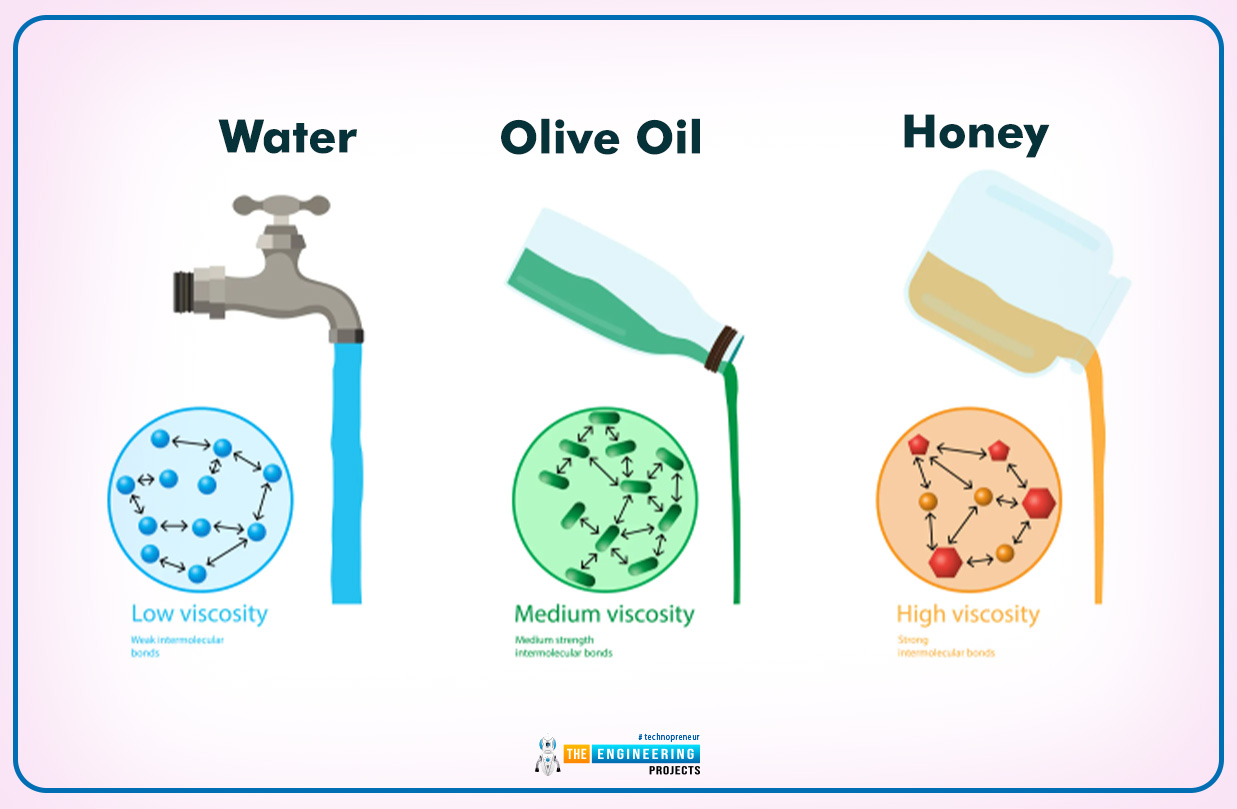
Foundations of Fluid Mechanics in the Digital Age
While the governing laws of fluid mechanics were penned by luminaries like Archimedes, Bernoulli, and Navier-Stokes centuries ago, the “tech” version of this science is defined by our ability to digitize these laws.
From Classical Physics to Computational Power
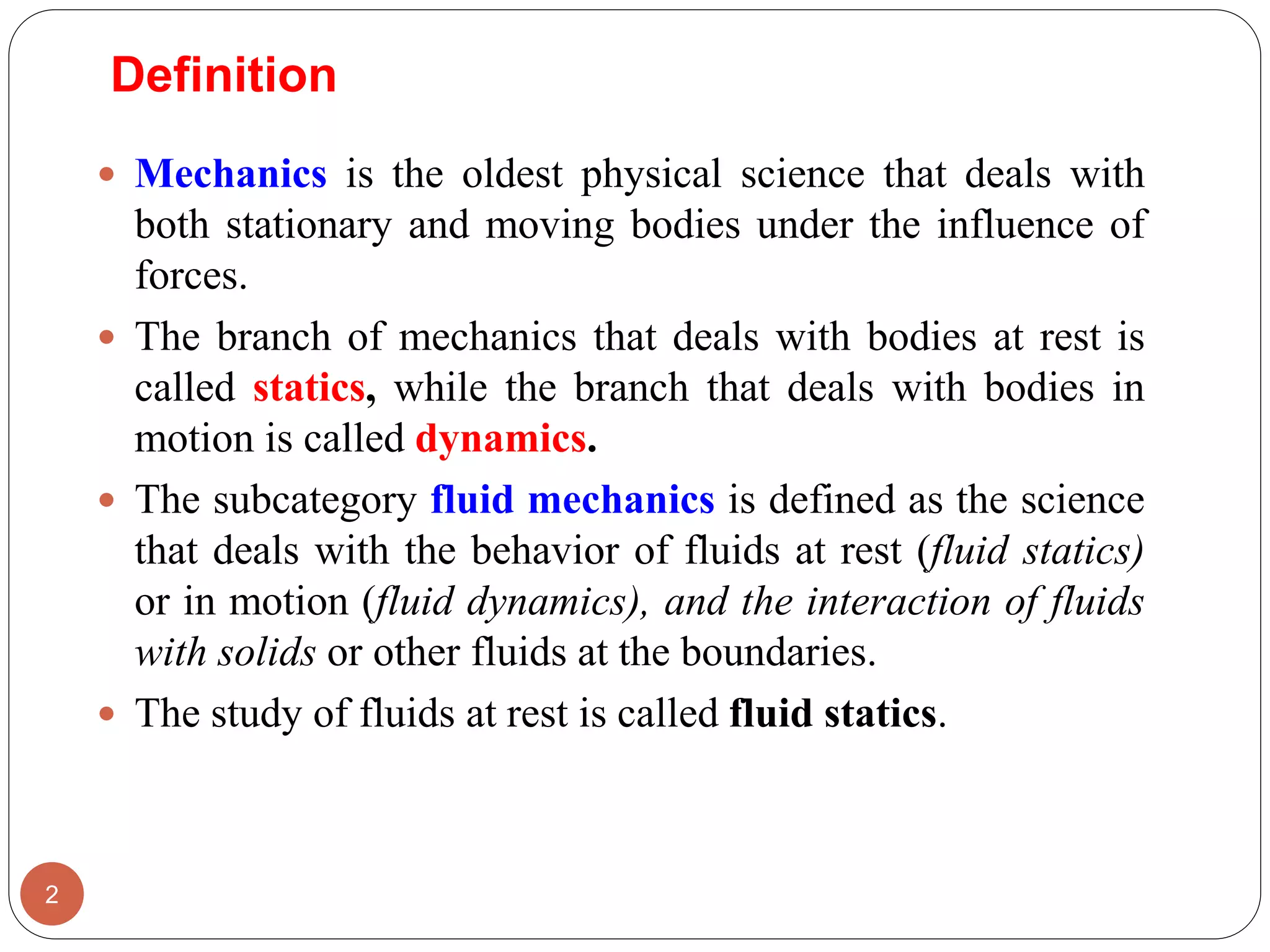
Historically, fluid mechanics was divided into two main branches: fluid statics (fluids at rest) and fluid dynamics (fluids in motion). For decades, engineers relied on physical prototypes and expensive experimental testing. However, the rise of the digital era shifted the focus toward simulation. The Navier-Stokes equations, which describe the motion of fluid substances, are notoriously difficult to solve. They are non-linear partial differential equations that, for many complex scenarios, cannot be solved with pen and paper.
In the tech sector, we have replaced the blackboard with the GPU. The ability to discretize these equations—breaking them down into millions of tiny calculations—has allowed us to simulate fluid behavior with terrifying accuracy. This shift from physical to digital experimentation has reduced R&D costs by billions across the aerospace, automotive, and tech-hardware industries.
Why Tech Giants are Obsessed with Flow
When we think of “fluids” in a technology context, we aren’t just talking about water. We are talking about air, heat transfer, and even the “flow” of electrons or data packets when modeled using fluid-like heuristics. Companies like Tesla, Apple, and Intel invest heavily in fluid mechanics to solve one of the greatest bottlenecks in modern tech: heat.
As transistors get smaller and processors get faster, they generate immense thermal energy. Fluid mechanics provides the framework for designing advanced cooling systems—ranging from the simple airflow patterns inside a MacBook to the sophisticated liquid-immersion cooling systems used in Bitcoin mining rigs and AI server farms.
Computational Fluid Dynamics (CFD): The Software Revolution
The most significant technological manifestation of fluid mechanics is Computational Fluid Dynamics (CFD). This is a branch of technology that uses numerical analysis and data structures to analyze and solve problems that involve fluid flows.
Simulating Reality: The Role of High-Performance Computing
CFD is a resource-intensive endeavor. To simulate the air flowing over a Boeing 787 wing or the blood flowing through a 3D-printed heart valve, computers must process billions of data points. This has driven massive innovation in High-Performance Computing (HPC).
Modern CFD software utilizes parallel processing, where thousands of CPU or GPU cores work simultaneously to solve a single flow problem. This demand has pushed the boundaries of hardware architecture, leading to the development of specialized chips optimized for the vector mathematics required in fluid simulations. Cloud providers like AWS and Microsoft Azure now offer dedicated “HPC as a Service,” allowing startups to run complex fluid simulations without owning a supercomputer.
Key Tools and Platforms Shaping the Industry
The software ecosystem for fluid mechanics is robust and diverse. Industry standards like Ansys Fluent and Simscale have become the “Photoshop” of the engineering world. These platforms allow designers to create digital twins of their products.
- OpenFOAM: An open-source powerhouse that allows developers to customize their own solvers, fostering a global community of tech-driven researchers.
- Autodesk CFD: Bridging the gap between architectural design and environmental fluid mechanics, helping architects design “breathable” buildings that use natural airflow instead of energy-heavy air conditioning.
- Star-CCM+: A tool that integrates fluid mechanics with heat transfer and stress analysis, providing a holistic view of how a product will perform in the real world.
AI and Machine Learning: Redefining Fluid Dynamics
We are currently witnessing a “Third Wave” of fluid mechanics, where Artificial Intelligence (AI) and Machine Learning (ML) are being integrated into traditional physics-based models. This is perhaps the most exciting trend in the tech niche today.
Physics-Informed Neural Networks (PINNs)
One of the limitations of traditional CFD is time; a high-fidelity simulation can take days or even weeks to run. Enter Physics-Informed Neural Networks (PINNs). Unlike traditional AI, which requires massive datasets to “learn,” PINNs are embedded with the actual laws of physics (like the Navier-Stokes equations).
By teaching an AI the “rules” of fluid mechanics, researchers can now generate near-instantaneous simulations. This allows for real-time design adjustments. Imagine a drone’s onboard AI recalculating its flight path in milliseconds by predicting the fluid-dynamic turbulence of a sudden wind gust. This is the intersection of classical mechanics and cutting-edge software engineering.
Predictive Maintenance and Real-Time Optimization
In industrial tech, fluid mechanics combined with IoT (Internet of Things) sensors allows for “Predictive Maintenance.” Sensors in a transcontinental pipeline or a city’s water infrastructure can feed flow-rate data into an AI model. By understanding the fluid mechanics of the system, the AI can detect a “pressure anomaly” that suggests a leak or a block long before a human operator would notice. This integration of fluid dynamics into the software stack of “Smart Cities” is a multibillion-dollar sub-sector of the tech industry.
Fluid Mechanics in Hardware Design and Gadgetry
While software gets much of the glory, the physical tech we interact with daily is a masterclass in applied fluid mechanics.
Thermal Management in Consumer Electronics
The biggest enemy of a high-performance gadget is heat. In gaming laptops, for example, the placement of fans, the shape of the heat pipes, and the vents are all dictated by fluid mechanics. Engineers use “Synthetic Jets” and “Micro-fluidic Cooling” to move heat away from sensitive components.
Even the transition from traditional fans to “vapor chamber” cooling in high-end smartphones is a fluid mechanics innovation. These chambers use a small amount of liquid that evaporates and condenses in a closed loop, moving heat with far more efficiency than solid copper ever could.
The Future of Microfluidics and Lab-on-a-Chip Tech
Microfluidics is a specialized branch of fluid mechanics dealing with the behavior of fluids through micro-channels. This tech is the foundation of the “Lab-on-a-Chip” (LoC) revolution. These devices shrink the functionality of a medical laboratory onto a single square-centimeter chip.
By precisely controlling the flow of nanoliters of blood or chemical reagents, these chips can perform instant diagnostic tests. This is the tech that will eventually allow for real-time, wearable health monitoring that goes far beyond measuring your heart rate; it will analyze your body chemistry using the principles of micro-scale fluid dynamics.
The Role of Fluid Mechanics in Sustainable Tech
As the tech industry pivots toward sustainability, fluid mechanics has become the primary tool for optimizing “Green Tech.”
Aerodynamics for Green Energy and EV Efficiency
In the world of Electric Vehicles (EVs), range is king. Because EVs are so efficient, a large portion of their energy consumption at high speeds is spent simply pushing through the air. Fluid mechanics allows companies like Lucid and Tesla to design cars with the lowest drag coefficients in history. Every curve of the chassis is optimized using CFD to ensure the air “flows” with minimal resistance.
Similarly, in renewable energy, fluid mechanics is used to design more efficient wind turbine blades. By simulating how wind interacts with different blade geometries, engineers can extract more megawatt-hours from the same breeze. Even in the burgeoning field of Carbon Capture, fluid mechanics is essential for designing the massive fans and filtration systems that “scrub” CO2 from the atmosphere.
Conclusion: The Fluid Future
“What is fluid mechanics?” In the context of the modern tech landscape, it is the bridge between the physical world and the digital simulation. It is the science of flow, repurposed for an era of AI, supercomputing, and high-performance hardware.
As we push deeper into the frontiers of space exploration, quantum computing (which requires extreme cryogenic fluid cooling), and personalized medicine, fluid mechanics will remain the invisible engine of progress. It is a discipline that proves that even the oldest laws of physics can find a new, vibrant life when viewed through the lens of technology. Whether it is a cooling fin on a GPU or the wing of a hypersonic jet, fluid mechanics is the code that writes the physical world.
aViewFromTheCave is a participant in the Amazon Services LLC Associates Program, an affiliate advertising program designed to provide a means for sites to earn advertising fees by advertising and linking to Amazon.com. Amazon, the Amazon logo, AmazonSupply, and the AmazonSupply logo are trademarks of Amazon.com, Inc. or its affiliates. As an Amazon Associate we earn affiliate commissions from qualifying purchases.