
In the rapidly evolving landscape of the digital economy, understanding how to measure the performance of your financial assets is crucial for long-term success. For publishers, app developers, and digital entrepreneurs, one of the most vital metrics for gauging the health of an online income stream is eCPM, or “Effective Cost Per Mille.” While it may sound like technical jargon, eCPM is fundamentally a financial tool used to evaluate the efficiency of monetization strategies. Whether you are running a side hustle through a niche blog or managing a large-scale digital media empire, mastering eCPM is essential for optimizing your business finance.

Deciphering the eCPM Metric: Definitions and Calculations
To navigate the world of online income, one must first understand the “Mille.” In advertising, “Mille” is the Latin word for a thousand. Therefore, any metric involving “CPM” is looking at costs or earnings per 1,000 impressions. However, the distinction between a standard CPM and an “effective” CPM (eCPM) is where the true financial insight lies.
The Difference Between CPM and eCPM
Standard CPM is a measurement of what an advertiser is willing to pay for 1,000 sightings of their ad. It is an “input” metric—a cost for the advertiser. eCPM, on the other hand, is an “output” metric for the publisher or the person earning the money.
The primary difference is that eCPM accounts for all revenue generated, regardless of the buying model. While some ads are bought on a CPM basis, others are bought on a CPC (Cost Per Click) or CPA (Cost Per Action) basis. eCPM levels the playing field, converting all these different revenue types into a single, comparable figure that tells you exactly how much you earned for every 1,000 impressions served.
How to Calculate eCPM (The Formula)
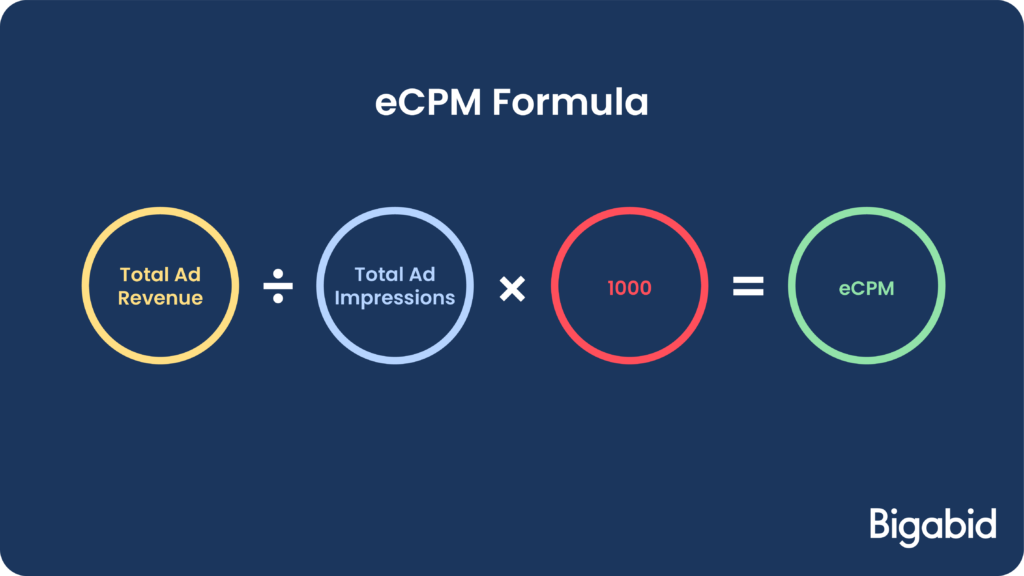
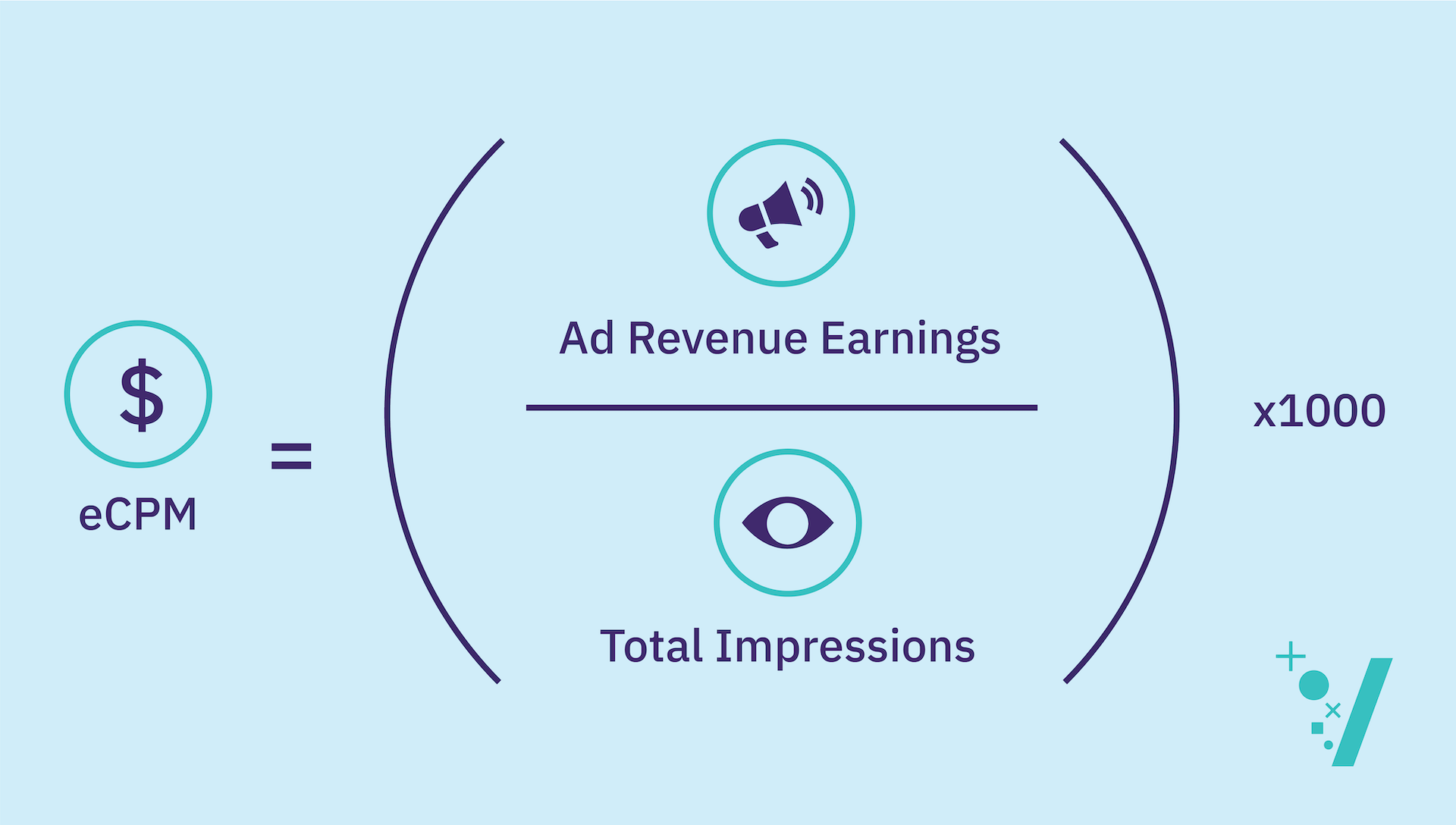
From a business finance perspective, the formula for eCPM is straightforward but powerful:
eCPM = (Total Ad Earnings / Total Impressions) x 1,000
For example, if your website generated $500 in total revenue from 200,000 ad impressions, your eCPM would be $2.50. This means that for every 1,000 times an ad was shown on your site, you earned $2.50. This formula is the bedrock of digital revenue analysis because it allows you to compare the profitability of different pages, ad units, and traffic sources, even if they use different monetization methods.
Why eCPM Matters for Your Business Finance and Online Income
In the realm of personal finance and investing, you wouldn’t track your portfolio’s success by only looking at the number of shares you own; you would look at the yield. In the digital world, eCPM is that yield. It is the primary KPI (Key Performance Indicator) for anyone looking to maximize their return on digital real estate.
Gauging Monetization Performance
For anyone pursuing online income, eCPM serves as a diagnostic tool. If you notice your traffic is increasing but your total revenue is stagnant, your eCPM is likely dropping. This financial signal tells you that your current monetization strategy is becoming less efficient. By monitoring eCPM, you can identify which content types or website sections are the most “valuable” in terms of revenue density. High eCPMs indicate that your audience is highly engaged or that the niche you are writing about is highly sought after by advertisers, allowing you to double down on what works.
Budget Optimization for Digital Investors
If you are an entrepreneur who buys traffic (arbitrage) or invests in digital assets, eCPM is your compass. Digital investing often involves “buying” users at a certain cost and “selling” their attention to advertisers. To ensure a positive ROI (Return on Investment), your eCPM must exceed your CPC (Cost Per Click) or CPM costs associated with acquiring that traffic. By analyzing eCPM across different platforms—such as Google AdSense vs. Header Bidding—you can allocate your resources to the highest-yielding platforms, effectively managing your business’s cash flow and profit margins.
Factors Influencing eCPM in the Modern Digital Economy
Understanding the “what” and the “why” is only half the battle. To actively manage your business finance, you must understand the variables that cause eCPM to fluctuate. eCPM is not a static number; it is a reflection of market demand, audience quality, and technical execution.
Geographic Location and Audience Demographics
In the world of online finance, not all “Milles” are created equal. Advertisers are willing to pay significantly more to reach audiences in “Tier 1” countries like the United States, Canada, the UK, and Australia due to the higher purchasing power of these consumers. Consequently, a website with a primarily US-based audience will almost always have a higher eCPM than one with a global or Tier 3 audience. Understanding the financial value of different demographics allows you to tailor your content strategy toward more lucrative markets.
Seasonality and Market Trends
Just as the stock market has cycles, the advertising market experiences seasonal fluctuations. eCPMs typically skyrocket in the fourth quarter (Q4) as retail brands compete for holiday shoppers’ attention. Conversely, January often sees a “slump” as marketing budgets are reset. For someone relying on online income, anticipating these cycles is crucial for financial planning. Recognizing that a dip in eCPM in January is a market-wide trend rather than a failure of your strategy can prevent unnecessary financial panic.
Ad Placement and User Engagement
The physical layout of your digital asset plays a massive role in its financial yield. Ads placed “above the fold” (visible without scrolling) generally command higher eCPMs because they have higher viewability rates. However, there is a delicate balance to maintain. If you clutter your site with too many ads to chase a higher eCPM, you may damage the user experience, leading to higher bounce rates and lower total impressions. The goal is to maximize the total revenue, which is a product of both eCPM and volume.
Strategies to Increase eCPM and Maximize Your Side Hustle or Business
If you want to turn a modest side hustle into a robust source of online income, you cannot simply wait for eCPMs to rise on their own. You must take an active role in optimizing your digital financial performance.
Optimizing Ad Fill Rates
A common mistake in managing digital revenue is focusing solely on the price of the ads. However, your total earnings are also dependent on your “Fill Rate”—the percentage of ad requests that are actually filled with an ad. A high eCPM with a 20% fill rate is often less profitable than a moderate eCPM with a 90% fill rate. To optimize your business finance, you should aim for the “sweet spot” where the combination of fill rate and eCPM results in the highest possible “rRPM” (Revenue per Mille).
Implementing Header Bidding and Mediation
For those looking to professionalize their online income, moving beyond a single ad network is essential. Header bidding is a programmatic technique that allows multiple ad exchanges to bid on your inventory simultaneously. This increased competition naturally drives up your eCPM because the highest bidder always wins. Similarly, for mobile app developers, using a mediation platform ensures that ad requests are routed to the network that offers the highest yield at that specific moment, ensuring no dollar is left on the table.
Testing Different Ad Formats
From a financial perspective, diversification is key. Relying on a single ad format (like standard banners) can limit your revenue potential. Rich media ads, video ads, and native advertisements often command much higher eCPMs than traditional display ads. By A/B testing different formats and monitoring their impact on eCPM, you can discover which combinations yield the highest returns for your specific niche. Video ads, in particular, are currently one of the highest-yielding assets in the digital advertising space.
The Future of eCPM in an Evolving Financial Landscape
As we look toward the future of digital business finance, several factors are poised to change the way eCPM is calculated and optimized. Staying ahead of these trends is vital for anyone whose financial well-being depends on online revenue.
The Impact of Privacy Regulations on Revenue
With the rise of GDPR, CCPA, and the phasing out of third-party cookies, the ability to track and target users is becoming more limited. For many years, high eCPMs were driven by hyper-targeted advertising. As privacy regulations tighten, publishers may see a temporary decline in eCPMs as advertisers find it harder to identify their ideal customers. The financial winners of the future will be those who collect “first-party data”—information provided directly by users—allowing them to maintain high eCPMs through direct relationships and contextual targeting.
AI and Machine Learning in Yield Optimization
The next frontier in maximizing online income is Artificial Intelligence. New financial tools are emerging that use machine learning to predict which ad placements and formats will yield the highest eCPM for a specific user in real-time. By automating the “floor price” (the minimum price you are willing to accept for an ad), AI can ensure that you are always selling your inventory at its maximum market value. For the modern digital entrepreneur, leveraging these AI-driven financial tools is no longer optional; it is a requirement for staying competitive in a high-stakes market.
In conclusion, eCPM is far more than just a metric for the “tech” department; it is the heartbeat of your digital business finance. By understanding how to calculate it, why it fluctuates, and how to actively optimize it, you can transform your online presence into a highly efficient, income-generating machine. Whether you are managing a portfolio of websites or a single mobile app, keeping a close eye on your eCPM will ensure that your digital assets continue to grow in value and profitability.
aViewFromTheCave is a participant in the Amazon Services LLC Associates Program, an affiliate advertising program designed to provide a means for sites to earn advertising fees by advertising and linking to Amazon.com. Amazon, the Amazon logo, AmazonSupply, and the AmazonSupply logo are trademarks of Amazon.com, Inc. or its affiliates. As an Amazon Associate we earn affiliate commissions from qualifying purchases.