
The journey to obtaining a U.S. nonimmigrant visa, whether for tourism, business, study, or temporary work, often begins with a single, crucial document: the DS-160, Online Nonimmigrant Visa Application. This digital form serves as the primary application for most nonimmigrant visa categories, acting as the gateway through which individuals seeking to enter the United States temporarily present their case to consular officers. Understanding the intricacies of the DS-160 is not merely a procedural step; it’s a fundamental requirement for a successful visa application. This article will delve into the nature of the DS-160 form, its significance in the U.S. visa process, the information it demands, and essential tips for navigating its completion.

The DS-160: A Digital Foundation for U.S. Nonimmigrant Visa Applications
The DS-160 represents a significant shift from previous paper-based application processes. Its transition to an online platform streamlined the application submission, allowing for greater efficiency, accuracy, and accessibility. This digital format ensures that all applicants provide a standardized set of information, which is then electronically transmitted to the U.S. Department of State for review.
Evolution of Visa Application Processes
Historically, visa applications involved lengthy, paper-based forms that were often prone to errors, delays, and logistical challenges. The introduction of the DS-160 marked a pivotal moment in modernizing the U.S. visa system. This digital transformation was driven by several key objectives:
- Enhanced Efficiency: Moving to an online platform significantly reduced processing times for both applicants and consular staff. Information is captured and transmitted instantly, minimizing the need for manual data entry and physical document handling.
- Improved Data Accuracy: The online form includes built-in validation checks that flag potential errors or omissions in real-time, prompting applicants to correct them before submission. This reduces the likelihood of applications being rejected due to simple mistakes.
- Global Accessibility: The DS-160 can be accessed from anywhere in the world with an internet connection, making the application process more equitable for individuals regardless of their location.
- Environmental Benefits: The shift to digital reduces the reliance on paper, contributing to a more sustainable application process.
The Purpose and Scope of the DS-160
The DS-160 is not a standalone application for all U.S. visa types. It is specifically designed for nonimmigrant visas, which are temporary visas granted for specific purposes like tourism (B-2), business (B-1), study (F-1), exchange visitor (J-1), temporary employment (H-1B, L-1, O-1, P-1), and more. It is not used for immigrant visas, which are for those seeking permanent residency in the United States.
The primary purpose of the DS-160 is to gather comprehensive information about the applicant’s identity, background, travel plans, and intended activities in the U.S. This information allows consular officers to assess the applicant’s eligibility for the specific visa category requested and to determine if they meet the requirements outlined by U.S. immigration law. The data collected is used for various purposes, including:
- Eligibility Assessment: Determining if the applicant meets the criteria for the requested visa category.
- Security Screening: Identifying potential security risks by cross-referencing information with various databases.
- Fraud Prevention: Detecting inconsistencies or fraudulent information that could indicate an intent to misrepresent facts.
- Statistical Analysis: Gathering data for immigration policy development and trend analysis.
Navigating the DS-160: Key Sections and Information Required
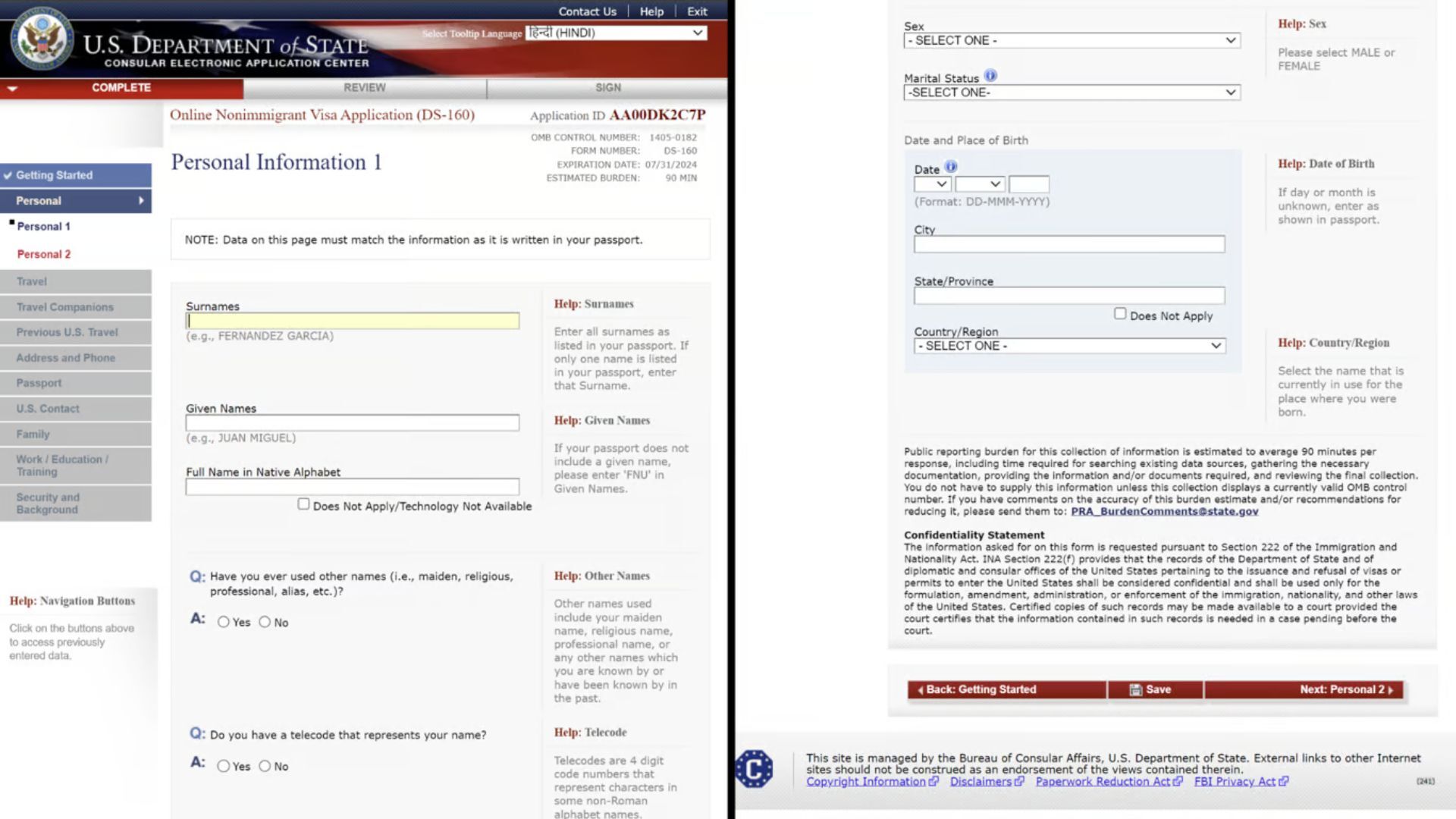
Completing the DS-160 requires meticulous attention to detail and the gathering of a significant amount of personal and contextual information. The form is structured into various sections, each designed to elicit specific details crucial for the visa application review.
Personal Information and Identification
This section is fundamental to establishing the applicant’s identity. It requires:
- Full Name: As it appears on the passport.
- Date and Place of Birth: Accurate birth details.
- Nationality and Citizenship: Current and previous citizenships.
- Passport Information: Including passport number, issue date, expiry date, and issuing country.
- Biographical Data: Such as gender, marital status, and information about parents and family members. This helps in establishing ties to the home country, which is often a key factor in demonstrating nonimmigrant intent.
Travel Plans and Purpose of Visit
This section seeks to understand the applicant’s intentions in the United States. It includes:
- Intended U.S. Address: Where the applicant plans to stay. This could be a hotel, a friend’s residence, or a university dormitory.
- Contact Person in the U.S.: If applicable, details of the person or organization the applicant will be in contact with.
- Travel Itinerary: Specific details about the planned trip, including dates of arrival and departure, intended duration of stay, and specific locations to be visited.
- Purpose of Travel: A clear articulation of why the applicant wishes to enter the U.S. This is critical and must align with the visa category being applied for (e.g., attending a conference for B-1, enrolling in a course for F-1).
Background and Security Information
This is perhaps the most comprehensive and sensitive part of the DS-160, designed to assess the applicant’s admissibility to the United States. It delves into:
- Prior U.S. Travel History: Details of previous visas, visits, and any immigration history in the U.S.
- Criminal History: Questions about arrests, convictions, and any involvement with law enforcement. Honesty and accuracy are paramount here; any misrepresentation can lead to permanent ineligibility.
- Security-Related Questions: This section often includes questions pertaining to past or present involvement with terrorism, military service, or any activities that could be considered a security risk to the U.S.
- Medical History: Questions about communicable diseases of public health significance, drug abuse, and mental or physical disorders that could pose a risk.
- Education and Employment History: Details about the applicant’s educational background and current or previous employment. This helps establish the applicant’s stability and ties to their home country.
Additional Questions and Supporting Documents
The DS-160 may also include specific questions tailored to the visa category. For instance, an F-1 student visa applicant will be asked about their chosen course of study and the educational institution. An H-1B visa applicant will need to provide details related to their sponsoring employer.
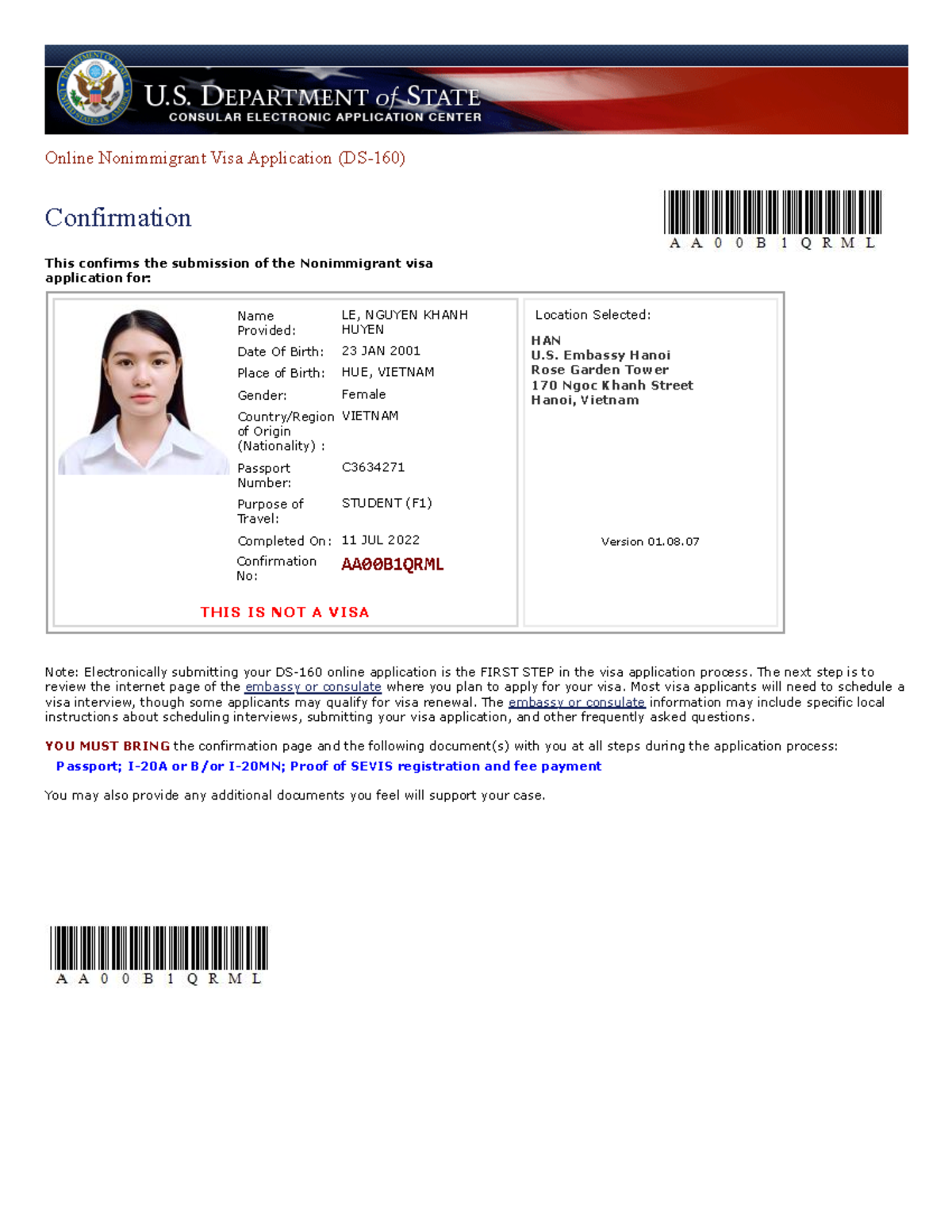
Crucially, the DS-160 requires the applicant to upload a digital photograph that meets specific U.S. Department of State guidelines. Failure to comply with photo requirements can lead to application delays or rejection. While the DS-160 is primarily online, applicants will be instructed on which supporting documents to bring to their visa interview, such as passport, interview appointment letter, DS-160 confirmation page, and any other relevant evidence supporting their application.
Best Practices for Completing the DS-160 Form
Given the critical nature of the DS-160, approaching its completion with diligence and accuracy is essential. A well-prepared application can significantly improve the chances of a successful visa outcome.
Accuracy and Honesty as Paramount
The most critical piece of advice for any DS-160 applicant is to be completely honest and accurate in all responses. U.S. immigration law is stringent, and any attempt to misrepresent facts, omit information, or provide false statements can have severe consequences, including visa denial and long-term ineligibility for future visas. Consular officers are trained to identify inconsistencies and are adept at uncovering discrepancies. If you are unsure about how to answer a question, it is better to seek clarification from official sources or legal counsel than to guess or provide potentially misleading information.
Gathering Necessary Information Before Starting
Before beginning the DS-160, it is highly recommended to gather all necessary personal documents and information. This includes:
- Valid Passport: Ensure it has sufficient validity beyond your intended stay.
- Previous U.S. Visas (if any): Details of past U.S. travel.
- Social Security Number and/or Taxpayer ID Number: If you have ever worked in the U.S.
- Resume or Curriculum Vitae: For employment-based visas.
- Educational Transcripts and Diplomas: For student visas.
- Information about Family Members: Including their names, dates of birth, and relationship.
- Details of Previous U.S. Travel: Dates, visa numbers, and locations.
- Digital Photograph: Meeting U.S. Department of State specifications.
Having this information readily available will make the online application process smoother and reduce the likelihood of errors.
Understanding and Utilizing the Application ID
Upon starting the DS-160, you will be assigned an Application ID. This ID is crucial as it allows you to retrieve your application if you need to save it and return later to complete it. It also serves as a reference number for your application. It is imperative to record this ID and keep it in a safe place. You will need it to access your saved application, and it will appear on your confirmation page.
Saving Progress Frequently
The online DS-160 system has a time-out feature. If you are inactive for too long, your session will end, and you may lose unsaved progress. Therefore, it is essential to save your application frequently, especially after completing significant sections. Most pages have a “Save” button.
Reviewing and Verifying Information
Before submitting the DS-160, take the time to thoroughly review all the information you have entered. Many applicants make the mistake of submitting without a final check. A careful review can help catch typographical errors, factual inaccuracies, or omissions. Most online systems provide a summary or review page where you can see all your entered data in one place.
Printing the Confirmation Page
After successfully submitting the DS-160, you will receive a confirmation page with a barcode. This confirmation page is extremely important. You will need to print it and bring it with you to your visa interview. It serves as proof of your application submission and contains a unique barcode that consular staff will scan.
The DS-160 in the Broader U.S. Visa Ecosystem
The DS-160 is not an isolated document but an integral part of a larger, interconnected system for U.S. visa processing. Its digital nature facilitates its integration with subsequent steps in the visa application journey.
Integration with the Visa Interview Process
The information provided in the DS-160 forms the basis for the visa interview. Consular officers use the application data to prepare for the interview and to ask targeted questions designed to verify the applicant’s information and assess their eligibility. They will compare the applicant’s responses during the interview with the information provided on the DS-160. Any significant discrepancies can raise red flags and lead to further scrutiny or denial. Therefore, it is crucial for applicants to be consistent in their statements during the interview and with the information provided in their application.
Role in Security Screening and Background Checks
The DS-160 is a primary source of information for security screening and background checks. The data submitted is cross-referenced with various government databases, including those related to law enforcement, national security, and immigration history. This process helps U.S. authorities identify individuals who may pose a risk to national security or public safety, or who have a history of violating immigration laws. The thoroughness of these checks underscores the importance of providing accurate and complete information on the DS-160.
Impact on Visa Approval and Denial
The DS-160 is the initial and perhaps most critical hurdle in the U.S. nonimmigrant visa application process. A well-completed, accurate, and truthful DS-160, coupled with a strong supporting case for the visa category, significantly increases the likelihood of a successful outcome. Conversely, errors, omissions, or misrepresentations on the DS-160 can lead to delays, requests for additional information, or outright denial of the visa application. Understanding the form’s requirements and dedicating adequate time and attention to its completion is therefore directly correlated with the applicant’s success in obtaining a U.S. visa.
In conclusion, the DS-160 form is the digital backbone of the U.S. nonimmigrant visa application process. Its comprehensive nature demands honesty, accuracy, and careful preparation. By understanding its purpose, the information it requires, and by adhering to best practices for its completion, applicants can navigate this essential step with greater confidence, laying a solid foundation for their pursuit of a temporary visa to the United States.
aViewFromTheCave is a participant in the Amazon Services LLC Associates Program, an affiliate advertising program designed to provide a means for sites to earn advertising fees by advertising and linking to Amazon.com. Amazon, the Amazon logo, AmazonSupply, and the AmazonSupply logo are trademarks of Amazon.com, Inc. or its affiliates. As an Amazon Associate we earn affiliate commissions from qualifying purchases.