
Delaware is currently in the midst of a significant economic transition. For years, the “First State” maintained a minimum wage that trailed behind several of its Mid-Atlantic neighbors. However, recent legislative shifts have placed Delaware on an aggressive path toward a $15.00 hourly minimum. This shift is not merely a legal update; it is a fundamental change in the state’s financial landscape, affecting business overhead, personal budgeting, and the broader regional economy.
As of January 1, 2024, the Delaware minimum wage stands at $13.25 per hour. This represents a substantial jump from previous years and serves as the penultimate step before reaching the $15.00 target on January 1, 2025. Understanding the nuances of this increase is essential for business owners managing tight margins and for employees looking to optimize their personal finances.
The Roadmap to $15: Decoding Delaware’s Wage Legislation
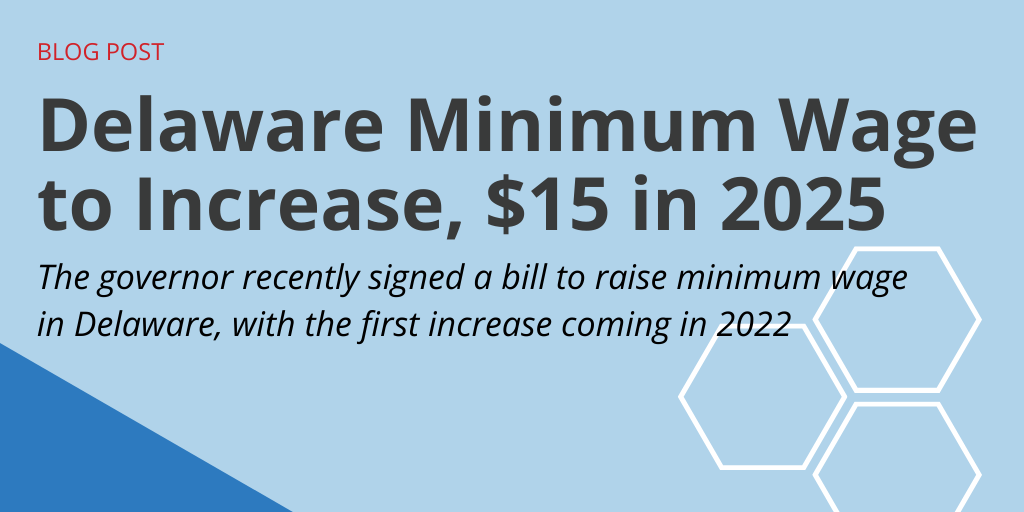
The primary catalyst for the current wage trajectory is Senate Bill 15, which was signed into law in 2021. This legislation was designed to provide a predictable, incremental path toward a living wage, allowing both the public and private sectors time to adjust their financial models.
The Impact of Senate Bill 15
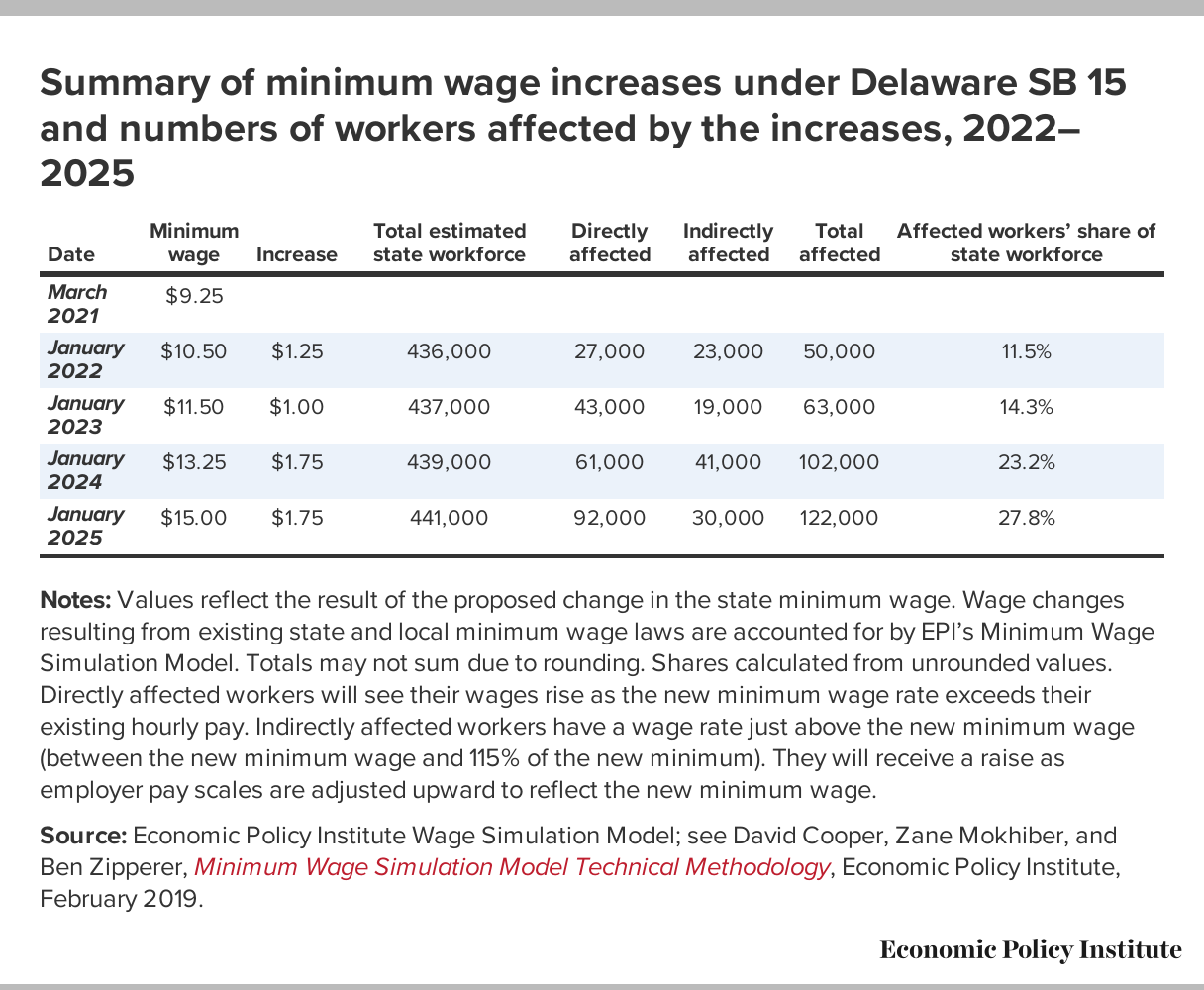
Senate Bill 15 was a landmark piece of legislation for Delaware. Prior to its passage, wage increases were often sporadic and subject to intense political debate. The bill established a clear timeline: the wage rose to $10.50 in 2022, $11.75 in 2023, $13.25 in 2024, and finally, it will hit $15.00 in 2025. By codifying these increases, the state provided a sense of fiscal predictability, though the rapid pace of the jumps—roughly 12% to 15% annually—has created unique pressures on the local economy.
Historical Context of Wage Increases in the First State
For much of the early 2010s, Delaware’s minimum wage hovered significantly lower, often stuck between $7.25 and $8.25. The shift toward a $15.00 threshold reflects a broader national trend where states take the lead in the absence of federal minimum wage adjustments. In the Mid-Atlantic region, Delaware’s move is a strategic attempt to remain competitive with Maryland and New Jersey, both of which have already implemented or are nearing their own $15.00 benchmarks.
Looking Ahead to 2025 and Beyond
Once the $15.00 threshold is met on January 1, 2025, the focus will shift from “getting there” to “staying there.” While the current law does not explicitly tie future increases to the Consumer Price Index (CPI) automatically, there is ongoing discussion within the Delaware General Assembly regarding “inflation-proofing” the wage. For now, financial planners and business consultants suggest that stakeholders should treat $15.00 as the new baseline for all long-term fiscal modeling.
Navigating the Financial Implications for Small Businesses
For the thousands of small businesses that form the backbone of Delaware’s economy—from the boardwalk shops in Rehoboth Beach to the tech startups in Wilmington—the wage increase is a double-edged sword. While higher wages can lead to increased consumer spending, the immediate impact on payroll can be jarring.
Managing Increased Labor Costs and Payroll Taxes
The most direct hit to a business’s bottom line is the “gross-up” of labor costs. When the minimum wage increases, it isn’t just the hourly rate that rises. Employers must also account for higher Social Security and Medicare contributions (FICA), unemployment taxes, and workers’ compensation premiums. For a business with 20 minimum-wage employees, the jump from $11.75 to $13.25 represents an additional $62,400 in annual raw wage costs, even before accounting for the associated taxes. To maintain profitability, businesses are increasingly turning to sophisticated accounting software to forecast cash flow and identify areas of waste.
Adjusting Pricing Strategies Without Alienating Customers
To offset rising labor costs, many Delaware businesses are forced to raise prices. However, in a competitive market, this must be handled with precision. A “cost-plus” pricing strategy—simply adding the wage increase onto the price of a burger or a dry-cleaning bill—can drive customers to larger competitors who have the scale to absorb costs. Instead, savvy business owners are practicing “value-based” adjustments, where they improve the service experience or product quality alongside a modest price increase, ensuring that the customer feels they are still receiving a fair deal.
Investing in Operational Efficiency
When labor becomes more expensive, the ROI on efficiency increases. Many Delaware businesses are now investing in “Money Tech”—tools like automated inventory management, self-service kiosks, and advanced scheduling software. By reducing “dead time” (hours where employees are clocked in but productivity is low), businesses can pay the higher wage without a linear increase in total payroll spend. This drive toward efficiency is accelerating the modernization of the Delaware small business sector.
Personal Finance and the Living Wage: A Reality Check for Workers
From the perspective of an hourly worker, an increase to $13.25 (and soon $15.00) is a vital adjustment in an era of high inflation. However, earning a higher wage requires a new approach to personal financial management to ensure that the extra income isn’t simply swallowed by the rising cost of goods.
The Gap Between Minimum Wage and the Cost of Living
Despite the increases, there remains a gap between the minimum wage and what is often referred to as a “living wage.” According to data from the MIT Living Wage Calculator, a single adult in Delaware typically needs more than $15.00 an hour to cover basic housing, food, transportation, and healthcare without external assistance. For those with children, that number rises significantly. Therefore, while the $13.25 rate is an improvement, many workers find it necessary to supplement their income with side hustles or gig work to achieve true financial stability.
Budgeting Strategies for Hourly Earners
An increase in pay provides a unique opportunity to break the cycle of living paycheck to paycheck. Financial advisors recommend the “50/30/20” rule: 50% for needs, 30% for wants, and 20% for savings and debt repayment. For a worker seeing an extra $200 in their monthly take-home pay due to the wage hike, directing that surplus immediately into an emergency fund or a high-yield savings account—rather than increasing lifestyle spending—can create a permanent shift in their net worth.
The “Ripple Effect” on Higher-Earning Positions
The Delaware minimum wage increase doesn’t just affect those at the bottom of the pay scale; it creates upward pressure on all wages. If a shift supervisor was previously making $15.00 an hour while the entry-level staff made $11.75, they will likely demand a raise once the entry-level staff hits $13.25 or $15.00. This “wage compression” forces companies to re-evaluate their entire compensation structure, leading to broader income growth across the lower and middle classes in the state.
Specific Exemptions and Specialized Wage Rules
Delaware’s labor laws are not “one size fits all.” There are specific niches within the financial ecosystem that follow different rules, particularly regarding tipped employees and younger workers.
The Tipped Employee Standard
In Delaware, the minimum cash wage for employees who receive tips (such as servers and bartenders) remains at $2.23 per hour. However, there is a crucial financial safeguard: if an employee’s tips plus their $2.23 hourly wage do not equal the state’s current minimum wage ($13.25), the employer is legally required to pay the difference. This is known as the “tip credit.” For restaurant owners, managing this “tip credit” requires meticulous record-keeping to ensure compliance and avoid costly audits from the Delaware Department of Labor.
Youth and Training Wage Provisions
To encourage the hiring of younger workers who may lack experience, Delaware allows for a “training wage.” For the first 90 days of employment, or for employees under the age of 18, employers can pay a slightly lower rate—specifically, $0.50 less than the standard minimum wage. While this provides a small amount of financial relief for businesses like seasonal ice cream shops or summer camps, the gap is narrowing. As the wage hits $15.00, the utility of this $0.50 discount may diminish compared to the administrative burden of tracking it.
Understanding Overtime and Compliance Risks
The minimum wage increase is inextricably linked to overtime pay. In Delaware, any hours worked over 40 in a workweek must be paid at time-and-a-half. At a $13.25 minimum wage, the overtime rate is $19.87. Once the wage hits $15.00, the overtime rate jumps to $22.50. From a business finance perspective, “uncontrolled overtime” is one of the fastest ways to erode a company’s profit margin. Consequently, many Delaware firms are implementing stricter time-tracking protocols to ensure that labor costs remain within budgeted parameters.
The Broader Economic Landscape: Why Wage Policy Matters in 2024
Delaware’s decision to aggressively raise the minimum wage is a reflection of the modern economic reality: labor is no longer a commodity, but a competitive asset.
Attracting Talent in a Competitive Mid-Atlantic Market
Delaware is geographically small, meaning many of its residents live within a 20-minute drive of Maryland, Pennsylvania, or New Jersey. In this environment, wage policy is a tool for talent retention. If Pennsylvania remains at the federal minimum of $7.25 while Delaware moves to $15.00, Delaware becomes a magnet for the regional labor force. This influx of workers can bolster Delaware’s economy, as these employees often spend their earnings within the state where they work.

Inflation and the Purchasing Power of the Dollar
The core argument for the $15.00 wage is the preservation of purchasing power. Between 2021 and 2024, the United States experienced significant inflationary pressure, particularly in the sectors of housing and groceries. By raising the minimum wage, Delaware is attempting to ensure that its lowest-paid residents do not fall into a “poverty trap” where their nominal income remains the same while their real-world costs skyrocket. For the state’s economy to remain healthy, the “velocity of money”—the rate at which money is exchanged—must remain high. Higher wages for low-income earners typically lead to immediate spending in the local economy, providing a “bottom-up” stimulus.
In conclusion, the Delaware minimum wage increase to $13.25 (and eventually $15.00) is a pivotal moment for the state’s financial health. For businesses, it is an invitation to innovate and find new efficiencies. For workers, it is a necessary adjustment to a high-cost world and an opportunity to build a more stable financial foundation. By understanding these shifts today, stakeholders can better navigate the economic landscape of tomorrow.
aViewFromTheCave is a participant in the Amazon Services LLC Associates Program, an affiliate advertising program designed to provide a means for sites to earn advertising fees by advertising and linking to Amazon.com. Amazon, the Amazon logo, AmazonSupply, and the AmazonSupply logo are trademarks of Amazon.com, Inc. or its affiliates. As an Amazon Associate we earn affiliate commissions from qualifying purchases.