
In the rapidly evolving landscape of health technology, the Apple Watch has transitioned from a simple notification hub to a sophisticated biometric laboratory worn on the wrist. One of the most significant leaps in its technological evolution occurred with the introduction of advanced sleep stage tracking. For users diving into their Health app data, the term “Core Sleep” often sparks curiosity. Unlike “Deep” or “REM” sleep, which are terms commonly used in general wellness circles, “Core Sleep” is a specific classification within the Apple ecosystem that reflects a critical phase of our nocturnal biology.

The Evolution of Sleep Tracking in the Apple Ecosystem
The journey of the Apple Watch as a sleep-tracking device was a gradual one. In its early iterations, the hardware was limited by battery life, often requiring a nightly charge that precluded overnight monitoring. However, as battery efficiency improved and sensor technology became more refined, Apple leaned heavily into the science of polysomnography—the “gold standard” of sleep study.
From Basic Tracking to watchOS Sleep Stages
Initially, the Apple Watch provided rudimentary data, focusing primarily on “Time in Bed” and “Time Asleep.” It functioned largely as a motion-sensitive alarm clock. With the release of watchOS 9 and subsequent updates, Apple integrated machine learning models trained against clinical sleep studies. This allowed the device to differentiate between various states of consciousness by analyzing heart rate variability (HRV) and movement patterns captured by the accelerometer. The introduction of Sleep Stages transformed the Apple Watch into a competitive tool for biohackers and health-conscious tech enthusiasts.
How the Apple Watch Sensors Measure Your Rest
The “Core Sleep” metric is not a guess; it is the result of high-frequency data processing. The Apple Watch utilizes its green LED lights and photodiodes (the heart rate sensor) to detect blood volume changes, which correlate with your heart rate. Simultaneously, the accelerometer detects the subtle nuances of movement—or the lack thereof. When the software detects a steady heart rate and minimal movement that doesn’t quite reach the profound stillness of Deep sleep, it categorizes the period as Core sleep. This synthesis of hardware and software allows for a non-invasive look into the brain’s activity throughout the night.
Defining Core Sleep: What It Means for Your Recovery
To understand Core sleep, one must look at traditional sleep science. In clinical terms, Core sleep primarily encompasses what researchers call Stage 1 (N1) and Stage 2 (N2) of the Non-Rapid Eye Movement (NREM) cycle. While “Deep” sleep (N3) often gets the most attention for physical repair, Core sleep is the essential foundation upon which a healthy night’s rest is built.
The Science of Light Sleep (Stages N1 and N2)
Core sleep is the “transitional” phase of rest. During Stage 1, you are drifting in and out of sleep and can be easily awakened. In Stage 2—which makes up the bulk of Core sleep—your brain waves begin to slow down, punctuated by bursts of rapid activity known as “sleep spindles.” These spindles are vital for sensory processing and long-term memory consolidation. By labeling these stages as “Core,” Apple acknowledges that while this sleep is “light,” it is the fundamental core of our nightly recovery cycle.
Why Core Sleep Occupies the Majority of Your Night
It is a common misconception that a “good” night of sleep consists mostly of Deep or REM sleep. In reality, a healthy adult typically spends about 50% to 60% of their total sleep time in the Core phase. This stage serves as a vital buffer between the more intense REM and Deep cycles. It allows the body to maintain a baseline of rest while the brain performs “housekeeping” tasks, such as clearing metabolic waste and stabilizing the neural pathways formed during the day. If your Apple Watch shows a high percentage of Core sleep, it is generally an indicator of a normal, healthy sleep architecture.
Comparing Core, REM, and Deep Sleep
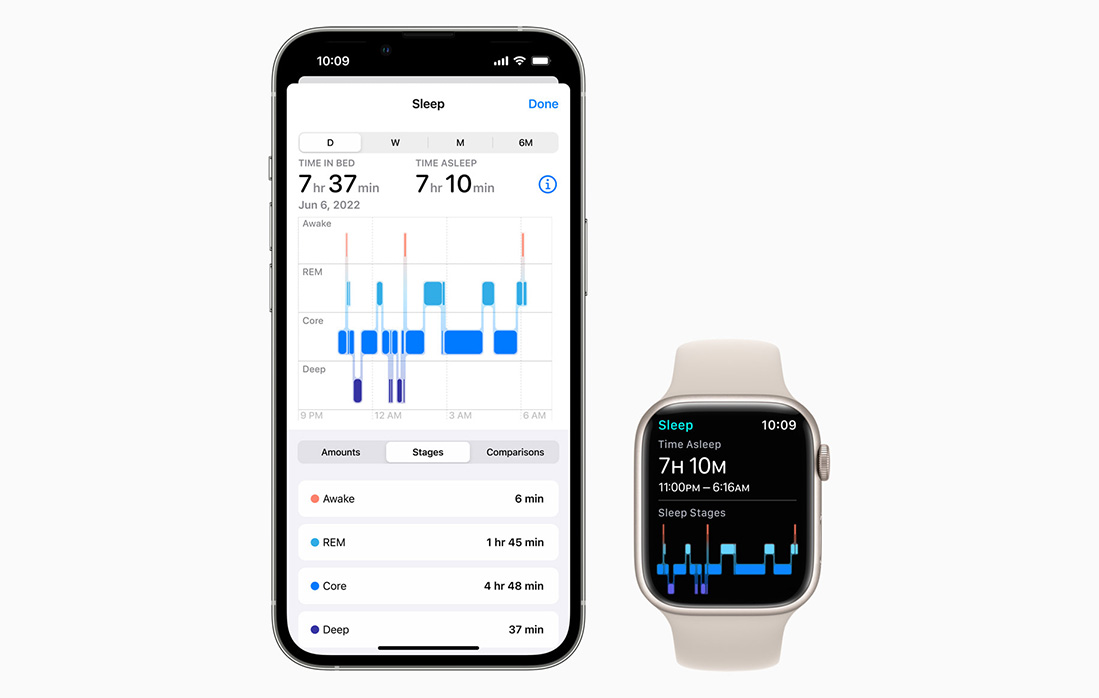
To truly appreciate the data provided by the Apple Watch, users must understand how Core sleep interacts with the other two primary stages: REM and Deep sleep. Each stage plays a distinct role in the “Tech-Bio” feedback loop that modern wearables seek to quantify.
The Role of REM in Cognitive Health
Rapid Eye Movement (REM) sleep is often associated with dreaming. On your Apple Watch chart, REM is usually highlighted separately from Core sleep because of its unique physiological markers: increased brain activity, faster breathing, and temporary muscle paralysis. While Core sleep handles the “maintenance,” REM is the “processor.” It is crucial for emotional regulation, creative problem-solving, and complex memory integration. A lack of balance between Core and REM can often lead to “brain fog,” even if the total duration of sleep seems adequate.
Deep Sleep and Physical Restoration
Deep sleep, or Slow Wave Sleep (SWS), is the most physically restorative stage. During this time, the body releases growth hormones, repairs tissues, and bolsters the immune system. The Apple Watch identifies Deep sleep when heart rate significantly slows and movement is virtually non-existent. While Core sleep prepares the body, Deep sleep does the heavy lifting of physical recovery. Understanding the ratio between Core and Deep sleep can help athletes and high-performance individuals determine if they are adequately recovering from physical strain.
How to Analyze Your Sleep Data in the Health App
Collecting data is only the first step; the true value of the Apple Watch lies in the interpretation of that data through the iOS Health app. The interface is designed to provide both a snapshot of the previous night and a long-term view of health trends.
Interpreting the Sleep Stage Charts
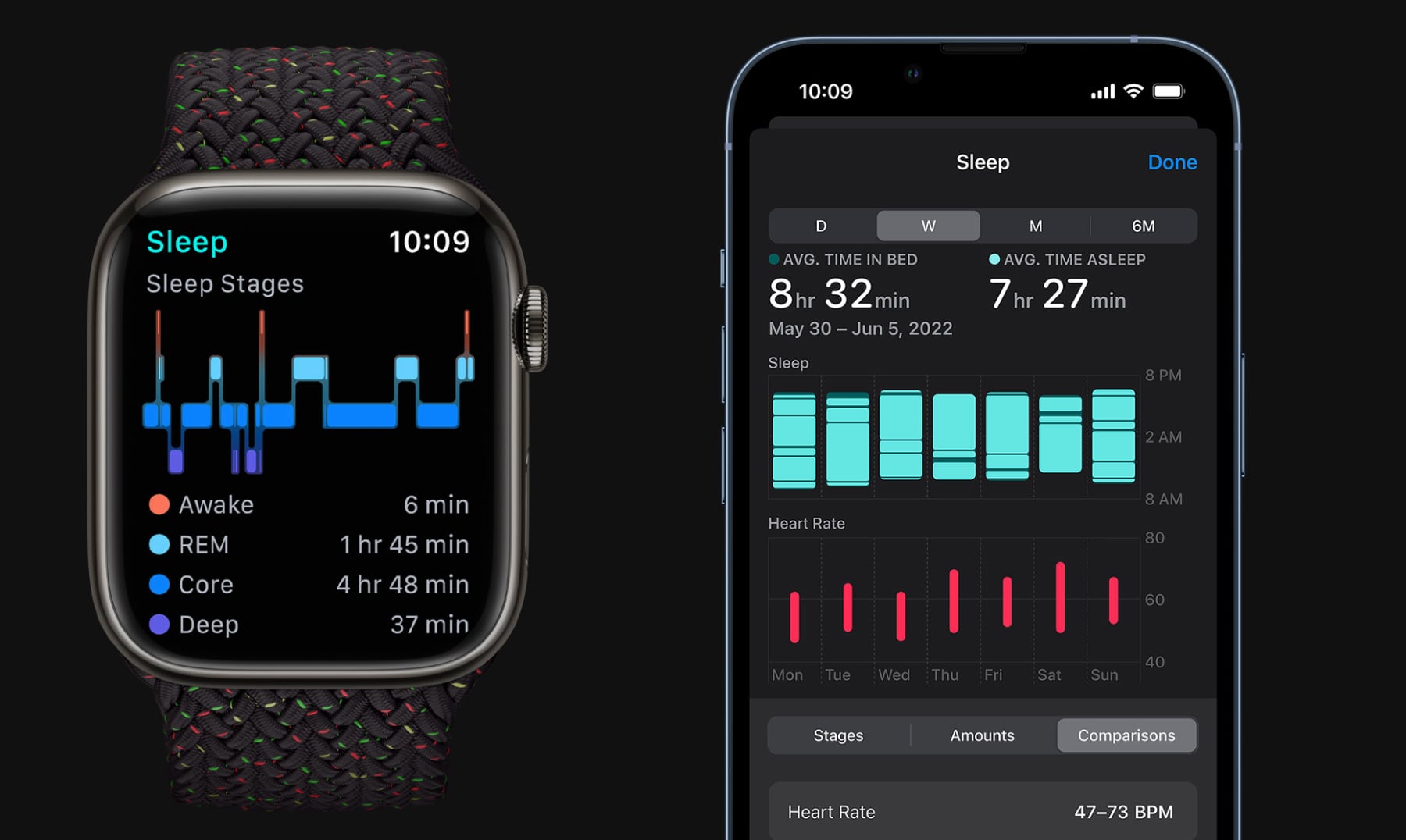
When you open the Health app on your iPhone and navigate to the “Sleep” section, you are presented with a multi-colored bar graph. The “Core” section is usually represented by a specific shade of blue. By tapping on the “Stages” tab, you can see exactly when you transitioned from Core to REM or Deep sleep. Frequent interruptions—represented by thin gaps in the bars—might indicate that your Core sleep is being fragmented by external factors like noise, temperature, or caffeine consumption.
Identifying Patterns and Improving Sleep Hygiene
The “Trends” feature in the Health app is perhaps the most powerful tool for tech-savvy users. By looking at your Core sleep over a month or six months, you can see how lifestyle changes affect your rest. For instance, if you notice a decrease in Core sleep duration following the introduction of a late-night screen habit, the data provides a clear technological incentive to adjust your behavior. The integration of “Sleep Goals” and “Wind Down” shortcuts further leverages the Apple ecosystem to push users toward more consistent sleep schedules.
The Accuracy and Future of Wearable Sleep Technology
As we look toward the future, the question of accuracy remains paramount. How does a consumer-grade device like the Apple Watch compare to a multi-million dollar sleep laboratory?
Apple’s Algorithms vs. Clinical Sleep Labs
Apple has invested heavily in the “Apple Heart and Movement Study,” one of the largest longitudinal studies of its kind. By comparing Apple Watch data with polysomnography (PSG) results from thousands of participants, Apple has refined its algorithms to be surprisingly accurate for a wrist-worn device. While it cannot measure brain waves (EEG) directly, its ability to proxy those stages via heart rate and motion is at the forefront of wearable technology. For the average user, the Apple Watch provides a level of insight that was once only available in a clinical setting.
Leveraging AI for Better Sleep Insights
The future of sleep tracking on the Apple Watch likely involves even deeper integration of Artificial Intelligence. We are moving toward a period where the device won’t just tell you how much Core sleep you got, but will also predict how your sleep will affect your cognitive performance the next day. Through AI-driven analysis, the Apple Watch could eventually suggest personalized “optimal” bedtimes based on your previous month’s Core and Deep sleep ratios, effectively acting as a digital sleep coach.
By understanding the technical nuances of Core sleep, users can move beyond surface-level metrics and truly harness the power of the technology on their wrists. The Apple Watch doesn’t just track time; it provides a window into the complex, biological machinery that sustains us, one Core sleep cycle at a time.
aViewFromTheCave is a participant in the Amazon Services LLC Associates Program, an affiliate advertising program designed to provide a means for sites to earn advertising fees by advertising and linking to Amazon.com. Amazon, the Amazon logo, AmazonSupply, and the AmazonSupply logo are trademarks of Amazon.com, Inc. or its affiliates. As an Amazon Associate we earn affiliate commissions from qualifying purchases.