
In the world of personal finance, few concepts carry as much weight or promise as compounding. Often referred to as the “eighth wonder of the world” by Albert Einstein, compounding is the process where the value of an investment increases because the earnings on an investment—both capital gains and interest—earn interest as time passes. It is the fundamental mechanism that allows small, consistent contributions to transform into significant fortunes.
Understanding compounding is not merely a mathematical exercise; it is a shift in mindset. It requires moving away from the desire for instant gratification and toward a long-term perspective. Whether you are a novice investor or a seasoned professional, mastering the principles of compounding is the most reliable path to achieving financial independence.
The Mechanics of Compound Interest: How the Snowball Effect Works
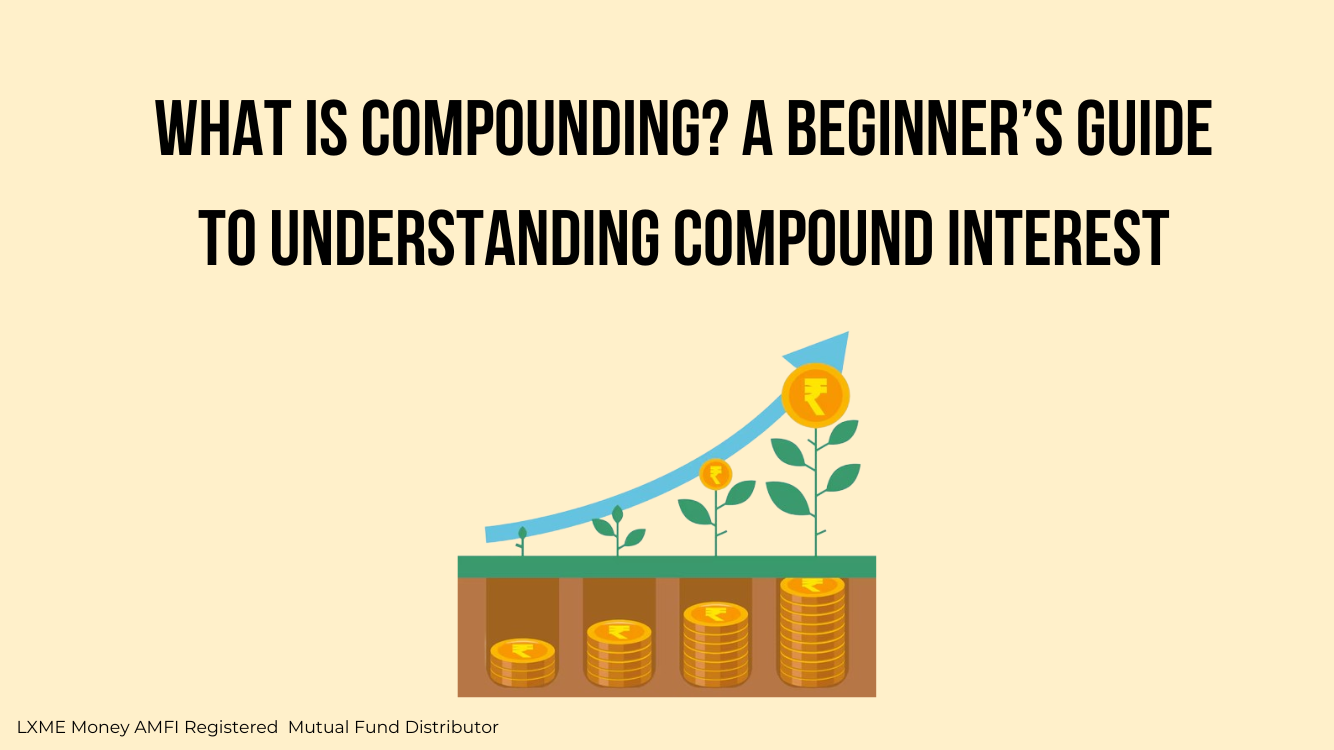
At its core, compounding is “interest on interest.” While simple interest is calculated only on the principal amount of a loan or deposit, compound interest is calculated on the principal amount plus the accumulated interest of previous periods. This creates a “snowball effect,” where your wealth grows at an accelerating rate over time.
The Difference Between Simple and Compound Interest
To appreciate the power of compounding, one must first distinguish it from simple interest. Simple interest is linear. If you invest $10,000 at a 5% simple interest rate, you earn $500 every year. After 20 years, you have your original $10,000 plus $10,000 in interest ($500 x 20), totaling $20,000.
In contrast, compound interest is exponential. Using the same $10,000 at a 5% interest rate compounded annually, you earn $500 in the first year. However, in the second year, you earn 5% on $10,500, which is $525. By the twentieth year, your total would be approximately $26,533. The “extra” $6,533 is the result of your interest earning its own interest. Over longer horizons, this gap widens dramatically.
The Mathematical Formula Behind the Magic
While modern financial calculators and software handle the math for us, understanding the formula provides clarity on the variables we can control. The standard formula for compound interest is:
A = P (1 + r/n)^(nt)
Where:
- A is the final amount.
- P is the principal balance (the initial investment).
- r is the annual interest rate (decimal).
- n is the number of times interest is compounded per year.
- t is the number of years the money is invested.
The presence of the exponent t (time) is what makes the formula so potent. It signifies that time is the most influential factor in the equation, outweighing even the interest rate or the initial principal in many scenarios.
The Rule of 72: A Shortcut to Predicting Growth
For those who want a quick way to estimate how long it will take for their money to double through compounding, the “Rule of 72” is an invaluable tool. By dividing 72 by your expected annual rate of return, you can determine the approximate number of years it will take for your investment to double. For example, if you expect an 8% return, your money will double roughly every 9 years (72 / 8 = 9). This mental shortcut helps investors visualize the long-term impact of different yield environments.
The Essential Ingredients for Compounding Success
Compounding does not happen in a vacuum. It requires a specific set of conditions to reach its full potential. Without these ingredients, the engine of wealth creation can stall or fail to start altogether.
Time: Your Greatest Financial Asset
The most critical component of compounding is time. Because growth is exponential, the most significant gains occur in the final years of an investment period. This is why starting early is more important than starting with a large sum of money.
Consider two investors: Investor A starts at age 25, investing $500 a month for 10 years and then stops entirely, leaving the money to grow at 7% until age 65. Investor B starts at age 35 and invests $500 a month every single month for 30 years until age 65 at the same 7% rate. Despite Investor B contributing three times as much money over a much longer period, Investor A will likely end up with more wealth because their money had an extra decade to compound.
Consistency and the Reinvestment of Returns
Compounding requires that you leave the “engine” alone. This means reinvesting all dividends, interest, and capital gains rather than withdrawing them. In the context of the stock market, many companies pay dividends to shareholders. If those dividends are taken as cash and spent, the compounding cycle is broken for that portion of the capital. By using a Dividend Reinvestment Plan (DRIP), investors ensure that every cent earned is immediately put back to work, buying more shares which will, in turn, produce more dividends.
The Impact of Compounding Frequency
The frequency with which interest is compounded—daily, monthly, quarterly, or annually—can significantly affect the final outcome. The more frequently interest is added to the balance, the faster the balance grows. For instance, a savings account that compounds daily will yield a slightly higher effective annual rate than one that compounds annually, even if the nominal interest rate is the same. While the differences may seem negligible in the short term, they become substantial over decades.
Compounding in Different Financial Contexts
While often associated with savings accounts, the principle of compounding applies across the entire spectrum of finance, from the stock market to business scaling and debt management.
Stock Market Investing and Equity Growth
In the stock market, compounding manifests through both price appreciation and dividend reinvestment. As a company grows, its share price ideally increases. If you hold that stock, your gains are “compounded” as the percentage growth applies to an increasingly higher share price. Furthermore, the total return of the S&P 500 historically owes a massive portion of its growth to the reinvestment of dividends. Over long periods, reinvested dividends can account for nearly half of the total returns of the equity market.
Real Estate and Rental Income
Real estate offers a unique form of compounding. As property values increase (capital appreciation), the equity in the home grows. Simultaneously, if the property is a rental, the income generated can be used to pay down the mortgage or reinvested into property improvements or additional acquisitions. This “multi-layer” compounding—where you have both asset appreciation and income generation—is a cornerstone of building real estate empires.
The “Dark Side”: Compounding Debt
It is vital to recognize that compounding is a neutral force; it works just as effectively against you as it does for you. High-interest debt, such as credit card balances, compounds aggressively. If you only pay the minimum balance, the remaining interest is added to the principal, and you begin paying interest on your interest. This is how a small balance can spiral into an unmanageable financial burden. Understanding compounding is the first step toward avoiding the debt traps that keep many in a cycle of poverty.
Psychological Hurdles and Strategic Pitfalls
If compounding is so powerful and mathematically simple, why isn’t everyone wealthy? The answer lies in human psychology and the practical realities of the financial markets.
The “Early Years” Plateau
The greatest challenge of compounding is that it is incredibly boring and seemingly ineffective in the beginning. For the first several years, the growth of an investment looks almost linear. It takes a long time for the “curve” of the exponential graph to start turning upward. Many investors become discouraged during this “plateau” phase and abandon their strategy, seeking “faster” ways to make money, often losing capital in the process. Discipline is the ability to stay the course when the results are not yet visible.
The Eroding Effect of Fees and Inflation
Two of the greatest enemies of compounding are management fees and inflation. If your investment returns 7% but you are paying 2% in advisory fees and expense ratios, your compounding rate is effectively slashed to 5%. Over 30 years, that 2% difference can result in losing hundreds of thousands of dollars in potential wealth. Similarly, inflation reduces the purchasing power of your compounded gains. To truly build wealth, one must seek returns that comfortably outpace the rate of inflation after all fees are accounted for.
Emotional Discipline and Market Volatility
Compounding requires an uninterrupted timeline. However, financial markets are volatile. During a market crash, the temptation to sell and “preserve” what is left is high. Selling during a downturn not only locks in losses but also resets the compounding clock. To benefit from compounding, an investor must develop the emotional fortitude to ignore short-term market fluctuations and maintain their positions through full market cycles.
Conclusion: Starting Your Compounding Journey
Compounding is the most accessible tool for wealth creation available to the average person. It does not require a high IQ, a massive inheritance, or a lucky break in the lottery. Instead, it requires three things: a small amount of capital, a disciplined plan, and, most importantly, the patience to let time do the heavy lifting.
The best time to start taking advantage of compounding was ten years ago; the second best time is today. By understanding the mechanics of interest-on-interest, choosing the right financial vehicles, and avoiding the pitfalls of fees and emotional trading, you can harness the power of the eighth wonder of the world to secure your financial future. Whether you are saving for retirement, a child’s education, or ultimate financial freedom, compounding is the engine that will get you there.
aViewFromTheCave is a participant in the Amazon Services LLC Associates Program, an affiliate advertising program designed to provide a means for sites to earn advertising fees by advertising and linking to Amazon.com. Amazon, the Amazon logo, AmazonSupply, and the AmazonSupply logo are trademarks of Amazon.com, Inc. or its affiliates. As an Amazon Associate we earn affiliate commissions from qualifying purchases.