
In the world of modern finance, few metrics are monitored with as much fervor and scrutiny as the All-Time High (ATH) of Bitcoin (BTC). For investors, analysts, and the general public, the ATH represents more than just a numerical milestone; it is a psychological barrier, a testament to the asset’s adoption, and a critical data point in the cycle of global wealth distribution. Understanding what the Bitcoin ATH is, how it is reached, and what it signifies for your personal portfolio is essential for anyone navigating the volatile waters of digital asset investing.

Defining the All-Time High (ATH) in the Crypto Landscape
The term “All-Time High” refers to the highest historical price a specific asset has ever reached in a particular currency, usually the US Dollar. In the context of Bitcoin, the ATH is a moving target that serves as the definitive benchmark for the asset’s success and market penetration. Unlike traditional stocks, which operate within set market hours, Bitcoin trades 24/7 across hundreds of global exchanges, making the “exact” ATH a subject of slight variation depending on the data source used.
What Does ATH Actually Mean for Investors?
For the retail investor, the ATH is a double-edged sword. On one hand, it validates the long-term “HODL” strategy, proving that the asset has the capacity to recover from previous “crypto winters” and reach new levels of valuation. On the other hand, an ATH often triggers a wave of “price discovery,” a phase where the asset moves into uncharted territory without historical resistance levels to guide its trajectory. Financially, reaching an ATH often results in 100% of current holders being “in the money,” meaning every single person who owns Bitcoin at that moment is technically in a state of profit, provided they haven’t sold.
The Historical Context of BTC Price Milestones
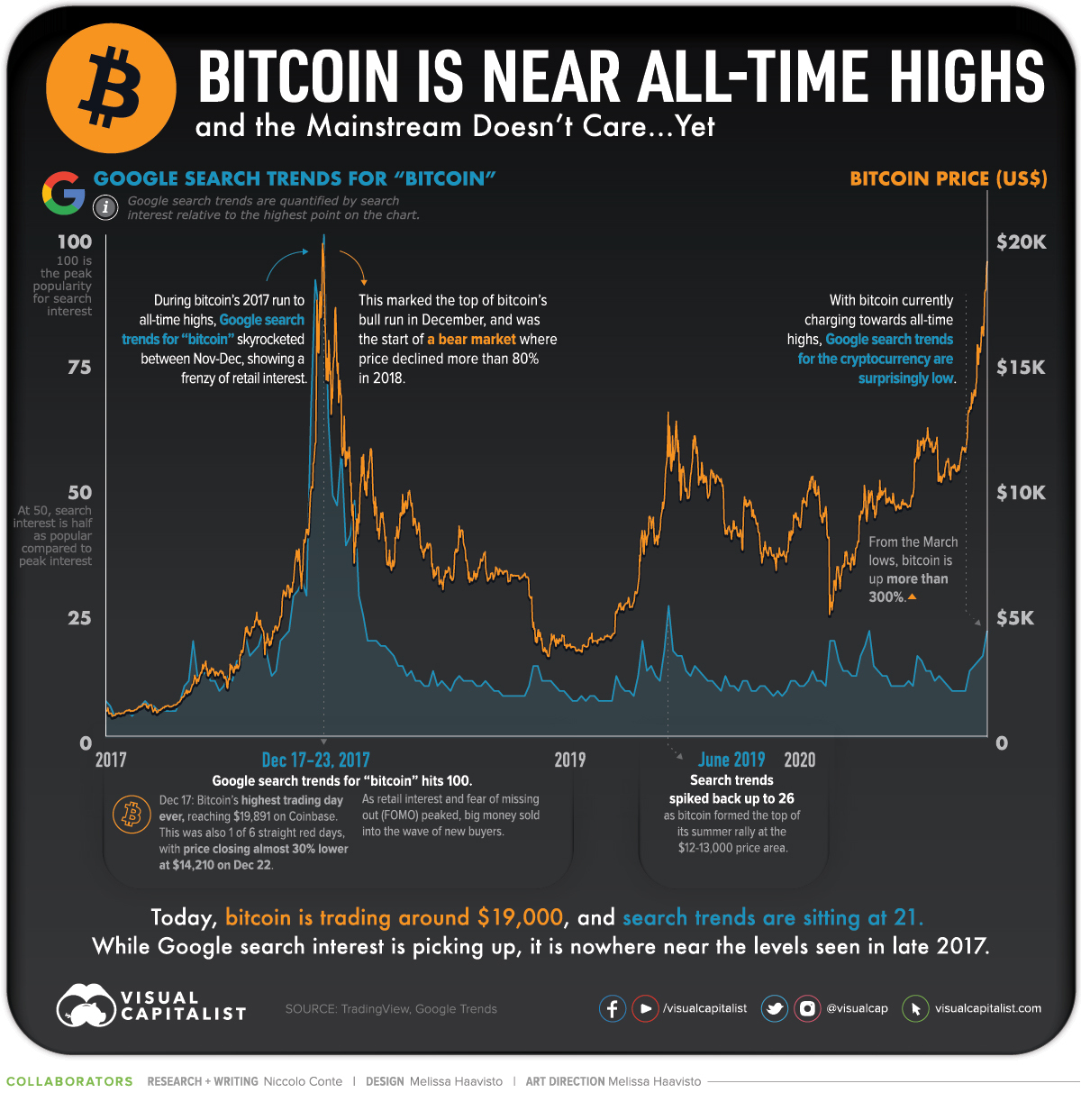
Bitcoin’s journey to its various all-time highs is a masterclass in market psychology. From its humble beginnings in 2009, it took years to reach the $1,000 mark. The 2017 bull run, which saw Bitcoin surge toward $20,000, was the first time the asset truly entered the mainstream financial consciousness. This was followed by the 2021 peaks, where Bitcoin first shattered $64,000 and later $69,000, driven by institutional interest and pandemic-era liquidity. Most recently, in early 2024, Bitcoin reached a new ATH exceeding $73,700, fueled by the landmark approval of Spot Bitcoin ETFs in the United States. Each peak is characterized by higher floors and a broader base of investors.
Factors That Drive Bitcoin to New Peaks
Reaching an all-time high is rarely a random occurrence. In the financial sector, these peaks are the result of a “perfect storm” of supply-side constraints and demand-side surges. Bitcoin’s unique programmatic monetary policy makes it fundamentally different from fiat currencies, which can be printed at will by central banks.
Institutional Adoption and the Impact of Spot ETFs
Perhaps the most significant driver of the 2024 all-time high was the institutionalization of Bitcoin. The approval of Spot Bitcoin Exchange-Traded Funds (ETFs) by the SEC allowed massive financial institutions like BlackRock and Fidelity to offer Bitcoin exposure to traditional brokerage accounts. This “wall of money” created a massive demand shock. When multi-trillion-dollar asset managers begin allocating even 1% of their portfolios to Bitcoin, the buying pressure outweighs the available liquid supply on exchanges, inevitably driving the price toward new highs.
The Role of the Bitcoin Halving
Every four years, the Bitcoin network undergoes an event known as “the halving.” This is a pre-programmed reduction in the reward that miners receive for processing transactions, effectively cutting the new supply of Bitcoin entering the market by 50%. Historically, the halving has been a precursor to a new ATH. From an economic perspective, the halving creates a supply squeeze. If demand remains constant or increases while the rate of new supply drops, the laws of economics dictate that the price must rise. This cyclicality is a core component of Bitcoin’s identity as “digital gold.”
Macroeconomic Influences and Inflation Hedging
Bitcoin does not exist in a vacuum; it is deeply tied to the global macro economy. When central banks engage in quantitative easing or maintain low-interest rates, the supply of fiat currency increases, leading to fears of inflation and currency debasement. In such environments, investors seek “hard assets” with a fixed supply. Bitcoin’s hard cap of 21 million coins makes it an attractive hedge against the eroding purchasing power of the dollar. As global debt levels rise, the “store of value” thesis for Bitcoin strengthens, pushing its price to new heights.

The Psychology of Investing at the Top
The financial implications of an all-time high are heavily influenced by human emotion. Behavioral finance plays a massive role in how Bitcoin moves once it nears its previous records. For the disciplined investor, an ATH is a time for caution; for the novice, it is often a time of irrational exuberance.
Dealing with FOMO (Fear Of Missing Out)
When Bitcoin breaks its previous ATH, it often dominates financial news headlines. This visibility triggers FOMO—the fear of missing out on future gains. Retail investors who were hesitant to buy when the price was low often rush into the market at the peak, fearing they will never get another chance. This influx of “late money” can push the price even higher in a vertical blow-off top, but it also leaves these investors vulnerable to significant pullbacks. Understanding that the market moves in cycles is the best defense against FOMO-driven financial decisions.
The Risks and Realities of “Buying the Top”
Investing at or near an ATH carries inherent risks. Markets rarely move in a straight line, and periods of rapid price appreciation are almost always followed by corrections or “mean reversion.” Those who buy at the peak may have to endure “drawdowns”—periods where the market value of their investment is lower than their entry price—for months or even years. However, history has shown that for Bitcoin, the “top” of one cycle has eventually become the “bottom” or “mid-range” of the next. The risk, therefore, is not necessarily the price at entry, but the investor’s time horizon and liquidity needs.
Strategic Approaches to BTC Volatility
For those looking to build wealth through Bitcoin, managing the volatility associated with all-time highs requires a structured investment strategy. Moving away from speculative gambling and toward professional financial management is key to long-term success.
Utilizing Dollar-Cost Averaging (DCA)
One of the most effective strategies for mitigating the risk of buying at an ATH is Dollar-Cost Averaging. Instead of investing a lump sum at a single price point, an investor commits to buying a fixed dollar amount of Bitcoin at regular intervals (e.g., weekly or monthly), regardless of the price. This approach smoothes out the purchase price over time. When the price is at an ATH, your fixed dollar amount buys less BTC; when the price crashes, it buys more. Over the long term, DCA reduces the emotional stress of timing the market and has historically proven to be a winning strategy for Bitcoin investors.
Disciplined Profit-Taking and Portfolio Rebalancing
While “HODLing” is a popular meme, professional wealth management often involves taking profits. When Bitcoin reaches a new ATH and becomes a disproportionately large part of an investment portfolio, it may be prudent to sell a small percentage to recoup the initial investment or to rebalance into other asset classes. This “de-risking” strategy ensures that an investor captures realized gains, providing a financial cushion if the market enters a cyclical downturn. Setting predetermined “exit targets” helps remove the emotion from the selling process.
The Future Outlook: Beyond the Current ATH
As Bitcoin continues to mature as a financial asset, the significance of each all-time high changes. We are transitioning from an era of pure speculation into an era of global settlement and institutional reserve backing.
Bitcoin as a Long-term Store of Value
The ultimate goal for many Bitcoin advocates is not to trade it back for fiat currency at an ATH, but to use it as a permanent store of wealth. As the market capitalization of Bitcoin grows, its volatility is expected to decrease, eventually mimicking the price stability of gold but with the added benefits of digital portability and divisibility. In this context, an ATH is merely a milestone on the path toward Bitcoin becoming a foundational layer of the global financial system.
Conclusion: Navigating the Peaks
An All-Time High in Bitcoin is a moment of celebration for the “true believers” and a moment of intense study for the financial analyst. It represents the intersection of technology, scarcity, and a global shift in how we perceive value. For the individual investor, the ATH should be viewed through the lens of a broader financial plan. Whether you are looking to enter the market for the first time or are considering taking profits on a long-held position, understanding the drivers behind the price and the psychological traps of the peak is essential. Bitcoin’s journey is far from over, and while the ATHs of the past seemed insurmountable at the time, they have consistently served as the foundation for the growth of tomorrow.