
In the ever-evolving landscape of technology, where information is abundant and the ability to find it efficiently is paramount, certain algorithms and methodologies stand out as foundational. Among these is BM25, a name that might sound technical but underpins much of the search functionality we rely on daily. Whether you’re a tech enthusiast, a marketer striving for better brand visibility, or an entrepreneur looking to optimize online income, understanding BM25 can offer valuable insights into how information is retrieved and ranked. This article will delve into what BM25 is, its significance in the tech world, and its broader implications across branding and even personal finance.

The Technical Heart of Search: Demystifying BM25
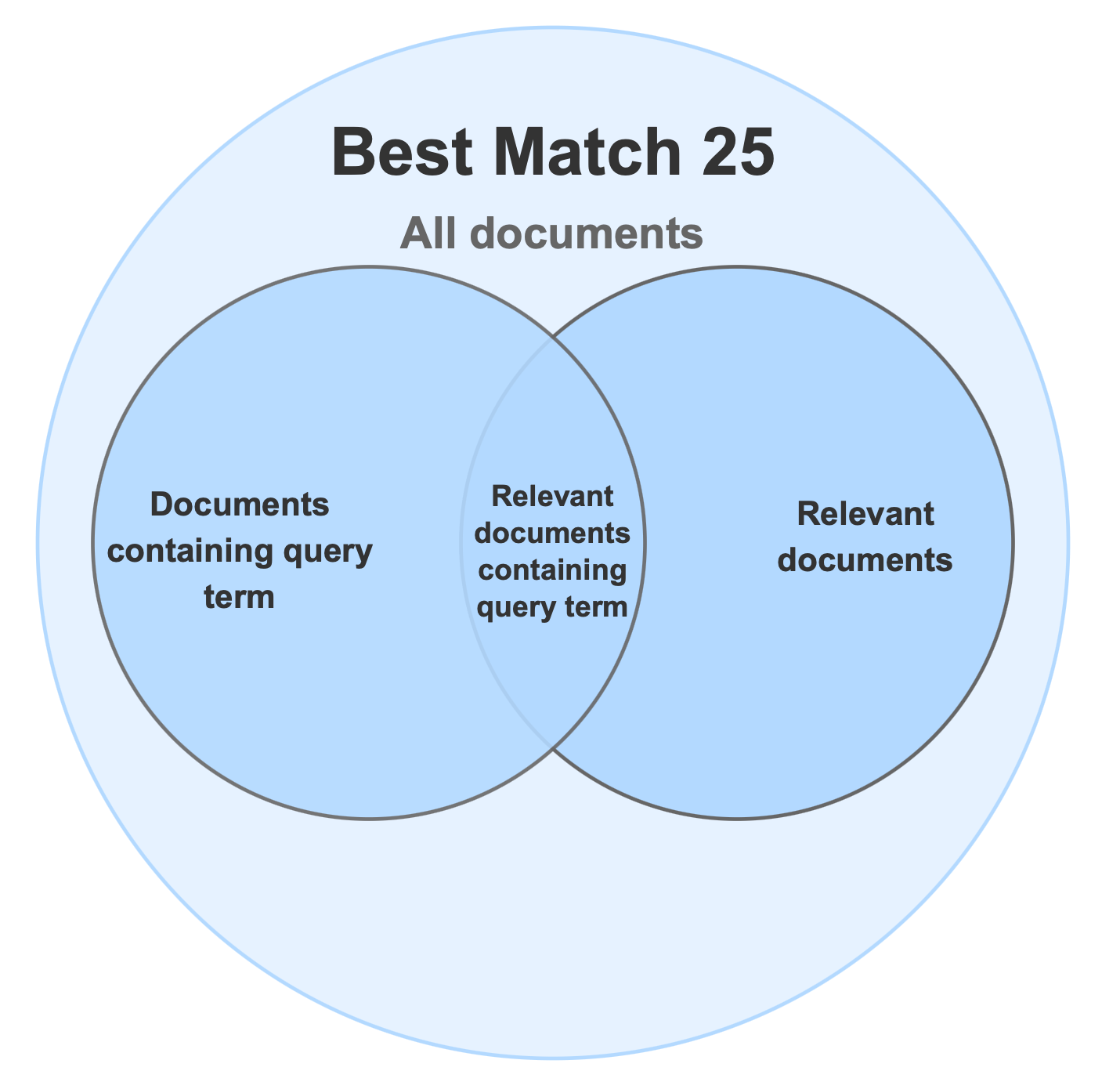
At its core, BM25 (Best Matching 25) is a ranking function used by search engines and information retrieval systems to estimate the relevance of documents to a given search query. Developed by Stephen E. Robertson and Karen Spärck Jones in the late 1970s and early 1980s, BM25 has become a de facto standard and a powerful baseline for modern search algorithms. Its enduring relevance speaks volumes about its effectiveness in balancing key factors that contribute to a document’s perceived importance in response to a user’s search intent.
How BM25 Works: The Core Components
To truly grasp “what is BM25,” we need to break down its fundamental components. Unlike simpler keyword-matching techniques, BM25 incorporates several sophisticated elements to provide more nuanced and accurate results.
Term Frequency (TF)
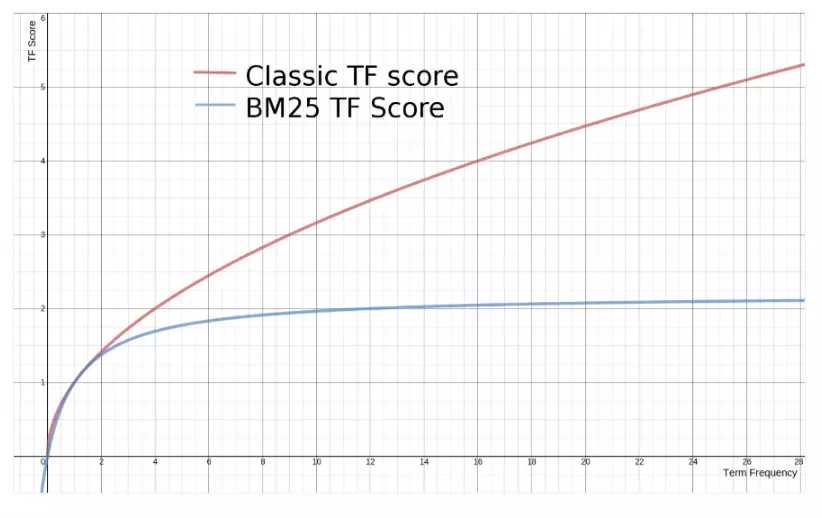
The first crucial element is Term Frequency (TF). This measures how often a specific search term appears within a document. Intuitively, a document that mentions a search term multiple times is likely to be more relevant than one that mentions it only once. However, BM25 refines this. It recognizes that beyond a certain point, the additional occurrences of a term don’t necessarily increase relevance proportionally. This is where TF-IDF (Term Frequency-Inverse Document Frequency), a related concept that BM25 builds upon, comes into play. While BM25 isn’t strictly TF-IDF, it borrows the idea of weighing terms based on their prevalence within a document and across a corpus of documents. BM25, however, uses a non-linear saturation function for term frequency. This means that as the term frequency increases, its contribution to the relevance score starts to plateau. For example, if a document mentions “AI tools” 20 times, it’s highly relevant. But if it mentions it 200 times, the incremental benefit of those extra 180 mentions is diminishing.
Inverse Document Frequency (IDF)
The second key component is the Inverse Document Frequency (IDF). This component addresses the rarity of a term across the entire collection of documents (the corpus). Terms that appear in many documents are less discriminative and therefore less informative. Conversely, rare terms are more likely to be specific to a particular topic and thus highly indicative of relevance. The IDF of a term is calculated based on the total number of documents and the number of documents containing the term. The formula typically involves a logarithm to scale down the impact of very common or very rare terms. For instance, a word like “the” or “a” would have a very low IDF because it appears in almost every document. A term like “quantum computing algorithm” would likely have a very high IDF, making documents containing it particularly valuable for a query about that specific topic.
Document Length Normalization
The third critical aspect of BM25 is document length normalization. Longer documents naturally have a higher chance of containing any given search term multiple times. Without normalization, a lengthy document might unfairly rank higher simply because it’s long, even if its content isn’t as precisely focused on the query as a shorter, more targeted document. BM25 accounts for this by penalizing longer documents. This ensures that the ranking is based on the density of relevant terms rather than just their raw count in a verbose piece of content. This normalization is typically achieved by dividing the TF component by a factor related to the document’s length, often in conjunction with average document length across the corpus.
The “25” in BM25
The “25” in BM25 refers to parameter k1, which is a hyperparameter that controls the impact of term frequency. BM25 is actually a family of functions, and the specific formulation often used, BM25F, is a probabilistic model. The parameter k1, typically set to a value around 1.5 to 2.0 (hence the “25” is a simplified representation in some contexts, though the original formulation and common implementations involve the parameter k1 and another parameter, b, which controls document length normalization), determines how quickly the term frequency’s contribution saturates. A higher k1 means term frequency has a greater impact up to a higher count before saturation. The parameter ‘b’, typically set to 0.75, controls the extent to which document length affects the score. A ‘b’ value of 1 means full length normalization, while a ‘b’ value of 0 means no length normalization.
Why is BM25 Still Relevant?
BM25’s continued prominence in the tech world, particularly in areas like search engine optimization (SEO), e-commerce product search, and internal knowledge base systems, is due to several factors:
- Effectiveness: It consistently outperforms simpler ranking models and provides a strong baseline against which more complex algorithms are measured.
- Simplicity and Efficiency: While sophisticated, it’s computationally less demanding than some of the newer, deep-learning-based ranking models. This makes it practical for large-scale applications.
- Interpretability: The components of BM25 (TF, IDF, length normalization) are relatively easy to understand and debug, making it accessible for developers and data scientists.
- Adaptability: It can be adapted and extended to handle more complex scenarios, such as queries with multiple terms or the inclusion of metadata.
BM25’s Impact: Beyond Search Boxes
While BM25’s primary application is in information retrieval, its influence extends far beyond the basic search bar. Understanding how it works can provide valuable strategic insights for various professional domains.
Brand Strategy and Marketing: Enhancing Discoverability
For brands and marketers, the principles behind BM25 are directly relevant to Brand Strategy and Marketing. In an age where consumers find products and services online, discoverability is key.
Optimizing for Search: The BM25 Lens
Search engines, whether they are general web search engines like Google or specialized search functions within platforms like Amazon or your company’s website, all employ ranking algorithms. While the exact algorithms are proprietary and often incorporate machine learning, the foundational principles of relevance scoring, similar to BM25, are still at play.
- Content Relevance: For a brand, this means creating content that is not only informative and engaging but also uses keywords that potential customers are likely to search for. Understanding TF, BM25 suggests that consistently using relevant terms naturally within your content will improve its ranking. However, stuffing keywords without regard for readability or user experience will likely be detrimental in modern search, as algorithms also consider user engagement signals.
- Authority and Uniqueness (IDF): Just as rare terms are more valuable in BM25, unique selling propositions (USPs) and specialized knowledge offered by a brand become its “rare terms.” Content that addresses niche queries or provides unique insights will rank higher for those specific searches, establishing the brand as an authority. This is where developing strong Personal Branding or Corporate Identity through specialized content can be highly effective.
- Conciseness and Clarity: The document length normalization aspect of BM25 subtly highlights the importance of clear, concise communication. While long-form content can be valuable, it needs to deliver value efficiently. Marketers and content creators should aim for well-structured content where relevant information is easily accessible, rather than burying it in excessive verbiage. This also applies to product descriptions on e-commerce sites – clear, keyword-rich descriptions that are not overly verbose are more likely to rank well.
- Reputation and Backlinks: While not directly part of the BM25 formula, the concept of “authority” in modern search is heavily influenced by external signals like backlinks and domain reputation. These act as a form of “document validation” or “term endorsement” across the broader web, akin to how IDF identifies terms that are significant within a corpus.
Case Studies in Discoverability
Consider an e-commerce brand selling artisanal coffee. If a customer searches for “single-origin Ethiopian Yirgacheffe coffee beans,” a product listing or blog post that frequently and naturally mentions these exact terms, while also being well-written and detailing the coffee’s unique origin and flavor profile (high TF, high IDF for the specific terms), is likely to rank higher than a generic “coffee beans” page that only mentions “Ethiopian” once. The BM25 principles guide the creation of content that satisfies the search engine’s need to match query terms to document content effectively.
Personal Finance and Online Income: Leveraging Information for Profit
The principles of relevance and discoverability that BM25 embodies also have practical applications in the realm of Money, particularly for individuals looking to increase their Online Income or manage their Personal Finance.
Optimizing Side Hustles and Online Ventures
- Niche Identification: Just as BM25 prioritizes rare terms, identifying a specific niche for a side hustle or online business is crucial. Instead of trying to compete in a broad market, focusing on a unique product or service (a “rare term” in the market’s lexicon) can lead to higher visibility and better customer acquisition.
- Content Creation for Income: For bloggers, affiliate marketers, or creators selling digital products, creating content that ranks well for relevant search queries is essential for driving traffic and generating income. Understanding the fundamentals of how search engines identify relevant content, influenced by BM25, can help optimize blog posts, product descriptions, and even YouTube video titles for better search performance.
- Financial Tool Comparison: When individuals search for financial tools or investment platforms, they are looking for the most relevant and trustworthy options. Websites that provide in-depth, well-researched comparisons, using precise terminology related to financial products and services, are more likely to be found by users actively seeking such information. This is directly analogous to how BM25 ranks documents based on the accuracy and density of relevant terms. The “document length normalization” principle can also be seen as favoring clear, actionable advice over overly verbose or jargon-filled financial explanations.
Smart Investing in Information
Understanding algorithms like BM25, even at a high level, empowers individuals to make smarter decisions about how they consume and create information online. It encourages a focus on quality, specificity, and clarity, principles that can lead to better outcomes whether you’re researching an investment, building a personal brand, or simply trying to find the best deal on a product.
The Future of Search and BM25
While the tech industry is constantly pushing the boundaries with advanced AI and machine learning models, BM25’s legacy and underlying principles remain influential. Newer algorithms often build upon or incorporate aspects of BM25, leveraging its proven ability to score relevance effectively. For developers and tech enthusiasts, understanding BM25 is not just about historical knowledge; it’s about grasping the bedrock upon which modern search and information retrieval systems are built.
As AI continues to advance, we will see increasingly sophisticated ways to understand user intent and document meaning. However, the fundamental challenge of matching user needs with available information will persist. Algorithms that can efficiently and accurately measure the “match” between a query and a document, much like BM25, will remain indispensable. Whether you’re building an app, refining a marketing campaign, or managing your finances, a foundational understanding of how information is organized and retrieved can provide a significant competitive advantage. BM25, in its elegant simplicity and enduring effectiveness, serves as a powerful reminder of the core principles that drive the digital information age.
aViewFromTheCave is a participant in the Amazon Services LLC Associates Program, an affiliate advertising program designed to provide a means for sites to earn advertising fees by advertising and linking to Amazon.com. Amazon, the Amazon logo, AmazonSupply, and the AmazonSupply logo are trademarks of Amazon.com, Inc. or its affiliates. As an Amazon Associate we earn affiliate commissions from qualifying purchases.