
The phrase “Bah Humbug” is arguably the most famous expression of cynicism in the English language. Immortalized by Ebenezer Scrooge in Charles Dickens’ 1843 novella A Christmas Carol, it is often dismissed as the grumbling of a holiday-hating miser. However, when viewed through the lens of personal finance and economic history, “Bah Humbug” represents something far more complex: a profound skepticism toward the perceived “humbug”—or fraudulence—of societal spending patterns and the performative nature of commercialized generosity.
In today’s financial landscape, understanding the “Bah Humbug” philosophy is less about being a curmudgeon and more about mastering the psychology of capital management. It is a call to look past the marketing “humbug” of the modern world and focus on the cold, hard realities of fiscal health, long-term investing, and the rejection of debt-fueled consumerism.
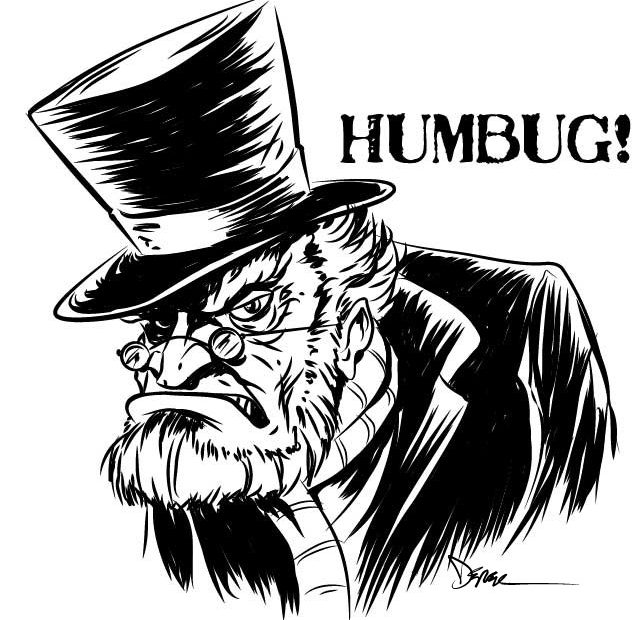
The Economic Roots of Bah Humbug: A Financial Profile of Ebenezer Scrooge
To understand the financial implications of “Bah Humbug,” one must first analyze the character of Ebenezer Scrooge not as a literary villain, but as a byproduct of the Industrial Revolution’s fiscal pressures. Scrooge was a man of business, a financier whose life revolved around “counting houses” and “ledgers.”
The Industrial Revolution and Capital Accumulation
During the mid-19th century, the world was transitioning into a capital-heavy economy. For individuals like Scrooge, wealth was not a means to buy luxury; it was a metric of security and power in an era without social safety nets. When Scrooge uttered “Bah Humbug” in response to holiday cheer, he was often reacting to the economic irrationality he saw around him. To a man focused on the compounding of interest and the preservation of capital, the idea of pausing production and spending beyond one’s means for a single day of revelry felt like a financial scam—a “humbug.”
The Psychology of the Miser vs. The Strategic Investor
There is a fine line between being a miser and being a strategic saver. Scrooge represents the extreme end of the spectrum: wealth accumulation without utility. From a modern financial perspective, Scrooge’s error wasn’t his frugality, but his failure to recognize the “ROI” (Return on Investment) of social capital and human well-being. However, his skepticism toward “humbug” serves as a precursor to modern value investing. Much like Warren Buffett or Charlie Munger, the “Bah Humbug” mindset seeks to strip away the emotional noise of the market to find the intrinsic value underneath.
The “Humbug” of Modern Holiday Spending: Understanding Seasonal Inflation
In the 21st century, the term “humbug” is perhaps more relevant than ever when applied to the retail industry and seasonal consumer trends. Every year, millions of consumers fall into a “humbug” trap—a cycle of performative spending that leads to significant financial distress in the first quarter of the following year.
The Cost of Commercialized Tradition
The “humbug” of modern consumerism lies in the manufactured urgency of “Black Friday,” “Cyber Monday,” and various holiday sales. Retailers utilize psychological triggers—scarcity, social proof, and FOMO (Fear of Missing Out)—to bypass the rational decision-making centers of the brain. When we look at the phrase “Bah Humbug” through this lens, it becomes a defensive mechanism against predatory marketing. It is the realization that much of the “joy” being sold is actually a commodity designed to separate the consumer from their savings.
Avoiding the Debt Trap of Festive Generosity
Statistically, a significant portion of holiday spending is financed through high-interest credit card debt. This is the ultimate “humbug.” By the time the decorations are put away, the “gift” has depreciated in value, but the interest on the debt continues to compound. A modern “Bah Humbug” approach to finance involves setting strict budgetary boundaries and refusing to participate in the “humbug” of keeping up with the Joneses. It’s about prioritizing a healthy net worth over a temporary display of festive wealth.
Cultivating a Healthy “Bah Humbug” Mindset for Financial Freedom

Adopting a strategic “Bah Humbug” mindset doesn’t mean living a life of joyless deprivation. Rather, it means developing a rigorous filter for where your money goes. In an era of “lifestyle creep” and “influencer marketing,” being a bit of a skeptic is a necessary trait for achieving financial independence.
The Power of “No”: Selective Consumption
The core of the “Bah Humbug” philosophy is the power of the word “No.” In personal finance, “No” is a tool for capital preservation.
- No to the latest smartphone upgrade when your current one works perfectly.
- No to subscription services that you rarely use.
- No to “luxury” items that are branded to look expensive but offer little functional value.
By identifying these “humbugs,” you free up capital that can be diverted into income-producing assets. This is where the transition from “Scrooge-like” hoarding to “Investor-like” growth occurs.
Long-term Wealth vs. Short-term Gratification
Scrooge’s redemption at the end of Dickens’ tale wasn’t about him spending all his money; it was about him learning to use his wealth purposefully. For the modern individual, the goal is to balance the “Bah Humbug” skepticism of waste with the “Christmas Spirit” of strategic deployment. This means investing in things that have long-term utility: education, retirement accounts, real estate, or diversified stock portfolios. The “humbug” is the temporary thrill of a purchase; the “spirit” is the long-term security of a well-funded brokerage account.
Strategic Investing and the Year-End Financial Audit
As the year draws to a close—the very season associated with “Bah Humbug”—it is the ideal time for a professional financial audit. Instead of getting lost in the “humbug” of holiday chaos, the financially savvy individual uses this time to review their portfolio and prepare for the coming fiscal year.
Tax-Loss Harvesting: The Pragmatic Bah Humbug
One of the most “Scrooge-like” (in a good way) moves an investor can make is tax-loss harvesting. This involves selling investments that are at a loss to offset capital gains taxes. It is a pragmatic, unemotional approach to tax liability. By looking at a “losing” stock and saying “Bah Humbug” to its future prospects, you can actually improve your overall financial position. It is about being clinical with your assets rather than emotionally attached.
Rebalancing for a Prosperous New Year
The end of the year is also the time to rebalance your portfolio. If a particular asset class has performed exceptionally well, it may now represent a larger percentage of your portfolio than is prudent. A “Bah Humbug” perspective allows you to trim those winners—taking profits—and reallocating that capital into undervalued sectors. It is a disciplined approach that ignores market “hype” (the ultimate humbug) and focuses on the mathematical reality of risk management.
Conclusion: Finding the Value in the Veto
Ultimately, “What is Bah Humbug?” is a question of value. In the world of money, it is an exclamation against the frivolous, the fraudulent, and the fiscally irresponsible. While Dickens used the phrase to characterize a man who had lost his way, we can reclaim it as a badge of financial discipline.
To say “Bah Humbug” to a bad investment, to a predatory loan, or to an unnecessary expense is an act of self-empowerment. It is the realization that your capital is a tool for your future, not a resource for someone else’s marketing department. By stripping away the “humbug” of modern consumer culture, we find the path to true financial freedom—a state of being that even the reformed Ebenezer Scrooge would likely agree is the greatest gift of all.
In the final analysis, being a little bit “Bah Humbug” about your money today is the best way to ensure you have plenty of “Merry Christmas” in your bank account tomorrow. It is not about hating the holidays; it is about loving your financial future enough to protect it from the noise of the present.
aViewFromTheCave is a participant in the Amazon Services LLC Associates Program, an affiliate advertising program designed to provide a means for sites to earn advertising fees by advertising and linking to Amazon.com. Amazon, the Amazon logo, AmazonSupply, and the AmazonSupply logo are trademarks of Amazon.com, Inc. or its affiliates. As an Amazon Associate we earn affiliate commissions from qualifying purchases.