
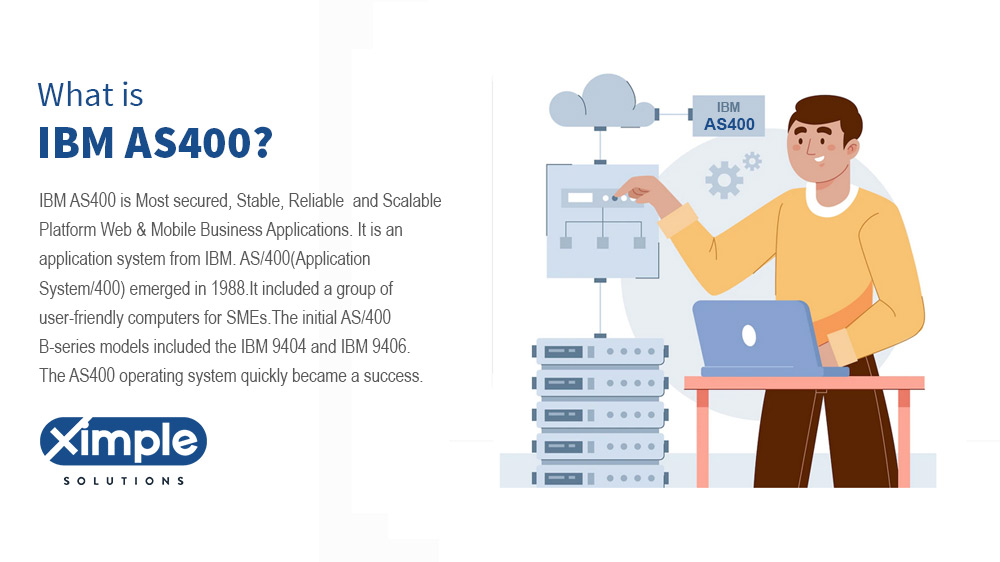
In the rapidly shifting landscape of enterprise technology, where software frameworks and hardware architectures often have the shelf life of a few years, the AS/400 stands as a remarkable anomaly. Originally launched by IBM in 1988, the Application System/400 (AS/400) has survived and thrived through decades of digital transformation. While many modern IT professionals might view it as a “legacy” system, its architecture remains the backbone of global banking, logistics, and manufacturing industries. Today, while it is officially known as IBM i running on IBM Power Systems, the “AS/400” name persists as a shorthand for one of the most stable, secure, and integrated computing environments ever designed.

To understand the AS/400 system is to understand a unique philosophy of computing that prioritizes long-term compatibility, integrated database management, and extreme hardware independence.
The Foundation: What is the AS/400 System?
The AS/400 was born out of a need for a midrange computer that could handle complex business logic with minimal administrative overhead. Unlike the fragmented PC market of the late 80s, the AS/400 was designed as an integrated “all-in-one” solution.
A Brief History of IBM’s Midrange Evolution
The AS/400 was the successor to IBM’s System/34, System/36, and System/38. Its launch marked a pivotal moment in tech history because it introduced a high-level architecture that shielded software from the underlying hardware. Over the years, the platform underwent several rebrandings:
- 1988: AS/400 (Application System/400)
- 2000: eServer iSeries
- 2006: IBM System i
- 2008 to Present: IBM i (the operating system) running on IBM Power Systems (the hardware)
Despite these name changes, the core principles of the architecture have remained remarkably consistent, allowing applications written thirty years ago to run on modern hardware with minimal modification.
The Core Philosophy of Integrated Architecture
What sets the AS/400 apart from Windows or Linux environments is its “integrated” nature. In a typical modern server environment, you must manually install and configure an operating system, a database (like MySQL or Oracle), security protocols, and communication layers. On the AS/400, the database (DB2), the security system, and the user interface are all baked into the operating system itself. This integration ensures that all components work in perfect harmony, reducing the risk of software conflicts and simplifying system management.
Key Technical Features That Define AS/400 (IBM i)
The AS/400’s longevity is not a matter of luck; it is a result of several revolutionary engineering choices that were decades ahead of their time. These features collectively create a system that is virtually immune to the “bit rot” and hardware obsolescence that plague other platforms.
Hardware Independence and the TIMI Layer
Perhaps the most significant innovation of the AS/400 is the Technology Independent Machine Interface (TIMI). TIMI is a software layer that sits between the applications and the hardware. Because applications interact with TIMI rather than the processor directly, IBM can change the underlying hardware architecture (for example, moving from CISC to RISC processors or from 32-bit to 64-bit) without requiring users to recompile or rewrite their software. This level of abstraction is why companies can migrate their entire software stack across decades of hardware upgrades without losing a single line of business logic.
The Integrated DB2 Database
Unlike other operating systems where the database is a third-party application, the AS/400 treats data as a first-class citizen. Every IBM i system comes with a built-in relational database, now known as DB2 for i. This integration allows for extreme optimization. The operating system handles data storage at the kernel level, resulting in superior performance for heavy transactional workloads. Furthermore, the system uses “Single-Level Storage,” a memory management technique that treats all disk storage and RAM as one massive address space, significantly boosting efficiency in data retrieval.
Object-Based Architecture and Security
In most operating systems, everything is a “file.” In the AS/400 world, everything is an “object.” Whether it is a program, a data file, or a hardware device description, it is treated as a specific object type with predefined attributes. This object-based approach is a cornerstone of the system’s legendary security. Since a “data” object cannot be executed like a “program” object, the system is inherently resistant to many types of malware and viruses that exploit file-type ambiguity. Combined with robust permission layers, the AS/400 remains one of the most secure platforms in existence.
The Modern Ecosystem: IBM i in the Age of Cloud and AI
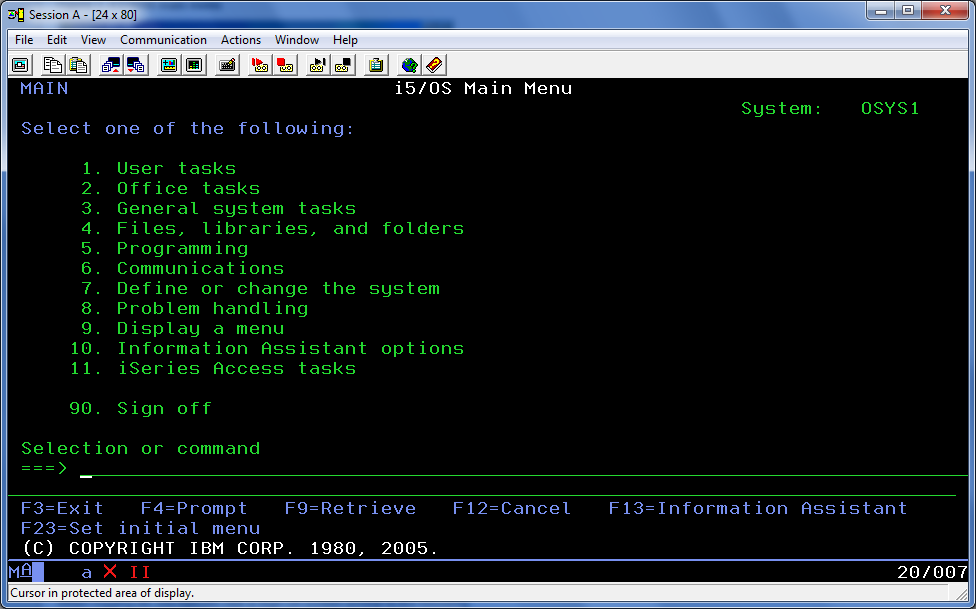
There is a common misconception that AS/400 systems are limited to the “green screen” (5250) terminal interfaces of the 1990s. In reality, the modern IBM i ecosystem is a sophisticated, web-enabled platform that supports the latest development tools and cloud methodologies.
Modernizing Legacy RPG Code
For decades, Report Program Generator (RPG) has been the primary language for AS/400 development. While older versions (RPG II and III) were columnar and restrictive, modern Free-form RPG looks and behaves much like Java or C#. Developers can now use modern Integrated Development Environments (IDEs) like VS Code or Rational Developer for i (RDi) to build applications. This modernization allows veteran systems to interface seamlessly with modern web services and mobile applications.
Hybrid Cloud Integration and Scalability
Today’s AS/400 systems are built on IBM Power10 processors, designed specifically for high-performance computing and hybrid cloud environments. IBM i can now be deployed in the cloud (IBM Power Virtual Server), allowing enterprises to scale their infrastructure dynamically. This hybrid approach enables businesses to keep their sensitive data on-premises while leveraging the cloud for burst capacity or disaster recovery.
The Role of Open Source and AI
IBM has aggressively integrated open-source technology into the platform. It is now common to find Python, Node.js, Git, and Java running natively on IBM i alongside traditional RPG programs. Furthermore, with the introduction of Power10 hardware, IBM has embedded AI acceleration directly into the processor. This allows businesses to run real-time AI inferencing—such as fraud detection or demand forecasting—directly on the same machine where their transactional data resides, eliminating the latency of moving data to an external AI server.
Why Enterprises Still Rely on AS/400 Today
In an era of “move fast and break things,” many large-scale enterprises prefer the “never break things” philosophy of the AS/400. The system’s value proposition is built on reliability and economic efficiency.
Unmatched Reliability and “Five Nines” Uptime
In industries like healthcare and finance, downtime can cost millions of dollars per minute. The AS/400 is famous for its “five nines” (99.999%) availability. It is not uncommon to hear stories of AS/400 servers running for a decade without a single unplanned reboot. The system’s ability to handle massive concurrent workloads—processing thousands of transactions per second without breaking a sweat—makes it the preferred choice for core banking systems and global supply chain management.
Total Cost of Ownership (TCO) vs. Performance
While the initial hardware cost of an IBM Power System can be higher than a commodity x86 server, the Total Cost of Ownership is often lower. Because the system is integrated, businesses require fewer administrators to manage the database, security, and OS. Additionally, because the hardware is so efficient, a single Power System core can often do the work of several x86 cores, leading to savings in software licensing and power consumption.
The Future of AS/400: What’s Next for IBM Power Systems?
The road ahead for the AS/400 (IBM i) is focused on bridging the gap between legacy stability and future innovation. IBM’s roadmap for the platform extends well into the 2030s, ensuring that the system will remain relevant for the foreseeable future.
The focus is shifting toward Autonomous Computing and Quantum-Safe Cryptography. As cyber threats become more sophisticated, IBM is integrating hardware-level encryption to protect data against future quantum computing attacks. Simultaneously, the operating system is becoming more “self-healing,” using automated monitoring tools to identify and resolve performance bottlenecks before they impact the user.
In conclusion, the AS/400 is far from a relic of the past. It is a masterclass in software engineering that has successfully pivoted from the era of mainframes to the era of the cloud. By maintaining its core architectural strengths while embracing modern languages and AI, the system continues to prove that in the world of technology, a solid foundation is the key to eternal relevance. Whether you call it AS/400, iSeries, or IBM i, this system remains the quiet engine driving the global economy.
aViewFromTheCave is a participant in the Amazon Services LLC Associates Program, an affiliate advertising program designed to provide a means for sites to earn advertising fees by advertising and linking to Amazon.com. Amazon, the Amazon logo, AmazonSupply, and the AmazonSupply logo are trademarks of Amazon.com, Inc. or its affiliates. As an Amazon Associate we earn affiliate commissions from qualifying purchases.