
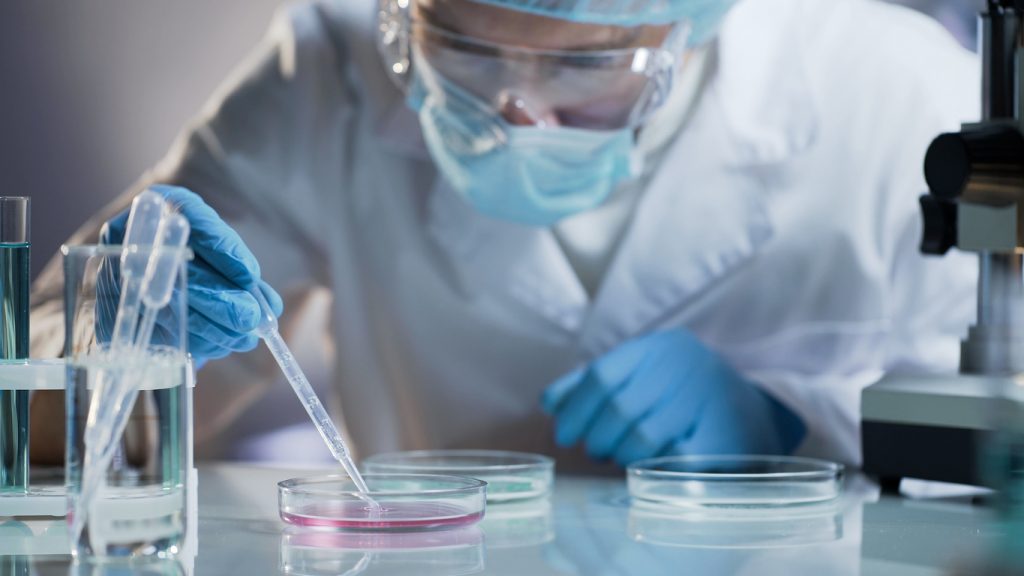
In the traditional imagination, an infectious disease (ID) doctor is often pictured in a sterile laboratory, peering through a microscope at a glass slide. While the biological core of the profession remains unchanged, the actual day-to-day reality of an infectious disease specialist has undergone a radical technological transformation. Today, an ID doctor is as much a data scientist and a software power-user as they are a clinician. In an era defined by rapid global travel and evolving pathogens, the “tech stack” of an infectious disease specialist has become their most potent weapon.

From the use of artificial intelligence in predicting outbreaks to the application of high-throughput genomic sequencing, the role is now fundamentally tied to the evolution of health technology. This article explores the technological landscape that defines the modern infectious disease doctor, focusing on the software, hardware, and digital frameworks that allow these specialists to safeguard global health.
The Intersection of Clinical Expertise and Advanced Health Informatics
At its heart, the work of an infectious disease doctor is about pattern recognition. However, the volume of patterns in modern medicine has scaled beyond human cognitive capacity. This is where Health Informatics and Big Data play a pivotal role. The modern ID specialist relies on integrated software systems to synthesize vast amounts of patient data into actionable insights.
Leveraging Big Data for Epidemiological Tracking
Infectious disease doctors use sophisticated epidemiological software to track the spread of pathogens in real-time. Tools like Geographic Information Systems (GIS) allow doctors to overlay clinical data with geographical locations, identifying “hot zones” before they become full-blown pandemics. By analyzing “digital exhaust”—anonymized data from search engines, social media, and hospital admission records—ID specialists can use predictive modeling to anticipate where a flu outbreak or a novel virus might strike next. This shift from reactive treatment to proactive surveillance is powered entirely by high-performance computing and complex algorithms.
The Role of EHRs and Predictive Analytics
Electronic Health Records (EHRs) are no longer just digital filing cabinets. For the ID doctor, modern EHRs integrated with AI modules serve as an early warning system. For instance, an ID specialist might utilize clinical decision support (CDS) tools that automatically flag patients whose vitals and lab results suggest the onset of sepsis. These software tools analyze longitudinal data—comparing current white blood cell counts with historical averages and pharmacy records—to suggest the most effective antimicrobial intervention. This integration of software into the diagnostic workflow allows ID doctors to intervene hours or even days earlier than was previously possible.
Next-Generation Diagnostics: Genomic Sequencing and AI-Driven Identification
The “tech” of the lab has moved from simple chemical reactions to complex digital processing. The ID doctor today works at the frontier of bioinformatics, using hardware and software that can decode the very blueprint of life.
Metagenomic Next-Generation Sequencing (mNGS)
One of the most significant technological leaps in the field is Metagenomic Next-Generation Sequencing (mNGS). Unlike traditional cultures, which can take days or weeks to grow, mNGS allows an infectious disease doctor to take a single sample of blood or spinal fluid and sequence all the nucleic acids present. High-powered cloud computing platforms then compare these sequences against massive databases of known bacteria, viruses, and fungi. This “search engine for pathogens” allows doctors to identify rare or emerging infections in a matter of hours. The ID doctor acts as the navigator of this tech, interpreting the bioinformatics reports to tailor treatments to a specific strain’s genetic profile.
Machine Learning in Antimicrobial Resistance Modeling
Antimicrobial resistance (AMR) is one of the greatest threats to modern medicine. To combat this, ID doctors are increasingly using machine learning (ML) models. These AI tools analyze the genetic mutations of a specific bacterial strain to predict which antibiotics will be effective and which will fail. Instead of a “trial and error” approach with medications, the doctor uses software to simulate the interaction between the drug and the pathogen’s molecular structure. This digital precision helps preserve the efficacy of our existing antibiotic arsenal and ensures patients receive the most effective treatment immediately.
Telehealth and Remote Monitoring: Expanding the Reach of Specialists
Infectious disease specialists are a finite resource, often concentrated in major urban academic centers. Technology has become the bridge that brings this specialized expertise to rural clinics, disaster zones, and high-security biocontainment units.
Virtual Consultations and E-Consults
The rise of high-definition tele-presence and secure, encrypted communication platforms has redefined the ID doctor’s consult. Through “E-Consult” platforms, an ID specialist can review digital images of a rash, analyze high-resolution scans of a lung infection, and interface with a primary care physician in a different time zone. This digital connectivity ensures that specialized knowledge—such as the management of complex HIV cases or the treatment of rare tropical diseases—is available globally, regardless of the doctor’s physical location.
Wearable Tech and Early Warning Systems
For patients with chronic infections or those recovering from major infectious bouts, wearable technology has become a crucial monitoring tool. ID doctors can now remotely monitor a patient’s temperature, heart rate, and oxygen saturation via IoT (Internet of Things) devices. If a patient’s “digital twin” (the data representation of their health) shows signs of a recurring infection, the software alerts the doctor instantly. This continuous stream of data provides a much more granular view of a patient’s recovery than a once-a-month office visit ever could.
The Future of Vaccine Technology and Global Research Networks
The ID doctor of the 21st century is also a key player in the tech-heavy world of vaccine development and global health security. The speed at which new vaccines are developed today is a testament to the power of collaborative digital infrastructure.
Collaborative Software in Global Research Networks
Modern ID doctors participate in global networks where data on viral mutations is shared instantaneously via secure, blockchain-verified platforms. This ensures that a mutation identified in an ID clinic in London is digitally transmitted to a lab in Singapore within minutes. This collaborative tech stack allows for the rapid “plug-and-play” design of mRNA vaccines. The ID doctor contributes by providing the clinical data that feeds these models, ensuring that the software-generated vaccine designs are grounded in real-world biological shifts.
Digital Security and Health Data Integrity
As the infectious disease specialty becomes more reliant on digital tools, the role of the ID doctor also intersects with digital security. Protecting the integrity of epidemiological data and ensuring the privacy of patients with sensitive diagnoses (like hepatitis or STIs) requires a deep understanding of cybersecurity protocols. The modern ID specialist must be proficient in using secure platforms that comply with regulations like HIPAA or GDPR, recognizing that a data breach in an infectious disease database could have significant public health and personal consequences.

Conclusion: The New Identity of the ID Specialist
To ask “what is an infectious disease doctor” in the modern age is to describe a professional who sits at the nexus of biology and technology. They are the gatekeepers of our digital health surveillance systems and the expert users of our most advanced diagnostic hardware. While the goal remains the same—to treat and prevent the spread of infection—the methods are increasingly digital.
The evolution of this role highlights a broader trend in the professional world: the disappearance of the line between “traditional” roles and “tech” roles. As AI, big data, and genomic sequencing continue to advance, the infectious disease doctor will continue to evolve, moving further away from the microscope and closer to the algorithm, ensuring that humanity stays one digital step ahead of the microscopic world.
aViewFromTheCave is a participant in the Amazon Services LLC Associates Program, an affiliate advertising program designed to provide a means for sites to earn advertising fees by advertising and linking to Amazon.com. Amazon, the Amazon logo, AmazonSupply, and the AmazonSupply logo are trademarks of Amazon.com, Inc. or its affiliates. As an Amazon Associate we earn affiliate commissions from qualifying purchases.