
In the intricate landscape of modern software development, where applications are often composed of myriad interconnected components, services, and external dependencies, ensuring seamless functionality from user interaction to backend data processing is paramount. This complex web necessitates a robust validation strategy, and at its zenith lies the End-to-End (E2E) test. Far more than just a routine check, an E2E test is a comprehensive simulation of a real user’s journey through a software system, verifying that every integrated piece works harmoniously to deliver the intended experience and functionality.
E2E testing is a critical discipline for any software product aiming for reliability, performance, and an exceptional user experience. It serves as the ultimate arbiter of a system’s readiness, providing an overarching perspective that other granular testing methods cannot achieve. For developers, quality assurance engineers, and product managers alike, understanding the ‘what,’ ‘why,’ and ‘how’ of E2E testing is foundational to building resilient and successful digital solutions in today’s fast-paced tech environment.
The Imperative of Comprehensive Software Validation
Modern software is rarely a monolithic entity. It’s an ecosystem of user interfaces, APIs, databases, microservices, third-party integrations, and cloud infrastructure, all working in concert. While individual unit tests and integration tests validate smaller parts of this ecosystem, they cannot guarantee the holistic functioning of the entire application under real-world conditions. This is where the strategic importance of End-to-End testing truly shines.
Defining End-to-End Testing
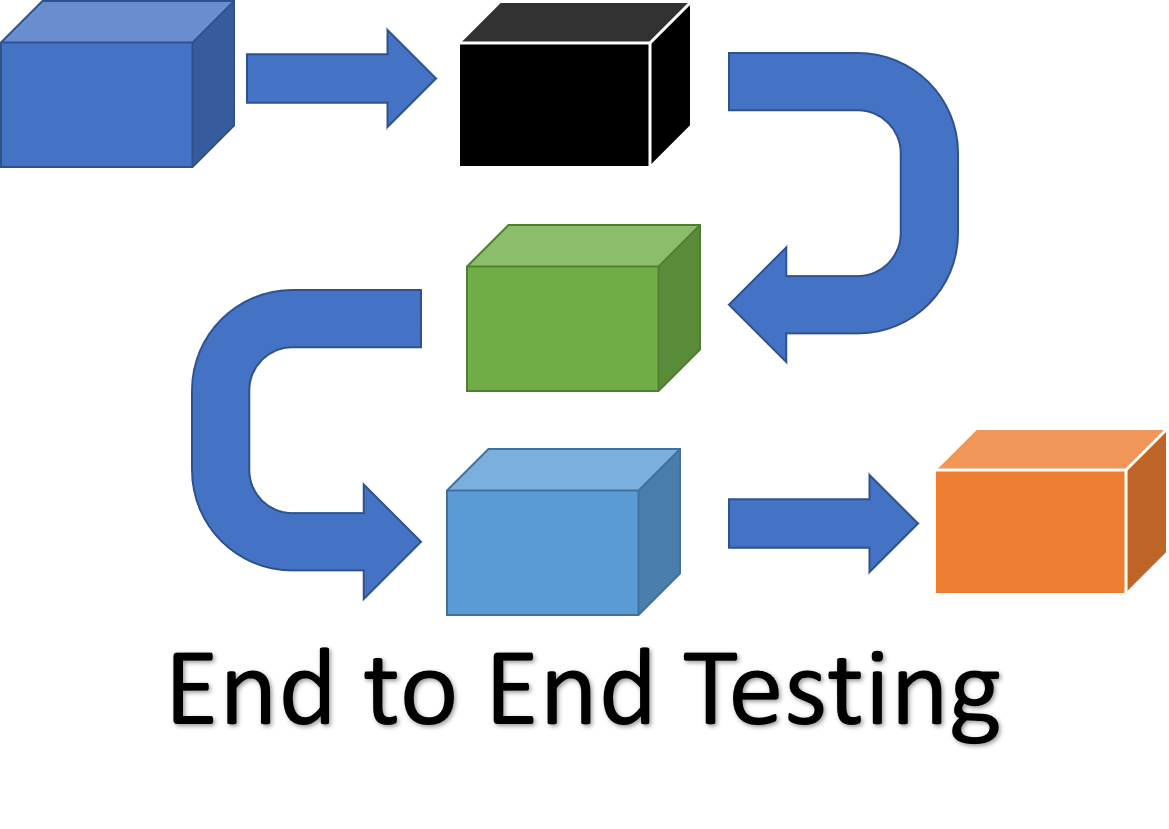
At its core, an End-to-End test simulates an actual user flow, from the moment a user initiates an action (e.g., clicking a button on a web page, sending a request via an API client) to the final outcome (e.g., a data record being updated in a database, a confirmation email being sent, or a complex report being generated). It involves testing the complete application environment, including the front-end, back-end, database, and any middleware or network communications, to ensure they all interact correctly.
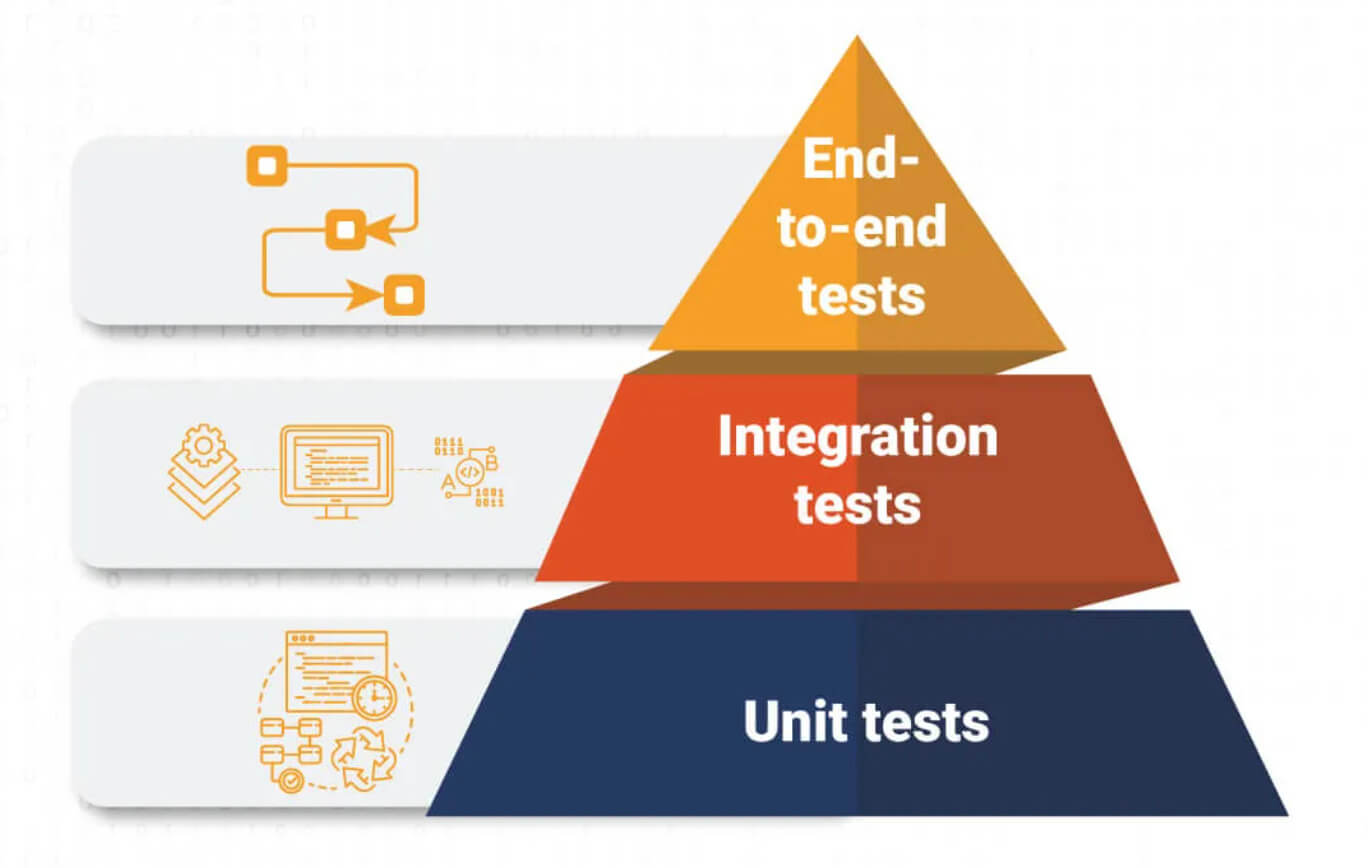
Unlike unit tests, which isolate and test individual code units or functions, or integration tests, which verify the interaction between a few related components, E2E tests validate an entire “slice” of functionality across all layers of the application stack. For instance, a unit test might confirm that a specific calculation function returns the correct result, and an integration test might ensure that a service correctly stores data in a database. An E2E test, however, would verify that when a user fills out a form, clicks ‘submit’, the data is validated by the front-end, sent via API to the back-end, processed and stored in the database, and then perhaps displayed correctly on another page – covering every step of that user journey.
The goal is to answer the fundamental question: “Does the entire system work as expected from a user’s perspective?” This holistic approach provides unparalleled confidence in the software’s readiness for deployment and its ability to handle real user interactions flawlessly.
Why E2E Testing Matters
The significance of End-to-End testing cannot be overstated, particularly in complex distributed systems. Its value proposition extends across several critical dimensions:
- Ensuring Critical Business Flows Work: E2E tests directly validate the core functionalities that drive business value. If a user cannot complete a purchase, sign up for a service, or access their data, the application fails its primary purpose. E2E tests provide assurance that these mission-critical paths are fully operational.
- Identifying Integration Issues: Many defects arise not from faulty individual components, but from how these components interact. Data format mismatches, API contract violations, authentication failures between services, or misconfigurations can cripple an application. E2E tests are uniquely positioned to uncover these elusive integration bugs that lower-level tests might miss.
- Boosting User Confidence and Satisfaction: A software product that consistently functions as expected, without unexpected errors or broken workflows, fosters user trust and satisfaction. E2E testing directly contributes to delivering a stable and reliable user experience, which is vital for user retention and brand reputation.
- Reducing Post-Deployment Defects: Catching critical bugs during the development cycle is significantly cheaper and less disruptive than fixing them in production. E2E tests act as a final safety net, significantly reducing the likelihood of severe, user-impacting defects making it into live environments. This proactive approach saves time, resources, and prevents potential financial losses or reputational damage.
- Validating System Health: Beyond specific user flows, E2E tests can also indirectly validate the overall health of the application’s infrastructure, network connectivity, and external dependencies. A failing E2E test might point to a problem in a third-party API, a misconfigured server, or a database connectivity issue.
Architecture and Scope of E2E Tests
An effective E2E testing strategy requires a clear understanding of which components are involved and what scenarios need to be covered. The scope of E2E tests is inherently broad, encompassing all layers of the application stack and any external touchpoints.
Key Components and Stages Tested
E2E tests deliberately traverse the full breadth of an application’s architecture. This includes:
- User Interface (UI): For web or mobile applications, E2E tests interact with the UI elements (buttons, forms, links) just as a human user would. This ensures that the visual components are rendered correctly and respond appropriately to user input.
- APIs/Microservices: The tests verify that the front-end successfully communicates with the back-end services, that API requests are correctly formed and handled, and that responses are accurate. In a microservices architecture, this often involves validating interactions across multiple services.
- Databases: E2E tests often include verification steps to confirm that data is correctly stored, retrieved, updated, and deleted in the underlying databases as a result of user actions. This ensures data integrity and persistence.
- External Integrations: Most modern applications rely on third-party services like payment gateways, email services, social media APIs, or authentication providers. E2E tests ensure that these external systems are correctly integrated and communicate effectively with the application.
- Network Communications: While not explicitly a “component,” E2E tests implicitly validate the network pathways and protocols involved in transmitting data between the client, servers, and external services.
Different Types of E2E Scenarios
To provide comprehensive coverage, E2E tests typically encompass a variety of scenarios:
- Happy Path Scenarios: These are the ideal, most common user journeys where everything works as expected. For example, a successful user registration, adding an item to a cart and completing a purchase, or successfully logging in and viewing a profile. These are essential for ensuring core functionality.
- Unhappy Path/Negative Scenarios: These tests deliberately introduce invalid input, incorrect credentials, or trigger error conditions to ensure the application handles exceptions gracefully. Examples include attempting to log in with an incorrect password, submitting an invalid form, or trying to access unauthorized resources. These scenarios validate error handling, security, and user feedback mechanisms.
- Boundary Conditions: These tests explore the limits of the system, such as entering the maximum allowed characters in a field, attempting to process an extremely large number of items, or testing edge cases in calculations.
- Concurrency Scenarios (Contextual): While not full performance tests, E2E tests can sometimes be designed to simulate concurrent user actions or quickly repeated actions to uncover race conditions or data integrity issues under load.
Methodologies and Best Practices for Implementation
Implementing an effective E2E testing strategy requires careful planning, the right tools, and adherence to best practices to overcome inherent complexities.
Test Planning and Design
Before writing any code, a clear plan is essential:
- Requirement Analysis: Understand the user stories, business requirements, and acceptance criteria. This forms the basis for identifying critical user journeys to test.
- Test Case Creation: Develop detailed test cases that outline clear, step-by-step instructions, specific input data, and precise expected outcomes for each scenario. User journey mapping can be very helpful here.
- Test Data Preparation: E2E tests often require specific, consistent test data (e.g., a test user with certain permissions, specific product inventory). Managing and resetting this data is crucial for repeatable tests.
- Environment Setup: E2E tests demand a stable and representative test environment that mirrors production as closely as possible, including all necessary services, databases, and third-party integrations.
Tools and Frameworks
The choice of tools significantly impacts the efficiency and maintainability of E2E tests:
- For Web UI Automation: Frameworks like Selenium WebDriver, Playwright, Cypress, and Puppeteer are widely used. They allow testers to programmatically interact with web browsers, simulating clicks, typing, navigation, and assertions on visual elements.
- For Mobile UI Automation: Tools like Appium (cross-platform) and platform-specific frameworks like XCUITest (iOS) and Espresso (Android) are essential.
- For API Testing: Tools like Postman, SoapUI, or code-based libraries like RestAssured (Java) or Axios (JavaScript) are used to test the back-end API layer directly, often in conjunction with UI tests or for scenarios where a UI isn’t necessary.
- Test Runners and Orchestration: Frameworks like Jest, Mocha, NUnit, JUnit, or Pytest are used to execute tests, generate reports, and integrate with CI/CD pipelines.
Automation vs. Manual E2E Testing
While automation is the gold standard for E2E tests due to their repetitive nature and potential for regression, a balanced approach is often most effective:
- When to Automate: Critical and frequently executed user flows (e.g., login, checkout, core data entry). Tests that are stable, unlikely to change frequently, and provide high ROI for automation. Automation ensures speed, consistency, and scalability.
- When Manual is Necessary: Exploratory testing to uncover unexpected behaviors, testing complex user interfaces that are hard to automate, or for initial stages of a new feature where the UI is highly volatile. Manual testing can catch nuances that automation might miss.
- Hybrid Approach: Often, a combination works best. Core user journeys are automated, while less frequent or highly dynamic scenarios might be manually tested or automated with less stringent coverage.
Maintenance and Scalability
E2E tests can be fragile and high-maintenance if not managed properly:
- Flaky Tests: These are tests that sometimes pass and sometimes fail without any code change. They often stem from timing issues, environment instability, or poorly written assertions. Strategies include adding explicit waits, retries, and ensuring a stable test environment.
- Test Data Management: Implement robust strategies for creating, using, and cleaning up test data. This might involve using test data factories, database seeding, or API calls to set up prerequisites.
- Environment Stability: Ensure test environments are isolated, consistent, and regularly refreshed to prevent previous test runs from interfering with current ones.
- Parallel Execution: As test suites grow, executing them in parallel across multiple browsers or machines dramatically reduces overall execution time, making them more feasible within CI/CD pipelines.
The Benefits and Challenges of E2E Testing
While E2E testing is indispensable for quality, it comes with its own set of advantages and inherent difficulties that teams must navigate.
Advantages of a Robust E2E Strategy
Embracing E2E testing delivers significant returns on investment:
- High Confidence in Releases: The primary benefit is the profound sense of assurance it provides. Knowing that the entire system has been validated under realistic conditions allows teams to deploy new features or updates with significantly reduced anxiety and risk.
- Early Detection of Complex Bugs: E2E tests excel at uncovering integration issues, data flow problems, and cross-component defects that are often difficult to diagnose with isolated testing. Catching these early in the development cycle prevents costly last-minute fixes.
- Improved Product Quality and User Experience: By ensuring critical user journeys are smooth and error-free, E2E tests directly contribute to a higher-quality product and a more satisfying experience for end-users, fostering loyalty and positive reviews.
- Reduced Technical Debt Over Time: Consistently running E2E tests helps prevent regressions as the codebase evolves. This continuous validation prevents old bugs from resurfacing and new ones from accumulating, thus reducing technical debt related to quality.
- Faster Feedback Loop for Critical Issues: When integrated into a Continuous Integration (CI) pipeline, automated E2E tests can provide rapid feedback on the health of the application after every code commit. This allows developers to quickly identify and address breaking changes.
Common Pitfalls and How to Overcome Them
Despite its benefits, E2E testing presents specific challenges:
- Time-Consuming and Resource-Intensive Setup: Setting up a stable E2E testing environment that mimics production can be complex, involving database configurations, API mock-ups, and managing external service dependencies.
- Overcome: Invest in Infrastructure as Code (IaC) for consistent environment provisioning. Use Docker/Kubernetes for containerization. Employ API mocking tools for external services where actual integration isn’t necessary for the test’s scope.
- Flakiness and Instability: E2E tests are notoriously prone to flakiness – failing intermittently without actual code changes. This can be due to network latency, timing issues, asynchronous operations, or UI rendering inconsistencies.
- Overcome: Implement explicit waits instead of implicit ones. Use robust locators (e.g., data-testid attributes) instead of brittle XPath or CSS selectors. Implement test retries. Analyze flaky tests thoroughly for root causes.
- Difficulty in Test Data Management: Maintaining consistent and realistic test data across many E2E scenarios, especially when tests modify data, can be a significant hurdle.
- Overcome: Implement test data factories or generation scripts. Ensure tests clean up after themselves or reset the environment to a known state before each run. Use dedicated test databases.
- Maintenance Overhead for Evolving UIs: As user interfaces evolve rapidly, E2E tests tied to specific UI elements can break frequently, requiring constant updates.
- Overcome: Decouple tests from specific UI implementation details using Page Object Model (POM) or similar design patterns. Use resilient locators. Prioritize testing the underlying API layer for stable business logic.
- Environment Dependencies: Reliance on external services (payment gateways, email services) can introduce external points of failure, making tests unreliable or slow.
- Overcome: Mock or virtualize external services for tests where the external system’s actual behavior isn’t the primary focus. Use dedicated sandbox accounts for third-party integrations.
Integrating E2E Testing into the SDLC
To truly harness the power of E2E testing, it must be woven seamlessly into the software development lifecycle (SDLC), particularly within Agile and DevOps methodologies.
E2E in Agile and DevOps
- Shift-Left Testing: In Agile and DevOps, there’s an emphasis on “shifting left” – performing testing activities earlier in the development process. While E2E tests are inherently “later” in the pyramid (testing the full system), planning for them, designing the architecture to be testable, and writing them alongside development still aligns with shift-left principles.
- Continuous Integration/Continuous Deployment (CI/CD): E2E tests are fundamental to CI/CD pipelines. Automated E2E test suites should run automatically upon every code commit or pull request merge to the main branch. If they pass, the code can proceed to the next stage (e.g., deployment to a staging environment); if they fail, the pipeline halts, providing immediate feedback to developers.
- Fast Feedback Loops: Integrating E2E tests into CI/CD ensures developers receive rapid feedback on the impact of their changes across the entire system. This allows for quick identification and resolution of regressions, preventing issues from festering.
- Collaboration Between Dev and QA: Successful E2E testing in an Agile/DevOps context requires close collaboration. Developers should consider testability when designing features, and QA engineers should work with developers to write robust, maintainable tests.
Measuring Success and Continuous Improvement
The effectiveness of an E2E strategy should be continuously monitored and refined:
- Key Metrics: Track metrics such as pass/fail rates, test execution time, test coverage (of critical paths), and the mean time to recover from test failures. High flakiness rates or long execution times indicate areas for improvement.
- Root Cause Analysis of Failures: When an E2E test fails, thoroughly investigate whether it’s an actual bug, an environment issue, or a flaky test. This prevents unnecessary development cycles spent on non-issues.
- Regular Review and Optimization of Test Suites: E2E test suites should not be static. Regularly review test cases for relevance, remove redundant tests, optimize slow tests, and refactor brittle ones. The goal is to maintain a lean, fast, and reliable suite that provides maximum value with minimum overhead.
Conclusion
End-to-End testing stands as an indispensable pillar in the modern software development landscape. It is the ultimate guardian of application integrity, ensuring that complex, interconnected systems deliver on their promise of seamless functionality and exceptional user experience. By simulating real user journeys across the entire technology stack, E2E tests provide an unparalleled level of confidence in software releases, catching critical integration issues and bolstering product quality.
While the implementation of a robust E2E strategy demands careful planning, the right tooling, and a commitment to best practices, the benefits far outweigh the challenges. In an era where user expectations are continually rising and software reliability is paramount, mastering End-to-End testing is not merely an option but a strategic imperative for any organization striving to deliver high-quality, resilient, and user-centric digital products. As applications grow in complexity, the role of comprehensive, insightful, and well-maintained E2E tests will only become more crucial in bridging the gap between individual components and a truly cohesive, high-performing system.
aViewFromTheCave is a participant in the Amazon Services LLC Associates Program, an affiliate advertising program designed to provide a means for sites to earn advertising fees by advertising and linking to Amazon.com. Amazon, the Amazon logo, AmazonSupply, and the AmazonSupply logo are trademarks of Amazon.com, Inc. or its affiliates. As an Amazon Associate we earn affiliate commissions from qualifying purchases.