
In the rapidly evolving landscape of consumer electronics, few components have demonstrated the staying power of the auxiliary port. Commonly referred to as the “aux,” this small, circular interface has been the bridge between hardware and human experience for decades. Whether you are plugging a vintage pair of headphones into a modern laptop or connecting a smartphone to a car’s stereo system, the “aux” remains a fundamental term in the lexicon of technology.
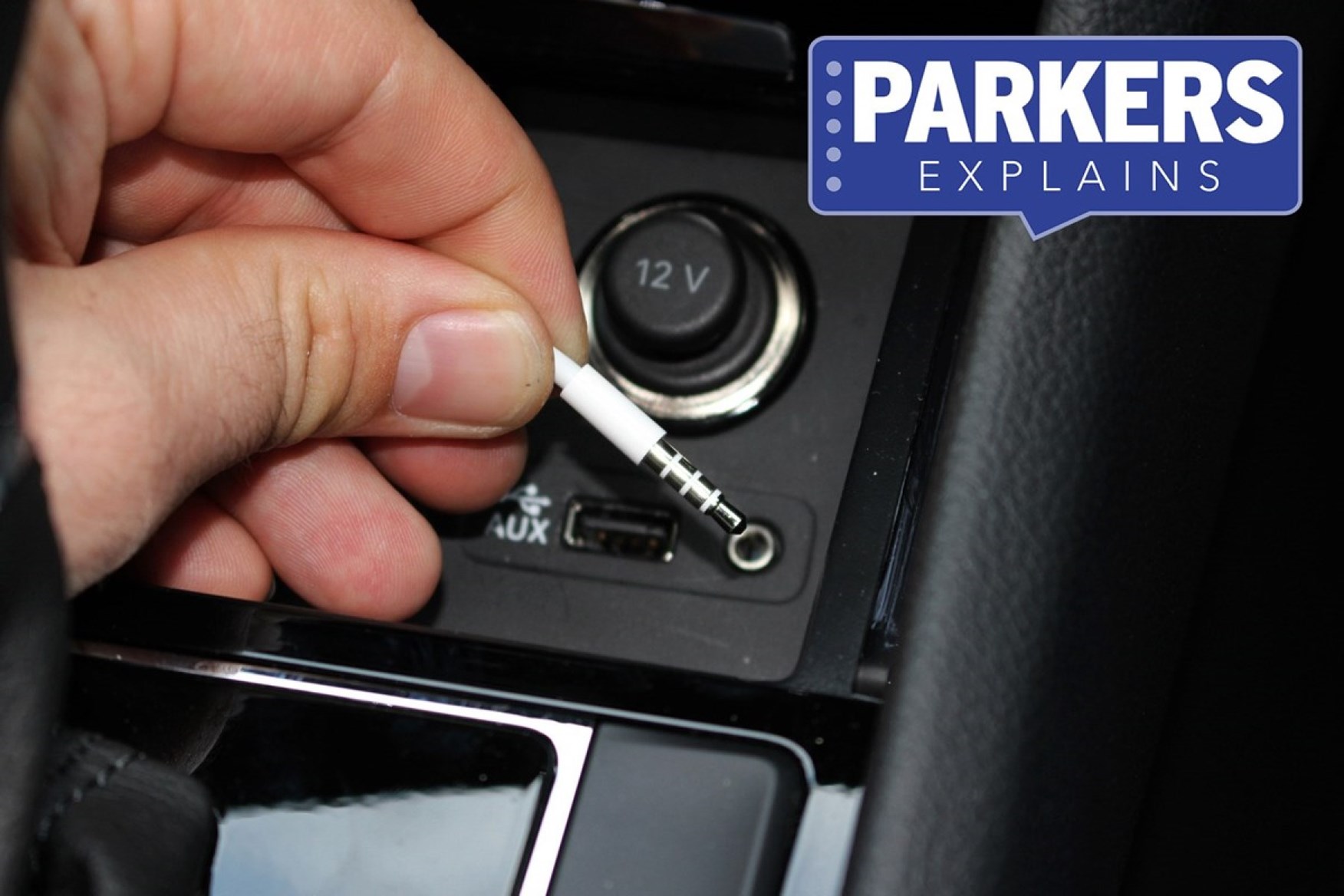
At its core, an auxiliary port (AUX) is an asynchronous serial port that allows for the input of audio signals from various devices. While the term “auxiliary” can technically refer to any secondary input method, in the context of modern gadgets, it almost exclusively refers to the 3.5mm TRS (Tip-Ring-Sleeve) jack. Understanding the “what” and “why” of this technology requires a dive into hardware engineering, signal processing, and the industry’s shift toward a wireless future.
The Technical Foundations of the 3.5mm Aux Port
To understand what an aux port is, one must first understand its physical architecture. The 3.5mm jack is a miniature version of the original 6.35mm (1/4 inch) phone connector, which dates back to the manual telephone switchboards of the late 19th century. Its survival into the 21st century is a testament to its elegant design and reliability.
From Telephones to Smartphones: A Brief History
The transition from the bulky 1/4 inch jacks used in professional audio and early telecommunications to the 3.5mm standard occurred as portable electronics began to shrink. The rise of the transistor radio and, eventually, the iconic Sony Walkman in the late 1970s solidified the 3.5mm jack as the global standard for consumer audio. It provided a compact, durable, and cost-effective way to transmit high-quality analog sound. For decades, it was the one “universal” port that worked across brands, from Apple and Samsung to Sony and Bose.
TRS vs. TRRS: Decoding the Rings
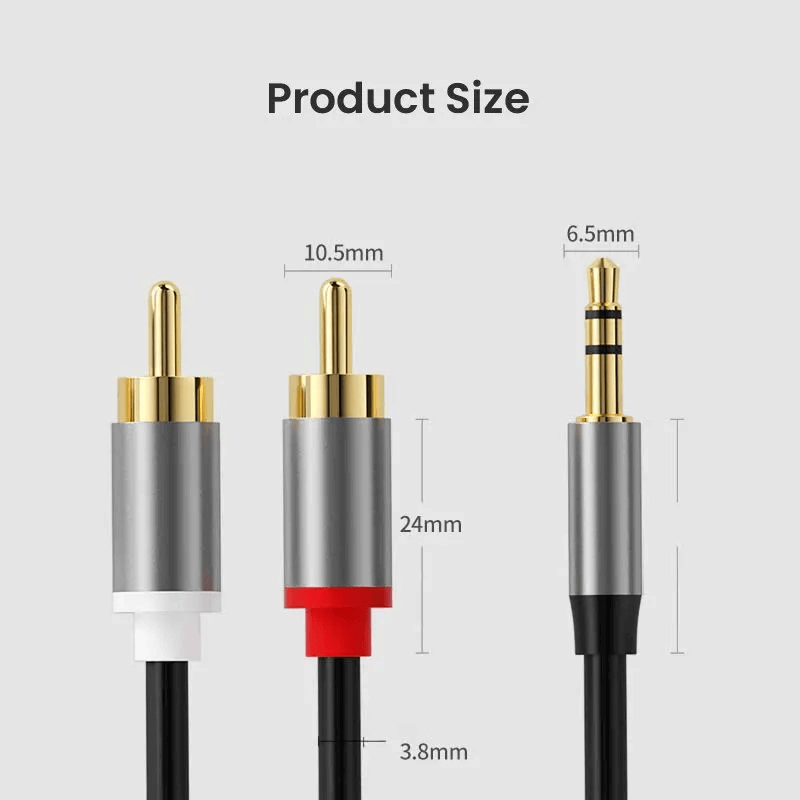
If you look closely at an aux plug, you will notice small plastic rings (usually black or white) separating the metal sections. These are not merely decorative; they define the capability of the connection.
- TS (Tip-Sleeve): Features one ring and two conductors. This is used for mono signals.
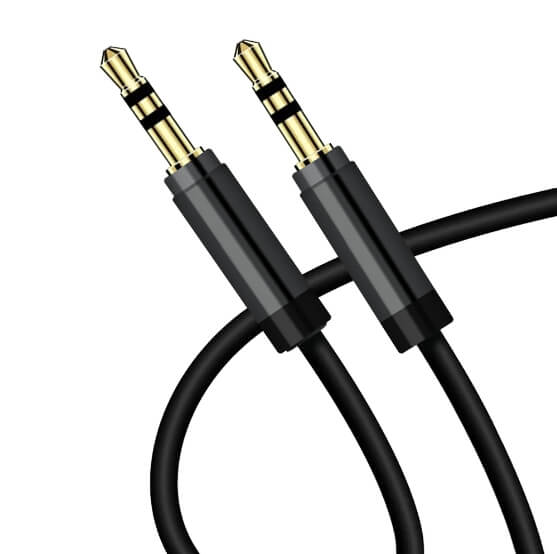
- TRS (Tip-Ring-Sleeve): Features two rings and three conductors. This is the standard for stereo audio (Left channel, Right channel, and Ground).
- TRRS (Tip-Ring-Ring-Sleeve): Features three rings and four conductors. This is common in modern smartphone headsets, as the extra conductor allows for a microphone signal or remote control commands (like volume up/down) to be transmitted alongside the stereo audio.
Behind the Signal: How Analog Audio Transmission Works
The aux port is an analog interface. In a world dominated by digital bits and bytes, the aux port remains a sanctuary for continuous electrical waveforms. When you play a song on your phone, the digital file (MP3, FLAC, or AAC) must be converted into an electrical voltage that can move the diaphragms in your speakers or headphones.
The Role of the DAC (Digital-to-Analog Converter)
Every device with an aux port—be it a laptop, a tablet, or an older smartphone—contains a component called a Digital-to-Analog Converter (DAC). The DAC takes the binary data of your music and translates it into an analog electrical signal. This signal is then sent through the aux port, down the copper wire of your cable, and into your headphones. The quality of the DAC inside your device significantly impacts the “warmth” and clarity of the sound you hear. This is why some high-end portable music players (DAPs) are prized by audiophiles; they use premium DAC chips that outperform the standard hardware found in a typical budget smartphone.
The Analog Advantage in a Digital World
While digital connections like USB-C and Bluetooth are becoming the norm, the analog aux connection offers several technical advantages. First, it is “plug-and-play” in the purest sense. There are no drivers to install, no firmware updates required, and no pairing sequences to navigate. Second, the analog signal is instantaneous. There is no processing lag, which makes the aux port the gold standard for applications where timing is critical, such as music production and competitive gaming.
The Evolution of Connectivity: Aux vs. Digital Alternatives
The tech industry is currently in the midst of a “port war.” As manufacturers strive to make devices thinner and more water-resistant, the traditional 3.5mm aux port has often been the first victim of the “courageous” move toward modernization.
The Rise of USB-C and Lightning Audio
With the removal of the headphone jack from flagship smartphones, audio transmission has shifted toward the USB-C (Android) and Lightning (Apple) ports. Unlike the aux port, these are digital interfaces. When you use a “dongle” or USB-C headphones, the DAC is often moved out of the phone and into the connector itself. This allows manufacturers to save internal space and potentially reduce electromagnetic interference inside the device. However, it also complicates the ecosystem, forcing users to rely on adapters that are easily lost or damaged.
The Impact of Wireless Bluetooth Technology
The most significant challenger to the aux port is Bluetooth. Modern Bluetooth codecs, such as LDAC and aptX HD, have narrowed the gap between wireless and wired audio quality. However, Bluetooth introduces two major hurdles: compression and latency. Even the best Bluetooth connection involves some loss of data to fit the audio signal through the wireless spectrum. Furthermore, the time it takes to encode, transmit, and decode the signal creates a delay. For watching movies or playing fast-paced games, this latency can lead to a frustrating “lip-sync” error that a wired aux connection simply does not have.
Why the Aux Port Still Wins for Pro Gamers
In the professional gaming circuit, the aux port remains indispensable. Gamers rely on spatial audio cues—such as the sound of footsteps—to react in real-time. A delay of even 50 milliseconds can be the difference between winning and losing. Because an aux connection transmits at the speed of electricity through copper, the latency is effectively zero. This is why high-end gaming headsets almost always include a 3.5mm wired option.
Troubleshooting and Optimizing Your Aux Connections
Despite its simplicity, the aux port is susceptible to physical wear and electronic interference. Understanding how to maintain this hardware can extend the life of your tech gear.
Common Hardware Failures and Maintenance
The most common issue with an aux port is “crackle” or intermittent sound. This is usually caused by oxidation on the metal contacts or the accumulation of lint inside the port. Because the port is open to the elements, it acts as a magnet for pocket debris. A non-conductive toothpick or a blast of compressed air can often solve connection issues. If the sound only plays out of one ear, it usually indicates a broken “leaf spring” inside the jack or a frayed wire in the cable itself.
Improving Audio Quality with External DACs and Amps
For those who want to get the most out of their aux connection, the “audiophile stack” is a popular tech upgrade. By using an external USB DAC and a dedicated headphone amplifier, you bypass the mediocre internal circuitry of your laptop or phone. You then connect your headphones to the aux port of the amplifier. This provides a cleaner signal with a higher Signal-to-Noise Ratio (SNR) and more “headroom,” allowing high-impedance headphones to reach their full sonic potential.
The Cultural and Technological Resilience of the Aux Cable
The term “Pass the aux cord” has become a cultural meme, symbolizing the democratic nature of shared music. But beyond the social aspect, the aux cord represents a rare moment of technological universalism.
The “Aux Cord” Phenomenon in Car Tech
Before the ubiquity of Apple CarPlay and Android Auto, the aux port was the primary way to bring digital music into the automotive world. Even today, in many parts of the world, the aux port is the most reliable way to connect a phone to a car’s head unit. Unlike Bluetooth, which can be finicky with older car firmware, the aux port works 100% of the time. It is the fallback technology that ensures compatibility across generations of hardware.
Why Audiophiles Refuse to Let Go
As we look toward the future, the aux port is increasingly becoming a “pro” feature. While entry-level consumer devices have abandoned it, high-end laptops, studio monitors, and professional cameras continue to include it. The reason is simple: reliability. In a professional environment, you cannot afford for a battery to die or a wireless signal to drop. The aux port provides a physical, tactile confirmation of a connection that digital solutions have yet to replicate.
In conclusion, “what is an aux” is a question that leads us through the history of electronic miniaturization and into the heart of the digital-analog debate. While it may be disappearing from our pockets, its role in high-fidelity audio, professional gaming, and legacy systems remains secure. The auxiliary port is more than just a hole in a device; it is a refined piece of engineering that has bridged the gap between the digital and physical worlds for over a century. Whether you view it as a relic of the past or a staple of professional tech, its impact on how we consume media is undeniable.
aViewFromTheCave is a participant in the Amazon Services LLC Associates Program, an affiliate advertising program designed to provide a means for sites to earn advertising fees by advertising and linking to Amazon.com. Amazon, the Amazon logo, AmazonSupply, and the AmazonSupply logo are trademarks of Amazon.com, Inc. or its affiliates. As an Amazon Associate we earn affiliate commissions from qualifying purchases.