
In an increasingly portable and wirelessly powered world, batteries have become the invisible workhorses enabling everything from our smartphones to electric vehicles. Among the myriad specifications that define a battery’s capabilities, the “Ah” rating stands out as one of the most fundamental and frequently encountered. But what exactly does “Ah” signify, and why is it so crucial for understanding the performance and utility of a battery?
Ah, an abbreviation for Ampere-hour, is a unit of electric charge, representing the battery’s capacity to deliver a certain current over a specific period. It quantifies the total amount of energy a battery can store and deliver before needing a recharge. In essence, it tells you how long a battery can power a device that draws a particular current. A higher Ah rating generally means a longer run-time for your device or a greater energy reserve for larger applications. This foundational understanding is vital for consumers, engineers, and anyone relying on battery-powered technology, allowing for informed decisions about power sources that meet specific operational demands. This article will delve into the intricacies of Ampere-hour, its implications, and how it fits into the broader landscape of battery technology.
Decoding the Ampere-hour (Ah) Rating
The Ampere-hour rating is the cornerstone of battery capacity measurement, offering a direct insight into how much power a battery can supply over time. Understanding this metric is essential for both predicting device performance and making appropriate battery selections.
The Fundamental Concept of Capacity
At its core, Ah represents a battery’s ability to store and discharge electrical current. Imagine a reservoir of water; the Ah rating is akin to the total volume of water the reservoir can hold. A battery with a 1 Ah rating can theoretically deliver one amp (1A) of current for one hour (1h), or it could deliver half an amp (0.5A) for two hours, or two amps (2A) for half an hour. The key is that the product of the current (in Amperes) and the time (in hours) remains constant, equaling the battery’s Ah capacity. This simple yet powerful concept allows users to estimate how long a device will operate given its current draw and the battery’s capacity. It’s a measure of the total electrical charge available, rather than the instantaneous power output.
Amps vs. Ampere-hours: A Crucial Distinction
It’s easy to confuse Amps and Ampere-hours, but they represent distinct electrical concepts. An “Ampere” (A) is a unit of electric current, measuring the rate of electron flow at a given moment. It’s an instantaneous value—how much electricity is flowing right now. Think of it like the speed of water flowing through a pipe. If a device draws 2 Amps, that’s its current consumption.
“Ampere-hour” (Ah), on the other hand, is a unit of charge or capacity. It measures the total quantity of electricity that can be delivered over a period. Using the water analogy again, if Amps are the speed of water, then Ampere-hours are the total volume of water that the reservoir can supply. A battery’s Ah rating quantifies its total energy storage capability, indicating how long it can sustain a certain current draw. This distinction is paramount: Amps describe the demand, while Ampere-hours describe the supply over time.
Why Ah Matters: Powering Your Devices Longer
The practical significance of the Ah rating cannot be overstated. For consumers, it directly translates to the run-time of their portable devices. A smartphone with a 4000 mAh (milliampere-hour, or 4 Ah) battery will generally last longer on a single charge than one with a 3000 mAh battery, assuming similar power consumption by the phone’s components. For engineers designing systems, the Ah rating dictates the maximum operational duration before a recharge or replacement is needed, which is critical for applications like drones, remote sensors, medical devices, and electric vehicles.
In grid-scale energy storage or uninterruptible power supplies (UPS), high Ah ratings are essential for maintaining power over extended outages. For recreational vehicles or marine applications, the Ah rating determines how long onboard electronics, lighting, and appliances can function independently. Ultimately, a higher Ah rating translates to greater energy reserves, providing longer operational periods, increased reliability, and often, more robust performance for a wide array of technological applications.
Factors Influencing a Battery’s Ah Rating
While the Ah rating is a single number, it is the culmination of various design and chemical considerations that go into battery manufacturing. Understanding these underlying factors provides a deeper appreciation for battery technology.
Cell Chemistry and Design
The intrinsic capacity of a battery is heavily dependent on its electrochemical makeup. Different battery chemistries store energy with varying efficiencies and densities. For instance, lithium-ion (Li-ion) batteries, prevalent in modern electronics, offer high energy density, meaning they can pack more Ah into a smaller volume compared to older chemistries like nickel-cadmium (NiCd) or lead-acid batteries. The specific electrode materials, electrolyte composition, and separator technologies all play a critical role in determining how many charge carriers (ions) can be stored and released, thus directly influencing the Ah rating. Advanced materials research continually aims to improve these chemistries, pushing the boundaries of energy storage capacity per unit mass or volume.
Physical Size and Energy Density
It’s a common observation that larger batteries tend to have higher Ah ratings. This is because, generally, a larger physical size allows for more active chemical material within the battery cells. More active material translates to a greater capacity for electrochemical reactions, thus increasing the total stored charge. This relationship is often expressed through “energy density,” which measures the amount of energy a battery can hold relative to its weight (Wh/kg) or volume (Wh/L). While two batteries of different chemistries might have the same physical size, the one with higher energy density will yield a higher Ah rating (and often a higher voltage, leading to higher Watt-hours). Battery design engineers constantly strive to maximize energy density to achieve higher Ah ratings in compact form factors, which is critical for space-constrained applications like wearable tech and portable medical devices.
Discharge Rate and Peukert’s Law
While the Ah rating provides a nominal capacity, the actual usable capacity can vary based on the rate at which the battery is discharged. This phenomenon is often described by Peukert’s Law, particularly relevant for lead-acid batteries, though it has implications for other chemistries too. Peukert’s Law states that as the discharge rate (current drawn) increases, the battery’s available capacity (Ah) decreases. In simpler terms, if you draw current very quickly from a battery, you might get less total usable Ah than if you draw it slowly. This is due to internal resistance, electrochemical kinetics, and voltage drop effects. Most Ah ratings are specified at a particular discharge rate (e.g., C/20, meaning discharged over 20 hours). For applications requiring high instantaneous power, understanding this relationship is crucial, as a battery might perform below its nominal Ah rating if subjected to very high current demands. Modern battery management systems (BMS) in advanced battery packs help mitigate these effects and provide more accurate state-of-charge estimations.
Practical Applications and Selecting the Right Ah Battery
The versatility of battery technology, quantified largely by its Ah rating, underpins a vast array of modern technological applications. Choosing the correct Ah battery for a given task is a critical decision that impacts performance, cost, and longevity.
Portable Electronics (Smartphones, Laptops, Drones)
For the ubiquitous devices we carry daily, Ah (often expressed as mAh for milliaMpere-hours) directly correlates with battery life. A smartphone with a 4500 mAh battery offers significantly longer usage time than one with a 3000 mAh battery, enabling users to go longer between charges. Similarly, the Ah rating of a laptop battery determines its unplugged productivity. In the drone market, higher Ah batteries (while adding weight) allow for extended flight times, a critical factor for professional photography, surveying, and delivery applications. Here, the trade-off between battery capacity (Ah) and overall device weight/size is a constant design challenge.
Electric Vehicles and E-mobility
In the realm of electric vehicles (EVs), the Ah rating, often in conjunction with voltage to calculate total Watt-hours (Wh), is a primary indicator of range. A larger Ah capacity battery pack means the vehicle can travel further on a single charge. This applies not only to cars but also to electric bicycles, scooters, and even electric ferries. For instance, a long-range EV might boast a battery pack with 100 kWh capacity (which can be derived from hundreds or thousands of individual cells, each with its own Ah and voltage rating), ensuring hundreds of miles of travel. The rapid evolution in battery Ah capacity is a key driver behind the increasing adoption and practicality of electric transportation.
Renewable Energy Storage (Solar, UPS)
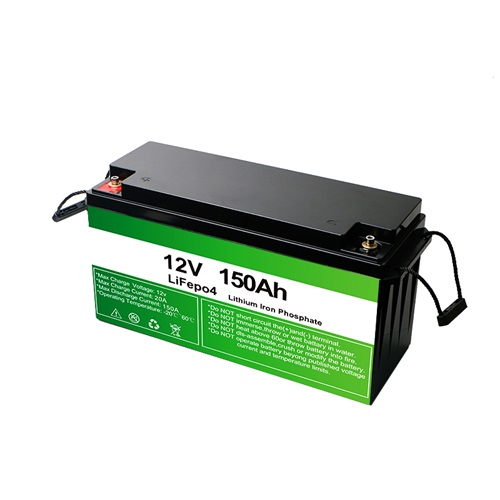
Ah batteries are fundamental to renewable energy systems, particularly solar installations, where they store surplus energy generated during daylight hours for use after sunset or during cloudy periods. Large battery banks, often comprising multiple lead-acid or lithium-ion batteries, are rated in thousands of Ah to provide substantial energy reserves for homes, businesses, or even entire microgrids. Similarly, Uninterruptible Power Supplies (UPS) systems, vital for data centers and critical infrastructure, rely on high-Ah batteries to bridge power outages, ensuring continuous operation until mains power returns or generators kick in. The Ah rating here dictates the duration of backup power available.
Tools and Industrial Applications
From cordless power tools to robotic systems and industrial machinery, Ah ratings are crucial for sustained performance. A cordless drill with a 5 Ah battery will operate much longer on a single charge than one with a 2 Ah battery, allowing professionals to complete more work without interruption. Robotic systems, whether in manufacturing or exploration, require specific Ah capacities to fulfill their operational cycles. Even in specialized industrial equipment like automated guided vehicles (AGVs) or forklifts, high-Ah batteries provide the necessary power and endurance for heavy-duty, continuous operation, often lasting an entire shift.
Matching Ah to Device Requirements
Selecting the right Ah battery involves a careful analysis of the device’s power consumption and the desired run-time. For low-power, long-duration applications like remote sensors, a modest Ah battery might suffice for months. For high-power, short-duration tasks like a drone performing a quick delivery, a higher Ah battery optimized for discharge rate might be prioritized, even if it adds weight. Engineers and product designers use current draw data (Amps) of various components and the desired operational time (hours) to calculate the minimum required Ah capacity, often adding a safety margin to account for battery degradation over time and environmental factors. Over-specifying Ah can lead to unnecessary cost and weight, while under-specifying can lead to poor performance and user dissatisfaction.
Beyond Ah: Other Key Battery Specifications
While the Ampere-hour rating is foundational, a battery’s overall performance and suitability for an application are also defined by several other critical specifications. A holistic understanding requires considering these factors in conjunction with Ah.
Voltage (V): The Driving Force
Voltage, measured in Volts (V), represents the electrical potential difference or “pressure” that drives the current through a circuit. While Ah quantifies the quantity of charge, voltage determines the “force” with which that charge is delivered. Most devices are designed to operate at a specific voltage (e.g., 3.7V for smartphones, 12V for car batteries, 48V for e-bikes). A battery must match the voltage requirements of the device it powers. Batteries often comprise multiple cells in series to achieve higher voltages; for instance, a 12V lead-acid battery typically has six 2V cells in series. Without the correct voltage, a battery, regardless of its Ah rating, simply won’t power the device correctly or safely.
Watt-hours (Wh): Total Energy Content
Watt-hours (Wh) provide a more comprehensive measure of a battery’s total energy content, combining both its capacity and its voltage: Wh = Ah × V. This metric is often preferred when comparing batteries of different voltages, as it gives a true apples-to-apples comparison of the stored energy. For example, a 10 Ah, 12V battery (120 Wh) stores more total energy than a 10 Ah, 3.7V battery (37 Wh), despite having the same Ah rating. Wh is particularly relevant for applications like electric vehicles or large energy storage systems, where the total usable energy is paramount, regardless of the individual cell voltage. For international travel with portable electronics, Wh limits are often imposed by airlines for safety reasons.
Discharge Rate (C-rating)
The C-rating describes how quickly a battery can safely be discharged relative to its total capacity. A 1C discharge rate means the battery can be fully discharged in one hour. A 2C rate means it can be discharged in half an hour, supplying twice its nominal Ah current. Conversely, a C/10 rate means it takes 10 hours to discharge. This specification is crucial for high-power applications such as drones, RC vehicles, or power tools that require a large burst of current. Batteries with high C-ratings are designed to deliver power rapidly without significant voltage sag or excessive heat generation. Attempting to draw current beyond a battery’s specified C-rating can damage the battery, reduce its lifespan, or even pose a safety risk.
Cycle Life and Longevity
Cycle life refers to the number of charge-discharge cycles a battery can undergo before its capacity degrades to a specified percentage of its original capacity (e.g., 80%). This metric is vital for assessing a battery’s longevity and long-term value. A battery with a high cycle life (e.g., 1000+ cycles for modern Li-ion) is more durable and cost-effective in the long run, even if its initial cost is higher. Factors influencing cycle life include battery chemistry, depth of discharge, temperature, and charging/discharging rates. For critical applications, understanding cycle life is as important as its immediate capacity.
Internal Resistance and Efficiency
Every battery has internal resistance, an inherent opposition to current flow within the battery itself. A lower internal resistance generally indicates a more efficient battery, as less energy is lost as heat during charging and discharging. High internal resistance can lead to voltage drop under load, reduced usable capacity (especially at high discharge rates), and increased heat generation, all of which negatively impact performance and lifespan. Manufacturers constantly work to minimize internal resistance through material selection and design optimizations, enhancing the battery’s overall efficiency and effective Ah delivery.
The Future of Battery Technology and Ah Ratings
The demand for longer-lasting, more powerful, and safer batteries continues to drive relentless innovation in the field. The Ampere-hour rating, while a constant measure of capacity, will be profoundly impacted by future advancements across various fronts.
Advancements in Energy Density
Future battery technologies are relentlessly focused on increasing energy density – packing more Ah into smaller, lighter packages. Solid-state batteries, for example, promise significantly higher energy densities than current liquid electrolyte lithium-ion batteries, potentially doubling or tripling Ah capacities for the same volume. Silicon anodes and lithium-sulfur cathodes are other research frontiers aiming to store more lithium ions, thereby boosting the effective Ah rating of individual cells. These breakthroughs will translate directly into vastly extended run-times for portable electronics, greater range for electric vehicles, and more compact energy storage solutions for grid applications, pushing the boundaries of what battery-powered devices can achieve.
Faster Charging and Longer Lifespans
Beyond just capacity, future batteries will prioritize faster charging capabilities without compromising cycle life. Innovations in electrode materials and cell architecture are enabling batteries to absorb charge more rapidly, effectively reducing downtime. Coupled with enhanced thermal management systems, these advancements will allow for higher C-rates during charging, making batteries more convenient for users. Simultaneously, research into self-healing materials and advanced electrolyte formulations aims to significantly extend battery cycle life, ensuring that a high Ah capacity battery retains its performance over many more years of use, reducing replacement frequency and environmental impact.

Sustainability and Recycling Initiatives
As battery production scales, particularly for EVs and grid storage, the environmental footprint associated with manufacturing and end-of-life disposal becomes a critical concern. Future battery technology will increasingly integrate sustainability from design to disposal. This includes developing chemistries that rely on more abundant and less toxic materials (e.g., sodium-ion batteries) and designing batteries for easier disassembly and recycling. Enhanced recycling processes will recover valuable materials more efficiently, closing the loop on critical elements like lithium, cobalt, and nickel. While these initiatives don’t directly change the Ah rating, they ensure that the benefits of high-capacity batteries are realized in an environmentally responsible manner, creating a more circular economy for energy storage.
In conclusion, the Ampere-hour (Ah) rating is an indispensable metric in the world of batteries, serving as a direct measure of a battery’s capacity and its potential run-time for a given application. From powering the smallest wearable devices to propelling massive electric vehicles and stabilizing entire power grids, understanding Ah is crucial for engineers, designers, and consumers alike. As battery technology continues its rapid evolution, driven by advancements in chemistry, design, and sustainability, the fundamental concept of Ah will remain at the heart of how we quantify and harness the stored energy that powers our modern world.
aViewFromTheCave is a participant in the Amazon Services LLC Associates Program, an affiliate advertising program designed to provide a means for sites to earn advertising fees by advertising and linking to Amazon.com. Amazon, the Amazon logo, AmazonSupply, and the AmazonSupply logo are trademarks of Amazon.com, Inc. or its affiliates. As an Amazon Associate we earn affiliate commissions from qualifying purchases.