
In the landscape of modern personal finance, savvy consumers are constantly looking for ways to optimize their spending and extract maximum value from every dollar. Amazon, the world’s largest online retailer, offers various mechanisms for cost-saving, but few are as misunderstood or underutilized as the “Amazon Promotional Credit.” Unlike gift cards, which are straightforward digital currency, promotional credits are nuanced financial instruments that require a strategic approach to master.
Understanding the mechanics of Amazon promotional credit is essential for anyone looking to refine their digital budgeting. Whether you are a Prime member looking to recoup your annual fee through strategic shopping or a casual buyer aiming to shave a few dollars off your next purchase, mastering this system is a powerful addition to your financial toolkit.

Understanding Amazon Promotional Credit vs. Gift Cards
To manage your finances effectively on Amazon, you must first distinguish between the two primary types of “non-cash” balances: Gift Card balances and Promotional Credits. While both reduce the final price of an order, their financial treatment and limitations are vastly different.
Key Characteristics of Promotional Credits
A promotional credit is a discount provided by Amazon (or occasionally a third-party seller) that is applied toward a qualifying purchase. From a financial perspective, these are not “assets” in the same way a gift card balance is. You cannot purchase promotional credits; they are earned through specific actions or granted as a gesture of goodwill.
One of the most critical distinctions is that promotional credits are often “hidden.” While your gift card balance is clearly displayed in your account settings, promotional credits usually only reveal themselves during the final stages of the checkout process or through specific link-based balance checkers.
Expiration Dates and Restrictions
Unlike gift cards, which by law in many jurisdictions do not expire, Amazon promotional credits almost always have an expiration date. From a personal finance standpoint, this makes them “perishable capital.” If you do not use them within the designated window—often ranging from 30 days to a few months—they vanish from your account with no recourse.
Furthermore, most credits are restricted to items “Sold and Shipped by Amazon.” This is a vital distinction for the budget-conscious shopper. If you attempt to use a promotional credit on a third-party “Marketplace” item, the credit will not apply, potentially leading to an unexpected charge on your primary payment method.
How to Earn Amazon Promotional Credit: Strategic Ways to Boost Your Balance
For those focused on “online income” or “side hustles,” earning promotional credit is a form of passive saving that mirrors earning interest or cash-back rewards. By making slight adjustments to your shopping habits, you can accumulate a significant amount of credit over time.
No-Rush Shipping Rewards
The most common way to earn promotional credit is through the “No-Rush Shipping” program. If you are an Amazon Prime member and do not require your items immediately, Amazon will often offer a $1 to $3 promotional credit in exchange for choosing a slower delivery speed.
For a household that places 50 orders a year, choosing no-rush shipping on half of those orders can result in $50 to $75 of promotional credit. This is a 100% return on your “patience,” effectively subsidizing your digital entertainment or pantry staples. These credits are frequently designated for specific categories, such as Prime Video rentals, Kindle eBooks, or Amazon Fresh.
Trade-In Programs and Special Offers
Amazon’s Trade-In program is an excellent way to convert old tech into liquid value. While much of the trade-in value is issued as a gift card, Amazon frequently bundles a “promotional credit” (often 20-25% off) toward the purchase of a new Kindle, Echo, or Fire TV device.
From a financial planning perspective, this is a “double-dip” opportunity. You receive the fair market value for your old device (Gift Card) plus a targeted discount (Promotional Credit), significantly lowering the capital expenditure for a tech upgrade.
Credit Card Rewards and Partner Promotions
Amazon often partners with financial institutions like Chase or American Express. These promotions might offer $15 to $50 in promotional credit if you use at least one reward point from your credit card at checkout. For the financially savvy, this is an incredible arbitrage opportunity—using a single cent’s worth of points to trigger a high-value promotional credit.
The Financial Mechanics: How to Check and Redeem Your Credits
Managing your promotional credit requires more oversight than managing a bank account because of the lack of a centralized “Promotional Credit Dashboard” for physical goods.
Navigating Your Account Balance
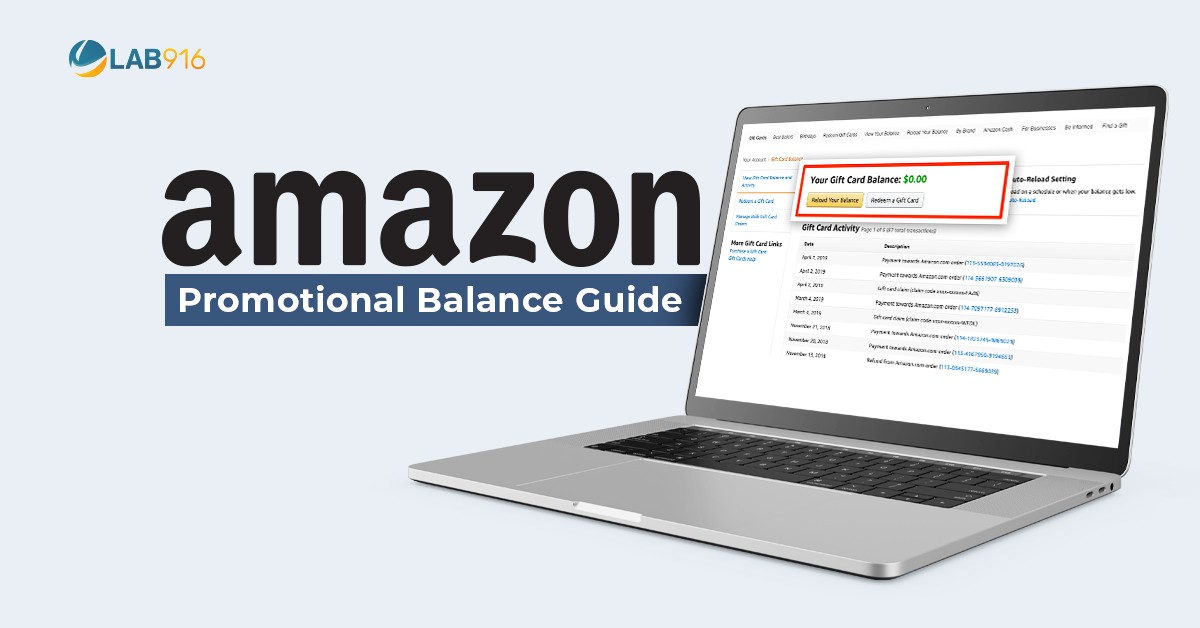
While Amazon makes it easy to see your Gift Card balance, promotional credits for physical goods are often “unseen” until you reach the “Select a Payment Method” screen. However, for digital credits (Video, Music, Books), Amazon provides a “Digital Balance” page. Monitoring this is essential for “budget leakage” prevention—ensuring you don’t pay for a movie rental out of pocket when you have credits sitting idle.
Applying Credits During Checkout
Promotional credits are typically applied automatically to qualifying orders. However, a common mistake in personal finance management is assuming the credit applied when it didn’t. Always review the “Order Summary” on the final checkout page. If the “Promotional Certificate” line item is missing, your items likely do not qualify, or the credit has expired.
Strategically, you should aim to use these credits on “needs” rather than “wants.” Using a $5 credit on a luxury item you wouldn’t otherwise buy is not a saving; it is a $5 reduction in a discretionary expense. Applying it to a household staple you buy every month is a genuine improvement to your monthly cash flow.
Strategic Spending: Best Practices for Using Promotional Credits
To maximize the “Money” aspect of Amazon credits, one must treat them with the same discipline as a cash budget.
Prioritizing High-Value Purchases
Not all promotional credits are created equal. Some are “category-specific,” while others are “site-wide” (limited to Amazon-sold items). The best practice is to use category-specific credits first. For example, if you have a credit specifically for “Amazon Fresh,” use it for your groceries immediately, preserving your more versatile gift card balance or cash for other needs.
Avoiding Common Financial Pitfalls
The biggest pitfall is the “spending-to-save” trap. Amazon offers promotional credits to incentivize behavior—usually to get you to spend more. If a promotion requires you to “Spend $100 to get a $20 credit,” and you only needed $50 worth of goods, you have effectively lost $30 in liquidity for a $20 future discount.
Always evaluate the ROI (Return on Investment) of a promotion. If the required purchase aligns with your existing shopping list, the promotional credit is a “win.” If it requires lifestyle creep or buying inventory you don’t need, it’s a “loss.”
The Impact on Your Personal Budget
Integrating Amazon promotional credits into your personal finance strategy is about more than just “coupons.” It is about understanding the ecosystem of a platform where you likely spend a significant portion of your discretionary income.
By systematically choosing No-Rush shipping, participating in trade-ins, and leveraging credit card partner offers, an average user can easily generate $100 to $300 in promotional credits annually. In the context of a personal budget, this is equivalent to a small dividend or a modest side hustle.
Furthermore, these credits provide a “buffer.” If your monthly entertainment budget is tight, using accumulated promotional credits for Prime Video rentals or Kindle books allows you to enjoy digital media without impacting your liquid savings.

Conclusion: The Value of Digital Arbitrage
Amazon promotional credits are a unique form of digital currency that reward the informed consumer. They are not “free money” in the sense that they often require specific actions or have strict limitations, but they are a highly effective tool for reducing the “cost of living” in a digital world.
By treating these credits as a component of your broader financial strategy—tracking expiration dates, understanding qualifying items, and avoiding the trap of overspending to trigger rewards—you can ensure that your Amazon account works for you, rather than the other way around. In the realm of personal finance, every dollar saved is a dollar that can be invested elsewhere, and promotional credits are one of the simplest ways to reclaim those dollars from your daily spending.
aViewFromTheCave is a participant in the Amazon Services LLC Associates Program, an affiliate advertising program designed to provide a means for sites to earn advertising fees by advertising and linking to Amazon.com. Amazon, the Amazon logo, AmazonSupply, and the AmazonSupply logo are trademarks of Amazon.com, Inc. or its affiliates. As an Amazon Associate we earn affiliate commissions from qualifying purchases.